What to Do When Daisies Get Pests? 3 Pest Infestations and 2 Diseases and Their Control Methods
The daisy is a highly ornamental plant, and in Italy it has even been chosen as the national flower. However, no matter how ornamental a flower is, if pests or diseases appear, they will still affect its overall beauty, and in severe cases can even cause the plant to wither and die. Regarding what to do when daisies get pests, how should pest and disease control for daisies be carried out? Below, the editor takes everyone through it.
I. What to Do When Daisies Get Pests / Targeted Treatment
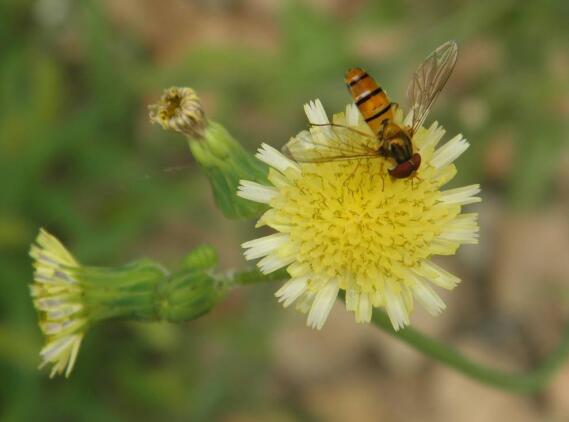
Regarding questions like what to do when daisies get pests, first we need to identify exactly which pest or disease has appeared. As long as the cause is found, targeted elimination is relatively easy. Below are the characteristics and control methods of various pests and diseases; friends who want to learn more can keep reading.
II. Pest and Disease Control for Daisies
1. Chrysanthemum longhorn beetle pest
Among the pest and disease control measures for daisies, the chrysanthemum longhorn beetle is a relatively common one. This pest is generally 6-11mm, with a cylindrical body and black color. It initially hides in the roots of the daisy, then gradually eats its way upward from the roots, and in the later stages causes the plant to wither and die from insufficient nutrients.
Control method: The best time to control this pest is when dividing daisies. When dividing, we need to dig out the plant roots; at this time we can check whether this pest is present. If found, we can use 50% dichlorvos emulsifiable concentrate at 200 times dilution for direct spray-killing.
2. Cotton aphid pest
The cotton aphid mainly harms the leaves of daisies. In the early stage, the leaves curl up, and as time goes on they gradually shrivel, finally spreading to the whole plant and causing it to wither and die.
Control method: When encountering this pest, it must be dealt with as early as possible. The most direct method is to use 1000 grams of 75% phorate emulsifiable concentrate to spray the entire plant. Generally spray once every 7-12 days; after two to three times, this pest can basically be eliminated.
3. Green leafhopper pest
The green leafhopper is generally 7-8mm in size, with a brown head and a green body. This pest mainly harms the leaves of plants. It sucks the sap from the leaves, causing them to turn yellow and wither, and as time passes it will gradually spread.
Control method: To control this pest, many people choose to use light traps to lure and kill them, but this method is hard to completely eliminate the pest with. The most direct and effective method is that we can use 50% methamidophos emulsifiable concentrate at 1000 times dilution for direct spray-killing of this pest.
4. Anthracnose disease
Anthracnose mainly harms the leaves of daisies. In the early stage of the disease, many small green spots appear on the leaves. As time passes, these spots gradually expand and spread.
Control method: This disease must be controlled in the early stage. If it drags on and the pathogen spreads, it becomes very difficult to treat. We can use 50% benomyl wettable powder at 1500 times dilution to spray the plant for control.
5. Gray mold disease
Gray mold is a fungal disease that appears in many plants. It mainly harms the leaves and petioles of daisies. When the disease occurs, these two parts appear grayish-white, and many irregular water-soaked spots also appear. In the final stage, it causes the plant to rot and wither.
Control method: This disease most often appears when the plant is overwintering and over-summering, so special attention must be paid at these times. For control of this disease, we can use 50% iprodione diluted at 1000-1500 times and spray it. Generally spray once every 5 days. After 1-2 times, it can basically be cured.
Control Methods for the Main Pests and Diseases of Daisies
Commonsclerotinia rot, leaf spotandAtractomorpha sinensis, small green grasshopperdamage.
Control method: For sclerotinia rot, spray with 50% thiophanate wettable powder at 500 times dilution; for Atractomorpha sinensis, use 50% fenitrothion emulsifiable concentrate at 1000 times dilution for spray-killing control.
Disease Control for Daisies
Daisy leaf blight
Leaf blight mostly infects from the leaf margins and leaf tips. The spots range from small to large and irregular in shape, red-brown to gray-brown. The spots join together into large blighted patches, with the withered area reaching 1/3-1/2 of the leaf. At the edge of the spots there is a band darker than the spots; the boundary between diseased and healthy tissue is obvious. Later, some small black granules appear on the spots.
Specific symptoms: In the early stage, diseased leaves first turn yellow, and the yellow parts gradually turn brown and necrotic. It spreads from local areas to the entire leaf vein, showing brown to red-brown leaf margin spots, with wavy edges and a darker color. The boundary between diseased and healthy tissue is obvious, and sometimes there is also a light yellow band of varying width on the outer edge. Subsequently, the spots gradually extend toward the leaf base until the entire leaf turns brown to gray-brown. Then black fuzzy material or small black dots appear on the back or front of the diseased leaf.
Daisy seedling damping-off
Seedlings can develop the disease either before emerging from the soil or after sprouting. When the disease occurs before emergence, the hypocotyl and cotyledons rot; when seedlings develop the disease after emergence, the base of the young stem first shows water-soaked spots, then turns brown, constricts into a thread-like shape, and the seedling falls over and dies. At death, the cotyledons have not yet withered and are still green. Under high temperature and high humidity, a layer of white cotton-like mycelium can grow on the surface soil near the diseased plants.
Daisy gray mold
Diseased gray mold seedlings are pale in color. The leaves and petioles show grayish-white, water-soaked lesions, and the tissue softens to the point of rotting. Under high humidity, gray mold grows on the surface. The young stem mostly first develops irregular water-soaked spots at the base of the petiole, quickly becomes soft and rots, constricts or bends over, and finally the diseased seedling rots, withers, and dies of the disease.
Daisy brown spot
A fungal disease, it starts on the lower leaves and gradually spreads upward. In the early stage the spots are round or oval and purple-brown, and later become black, 5-10mm in diameter, with clear boundaries. In severe cases the spots can join into patches, causing the leaves to wither, yellow, and fall off, affecting flowering.
Daisy anthracnose
This disease infects the leaves of daisies. In the early stage of the disease, small chlorotic spots appear on the leaves, and after gradually expanding they form round, semicircular, or oval spots. The spots are light brown to grayish-white, with a red-brown ring around the edge. Under moist conditions, pale pink viscous acervuli appear on the spots. Anthracnose occurs from April to June. The pathogen overwinters as acervuli in diseased fallen leaves and is spread by wind and rain.
Daisy Disease Control Methods
Control should focus on prevention, spraying targeted chemicals plus New High Lipid Film to increase the effective ingredient rate of the pesticide. It is not afraid of evaporation from strong sunlight, can regulate water absorption, and prevents drought and rain damage.
When cultivating, avoid dense planting and try to maintain cool environmental conditions with ventilation, air permeability, and sufficient light; otherwise the plants will become weak and leggy.
Keep things clean. Whenever infected plants or leaves are found, they must be removed and cleaned up at any time. When disease occurs, immediately take chemical control measures.