What to do when evening primrose gets bugs? 2 Pest and 2 Disease Control Methods
Evening primrose is a plant with extremely high ornamental value, and it can be seen in many gardens and flower beds across our country. But no matter how beautiful a flower is, if it encounters pests and diseases, it will still show yellowing, withering, and other phenomena, which will also ruin its overall beauty. As for what to do when evening primrose gets bugs, and how to carry out pest and disease control for showy evening primrose, the editor below will walk everyone through it.
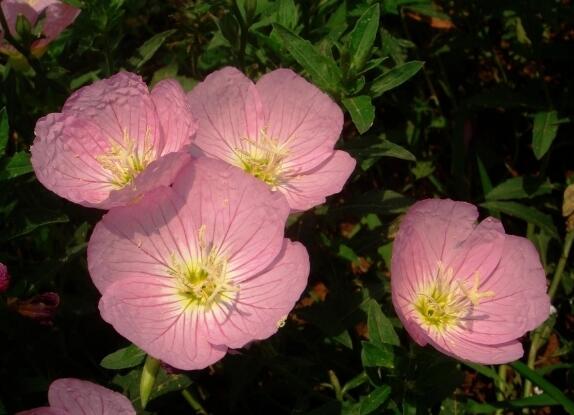
I. What to do when evening primrose gets bugs
As for what to do when evening primrose gets bugs, when this problem occurs, we first need to understand what kind of pest or disease it is. Only by knowing the cause can we handle it in a targeted way. The treatment methods are also relatively simple; generally, choosing chemical treatment is the most direct option.
II. Pest and Disease Control of Showy Evening Primrose
1. Aphid pest
Showy evening primrose is a differentiated variety of evening primrose, and the pests and diseases it develops are the same as those of evening primrose. Aphids are a pest found on many plants. They mainly harm the leaves of plants, sucking the sap from the leaves, which causes the plant to gradually lose nutrients and eventually die directly.
Control method: When this pest appears, the most direct method is to use chemical treatment. We can choose 50% fenitrothion emulsion at 1000 times dilution to spray and kill the pests. Generally, spray once every 7 days, and after 2-3 times these pests can basically be completely eliminated.
2. Copper green chafer pest
In the pest and disease control of showy evening primrose, the copper green chafer pest is a relatively common one. It mainly harms the seedlings of evening primrose, gnawing on the seedlings, which leads to poor development. If not handled in time, it can even cause the seedlings to die.
Control method: To control this pest, we can choose to use fried fragrant wheat bran mixed with 90% crystalline trichlorfon at 30 times dilution to make a poison bait, and use it to trap and kill the copper green chafer, thereby achieving control. There is also one point everyone should remember: after clearing this pest, remember to disinfect the evening primrose in time to avoid any residual virus.
3. Leaf spot disease
The main part harmed by leaf spot disease is the leaves of evening primrose. In the early stage, small brown spots appear on the leaves. As time goes on, the area gradually expands, and in the later stage it causes the leaves to turn yellow, dry up, and fall off.
Control method: When encountering this disease, it must be treated as early as possible. We can choose 65% zineb at 400-500 times dilution to spray the plant. Generally, spray once every half month, and after 1-2 times this disease can basically be cleared.
4. Rot disease
Rot disease is a disease found in many plants and is caused by bacteria or fungi. This disease mainly threatens the roots of plants. As the name suggests, when this disease occurs, it causes the plant to shrink and rot.
Control method: When this disease appears, it must be controlled in the early stage. If it is late, it may be difficult to cure completely. When discovered in the early stage, we can use 75% chlorothalonil at 1000 times dilution to irrigate the plant, which can achieve a very good control effect.
As for the question of what to do when evening primrose gets bugs, after reading the above, I believe everyone already understands. In fact, in the process of growing plants, the most important thing is still carefulness. As long as you care for them carefully, pests and diseases will rarely appear. The editor has introduced the pest and disease control of showy evening primrose here, and hopes this article can bring everyone some help.
Pests and Diseases of Evening Primrose and Their Control Methods
Diseases of Evening Primrose and Their Control Methods
Rot disease
Rot disease is one of the diseases troubling evening primrose. After infection, the roots of the plant gradually change color and rot, the leaves shrink and dry up, and in severe cases it can cause the whole plant to die.
Control methods
You can irrigate with 1% lime water, or 50% thiophanate at 1500 times dilution, or 75% chlorothalonil at 1000 times dilution.
Leaf spot disease
Leaf spot disease mainly harms the leaves of evening primrose. The pathogen is Septoria oenotherae, which belongs to the Deuteromycotina, genus Septoria fungi. The pathogen overwinters in diseased remains as pycnidia and mycelium. In the following spring, after the pycnidia absorb water, they release conidia for initial infection.
The spread of leaf spot disease mainly relies on raindrop splashing and air circulation. Seeds carrying the pathogen cause long-distance transmission. High temperature and high humidity environments are most likely to cause the disease, so the hot and rainy season from July to August each year is the peak period of disease occurrence.
After infection, round, light brown lesions appear on the leaves, about 2-3 mm in diameter, with purplish red edges and brown centers, densely covered with small black spots. In severe cases, the leaves gradually dry up and fall off.
Control methods
In autumn, thoroughly remove diseased leaves and severely affected plants, and burn or discard them in a centralized manner.
Before sowing, soak the seeds in 50% carbendazim or 50% mancozeb at 500 times dilution for 30 minutes. Dry them before sowing.
In the early stage of disease onset, spray once with 50% mancozeb at 500 times dilution or 50% wanmeiling at 600 times dilution or similar chemicals, with an interval of 10-15 days.
Pests of Evening Primrose and Their Control Methods
Copper green chafer
During the larval stage, this pest harms plant seedlings, biting the stems and branches, causing poor development of the seedlings.
During the adult stage, it affects the flowering of the plant and has a certain impact on the petals.
Control methods
Mix fried fragrant wheat bran with 90% crystalline trichlorfon at 30 times dilution into a poison bait to trap and kill.
Mix the bait directly with 50% phoxim emulsifiable concentrate at a 1:1 ratio and stir evenly to trap and kill.
Evening Primrose Cultivation Methods and Precautions, and Its Pest and Disease Control
Evening primrose is a very special flower. Unlike other flowers, it blooms at night. Its flower shape is small and elegant, very beautiful. When it blooms, the fragrance is rich, but unfortunately it does not bloom during the day. Today, the editor will take everyone to learn about the cultivation methods and pest and disease control of evening primrose.
Cultivation methods
1. Light
Evening primrose likes light and is suitable for cultivation in ventilated and open areas of a courtyard. It can also be grown on a balcony, absorbing sunlight every day.
2. Fertilization
During the growth period, apply liquid fertilizer 1-2 times per month. Fertilization during the growth period is mainly nitrogen fertilizer, and during the bud stage it is mainly phosphorus and potassium fertilizer.
3. Watering
Evening primrose is relatively drought-tolerant but not waterlogging-tolerant. When the soil surface looks dry, water it in time. After each watering, carry out intertillage and weeding in a timely manner to help preserve soil moisture and improve aeration, promoting robust plant growth.
4. Soil
Evening primrose is not strict about soil requirements. Generally, neutral, slightly alkaline, or slightly acidic soil is all acceptable. Well-drained, loose, and fertile sandy loam gives the best growth.
Precautions
1. If evening primrose is transplanted from elsewhere, after planting and recovering from transplanting, pinch it once to promote branching and dwarfing of the plant, and increase the amount of flowering.
2. During the flowering period of evening primrose, use dilute human urine, or liquid fertilizer made from fermented and decomposed soybean cake, rapeseed cake, or bone meal, diluted with 9 parts water, and apply once every 3-4 days. Stop fertilizing half a month before evening primrose is brought indoors to overwinter.
3. Evening primrose is generally suitable for sowing in October. When winter comes, move the seedlings indoors to overwinter, and plant them out in spring. When grown as a biennial, the number of flowers is greater than when grown as an annual. Cuttings are suitable in spring and summer, rooting and sprouting in about one month. After potting and surviving, it can bloom in about 85 days.
Pest and disease control
1. Rot disease
Rot disease is one of the diseases troubling evening primrose. After infection, the roots of the plant gradually change color and rot, the leaves shrink and dry up, and in severe cases it can cause the whole plant to die.
Control methods
You can irrigate with 1% lime water, or 50% thiophanate at 1500 times dilution, or 75% chlorothalonil at 1000 times dilution.
2. Leaf spot disease
Leaf spot disease mainly harms the leaves of evening primrose. The pathogen is Septoria oenotherae, which belongs to the Deuteromycotina, genus Septoria fungi. The pathogen overwinters in diseased remains as pycnidia and mycelium. In the following spring, after the pycnidia absorb water, they release conidia for initial infection. High temperature and high humidity environments are most likely to cause the disease, so the hot and rainy season from July to August each year is the peak period of disease occurrence. After infection, round, light brown lesions appear on the leaves, about 2-3 mm in diameter, with purplish red edges and brown centers, densely covered with small black spots. In severe cases, the leaves gradually dry up and fall off.
Control methods
In autumn, thoroughly remove diseased leaves and severely affected plants, and burn or discard them in a centralized manner. Before sowing, soak the seeds in 50% carbendazim or 50% mancozeb at 500 times dilution for 30 minutes. Dry them before sowing. In the early stage of disease onset, spray once with 50% mancozeb at 500 times dilution or 50% wanmeiling at 600 times dilution or similar chemicals, with an interval of 10-15 days.
3. Copper green chafer
During the larval stage, this pest harms plant seedlings, biting the stems and branches, causing poor development of the seedlings. During the adult stage, it affects the flowering of the plant and has a certain impact on the petals.
Control methods
Mix fried fragrant wheat bran with 90% crystalline trichlorfon at 30 times dilution into a poison bait to trap and kill. Mix the bait directly with 50% phoxim emulsifiable concentrate at a 1:1 ratio and stir evenly to trap and kill.
The above is the cultivation method and pest and disease control of evening primrose that I have compiled. I hope it can be helpful to the majority of flower lovers, and please continue to follow Duorou Huapu to learn more about flower care knowledge.