What to do when Scutellaria barbata gets bugs? 3 pest control methods and 2 disease control methods
Scutellaria barbata is a plant with extremely high ornamental value, and many people are amazed by its beauty when it blooms. However, no matter how beautiful the flower is, if pests and diseases appear, it will still gradually wither and lose its beauty. As for what to do when Scutellaria barbata gets bugs, and how to carry out pest and disease control for Scutellaria barbata? Below, the editor will take everyone through it.
I. What to do when Scutellaria barbata gets bugs / targeted control
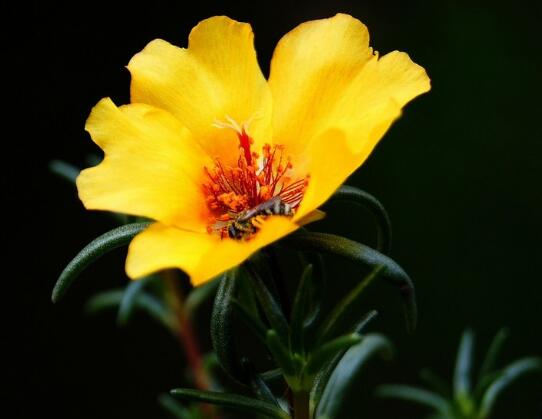
As for the question of what to do when Scutellaria barbata gets bugs, it is actually not hard to say, nor is it simple to say. If you do not know what is causing it, you will be at a loss, but if you know what pest or disease it is, treatment is relatively easy. Below are introductions to the pest and disease control of Scutellaria barbata and the characteristics when they appear. Friends who want to know can read on.
II. Pest and disease control of Scutellaria barbata
1. Tobacco cutworm pest
The tobacco cutworm is a pest that is brown in appearance. This pest mainly harms the leaves and rhizomes of Scutellaria barbata. It slowly nibbles away at the plant body, absorbs the plant's nutrients, and finally causes Scutellaria barbata to slowly wither and die because it cannot obtain nutrients.
Control method: When encountering this pest, we can choose to spray Scutellaria barbata with a 3000-fold dilution of 20% methomyl EC. Generally, spray once every 7-10 days, and after 2-3 times this pest can be completely eliminated.
2. Mole cricket pest
The smallest mole crickets are less than 2 cm. This pest mainly harms plant seedlings. It bites and feeds on the seedlings, and in the end causes Scutellaria barbata seedlings to appear tangled and messy, and finally slowly wither and die. It can be said to be extremely harmful.
Control method: When this pest appears, it must be discovered as early as possible and eliminated as early as possible. If it is late, you can only reseed. The most direct way to eliminate this pest is to directly use chemicals for spraying and killing. We can choose to use a 500-fold dilution of 50% phoxim EC to drench the roots of the seedlings, thereby eliminating mole crickets.
3. Aphid pest
Aphids are a kind of pest encountered by many plants, and Scutellaria barbata is no exception. This pest is very small and difficult to see with the naked eye. Generally, whether this pest has appeared can only be inferred through symptoms. This pest mainly harms the leaves of Scutellaria barbata. It slowly sucks the sap from the leaves, causing the leaves to turn yellow and even spread to the whole plant, and finally causing withering and death.
Control method: In the early stage of discovering this pest, we must promptly use chemicals for spraying and killing. We can use a 1000-fold dilution of 50% malathion emulsion. Generally, spray and kill once every 5-10 days, and after 1-2 times this pest can basically be completely eliminated.
4. Rust disease
Rust disease mainly harms the leaves and fruits of Scutellaria barbata. It first causes local contamination, making some small blister spots appear on the leaves, then gradually spreads to the whole plant, and finally causes leaf drop and even plant withering and death.
Control method: Rust disease is a relatively important point in the pest and disease control of Scutellaria barbata, because it is extremely harmful and spreads very quickly, so to solve this disease it must be done early. If this disease is found, we can spray Scutellaria barbata with a 150 to 200-fold dilution of high-fat film emulsion.
5. Root rot disease
This is a disease caused by fungi. When this disease appears, it greatly weakens the ability of Scutellaria barbata to absorb nutrients, thereby causing the plant itself to turn yellow and wither due to insufficient nutrients.
Control method: The peak period of this disease is around March to April each year, and special attention must be paid at this time. To treat this disease, we can use copper preparations or metalaxyl-hymexazol to prevent and control Scutellaria barbata.
Pest and disease control of Scutellaria barbata
Ban Zhi Lian generally refers to moss rose (a herbaceous flower of the genus Portulaca)
Moss rose (Latin scientific name: Portulaca grandiflora), also known as pine-leaf peony and ban zhi lian, is a perennial flower of the family Portulacaceae and genus Portulaca, often cultivated as an annual. It likes a warm, sunny and dry environment. It blooms when it sees sunlight and closes in the morning, evening and on cloudy days, hence the names "sun flower" and "noon flower."
It is native to Brazil in South America. It is now cultivated in various places in China. There are many flower colors, it has a light fragrance, and it is easy to grow and easy to keep alive.
Scutellaria barbata likes a warm and humid climate and does not have high requirements for soil conditions. In the wild, it is mostly seen in moist places beside ditches, field edges and roadsides. Soil that is too dry is unfavorable for growth.The seeds germinate easily, and the suitable germination temperature is 25c. The seed lifespan is 1 year.
Pest and disease control: During the growth process of Scutellaria barbata, almost no diseases occur. During the flowering period, aphids and cabbage black bugs are likely to cause damage. The former can be controlled with dimethoate, and the latter can be controlled by spraying with a 1000-fold dilution of 50% dichlorvos.
Control methods for pests and diseases of Scutellaria barbata
Scutellaria barbata is also called pine-leaf peony, dragon-whisker peony, golden-thread azalea, foreign purslane, sun flower and noon flower. It is a perennial herbaceous plant of the family Lamiaceae and genus Scutellaria. When cultivating Scutellaria barbata, pest and disease control is indispensable. Below, the editor will share with everyone the control methods for pests and diseases of Scutellaria barbata during the cultivation process.
Rust disease: It mainly harms leaves. The back of the leaves of affected plants shows yellow-brown spots, and in severe cases the leaves turn yellow, curl and fall off. Control method: In the early stage of the disease, use a 300-400-fold dilution of 97% sodium dimethyldithiocarbamate (add a small amount of laundry detergent), or use 0.2-0.3 degrees Baume lime sulfur mixture and spray once every 7-10 days for 2-3 consecutive times.
Epidemic disease: It is prone to occur in hot and rainy seasons. Water-soaked dark spots appear on the leaves, followed by wilting and drooping. Control method: Spray with 1:1:120 Bordeaux mixture or an 800-fold dilution of dexon in the evening for prevention and control.
Pests: Mainly aphids, African mole crickets, tobacco cutworms, etc. They can be controlled by spraying with a 1000-fold dilution of 40% dimethoate EC or a 1000-fold dilution of 50% phosphamidon EC. During the flowering period, aphids and cabbage black bugs are likely to cause damage. The former can be controlled with dimethoate, and the latter can be controlled by spraying with a 1000-fold dilution of 50% dichlorvos.
Pest and disease control of Scutellaria barbata
During the growth process of Scutellaria barbata, almost no diseases occur. During the flowering period, aphids and cabbage black bugs are likely to cause damage. The former can be controlled with dimethoate, and the latter can be controlled by spraying with a 1000-fold dilution of 50% dichlorvos.
Seed retention technique: From May to June, when the seeds gradually mature, harvest the fruiting branches in batches, dry them in the sun or in the shade, rub out the seeds, winnow away the stems and impurities, place them in cloth bags and store them in a dry place. Continuous cropping fields of Scutellaria barbata do not need seed retention. Generally, it can be continuously cropped for 3-4 years before renewing the root seedlings once.
As for the control methods for pests and diseases of Scutellaria barbata, today the editor will share them with everyone here. I hope the above can provide you with help.