Bay Laurel: Benefits and Uses - A Beautiful Plant Whose Flowers, Fruits, and Roots Can Be Used as Medicine
Bay laurel is a fairly common flowering plant in people's lives, with high ornamental value, and many people cultivate it in various places. However, besides being used for ornamental purposes, it also has many other uses. What exactly are the benefits and uses of bay laurel? Let's take a look below.
Benefits and Uses of Bay Laurel
1. Ornamental Value
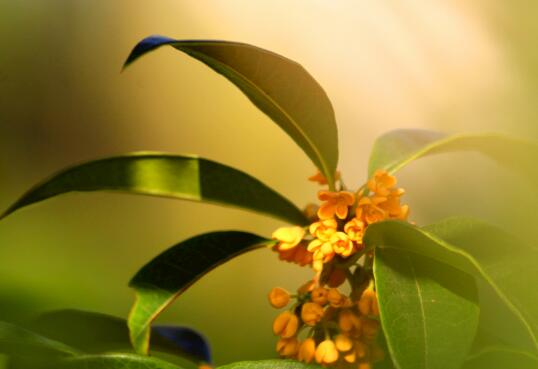
When it comes to the benefits and uses of bay laurel, people first think of its ornamental value. This plant has a very elegant form and a rich fragrance, making it an excellent choice whether grown in a courtyard or at home. If we grow it at home, it will also have a nice beautifying effect on the indoor environment.
2. Landscape Value
Besides growing it at home, this plant can also be planted on a large scale. It can be seen in many gardens across our country, especially during its flowering season each year, when large numbers of visitors flock to major gardens to admire it. This shows how much people love bay laurel.
3. Air Purification
Most flowering plants on the market today have the ability to purify air, and bay laurel is no exception. It is a natural air freshener that can absorb most harmful substances in the air and also release a rich floral fragrance, making the surrounding air fresher. If we grow it at home, it can also fill the home with the delicate scent of flowers.
4. Economic Value
In addition to the above points, bay laurel also has high economic value. Aromatic oil can be extracted from its leaves and fruits, which can be used in food and soap fragrances. Its leaves can also be used directly as seasoning sachets or canned food flavoring agents. Meanwhile, its seeds contain 30% plant oil, which can be used for industrial purposes.
5. Culinary Value
Bay laurel leaves are a basic spice in French cuisine. When making soup, people often add bay leaves to enhance the aroma, filling the soup with an appealing fragrance. Its leaves can also remove the fishy smell from meat, so people often add an appropriate amount of bay leaves when cooking.
6. Medicinal Value
Bay laurel has been recognized since ancient times as having certain medicinal value. In traditional Chinese medicine, its flowers, fruits, and roots can all be used as medicine. The flowers have the effect of dispelling cold and breaking up stagnation, as well as resolving phlegm and stopping cough. The fruits are used for deficiency-cold stomach pain. Its roots can also treat rheumatic muscle and bone pain, lower back pain, and toothache due to kidney deficiency.
What to Do When Bay Laurel Leaves Have Insects - Pest and Disease Control for Bay Laurel / 2 Pests, 3 Diseases
Pests and diseases can be said to be the problem that all plants least want to encounter during their growth process, and bay laurel is no exception. Such problems are very harmful to it, not only affecting its ornamental value but also causing it to wither and die in severe cases. So what should be done when bay laurel leaves have insects? How should pest and disease control for bay laurel be carried out? Let's take a look below.
I. What to Do When Bay Laurel Leaves Have Insects - Find the Cause
To know what to do when bay laurel leaves have insects, we first need to understand what kind of insect it is, so that we can deal with it in a targeted way, because the treatment methods for each pest and disease are different. Specific details are described in detail below. Friends who are troubled by this can take a look.
II. Pest and Disease Control for Bay Laurel (Pests)
Red Wax Scale
Red wax scale is an insect of the genus Ceroplastes in the family Coccidae of the order Hemiptera. This pest mainly parasitizes the branches and leaves of bay laurel, sucking the sap from within, which leads to decline in plant growth, shrinkage of the canopy, and in severe cases, the entire plant withering and dying.
Control method: If this pest appears on bay laurel, in the early stage we should promptly remove the insect bodies or prune the heavily infested branches and leaves, then destroy them in a centralized manner. If the infestation is severe, we can use a 1500-fold dilution of 20% Isoprocarb emulsifiable concentrate to directly spray and kill the pests.
Bagworm Moth
The bagworm moth is a moth of the genus Mahasena in the family Psychidae of the order Lepidoptera. Its larvae parasitize the leaves of bay laurel, gradually biting and eating the leaves and tender shoots, causing localized bald patches on the tea bushes and, in severe cases, leading to the death of the entire plant.
Control method: When dealing with this pest and disease of bay laurel, we can use a 1200-fold dilution of 90% Cartap wettable powder or a 1000-fold dilution of 50% Fenitrothion emulsifiable concentrate to directly spray and kill them.
III. Pest and Disease Control for Bay Laurel (Diseases)
Anthracnose
Anthracnose mainly threatens the leaves of bay laurel. In the early stage of the disease, many brown spots appear on the leaves, and over time the spots gradually expand and can occupy half the area of the leaflets, preventing the plant from carrying out photosynthesis and causing it to gradually wither and yellow, with the leaves also gradually falling off.
Control method: When controlling this disease of bay laurel, we can use a 1000-fold dilution of 75% Thiophanate-methyl wettable powder to spray the affected plants. Generally, spraying once every 7-10 days, 2-3 times is enough for recovery.
Black Spot Disease
Black spot disease is a disease caused by fungi, mainly harming the leaves, petioles, and tender shoots of bay laurel. When the disease occurs, many purplish-brown spots appear on the affected parts, and over time the spots gradually expand and the color slowly changes, eventually causing the plant to gradually wither.
Control method: For this disease of bay laurel, we can use Thiophanate-methyl or Carbendazim to spray the affected plants. Generally, once every 7-10 days, 2-3 times is enough for recovery.
Brown Spot Disease
Brown spot disease, also known as Rhizoctonia solani blight, is a fungal disease caused by Rhizoctonia solani. When the disease occurs, many yellow-brown to light brown spots with a diameter of 0.1-0.5 cm appear on the leaves, and over time the spots gradually spread, eventually causing the plant to wither and die.
Control method: When we discover this disease of bay laurel, if the number of diseased leaves is relatively small, we can promptly remove and destroy them. If there are many, we should use a 2000-fold dilution of 50% Procymidone to treat it. Generally, spray the affected plants once a week, and about 3 times is enough for recovery.
What Is the Flower Language of Bay Laurel - Legendary Stories of Bay Laurel / Praise
Bay laurel is a flowering plant with high ornamental value. It can often be seen in provinces such as Zhejiang, Jiangsu, Fujian, Taiwan, China, Sichuan, and Yunnan in our country. Like many flowering plants, it also has its own flower language. What is the flower language of bay laurel? What legendary stories does bay laurel have? Let's take a look below.
I. The Flower Language of Bay Laurel - Praise
The bay laurel plant symbolizes protection and peace in the Roman region, so the person who won the final victory in the Olympic competitions would wear a wreath woven from bay laurel to receive people's praise and admiration. The flower language of bay laurel was also derived from this allusion, representing praise.
II. Legendary Stories of Bay Laurel
Once, Apollo saw the little love god Cupid playing with a bow and arrows. He unceremoniously warned Cupid, saying: "Hey! Bows and arrows are very dangerous things. Children should not play with them casually." It turned out that little Cupid had two very special arrows: anyone struck by the sharp golden arrow would immediately feel the passion of love kindled in their heart; anyone struck by the other blunt leaden arrow would deeply detest love.
Cupid felt very unconvinced after being told off by Apollo. When Apollo was not paying attention, he shot the arrow of love at Apollo with a "whoosh," and Apollo's heart immediately ignited with the flame of love. Just then, a beautiful maiden named Daphne appeared. The mischievous Cupid shot the leaden blunt arrow at Daphne, and Daphne, once struck, immediately became filled with disgust for love.
At this time, Apollo, having been struck by the arrow of love, had already fallen deeply in love with Daphne, so he immediately expressed his affection to her. But Daphne said very unhappily: "Go away! I hate love! Stay away from me!" And with that, she ran off into the valley like a gazelle. But Apollo did not lose heart in pursuing Daphne. He took his lyre and played beautiful melodies. Whoever heard Apollo's music could not help but walk up to him and listen to his performance.
Daphne, hiding deep in the mountains, also heard this beautiful music and unknowingly became enchanted. "Where is such moving music coming from? I want to see who is playing." And with that, Daphne, already captivated by the music, walked toward Apollo. Apollo, who had been hiding behind a large rock playing the lyre, immediately jumped out and stepped forward to embrace Daphne. When Daphne saw Apollo, she turned and ran.
Apollo pursued her desperately from behind, shouting loudly: "I am not your enemy, nor a fierce beast, nor an unreasonable brute. Why are you hiding from me?" Although Apollo kept calling out to Daphne from behind, Daphne acted as if she did not hear and continued to run forward. But no matter how fast Daphne ran, she could not outrun Apollo.
After running for quite a while, Daphne was already exhausted and gasping for breath. Finally, she fell to the ground. Seeing that Apollo was about to catch up, Daphne cried out in desperation: "Help! Help!" At that moment, the river god heard Daphne's cries for help and immediately used his divine power to turn her into a bay laurel tree. Daphne's hair became leaves, her wrists became branches, her two legs became the trunk, and her two feet and toes became roots, deeply planted into the soil.
When Apollo saw this, he was filled with regret. He sadly embraced the bay laurel tree and wept, but the bay laurel tree kept shaking. Although Daphne had already turned into a bay laurel tree, Apollo still loved her. Apollo gazed at the bay laurel tree and said infatuatedly: "Although you could not become my wife, I will love you forever.
I will use your branches and leaves to make my laurel wreath, use your wood to make my lyre, and use your flowers to decorate my bow. At the same time, I will grant you eternal youth, never to age." When Daphne, now transformed into a bay laurel tree, heard this, she was deeply moved and nodded repeatedly to express her gratitude. Perhaps blessed by Apollo, the bay laurel tree remains evergreen all year round and is a plant deeply loved by people.