What to Do When Philodendron (Tree Philodendron) Gets Pests: Prevention and Care of Common Pests and Diseases Are Very Important
When we grow Philodendron, improper care or an unsuitable environment can both cause pests and diseases, and their harm to the plant is enormous. So what should we do if Philodendron gets pests? Today we will learn about the correct methods for preventing and controlling common Philodendron pests and diseases.
What to Do When Philodendron Gets Pests
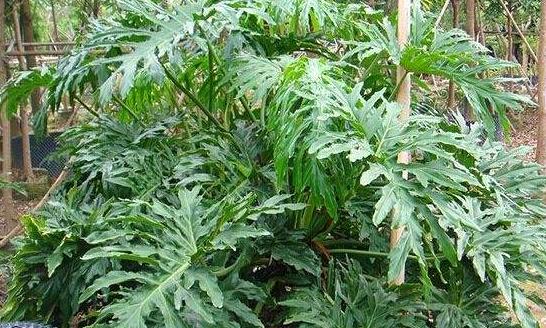
Usually, if we are familiar with the cultivation methods and precautions for Philodendron, it rarely gets pests or diseases. Once pests and diseases appear, however, corresponding measures should be taken promptly according to the pest or disease. The main insects that appear on Philodendron are red spider mites and scale insects; the diseases are leaf spot, anthracnose, and so on.
I. Common Pests of Philodendron
1. Red spider mite
Red spider mites can spread with the help of wind. Once this pest is found on Philodendron, it should be removed promptly; otherwise it may quickly threaten other plants. The cause of red spider mites is generally low humidity and dry, hot conditions. Mix 15 grams of washing powder, 15 milliliters of 20% sodium hydroxide, and 7.5 kilograms of water, then spray the mixture; after 2 days it can kill red spider mites.
Note: After killing red spider mites, we also need to prevent them from appearing again. Do not keep Philodendron in a dry, hot environment for a long time; frequent watering and ventilation can prevent red spider mites from appearing.
2. Scale insect
Scale insects are the most common pest of Philodendron, and more likely to appear than red spider mites. Scientific research shows that the appearance of scale insects is very likely caused by poor ventilation and insufficient light, so reasonable care should be taken after removing scale insects.
Note: Mix white liquor and water at a ratio of 1:2 to make a solution, then pour it on the surface of the potting soil, applying it once every half month to prevent and control scale insects. In addition, in the prevention and control of common Philodendron pests and diseases, make sure the plant gets enough light and keep it in a ventilated environment.
II. Diseases of Philodendron
1. Leaf spot
Leaf spot is the most common disease of Philodendron. Its specific symptoms are round leaf spots on the leaves; the color is brown to tan, the edges are dark brown, and there is a yellow halo around the outside. The spots also bear spots of different sizes.
Control measures: Spray a solution made by diluting 50% carbendazim to 1000 times. Wettable powders such as thiophanate-methyl and zineb can also be used for control.
2. Anthracnose
Round or oval reddish-brown spots appear on the leaves, then gradually expand, and the edges turn purplish-brown. Finally, the spots turn dark brown, causing the leaves to dry up and fall off. In severe cases, the leaves of Philodendron turn yellow, and even more than half of the leaves die.
Control measures: Cut off diseased leaves and spray 75% thiophanate-methyl wettable powder at 1000 times dilution. Generally spray once every 7-10 days; about 3 consecutive sprays can achieve good results. In addition, pay attention to fertilizing and watering.
Summary: When growing Philodendron, the prevention and control of common Philodendron pests and diseases is something that must be understood. In fact, many diseases are caused by the environment and care. Therefore, to reduce pests and diseases, you also need to pay more attention to daily care and keep the environment where Philodendron is kept clean and hygienic.
Propagation Methods of Potted Philodendron and Main Pest and Disease Control Measures
How do you grow potted Philodendron? How do you propagate it? Philodendron is a common potted plant in home courtyards with extremely strong ornamental value. Today, let's learn together with the editor of Huinong Network about the propagation and pest and disease control cultivation techniques of potted Philodendron.
I. Propagation Methods
Seed sowing propagation, division propagation, and cutting propagation can be used.
1. Seed sowing propagation
① Sowing in a seedbed.
a. Seed treatment. Soak the seeds for about 8 hours before sowing, which can promote earlier germination and increase the germination rate. The suitable germination temperature is 25°C-30°C, and germination occurs 7-10 days after sowing.
b. Seedbed preparation. The seedbed should choose sandy loam with loose soil structure, a low groundwater level, good drainage, and rich organic matter, and the soil should be disinfected. To avoid weeds growing later, a chemical herbicide can be sprayed once.
c. Sowing. The sowing depth is about 2-3 mm. After sowing, cover with a layer of fine soil, water thoroughly with a fine-rose watering can, then spray 1-2 times daily; germination begins after 1 week. When the seedlings grow 2-3 leaves, apply 1 diluted mixed fertilizer of nitrogen and potassium, then apply it once every 7 days thereafter.
② Sowing in a shallow pot.
a. Sowing substrate. Disinfected loose sandy leaf mold can be used, or yellow mud, coconut coir, and perlite sifted through a small sieve mixed at a ratio of 3:1:1.
b. Sowing in a shallow pot. Dibbling is best, though broadcasting can also be used, but it must be uniform and not too dense; too dense is unfavorable for seedling growth.
c. Spraying water to retain moisture. After sowing, spray thoroughly with a sprayer, then cover with newspaper or plastic film. Keep it moist for a long time, and uncover it once the seeds germinate.
2. Division propagation
Vigorous perennial plants can produce tillers at the base. When the small buds grow larger and adventitious roots appear, they can be separated and potted separately. You can also choose a plant with longer internodes; except for keeping the terminal bud and 1 leaf, remove all other leaves, then cut off the terminal bud with 1-2 aerial roots and pot it directly. Leave the remaining plant in its original pot in a humid, semi-shaded place for care, keeping the potting soil moist. The base of the petiole at the internode of Philodendron has a very strong regeneration ability; after cutting off the terminal bud, new buds will quickly sprout. In plants topped in early spring, several buds sprout at the leaf axils of the internodes after 20 days; in plants topped in July, bud points can grow in just 1 week. The newly sprouted young buds can be cut off together with part of the roots and potted separately after 20 days. Generally, 1 large seedling can be divided into more than 5 small seedlings. After potting, place the small seedlings in a shaded place first; after 1 week they can receive a little sunlight and gradually return to normal care.
3. Cutting propagation
March to June is best. Use coarse river sand or fresh yellow mud as the cutting substrate; river sand should be rinsed several times with clean water before use. Select healthy stems free of pests and diseases as cuttings. After cutting the branches, choose the sturdy parts and cut them into sections 2-3 nodes long. Cut off all leaves to reduce water evaporation. Insert into the sand bed, control the temperature at about 20°C-25°C, and roots can form in about 20-25 days; when new shoots are about 3-5 cm long, they can be transplanted into pots.
II. Daily Management Methods
1. Potting management
After potting, place the small seedlings in a shaded place first; after 1 week they can receive a little sunlight and gradually return to normal care. Philodendron grows quickly, so the management of water, fertilizer, light, and temperature should be adjusted well.
2. Watering
Philodendron has relatively high water requirements. During the growing season, keep the soil moist; do not wait until the soil is completely dry before watering. Frequently spray water on the leaves and ground to maintain relatively high humidity in the surrounding environment. This is beneficial for growth and also makes the leaves fresh and bright, full of vitality. In winter, reduce the amount of watering and keep the potting soil moist but tending dry; generally water once every 3-5 days. Note that the water temperature must not be too low, otherwise it is prone to cold damage.
3. Fertilizing
Philodendron likes fertilizer. During the growing period, apply 1 diluted decomposed liquid fertilizer or special fertilizer for foliage plants every half month. You can also spray the leaves with a mixed solution of 0.2% urea plus 0.1% monopotassium phosphate. Note that nitrogen fertilizer should be applied sparingly to prevent excessive growth. Around the Beginning of Autumn, apply 1-2 times a 0.3% monopotassium phosphate solution to enhance cold resistance. After entering winter, the plant stops growing, so stop applying additional fertilizer.
4. Temperature
The suitable growth temperature for Philodendron is 15°C-28°C, among which the suitable temperature from March to September is 21°C-30°C, and from October to the following February is 18°C-21°C. Below 15°C it enters dormancy, and the overwintering temperature is 14°C-16°C. Keeping the winter room temperature above 8°C allows it to overwinter safely, and the minimum must not be lower than 2°C. Larger plants can tolerate short periods of low temperature around 0°C; as long as the stems and root system have not been frozen badly, they can quickly resume growth the following spring.
5. Light
Philodendron likes a semi-shaded environment. During the growing season, avoid direct scorching sunlight; bright scattered light is better. For example, the north side of a building or under tree shade is very suitable. If conditions permit, a shade net can be set up to maintain 50%-70% light transmittance. Too strong light easily burns or yellows the leaves, affecting ornamental value. For indoor placement, it is better to place it in a spot with relatively sufficient light; long-term placement in a dark environment is very unfavorable for plant growth.
III. Pest and Disease Control
1. Diseases
Mainly include leaf spot, gray leaf spot, gray mold, mosaic disease, anthracnose, viral disease, sooty mold, soft rot, and so on.
① Leaf spot. The spots are nearly round or irregular, light brown or grayish-brown, with raised edges and a clear boundary with the healthy part. Small black grains are borne on the spots, and most grow on the leaf veins; on the back of the leaf, only individual spots show small black dots. Control method: After spots appear, spray 75% chlorothalonil wettable powder at 600 times dilution, or 12% copper green emulsifiable concentrate at 600 times dilution, or 50% Shibaike wettable powder at 800 times dilution, or 50% chlorobromoisocyanuric acid (Bactericide King) water-soluble powder at 1000-1200 times dilution. Spray once a week for 2-3 consecutive times, alternating use to prevent resistance.
② Gray leaf spot. Leaf spots are nearly round to irregular, grayish-brown to grayish-white. The diseased parts easily rupture and fall off, forming irregular perforations, and a ring of diseased tissue often remains at the edge of the spots. Small black grains are borne on the spot surface, which are the fungal fruiting bodies, the conidia-bearing structures. Control method: In the early stage of disease, spray 50% Tuzet wettable powder at 500-600 times dilution, or 20% compound thiophanate at 600 times dilution, or 40% flusilazole emulsifiable concentrate at 8000 times dilution, or 50% Shibagong wettable powder at 800 times dilution, or 69% Anke mancozeb + 75% chlorothalonil wettable powder (1:1) at 1200 times dilution, or 65% Duokejun wettable powder at 800 times dilution, once every 7-15 days. Spray 2-3 consecutive times, alternating use to prevent resistance.
③ Gray mold. Leaf spots occur at the leaf margins, nearly round to irregular, water-soaked, light brown to brown, sometimes with concentric rings. Stem spots are irregular long strips, brown; in severe cases the stem soft-rots and falls over. Buds infected produce bud blight and varying degrees of deformity. All affected parts can produce a gray mold layer.
Control method: In the early stage of disease, spray 40% folpet wettable powder at 500 times dilution, once every 10 days, for 3-4 consecutive sprays.
④ Mosaic disease. Yellow-green patches appear on the leaf surface in a mosaic pattern; the leaf surface is wrinkled, uneven, or distorted, reducing ornamental value. Control method: In the early stage of disease, spray 7.5% Keduling aqueous solution at 900 times dilution, or 32% ningnanmycin at 250 times dilution, or 10% Baolifeng Virus Like, each vial mixed with 10-15 kg of water, once every 10-15 days, for 2-3 consecutive treatments. The seedling room should use gauze nets at entrances and exits to prevent aphids from entering and transmitting the virus.
⑤ Anthracnose. The symptoms of this disease are similar to the early symptoms of gray mold, mainly occurring at leaf splits and on the leaf surface. After the initial spots expand, they form irregular large spots, brown, with a yellow halo outside the spot edge. In the later stage, concentric rings are obvious, and the central tissue is light brown. Black small grains are arranged in rings on them. Control method: In the early stage of disease, spray 25% Tanteling wettable powder at 500 times dilution, or 50% thiophanate-methyl wettable powder at 500 times dilution, or 50% carbendazim wettable powder at 800 times dilution, once every 10 days, for 2-3 treatments.
⑥ Viral disease. Leaf margins are wavy and curled upward, and the leaves are twisted and uneven. Some leaves show yellow-green mottling, and the leaves thicken, with small, relatively hard tips. Control method: In the early stage of disease, use 0.5% Antiviral Agent No. 1 at 600 times dilution, or 2% ningnanmycin at 200-300 times dilution, or 4% Bolian biological bacteriocin at 200-300 times dilution, spray 2 hours before sunset, once every 10 days, for 2-3 treatments.
⑦ Sooty mold. This disease occurs on leaves damaged by scale insects, forming irregular dirty-black soot-like layers on the diseased leaves. Control method: When scale insect density is high, spray Jiemanling emulsifiable concentrate at 1000-1200 times dilution, or 40% omethoate emulsifiable concentrate at 800 times dilution, or 50% malathion emulsifiable concentrate at 600-800 times dilution, etc. Spraying at the peak hatching period gives good results.
⑧ Soft rot. In the early stage of disease, the leaves droop in a wilted state on sunny days, and can recover to normal on cloudy days or in the morning and evening. The veins of affected leaves turn dark brown. Control method: Before and in the early stage of disease, use Dexon original powder at 1000 times dilution, or 38% oxathiapiprolin at 800 times dilution, or 50% amobam at 600-800 times dilution, or 77% copper hydroxide wettable powder at 400-600 times dilution, spraying once every 7-10 days for 2-3 consecutive sprays; in severe cases, root drenching treatment can be carried out.
2. Pests
Mainly include scale insects, red spider mites, and so on.
① Scale insects. They often gather in groups on stems, leaves, and flowers.
Control method: According to the various occurrence conditions of scale insects, spray pesticide at the peak nymph stage. You can use 40% omethoate at 1000 times dilution, or 50% malathion at 1200 times dilution, or 255 phosmet at 800 times dilution, or 50% dichlorvos at 800 times dilution, or 2.5% deltamethrin at 2000 times dilution for spraying. Spray once every 7-10 days for 2-3 consecutive times.
② Red spider mite. Early symptoms are leaf chlorosis and leaf margins curling upward, leading to withering and falling off, causing early shrinkage of flower buds and, in severe cases, plant death.
Control method: When damage is found, use 40% dicofol emulsifiable concentrate at 1000-1200 times dilution, 20% mieshijing wettable powder at 2000 times dilution, 15% pyridaben emulsifiable concentrate at 2000 times dilution, or 1.8% abamectin emulsifiable concentrate at 4000-6000 times dilution. Once a week, spray 3-4 consecutive times, with remarkable results.
That is all for today about the cultivation methods of potted Philodendron. Friends who grow Philodendron at home can read more and learn.
Control Methods for the Main Pests and Diseases of Philodendron
There are relatively few pests and diseases. Commonleaf spotandscale insectscause damage.
For leaf spot, spray 50% carbendazim at 1000 times dilution for control; for scale insects, spray 50% omethoate emulsifiable concentrate at 1000 times dilution to kill them.