What to Do When a Radermachera sinica Gets Bugs? 3 Pest and 3 Disease Control Methods
As a plant with good symbolism and beauty, the Radermachera sinica is welcomed and loved by many flower enthusiasts, and many people grow it as a potted plant at home. However, due to improper care and other reasons, the Radermachera sinica can get bugs and become sick, seriously affecting its ornamental value. So what should you do when a Radermachera sinica gets bugs? Below is a selection of pest and disease control methods for the Radermachera sinica compiled by the editor. Read on to find out!
I. What to Do When a Radermachera sinica Gets Bugs: Spray Pesticide
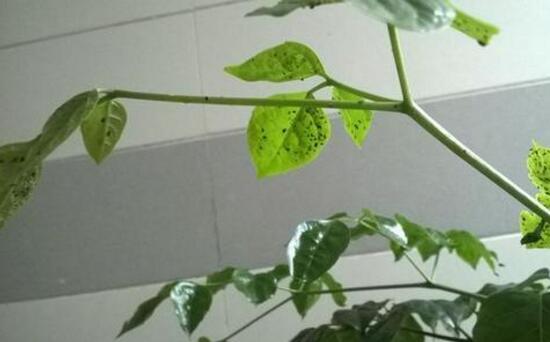
The Radermachera sinica is a common indoor potted plant with a sturdy, handsome form and emerald green leaves. However, indoors is not the same as outdoors. Once we fail to follow the proper cultivation methods for the Radermachera sinica, it will develop problems, getting bugs and becoming sick. As for what to do when a Radermachera sinica gets bugs, it is very simple: identify which pest it is, then spray the corresponding pesticide. The pests and diseases of the Radermachera sinica mainly include 3 pests and 3 diseases. Let us continue reading.
II. Pest and Disease Control for the Radermachera sinica
1. Scale insects
Under conditions of high temperature and high humidity with poor ventilation, scale insects easily appear on the stems and leaves of the Radermachera sinica. Symptoms of infestation: the leaves of the Radermachera sinica turn yellow, wither, and even drop, seriously affecting its indoor ornamental effect.
Control method: If a small number of scale insects are found, they can be wiped off immediately with a damp cloth, or removed by sticking them off with clear tape; when there are many pests, a 550% malathion or 40% dimethoate 0.1% solution can be sprayed alternately to kill them.
2. Mites
One of the pests and diseases of the Radermachera sinica, it generally appears from June to September. High temperature and dryness favor a massive outbreak of mites. Symptoms of infestation: new leaves of the Radermachera sinica become wrinkled and curled, and the leaf surface is uneven.
Control method: This pest is mainly killed by spraying pesticides, with acaricides such as fanbutatin oxide and hexythiazox as the first choice.
3. Aphids
A pest that attacks the Radermachera sinica, it parasitizes on the leaves and sucks sap, mainly harming young leaves and stems. Symptoms of infestation: the leaves of the Radermachera sinica become wrinkled and deformed. Aphids can be seen with the naked eye, and once they appear, they are densely packed and look quite frightening.
Control method: When there are few aphids, they can be killed manually, such as by picking them off with a needle, or brushing them off with a tool such as a brush; when there are many aphids, spray with zinc phosphide, omethoate, decamethrin, or similar.
4. Powdery mildew
Powdery mildew on the Radermachera sinica is a fungal disease with a high incidence rate, mainly harming the leaves, stems, flower buds, and other parts. Symptoms of the disease: small white powdery spots appear on diseased leaves, and a white powdery mold layer also covers them, affecting the ornamental value of the Radermachera sinica and making the plant stunted and lifeless.
Control method: When the condition is mild, wipe off the white powder on the leaf surface, then place it in a ventilated environment; when the condition is severe, appropriately prune the branches and tips of severely diseased plants and spray a 29% azinex 800-fold solution once every 7-10 days; after several applications it can recover.
5. Leaf spot disease
One of the main diseases of the Radermachera sinica. In environments with high temperature, high humidity, and poor ventilation, the leaves of the Radermachera sinica are very susceptible to leaf spot disease. Symptoms of the disease: the Radermachera sinica develops yellowing leaves, spots on the leaves, and dry, withered branches.
Control method: If a small number of diseased leaves are found, promptly remove and burn them to reduce the source of infection, then spray a 50% carbendazim wettable powder 600-fold solution. Carry out this spraying once every half month, spraying 3 times each time, and results can be seen after several applications.
6. Sooty mold
One of the pests and diseases of the Radermachera sinica, it is a fungal virus with an onset period in summer and autumn, mainly harming the plant's leaves and branches. Symptoms of the disease: dark brown mold spots appear on the leaf surface of the Radermachera sinica, which over time expand into a black soot-like layer, causing the leaves to drop.
Control method: To prevent and control this disease, we need to reduce air humidity and provide ventilation and supplemental light. Then spray lime sulfur mixture onto the leaf surface. After the leaves have absorbed the medicine, clean the leaves with clean water.
Small bugs are flying on the flowers and plants grown at home
“In the pot of my clivia at home, there are many small flying insects. What is going on, and what should I do?” Yesterday, resident Ms. Zhang posted a request for help on WeChat Moments. Yang Xiuqin, a landscape engineer in our city, offered advice: When home-grown flowers and plants suffer from aphids and other infestations, they can be killed by spraying insecticide, and the plants should be placed in a ventilated spot for air.
The reporter saw on WeChat Moments that resident Ms. Zhang said that recently, in the clivia grown on the balcony at home, a large number of small black flying insects appeared in the pot. They not only stayed on the potting soil but also flew all over the balcony, which was very annoying. Resident Mr. Zhong also said that his Radermachera sinica, which he had grown at home for two years, had always grown well before, but recently it also suffered from a pest infestation. There were some white flocculent things on the branches, and waxy spots appeared in many places on the leaf surface.
Regarding this, the reporter consulted Yang Xiuqin, a landscape engineer in our city.
Yang Xiuqin told the reporter that it is currently the plum rain season, the weather is humid, and it is also a period of high incidence of flower and plant pests. She analyzed that the small flying insects in the clivia pot at Ms. Zhang's home are called aphids, a common flower and plant pest and one of the most destructive pests.
“As for the Radermachera sinica at Mr. Zhong's home, it is scale insects causing the trouble.” Engineer Yang introduced that scale insects are the most common pests on flowers and fruit trees, and the secretions of scale insects can also induce sooty mold, causing great harm.
Yang Xiuqin offered this advice: The simplest way for residents to get rid of aphids at home is to use spray agents such as Miehaijing or decamethrin, which are bought at supermarkets for killing cockroaches and mosquitoes and flies, and spray them directly at the insects. It should be noted that these insecticides need to be diluted at a 1:1000 ratio to prevent the concentration from being too high and burning the flowers and plants. The expert said that this method is also effective against many other common pests such as red spiders and stinging moths.
Yang Xiuqin told the reporter that for flowers and plants already suffering from scale insect damage, because their secretions are waxy, the above-mentioned insecticides are no longer easy to use to kill them. Therefore, residents can gently and repeatedly wipe the diseased plants with alcohol or vinegar to remove the scale insects. Engineer Yang said that if there are not many affected branches and leaves, residents can also directly cut off the infested branches and leaves. It should be noted that in the end these diseased branches and leaves must be gathered and burned, and must not be thrown away casually.
Finally, Yang Xiuqin said that for pests, “prevention is more important than treatment.” First, residents should try to place flowers and plants in places with air circulation and sufficient light. Second, they should keep the flowers, plants, and pots clean and hygienic, and try not to pour waste milk water, tofu residue, and other leftovers into the pots. Third, they should frequently prune the branches and leaves of flowers and plants, appropriately thin out branches of plants that are growing too densely so they can get ventilation and light, and appropriately place them outdoors in the rain.
Bugs Are Flying on the Flowers and Plants at Home - Try Spraying Insecticide to Kill Them
June 30 news from China Landscape Web: “In the pot of my clivia at home, there are many small flying insects. What is going on, and what should I do?” Yesterday, resident Ms. Zhang posted a request for help on WeChat Moments. Yang Xiuqin, a landscape engineer in our city, offered advice: When home-grown flowers and plants suffer from aphids and other infestations, they can be killed by spraying insecticide, and the plants should be placed in a ventilated spot for air.
The reporter saw on WeChat Moments that resident Ms. Zhang said that recently, in the clivia grown on the balcony at home, a large number of small black flying insects appeared in the pot. They not only stayed on the potting soil but also flew all over the balcony, which was very annoying. Resident Mr. Zhong also said that his Radermachera sinica, which he had grown at home for two years, had always grown well before, but recently it also suffered from a pest infestation. There were some white flocculent things on the branches, and waxy spots appeared in many places on the leaf surface.
Regarding this, the reporter consulted Yang Xiuqin, a landscape engineer in our city.
Yang Xiuqin told the reporter that it is currently the plum rain season, the weather is humid, and it is also a period of high incidence of flower and plant pests. She analyzed that the small flying insects in the clivia pot at Ms. Zhang's home are called aphids, a common flower and plant pest and one of the most destructive pests.
"As for the Radermachera sinica at Mr. Zhong's home, it is scale insects causing the trouble." Engineer Yang introduced that scale insects are the most common pests on flowers and fruit trees, and the secretions of scale insects can also induce sooty mold, causing great harm.
Yang Xiuqin offered this advice: The simplest way for residents to get rid of aphids at home is to use spray agents such as Miehaijing or decamethrin, which are bought at supermarkets for killing cockroaches and mosquitoes and flies, and spray them directly at the insects. It should be noted that these insecticides need to be diluted at a 1:1000 ratio to prevent the concentration from being too high and burning the flowers and plants. The expert said that this method is also effective against many other common pests such as red spiders and stinging moths.
Yang Xiuqin told the reporter that for flowers and plants already suffering from scale insect damage, because their secretions are waxy, the above-mentioned insecticides are no longer easy to use to kill them. Therefore, residents can gently and repeatedly wipe the diseased plants with alcohol or vinegar to remove the scale insects. Engineer Yang said that if there are not many affected branches and leaves, residents can also directly cut off the infested branches and leaves. It should be noted that in the end these diseased branches and leaves must be gathered and burned, and must not be thrown away casually.
Finally, Yang Xiuqin said that for pests, "prevention is more important than treatment." First, residents should try to place flowers and plants in places with air circulation and sufficient light. Second, they should keep the flowers, plants, and pots clean and hygienic, and try not to pour waste milk water, tofu residue, and other leftovers into the pots. Third, they should frequently prune the branches and leaves of flowers and plants, appropriately thin out branches of plants that are growing too densely so they can get ventilation and light, and appropriately place them outdoors in the rain.