What to do when peace lilies get pests? 6 simple measures to prevent and control common pests and diseases
Pests and diseases cause enormous harm to plants, so when growing peace lilies, we must pay attention to the problem of pests and diseases. What should you do if your peace lily gets pests? Today, the editor will give you a detailed look at methods for preventing and controlling common pests and diseases of peace lilies.
What to do when peace lilies get pests
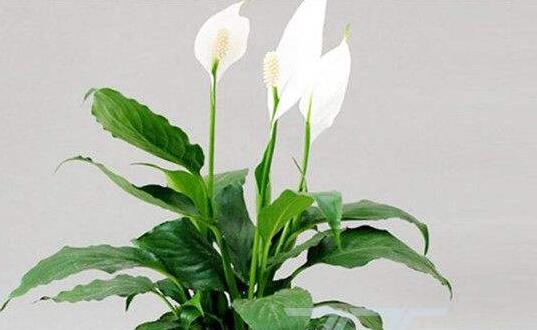
In the prevention and control of common pests and diseases of peace lilies, the most common pests are aphids, whiteflies, thrips and so on. What should you do when the peace lily we grow gets pests? Identifying the type of pest, taking effective pest control measures, and paying attention to later care are especially important.
1. Aphids
Symptoms: Aphids are also called greasy bugs or honey bugs. Their body length is about 1.5-4.9 mm, usually 2 mm. They suck sap through needle-like mouthparts, causing the stems and leaves of peace lilies to curl and wilt. They often appear in spring and autumn.
Control measures: (1) Aphids can be removed with a brush; if the infestation is severe, the branches and leaves need to be cut off; (2) A solution diluted 100 times from 50% malathion emulsion can be sprayed; (3) Carry out later care according to the cultivation methods and precautions for peace lilies.
2. Whiteflies
Symptoms: Whiteflies are pests with black, red or pale yellow wings, and their body length generally does not exceed 3 mm. They are one of the most harmful pests in the prevention and control of common pests and diseases of peace lilies. Their body shape is oval or nearly round. After sucking the sap of peace lilies, they cause the plants to weaken and even die.
Control measures: (1) Remove the whiteflies, using a brush or wooden stick; (2) A high-temperature smothering method can be used, for example keeping the temperature at 45-48 degrees and the humidity above 90%; after 2 hours the whiteflies will basically die; (3) Usually take care not to fertilize too much, and keep the environment well ventilated.
3. Thrips
Symptoms: A pest that is yellow, brown or black, with a body length of about 2 mm. It sucks the sap of the plant's young tissues, especially tender leaves and new buds, which causes peace lilies to curl and wilt and can cause serious damage.
Control measures: (1) Strengthen fertilizer and water management, which can promote more robust growth of peace lilies and reduce the probability of thrips appearing; (2) Use a solution diluted 5000 times from 25% thiamethoxam water-dispersible granules for root drenching; (3) Strengthen later care.
Common diseases of peace lilies
1. Leaf spot
Symptoms: Leaf spot is the most common in the prevention and control of common pests and diseases of peace lilies. Oval or elongated light reddish-brown spots appear on the leaves, surrounded by chlorotic halos, which later expand into irregular large patches, and black dots form on the spots.
Control measures: (1) Cut off the diseased tissue and burn it in a concentrated way; (2) Spray a solution diluted 1000 times from 38% oxadixyl, cymoxanil and copper fungicide, or spray a solution diluted 500 times from 70% mancozeb.
2. Brown spot
Symptoms: The disease starts on the lower leaves and then spreads upward. At first it forms round or oval purple-brown markings, which then turn black. Finally the leaves wither, yellow and fall off, and peace lilies will fail to bloom.
Control measures: (1) In hot and humid weather, apply less nitrogen fertilizer but maintain a certain amount of phosphorus and potassium fertilizer, and avoid watering in the evening; (2) In the early stage of the disease, spray a solution diluted 800 times from mancozeb and zineb, once every 5 days, 3-4 times is enough to prevent the disease from spreading.
3. Anthracnose
Symptoms: At first, water-soaked light green spots appear at the leaf tips or leaf edges, then spread along the leaf veins into translucent irregular spots, and finally change from brown to grayish blue-green.
Control measures: (1) Remove diseased leaves; (2) Spray a solution diluted 1500 times from 50% benomyl wettable powder, or spray a solution diluted 600 times from 25% carbendazim wettable powder.
Common pests and diseases of peace lilies and their control
Common diseases of peace lilies
Brown spot
Brown spot is caused by Phytophthora and mainly exists in the soil. The pathogen invades the plant from the base of the stem. At first, water-soaked spots appear on the leaves, gradually turn brown, and later rot, and the whole plant wilts. The specific control methods are as follows:
(1) In the early stage of the disease, use mancozeb and zineb diluted 800 times for control, once every 4-5 days, for 3-4 consecutive times, which can effectively prevent the disease from spreading.
(2) Use dimethomorph diluted 1500 times + propamocarb hydrochloride diluted 1000 times mixed for spraying, which can effectively control brown spot and damping-off.
Root rot
A fungal disease. The pathogen can infect roots, stems and leaves. Infection of the roots causes the roots to rot. When it infects leaves or stems, brown spots first appear, and as the disease expands, the leaves wilt and fall off, and in severe cases the plant dies. The control methods are as follows:
(1) When root rot is found, promptly clean up the diseased plant. For mild root rot, remove the rotten part and replant; for severe cases, throw it away directly. Promptly clean up dead leaves to avoid infecting other plants.
(2) When the disease occurs, drench the roots with a solution of root rot fungicide diluted 1000 times.
Common pests of peace lilies
Aphids
Aphids mainly suck sap through needle-like mouthparts, causing the stems and leaves of peace lilies to become deformed or curled. There are many suitable insecticides, such as dimethoate, omethoate, imidacloprid, fenvalerate and so on. When pests are found, spray the pesticide promptly; when there are only a few pests, they can be scraped off with a bamboo piece.
Thrips
When thrips infestation occurs, the plant's leaves shrink, growth is slow, and the internodes shorten. Thrips are afraid of strong light and mostly gather in shaded places to cause damage. They are active on the host surface only on cloudy days, in the morning, in the evening and at night, which is also one of the reasons thrips are difficult to control.
When killing thrips, usually choose the evening or early morning; spraying during the day when the insects cannot be seen is ineffective. Commonly used pesticides are acetamiprid, methomyl, imidacloprid and so on.
Reasons peace lilies do not bloom Methods for handling pests and diseases of peace lilies
Many flower growers report that the peace lilies they grow only produce leaves and do not bloom. What are the reasons peace lilies do not bloom, and what methods are there for dealing with pests and diseases? Next, let's study together.
Reasons peace lilies do not bloom
1. Long-term light that is too dim leads to weak growth and makes blooming difficult. But if the sunlight is too strong and direct, the leaves may turn yellow;
2. Peace lilies grow relatively quickly. Generally after 1-2 years the plant will fill the pot, the leaves will be crowded, and it will be difficult to bloom. Therefore, it needs to be repotted in time; usually after repotting, placing it in semi-shade is more suitable;
3. It requires high humidity. When the air is too dry, blooming is unfavorable. Each watering should be thorough to keep the potting soil moist;
4. Not fertilizing for a long time is not conducive to healthy plant growth. During the growing period from May to September, apply some granular compound fertilizer each month, so it will both grow leaves and bloom;
5. Its blooming needs induction. The method is to spray gibberellic acid to artificially induce the plant to bloom. Different varieties bloom at different times;
6. It requires loose, well-drained sandy loam rich in humus.
The blooming of peace lilies is not only a matter of light; it needs induction. The method is to spray gibberellic acid to artificially induce the plant to bloom. Different varieties bloom at different times. Small varieties respond more quickly to gibberellic acid and can bloom 7-9 weeks after spraying, medium varieties need 10-11 weeks, and large varieties need 12-13 weeks. Note that too high a concentration of gibberellic acid will cause the plant's flowers to become deformed. Generally, 1000-1500 times is enough.
Regarding light, when the light is strong, grow it in semi-shade or scattered light. In winter, it is best to give sufficient light conditions, which not only helps the leaves stay dark green but also helps it overwinter.
Methods for handling pests and diseases of peace lilies
(1) Control of bacterial leaf spot, brown spot and anthracnose: They mainly harm the leaves. Spray 50% carbendazim wettable powder diluted 500 times.
(2) Control of root rot and stem rot: Besides paying attention to ventilation and reducing humidity, use 75% chlorothalonil wettable powder diluted 800 times for control. Sometimes scale insects and red spider mites cause damage; use 50% malathion emulsifiable concentrate diluted 1500 times for spraying control.
(3) Control of scale insects: The methods are wiping with a cloth, spraying essential balm or laundry detergent diluted 500 times, spraying methidathion, buprofezin, or Guoguang scale killer, etc. The effects are all good.
Generally, this pest is prone to occur when ventilation is poor. Scale insects suck the sap of ornamental plants and generally do not move. Wiping them off kills them, which is the most environmentally friendly method, but they must be wiped clean.