What to Do When Tea Camellia Leaves Have Pests? Control of 4 Pests and 3 Diseases
As a combination of camellia and plum blossom, the beauty of the tea camellia is beyond doubt. Its beautiful leaves, brilliant flower colors, and enchanting fragrance make people adore it endlessly. However, for certain reasons, the tea camellia can get pests and diseases, which seriously affects its ornamental value. So what should you do when tea camellia leaves have pests? Below is a carefully selected guide to pest and disease control for tea camellias. Read on to find out!
I. What to Do When Tea Camellia Leaves Have Pests: Identify the Pest First
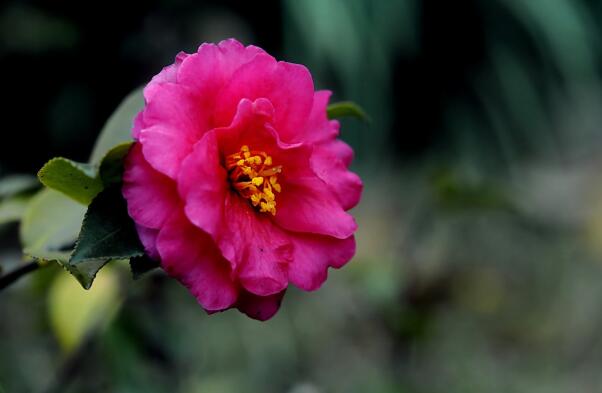
Tea camellias have strong resistance and are theoretically difficult to afflict with pests and diseases. However, if you do not follow the proper cultivation methods for tea camellias, it is quite normal for the leaves to get pests. At this point, do not panic. Instead, first identify the pest, then apply the appropriate pesticide spray. In total, tea camellias have 7 types of pests and diseases, including 4 pests and 3 diseases. Let us continue below for the specific symptoms and control methods.
II. Pest and Disease Control for Tea Camellias
1. Aphids
A type of insect that infests tea camellias. It parasitizes on leaves and sucks sap, mainly harming tender leaves and stems. Once aphids appear, they are densely packed and look quite frightening.
Control method: When there are few aphids, you can remove them manually, such as picking them off with a needle or brushing them off with a tool like a brush. When there are many aphids, spray with a 1200-fold dilution of 2.5% rotenone emulsifiable concentrate.
2. Slug moths
One of the pests and diseases of tea camellias. They generally occur from June to October. The larvae feed on the lower epidermis and mesophyll of leaves, and in severe cases chew until only the upper epidermis remains. Adult slug moths are even more destructive, capable of eating leaves entirely, leaving only the main veins, seriously affecting tea camellia flower bud differentiation, blooming, and ornamental value.
Control method: In the early stage, spray with an 800-fold dilution of 50% fenitrothion emulsifiable concentrate, or use a biological agent Bt aqueous solution at 1000-fold dilution on cloudy days, which gives good control results. In winter, you can dig out cocoons from the soil around the tea camellia and crush them, or remove cocoons from the tree trunk.
3. Scale insects
Another pest of tea camellias. They mainly harm tender leaves by sucking the sap of the plant. Symptoms of infestation: tea camellia leaves turn from green to grayish-green, and finally to yellow, which is also one of the causes of yellowing tea camellia leaves. In severe cases, branches and leaves are covered with scale insects, causing the entire plant to wither and die.
Control method: When there are few scale insects, wash them off with water, or wipe the affected plant with white liquor, vinegar, alcohol, or laundry detergent, which has some effect. When there are many scale insects, use 550% malathion and 40% dimethoate 0.1% solution alternately for spraying, and results will be seen after several applications.
4. Longhorn beetles
This pest is divided into the tea longhorn beetle and the tea black-tarsus longhorn beetle, both of which harm tea camellias. The former mainly bores into the roots and near-ground branches and trunks of tea camellias, while the latter damages above-ground branches and trunks from bottom to top, causing swelling of branches and trunks and death of branches.
Control method: After discovering longhorn beetles, you can manually capture the adults, or spray with an 800-fold dilution of 50% fenitrothion emulsifiable concentrate, or spray Green Weilei to kill the adults.
5. Anthracnose
This disease is one of the common diseases of tea camellias. It generally occurs between June and July and mainly harms mature leaves. Symptoms: water-soaked greenish-brown lesions appear on the leaf margins and tips of tea camellia leaves, then expand into irregular large patches arranged in a layer of small black dots that spread across the entire leaf, ultimately causing tea camellia leaf drop.
Control method: When the above symptoms are found, promptly remove and burn diseased leaves to reduce the source of infection. In the early stage of the disease, spray with carbendazim or an 600-fold dilution of 75% chlorothalonil 2-3 times, or during the bud break and leaf expansion stage, spray with a 600-fold dilution of 12% copper green emulsifiable concentrate 1-2 times.
6. Leaf spot disease
One of the main diseases of tea camellias. In environments with high temperature, high humidity, and poor ventilation, tea camellia leaves are very susceptible to leaf spot disease. Symptoms: pale yellow and reddish-yellow spots appear on the leaves, which then expand into circular or oval shapes.
Control method: When the above symptoms occur and a small number of diseased leaves are found, promptly remove and burn them to reduce the source of infection. In severe cases, use a 1000-1500 fold dilution of emulsifiable concentrate for control, spraying 25% solution 2-3 times at intervals of 7-15 days, and results will be seen after several applications.
7. Sooty mold
One of the pests and diseases of tea camellias. It generally occurs in environments with high temperature, high humidity, and poor ventilation. Symptoms: leaves and branches of tea camellias are covered with a layer of black soot-like substance, affecting leaf photosynthesis and respiration, causing poor growth and early leaf drop.
Control method: When the above symptoms are found, use a 600-fold dilution of 50% carbendazim or a 600-fold dilution of 70% mancozeb and spray alternately. Results will be seen after 2-3 applications.
What to Do When Bougainvillea Has Pests: Pest and Disease Control for Bougainvillea / 2 Pests and 3 Diseases
Bougainvillea, a very beautiful plant, is kept in the homes of many flower enthusiasts. Many people online who grow bougainvillea say it rarely gets pests, but that is what experienced growers say! If you are a beginner, pests may come knocking due to certain things not being done properly. So what should you do when bougainvillea has pests? Below is a compiled guide to pest and disease control for bougainvillea. Let us take a look together.
I. When Bougainvillea Has Pests, Spray with Pesticide
Generally speaking, bougainvillea does get pests fairly often. But if you do not follow the proper cultivation methods for bougainvillea, or if you handle things improperly, it will get pests and diseases. Flower enthusiasts must be very anxious! As for what to do when bougainvillea has pests, it is actually quite simple. First identify which pest it is, then address it accordingly. Below is the pest and disease control for bougainvillea, with a total of 2 pests and 3 diseases. Let us continue reading.
II. Pest and Disease Control for Bougainvillea
1. Scale insects
Scale insects, one of the pests of bougainvillea. The insects you see on bougainvillea are basically these. It is known that they often appear on leaves, mainly harming tender leaves by sucking the sap of the plant.
Reasons for scale insect appearance: In environments with poor lighting, inadequate ventilation, and high temperature and high humidity, various scale insects are prone to infest.
Symptoms of infestation: Many small white bumps appear on bougainvillea leaves, and the color changes from green to grayish-green, and finally to yellow, which is also one of the causes of yellowing bougainvillea leaves. In severe cases, branches and leaves are covered with scale insects, causing the entire plant to wither and die.
Solution: When there are few scale insects, you can directly scrape them off or pick them off with a toothpick. When there are many scale insects, use a 1000-fold dilution of 45% malathion emulsifiable concentrate and 40% dimethoate 0.1% solution alternately for spraying.
2. Aphids
Besides scale insects, aphids are also a pest of bougainvillea, and they appear very frequently. If you see insects with transparent wings and very black bodies, those are basically aphids.
Symptoms of infestation: Aphids mainly harm the tender leaves and stems of bougainvillea. Especially when leaves are unfolding, aphids parasitize on the leaves and suck sap. Once aphids appear, they are densely packed and look quite frightening.
Flower enthusiast's method: For aphids, you can spray some laundry detergent solution, at a concentration slightly stronger than what you normally use for washing clothes, once or twice a day, and results will show in two to three days.
Expert's method: When aphid infestation is found, spray with a 1200-fold aqueous dilution of dichlorvos, or use tobacco leaf water to kill them: add 50 grams of tobacco leaves to 5 kg of water and boil.
3. Leaf spot disease
One of the main diseases of bougainvillea. It generally appears in late autumn when the weather turns cold, harming the plant's leaves. Symptoms: In the early stage, yellow-brown lesions appear on the leaves with a yellow-green halo around them. In the middle stage, the lesions expand into circular or oval shapes with dark brown edges. In the late stage, small black dots appear on the lesions, and the leaves will then dry up and fall off.
Control method: In the early stage of the disease, you can apply miconazole nitrate cream ointment to the diseased leaves of bougainvillea, and prune away branches with more severe infection. In severe cases, spray with a 500-fold dilution of 50% carbendazim wettable powder, once every 7-10 days, for 3-4 consecutive times, with very good results.
4. Brown spot disease
Another disease of bougainvillea. It mainly harms bougainvillea leaves. Symptoms: Yellow-brown to light brown lesions with a diameter of 0.1-0.5 cm form on diseased leaves.
Control method: When the above symptoms are found, promptly remove diseased leaves and burn them in a centralized manner to reduce the source of infection. In the early stage of the disease, spray with a 400-fold dilution of 70% mancozeb wettable powder, once every 10 days, for 3-4 consecutive times, with good control results.
5. Dieback
This disease harms the buds, leaves, shoot tips, and branches of bougainvillea, causing dieback. Moreover, dieback can also harm the rhizome causing rot, harm the sapwood causing blue staining, and in severe cases cause pine trees to wither and die.
Control method: Promptly remove dead branches and diseased leaves, pay attention to ventilation to reduce the spread of the source of infection. When the disease occurs, use dimethoate, thiophanate, or similar solutions for control.
That is all for the pest and disease control of bougainvillea. I believe everyone now knows what to do when bougainvillea gets pests or diseases! In general, bougainvillea is rarely troubled by pests and diseases, so to avoid unnecessary trouble, it is best to care for them carefully. Finally, may everyone's bougainvillea bloom beautiful flowers.
What to Do When Camellia Has Pests: Pest and Disease Control for Camellias / 4 Pests and 3 Diseases, Spray with Pesticide
As one of China's top ten famous flowers, the beauty of the camellia is beyond doubt. Its beautiful flowers, vivid colors, and enchanting fragrance make people adore it endlessly. However, if you do not follow the proper cultivation methods for camellias, the plant will get pests and diseases, seriously affecting its ornamental value. So what should you do when camellias have pests? Below is a carefully selected guide to pest and disease control for camellias. Read on to find out!
I. What to Do When Camellias Have Pests: Identify the Pest First
The beauty of camellias lies in their beautiful appearance. If pests and diseases damage their appearance, it is truly distressing. So how do you deal with camellias getting pests? At this point, you should identify the pest, then apply the appropriate pesticide spray. In total, camellias have 7 types of pests and diseases, including 4 pests and 3 diseases. Let us continue below for the specific symptoms and control methods.
II. Pest and Disease Control for Camellias
(1) Pests of Camellias
1. Red spider mites
One of the main pests of camellias. They mainly harm the underside of leaves, surviving by sucking the sap of camellia leaves. Symptoms of infestation: The plant will become nutritionally imbalanced, and camellia leaves may turn yellow or even drop off.
Control method: When red spider mites are found, rinse the entire camellia plant thoroughly with a strong stream of water, then spray with a 2000-fold dilution of 20% dicofol emulsifiable concentrate. Results will be seen after several consecutive applications.
2. Aphids
A type of insect that infests camellias. It parasitizes on leaves and sucks sap, mainly harming tender leaves and stems. Once aphids appear, they are densely packed and look quite frightening. Moreover, the honeydew secreted by aphids attracts ants and can trigger sooty mold or other fungal diseases.
Control method: When there are few aphids, you can remove them manually, such as picking them off with a needle or brushing them off with a tool like a brush. When there are many aphids, spray with a 1200-fold dilution of 2.5% rotenone emulsifiable concentrate.
3. Scale insects
Another pest of camellias. They mainly harm tender leaves by sucking the sap of the plant. Symptoms of infestation: Camellia leaves turn from green to grayish-green, and finally to yellow. In severe cases, branches and leaves are covered with scale insects, causing the entire plant to wither and die.
Control method: When there are few scale insects, wash them off with water, or wipe the affected plant with white liquor, vinegar, alcohol, or laundry detergent, which has some effect. When there are many scale insects, use 550% malathion and 40% dimethoate 0.1% solution alternately for spraying, and results will be seen after several applications.
4. Leaf roller moths
This insect has a small body and is one of the main pests of camellias. Its larvae bite and feed on new buds, tender leaves, and flower buds of the plant, leaving only the epidermis in a net-like pattern, and cause leaves to curl longitudinally, hiding inside the leaves to continuously harm the plant, seriously affecting plant growth and blooming.
Control method: When there are few leaf roller moths, you can manually remove the curled leaves and crush the insects. During the larval stage of leaf roller moths, spray with a 1000-fold dilution of 75% phoxim at night. During the adult stage, you can use a sugar-vinegar solution (made with 5 parts sugar, 5 parts liquor, and 80 parts water) for trapping and killing. Harm·.
(2) Diseases of Camellias
1. Anthracnose
This disease is one of the common diseases of camellias. It generally occurs between June and July on the leaves of that year's seedlings. Symptoms: Water-soaked greenish-brown lesions appear on the leaf margins of camellias, then expand into irregular large patches arranged in a layer of small black dots that spread across the entire leaf, ultimately causing leaf drop.
Control method: When the above symptoms are found, promptly remove and burn diseased leaves to reduce the source of infection. In the early stage of the disease, spray with a 1000-1500 fold dilution of 70% thiophanate-methyl wettable powder for control.
2. Leaf spot disease
One of the main diseases of camellias. In environments with high temperature, high humidity, and poor ventilation, camellia leaves are very susceptible to leaf spot disease. Symptoms: Pale yellow and reddish-yellow spots appear on the leaves, which then expand into circular or oval shapes. If the environment is relatively humid, black granular substances may appear on the lesions, and the leaves will later dry up and fall off.
Control method: When a small number of diseased leaves are found, promptly remove and burn them to reduce the source of infection. In severe cases, use a 1000-1500 fold dilution of emulsifiable concentrate for control, spraying 25% solution 2-3 times at intervals of 7-15 days, and results will be seen after several applications.
3. Sooty mold
This disease can harm the branches and leaves of camellias, with leaves being more noticeably affected. In the early stage of the disease, soot-like small mold spots appear on camellia leaves, then gradually expand and connect into patches, covering most of the plant with a soot-like mold layer, seriously affecting the plant's photosynthesis and respiration, resulting in camellia leaf drop.
Control method: When the above symptoms are found, spray with a 0.3 degree Beaume lime sulfur mixture, once every 10-15 days, for a total of 3-4 sprays. In addition, you can also spray with a 500-fold dilution of 50% thiophanate wettable powder, once every 7-10 days, and results will be seen after 3 sprays.