What to Do When Anthurium Gets Pests? 8 Methods to Prevent and Control Common Pests and Diseases
When growing anthuriums, the most feared problem is pests and diseases, because many people do not understand them and have no idea how to prevent or control them, so they often feel at a loss. So what should you do when anthurium gets pests? Today we will give you a detailed introduction to common pest and disease control methods for anthurium.
What to Do When Anthurium Gets Pests
Pests on plants are an abnormal phenomenon, and when anthurium gets pests, what should you do? First determine the type of pest, then handle it according to common pest and disease control methods for anthurium. The pests that often appear on anthurium are mainly red spider mites, nematodes, scale insects and thrips.
1. Red spider mites
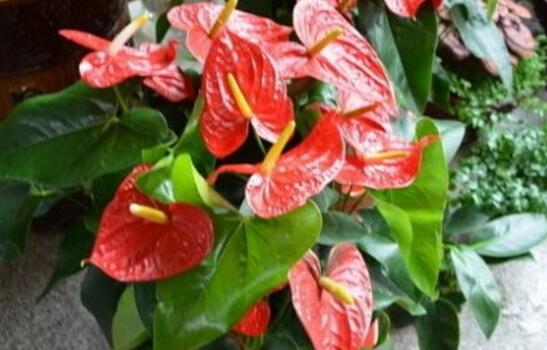
Symptoms: Very tiny red insects appear on the leaves, difficult to see with the naked eye; the leaves and flowers gradually fade and progressively turn white.
Treatment: Brush off the red spider mites with a brush and spray chemicals for control. Generally, agents such as dicofol, cyfluthrin and dicofol are diluted and sprayed. If the pest infestation is severe, the branches and leaves need to be cut off and burned, and usually take care that the temperature is not too high.
2. Nematodes
Symptoms: Gallbladder-like swellings appear on the roots, and brown spots are produced. If not treated in time, they may cause root rot.
Treatment: Among common pest and disease control methods for anthurium, nematodes are one of the more common ones. Prevention is generally needed before planting, such as disinfecting the soil, etc. When pest damage occurs, insecticides purchased at a flower shop can be used to drench the roots of the plant.
3. Scale insects
Symptoms: Brown spots appear on the leaves; in severe cases the leaves are covered with pests, the plant grows slowly, and the leaves may even turn yellow.
Treatment: Place the anthurium in a well-ventilated spot with a temperature of around 25 degrees for care, spray with a fungicide, and usually take care to water appropriately and keep the humidity and temperature of the environment moderate.
4. Thrips
Symptoms: White, yellow or black thrips appear on the leaves; they attach to the leaves and suck plant sap or fungi. They mostly appear from June to September, and the leaves gradually turn black.
Treatment: A dedicated agent can be used for spraying and killing. If the situation is severe, all the branches need to be cut off to prevent other branches and leaves from being infected.
Common Pest and Disease Control for Anthurium
1. Leaf blight
Symptoms: It generally occurs from July to October. When the disease strikes, it starts from the leaf margins and leaf tips, initially as irregular reddish-brown to grayish-brown lesions, which then connect into large blighted patches. The dried area may account for more than half of the leaf surface.
Treatment: ① In autumn, thoroughly remove diseased fallen leaves and burn them in a centralized manner; ② Understand the cultivation methods and precautions for anthurium, use well-drained fertile soil, and pay attention to fertilizing and watering; ③ Spray with a 1000-fold solution of 50% carbendazim wettable powder.
2. Root rot
Symptoms: The roots rot, the leaves turn yellow and then wither. The cause is root rot caused by fungi, which reduces the roots' ability to absorb water and nutrients, eventually causing the whole plant to die. It generally occurs from March to May.
Treatment: ① Disinfect the soil when planting; hymexazol and other agents can be used for disinfection, which can prevent many diseases; ② When the disease occurs, metalaxyl-hymexazol or copper preparations can be used to drench the roots; ③ Pay attention to routine care and keep the environment moderate.
3. Anthracnose
Symptoms: Round brown lesions form along the leaf veins; the lesions gradually connect to form large brownish-yellow lesions, and finally the whole plant dries up and dies.
Treatment: ① Dilute captan or mancozeb with clean water and spray the plant; once every 7 days, generally 2-3 times is enough; ② Remove diseased leaves or diseased plants, strengthen care and management, and pay attention to environmental hygiene.
4. Leaf spot disease
Symptoms: The lesions on the leaves are round, then expand into irregular shapes and produce concentric rings. The lesions change from reddish-brown to dark brown, with a grayish-brown center. On the stems and petioles, the lesions are brown and elongated.
Treatment: ① Cut off the diseased tissue and burn it in a centralized manner to prevent other plants from being infected; ② Spray with an 80% mancozeb solution diluted to 600 times, or spray with a 50% captan solution diluted to 500 times.
Common Pest and Disease Control for Anthurium
Potted anthuriums sometimes show premature flower aging, deformity, adhesion, cracking, vitrification and blue spots. These are mostly physiological diseases caused by improper management of fertilization, potting soil and air humidity, or by variety reasons. The way to prevent them is to improve cultivation management, fertilize reasonably and ventilate appropriately.The main pests and diseases of potted anthurium include bacterial wilt, leaf spot disease, root rot, Cylindrocarpon, Cylindrocladium, nematodes, red spider mites, aphids, lepidopteran pests, whiteflies, scale insects, snails, etc.
Anthracnose is one of the common diseases of anthurium. The pathogen is a fungus of the genus Gloeosporium or Colletotrichum. The former's symptom is the formation of round brown lesions along the leaf veins; afterward the lesions connect to form large lesions with brownish-yellow edges, and the diseased part finally dries up. The latter is similar to the former, with black setae growing on the acervuli, and it also causes flower rot, forming black necrotic spots on the spadix. High humidity is the main cause of this disease. The control methods are chemical control and strengthened cultivation management: ventilate and let in light frequently, avoid water or air-conditioning condensate splashing on the leaves, and promptly remove diseased leaves.
Damage symptoms of red spider mites: They mainly cause the leaves and flowers to fade, affecting the marketability of the leaves and flowers. Chemical control can be sprayed in the early stage of damage; the control agents include dicofol, dicofol, omethoate and cyfluthrin, etc.
Bacterial wilt is a bacterial disease caused by Xanthomonas, which can infect leaves and the spadix. In the early stage of the disease, water-soaked, semi-transparent irregular small spots form on the leaves, then turn black with a bright yellow edge, and the area around the lesions loses green color. The pathogen can cause systemic infection, manifested as old leaves turning yellow, petioles breaking, and vascular bundles turning yellow. The control methods are to strengthen cultivation management, supplement with chemical control, promptly remove diseased plant residues and burn them. During cultivation management, minimize artificial wounds and minimize the use of ammonium nitrogen fertilizer. Generally, agricultural streptomycin or new plant mycin is sprayed in the early stage of the disease.
Bacterial leaf spot disease
The symptoms are of one type on the leaves and flowers: in the early stage, water-soaked spots can be seen on the back of the leaves and flowers, and later brown spots appear on the leaf margins, accompanied by yellow halos. The other type is bacterial infection that starts on the stems and rapidly expands to the whole plant through vascular bundle infection of cells. In the early stage, the new leaves can be seen to have a dull leaf color, because the vascular bundles are blocked by bacteria, hindering the flow of water and the transport of nutrients within the plant, making the leaf color dull and the leaves yellow. In a relatively short time, this type of infection will cause the peduncle and leaves to fall from the plant, and the growing point rapidly rots with bacterial ooze flowing out.
There is no specific cure for bacterial diseases, so prevention is mainly the focus:
Environmental prevention: Strengthen the control of greenhouse temperature (the ideal reproduction condition for bacteria is around 30 degrees), the sanitary environment, and the movement of personnel and work tools in the production area, etc.
Fertilizer prevention: Try not to use nitrogen fertilizer in the high NH4 form during plant growth. Remove or isolate diseased plants.
Leaf blight nematode disease is caused by nematodes of the genus Aphelenchoides, mainly infecting the roots and leaves. The symptoms are necrotic spots or brown spots formed along the leaf veins, the roots swell, and finally the entire leaf dries up. The control methods are mainly strengthening seedling quarantine, selecting robust seedlings, and properly disinfecting the cultivation substrate.
What Common Pests and Diseases Does Anthurium Have? Common Pest and Disease Control Techniques for Anthurium
Recently, the editor found in the backend that many flower grower friends were consulting about anthurium cultivation problems. After summarizing, it was found that the most consultations were about anthurium pest and disease control. Below, the editor brings you common control techniques for leaf and flower pests and diseases of anthurium for reference!
1 Bacterial leaf blight
You can choose 90% new plant mycin 1000-fold solution, or 80% ethylicin 5000-fold solution, or 72% streptomycin sulfate 4000-fold solution, or 10% kukuning 1200-fold solution to spray the leaves. The above agents are used once every 5-7 days; alternating use gives better results.
2 Bacterial rot
Choose new plant mycin 1000-fold solution, or miejuncheng 1000-fold solution, or agricultural streptomycin 4000-fold solution, or Tianwei No. 3 3500-fold solution, or ningnanmycin 800-1000-fold solution, or zhongshengmycin 1000-fold solution, or thiazole copper 500-fold solution, or oxytetracycline 3000-4000-fold solution, etc. for control.
3 Fungal anthracnose
You can use 75% chlorothalonil 800-fold solution, or 70% thiophanate-methyl 1000-fold solution, or 60% Baitai 2500-fold solution, or 25% propiconazole 2000-fold solution, or 50% Shibaogong wettable powder, or 50% Shibaike wettable powder 1000-fold solution, 25% Tanteling wettable powder 500-fold solution, 60% Tanbiling wettable powder 600-fold solution, 10% Shigao water-dispersible granules 3000-fold solution, 25% bromothalonil emulsifiable concentrate 300-500-fold solution, or ShibaoKe 2000-fold solution for control. Any of the above agents should be sprayed about once every 10 days.
4 Fungal black spot disease
You can use 10% Shigao 3000-fold solution, or 70% thiophanate-methyl 1000-fold solution, or 250 g/L Kairun 3000-fold solution for control.
5 Fungal gray mold
After tissue-cultured seedlings are transplanted, immediately spray 60% Fangmeibao No. 2 water-soluble powder 700-800-fold solution. Before and after flowering, you can choose 36% thiophanate-methyl suspension concentrate 500-600-fold solution, 65% thiophanate wettable powder 1000-1500-fold solution, 50% mie mei ling wettable powder 900-fold solution, 50% iprodione wettable powder 1500-fold solution, 50% procymidone wettable powder 1500-fold solution, 65% thiophanate-methyl and procymidone wettable powder 1000-fold solution, or 60% Baitai 2500-fold solution, or 10% Shigao 3000-fold solution, or 25% ShibaoKe 2000-fold solution for control.
6 Viral disease
You can use 1.8% abamectin 2000-fold solution, or 25% acetamiprid 4000-fold solution, or 4% Bolian biological bacterial agent 200-fold solution for control.
7 Leaf-eating pests
These pests mainly include lepidopteran pests such as noctuid moths and bridge worms. You can choose 20% diflubenzuron suspension concentrate 3000-6000-fold solution, diafenthiuron, or indoxacarb 15% Anda suspension concentrate for control.
8 Comprehensive Control Measures for Leaf and Flower Pests and Diseases of Anthurium
In addition to the above chemical control, attention should also be paid to the following aspects for comprehensive control of leaf and flower pests and diseases of anthurium.
8.1 Strengthen the control of temperature, humidity and light in the greenhouse.
The optimum growth temperature for anthurium is 20°C-28°C; the maximum temperature should not exceed 35°C, and if the minimum temperature is below 10°C, frost damage may occur. The optimum relative air humidity is 75%-80%, and it should not be lower than 50%.
Maintaining relatively high air humidity in the cultivation environment is the key to successful anthurium cultivation. Temperature and humidity should be controlled throughout the year, and the plants should be kept dry. It is suitable to cultivate in an appropriately shaded environment all year round; in spring, summer and autumn, appropriate shading should be provided, especially in summer when more than 70% shading is needed.
8.2 Strengthen water and fertilizer management
Pay attention to disinfecting irrigation water as much as possible, and when applying it together with nutrient solution, drip irrigation is best. At the same time, take care that the leaf surface does not remain wet, to reduce the breeding of pathogens. When fertilizing, reduce the amount of ammonium nitrate, which can reduce the nutrients for bacterial growth and development. The pH of the cultivation substrate should be maintained at around 5.5.
8.3 Strict management of the planting area
Strict quarantine: it is forbidden to use plants or tissues carrying pathogenic microorganisms. Sanitary measures should be strengthened: set up a disinfection pool at the entrance of the planting area, wash hands with disinfectant, strengthen the disinfection management of work tools, and all personnel entering and leaving must disinfect their clothes, shoes, etc.; at the same time, strengthen personnel management and minimize personnel replacement and movement. Diseased plants, tissues and substrate should be discovered and removed in time, placed in sealed plastic bags and taken out of the park for destruction.
8.4 Advocate biological control and timely chemical control
Try to choose bionic preparations such as urea-based and antibiotic pesticides, and avoid the use of chemical pesticides for control. Anthurium is relatively sensitive to copper preparations and some organophosphorus pesticides, so when choosing chemical control, try to avoid chemical pesticides with strong pollution and sensitivity to the plant body.
The above are the control measures for common pests and diseases of anthurium. Flower grower friends, come and learn! You are welcome to put forward more experiences and methods and exchange them with other flower growers!