What to Do When Saxifraga Gets Pests? Use These 2 Spraying Techniques to Control Pests and Diseases
Normally, the leaves of Saxifraga are green or red-purple, but if pests or diseases appear, the leaves may turn yellow and fall off. So what should you do when Saxifraga gets pests? Getting rid of the pests and changing your care routine is the priority. Next, the editor will introduce several common pest and disease control methods for Saxifraga.
What to Do When Saxifraga Gets Pests
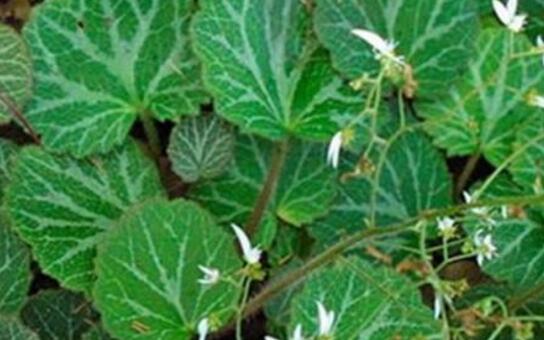
If the environment is humid and cool, Saxifraga generally grows quite normally, but changes in environment or improper care can inevitably occur, which may result in pests appearing on the leaves. So what should you do when Saxifraga gets pests? Both pest control and preventive measures are essential, and the main pests currently harming Saxifraga are mealybugs and whiteflies.
1. Mealybugs
Symptoms: Something like spider webs appears on the leaf surface, the leaves shrivel and dry up with only the veins still distinguishable, and white pests appear on the underside of the leaves. This is what people commonly call mealybugs.
How to control: Leaves that have already withered and turned yellow should be cut off promptly. For partially infected leaves, a 40% Supracide emulsifiable concentrate diluted to a 1500-fold solution can be sprayed; alternatively, a 25% Ikashi emulsifiable concentrate diluted to an 800-fold solution can be sprayed.
Precautions: When buying Saxifraga, inspect it carefully. The soil and containers used for potting should be disinfected. Potting soil that has been dried in the sun can effectively kill insect eggs and mother bodies.
2. Whiteflies
Symptoms: Yellowish-white spots of lost chlorophyll appear on the leaves, then the spots spread into patches, after which the leaves turn pale and fall off. What should you do when Saxifraga drops its leaves? Below are the detailed methods.
How to control: ① Spray a 20% Buprofezin wettable powder diluted to a 1500-fold solution; ② Spray a 25% Propargite emulsifiable concentrate diluted to a 1000-fold solution; ③ Spray a 10% Imidacloprid wettable powder diluted to a 1500-fold solution.
Precautions: Whiteflies should be controlled promptly when they appear. Spray the solution once every 10 days; generally 2-3 times is enough to eliminate the pests, but you must still pay attention to care afterward, otherwise the pests may come back.
Pest and Disease Control for Saxifraga
Leaves are the main organ through which Saxifraga breathes. Once disease appears, the result is that Saxifraga cannot breathe properly. Its common diseases are mainly two kinds, namely gray mold and powdery mildew, so pest and disease control for Saxifraga focuses mainly on these two.
1. Powdery Mildew
Symptoms: Powdery mildew usually occurs on the leaves, tender stems, flower stalks, flower buds, petals and other parts of Saxifraga. At first there are irregular yellow-green small spots, then the spots expand, followed by white powdery patches, and finally numerous black dots appear; the leaves shrivel and become smaller, turning grayish-white or dirty white in color.
How to control: ① During regular care, chlorothalonil can be sprayed on the stems for prevention; ② When powdery mildew appears, a 15% triadimefon diluted to a 1000-fold solution can be sprayed; ③ You can also use baijiu with an alcohol content of 35% diluted to a 1000-fold solution and spray once every 3-6 days, adjusting according to the infection situation, until the white powdery patches disappear.
2. Gray Mold
Symptoms: Semi-circular, circular or irregularly shaped spots appear on the edges of Saxifraga leaves, dark green or brown in color; the spots gradually spread, eventually causing the entire leaf to turn black-brown or even rot, and a gray mold layer appears on the infected area.
How to control: ① Cut off diseased leaves, replace the potting soil, strengthen care, make the environment more ventilated, and increase soil moisture; ② Spray a 28% Huimeike wettable powder diluted to an 800-fold solution, and when spraying, do not let the solution touch the leaf center.
Summary: Pest and disease control for Saxifraga should actually focus on prevention, and prevention requires developing good habits during regular planting. If the environment where Saxifraga is kept undergoes major changes, be sure to check whether the environment is suitable for its growth; otherwise, it should be moved elsewhere for cultivation.
An Introduction to Several Pests and Diseases of Saxifraga, and Their Control Methods
How much do you know about Saxifraga? Saxifraga is an evergreen flower with scale-like leaves and flowers in two colors, red and pink, making it an excellent potted flower. It is not only an ornamental plant, but the whole plant can also be used as medicine. Today, the editor will guide everyone through an introduction to pest and disease control methods for Saxifraga.1. Gray Mold
(1) Symptom Manifestation
Gray mold mainly harms the leaves. The spots often occur along the leaf margins, semi-circular or circular to irregular, water-soaked, dark green to brown. When humidity is high, the diseased area expands rapidly; in severe cases, the entire leaf turns black-brown and rots, and a gray mold layer grows on the diseased area.
(2) Control Methods
Once diseased spots are found, promptly cut off the diseased leaves. Strengthen ventilation and keep the soil and growing space at suitable humidity. For chemical control, a 28% Huimeike wettable powder 800-fold solution can be used. When spraying the chemical, be careful not to spray it onto the leaf center, to avoid causing the plant's leaf center to turn black.
2. Powdery Mildew
(1) Symptom Manifestation
Powdery mildew occurs on leaves, tender stems, flower stalks, flower buds, petals and other parts. In the early stage, there are irregular yellow-green small spots with indistinct edges. The diseased spots then continuously expand, white powdery patches grow on the surface, and finally countless black dots grow in that area.
The infected area turns gray, covering the surface in patches with indistinct edges, appearing dirty white or pale grayish-white. When damage is severe, the leaves shrivel and become smaller, the tender shoots twist and become deformed, and the flower buds do not open.
(2) Control Methods
During the growing period, chlorothalonil can be sprayed for prevention, brushed onto the plant stems. When the disease is prevalent, you can spray a 15% triadimefon 1000-fold solution, a 2% antimycin aqueous solution 200-fold solution, or a 10% polyoxin 1000 to 1500-fold solution. Because traditional chemicals used repeatedly cause the pathogen to develop antibodies and their effectiveness drops sharply, alternating use is recommended.
In addition, you can also use baijiu (alcohol content 35%) 1000-fold solution, spraying once every 3 to 6 days, for 3 to 6 consecutive sprays, washing the leaves until there is no white powder left.
3. Mealybugs
(1) Pest Manifestation
Females and larvae cluster on the underside of leaves and suck the sap. Males have wings and can fly. Leaves that have been sucked appear as if they have grown spider webs, and the leaves shrivel and dry up with only some veins left, looking very unsightly. Mealybugs have white sticky powder on the outside of their bodies, which can contaminate the leaf surface and induce other diseases.
(2) Control Methods
In dealings such as purchasing, introducing, transporting and gifting Saxifraga, careful inspection should be carried out to prevent pests from being brought in, so as to prevent their spread. Choose the most suitable potting medium and disinfect it scientifically. For example, composted culture soil and other organic matter must be fully fermented and disinfected by high temperature or chemicals to kill insect eggs or breeding mother bodies. During the peak hatching period of nymphs, spray or root-drench with a 40% Supracide emulsifiable concentrate 1000 to 1500-fold solution, or a 25% Ikashi emulsifiable concentrate 700 to 800-fold solution.
4. Whiteflies
(1) Pest Manifestation
Nymphs pierce and suck the sap of leaves, fruits and tender branches. Affected leaves show yellowish-white spots of lost chlorophyll, and as the damage worsens the spots spread into patches, and then the whole leaf turns pale and falls early; affected fruits have reduced flavor and quality, and young fruits often drop when severely damaged. The honeydew they excrete can induce sooty mold.
(2) Control Methods
Early-stage pest control: Begin spraying when whiteflies occur sporadically, using a 20% Buprofezin wettable powder 1500-fold solution, or a 25% Propargite emulsifiable concentrate 1000-fold solution, a 2.5% Uranus emulsifiable concentrate 3000-4000-fold solution, a 2.5% Kung Fu cypermethrin emulsifiable concentrate 2000-3000-fold solution, a 20% Nissorun emulsifiable concentrate 2000-fold solution, or a 10% Imidacloprid wettable powder 1500-fold solution, once about every 10 days, for 2-3 consecutive treatments.
The above is my compilation of several pests and diseases of Saxifraga, along with their control methods. I hope it can be helpful to the many flower lovers out there, and please continue to follow Duorou Huapu to learn more about flower care knowledge.
Control of the Main Pests and Diseases of Saxifraga
The diseases includegray mold, leaf spot disease, powdery mildewandrust disease. A 65% zineb 500-fold solution can be used to control gray mold and leaf spot disease, and a 15% triadimefon 800-fold solution can be used to control powdery mildew.
The main pests aremealybugsandwhiteflies。