What to Do When Violets Get Bugs? Detailed Pest and Disease Prevention and Control Methods
Although violet flowers are beautiful, the prerequisite for enjoying this beautiful sight is that they can grow healthily and bloom. If pests and diseases occur due to improper violet cultivation methods, it will undoubtedly cause huge harm to the violets. So what should you do if violets get bugs? Today I will introduce the commonly used pest and disease prevention and control methods for violets.
What to Do When Violets Get Bugs
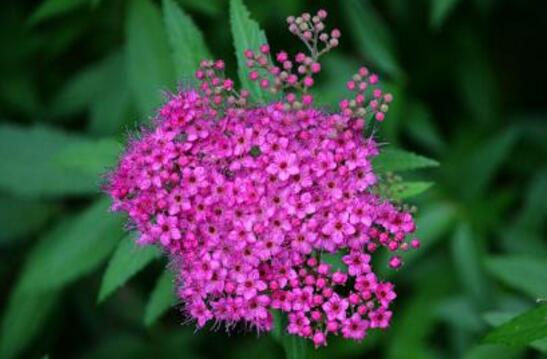
If there is a lack of management in violet growth, it often leads to some negative consequences, and getting bugs is one of them. So what should you do when violets get bugs? You should figure out which type of bug it is and take effective removal measures. Currently, the two common pest problems on violets are aphids and root-knot nematodes. Below is mainly an introduction to the prevention and control of these two pests.
1. Aphids
Aphids appear on many kinds of plants. Violet leaves, tender shoots, and flower buds are also among aphids' favorite places. They use their mouthparts to pierce into the plant tissue and suck out sap, then leave black spots or yellow spots on the leaves and flower buds, which then causes leaf drop, prevents flower buds from blooming, and can even cause the violets to die.
What to do: Spray a solution made by diluting 40% dimethoate or omethoate to 1500 times; or spray a solution made by diluting fenvalerate to 3000 times.
2. Root-knot nematodes
Their main method of spread is through irrigation, such as soil carrying the pathogen, and so on. Once the potting soil contains root-knot nematodes, the violets will soon be infected, so measures should be taken as early as possible.
What to do: At this point, what should you do when violets get bugs? Disinfect the soil before planting. If root-knot nematodes are found, they must be treated with chemicals, and chemical pesticides can be used for prevention and control.
Prevention and Control of Violet Pests and Diseases
1. White rust
Symptoms: If a plant develops white rust, its leaves will first turn yellow, then brown, and colorless chain-like spores will be produced under the epidermis. The prevention and control of this violet pest and disease is as follows.
How to prevent and control: During routine care, spray 3-4 degrees Baume lime sulfur mixture for prevention; if the disease appears, spray a solution made by diluting 65% zineb wettable powder to 600 times.
2. Violet wilt disease
Symptoms: The plant becomes shorter, obvious vein patterns appear on the leaves of young plants, and on larger plants it causes the leaves to droop.
How to prevent and control: Pay attention to soil disinfection. When the disease occurs, spray a 1000-times potassium permanganate solution. Severely infected diseased plants should be burned promptly to avoid spreading to one another.
3. Verticillium wilt
Symptoms: The lower leaves turn yellow and wilt, the diseased plant becomes severely stunted, and the vascular bundle tissue changes color rapidly.
How to prevent and control: The same as for wilt disease, spray a 1000-times potassium permanganate solution and burn severely infected diseased plants.
4. Downy mildew
Symptoms: The leaves wilt and droop, and even the whole plant dies. It is usually caused by poor drainage and overly dense planting.
How to prevent and control: Avoid planting too densely. If downy mildew appears, spray the new fungicide ethaboxam 3, with a concentration of 2—3 grams of pesticide per liter of water.
5. Leaf spot disease
Symptoms: Yellow or brown spots appear on the leaves. It is usually caused by poor ventilation and excessively high humidity.
How to prevent and control: Spray a solution made by diluting 1% Bordeaux mixture to 300 times; you can also spray a solution made by diluting 25% carbendazim wettable powder to 600 times.
6. Violet blight
Symptoms: Large round spots appear on the leaves, soft rot occurs when moist, and they appear pale blue-white when dry and easily crack late; stems show water-soaked, dark green symptoms when affected, and the diseased area is generally constricted, but the vascular bundles do not change color, and the leaves above the affected part wilt; when seedlings are infected, the growing point often appears dark green and water-soaked, and after soft rot they die and appear as dry tips.
How to prevent and control: Select disease-resistant violet varieties, adopt crop rotation cultivation management, and apply medication to diseased plants at the same time.
7. Rot disease
Symptoms: Rot appears on the roots or leaves. It is generally caused by environmental factors such as insufficient light, excessive watering, and high humidity.
How to prevent and control: Control the amount of watering, pay attention to environmental sanitation, and increase light and ventilation.
8. Damping-off
Symptoms: Seedlings grow weakly. It generally occurs when the temperature is relatively high and planting is too dense.
How to prevent and control: In the early stage, spray a solution made by diluting 50% amobam aqueous solution to 400 times; in severe cases, irrigate with a solution made by diluting 70% thiophanate-methyl wettable powder to 1000 times.
Summary: The prevention and control of violet pests and diseases is something everyone who grows them should understand. As the saying goes, prevent trouble before it happens. Even if the violets you grow have not developed diseases, you must not neglect preventive work, because this affects their health and even their death.
What to Do When African Violets Get Bugs, Pest and Disease Prevention and Control for African Violets / 2 Pests and 3 Diseases
As a beautiful flower, African violets have many benefits. They are not only good-looking, but can also repel mosquitoes and insects, and can beautify the home. However, when grown indoors, because the environment is too poor and care is improper, the plants often get bugs and diseases. So what should you do when African violets get bugs? The following are several common pest and disease prevention and control methods for African violets. Let's take a look together!
I. African Violets Getting Bugs
Growing African violets indoors is actually not prone to bugs and diseases, but when operational mistakes lead to high air humidity, insufficient light, and poor ventilation, they are also prone to diseases and pests such as wilt disease, powdery mildew, leaf rot, scale insects, and red spider mites, which will seriously affect the ornamental value of the plants. In response, everyone should promptly spray pesticides for prevention and control after discovering them.
II. Pest and Disease Prevention and Control for African Violets
1. Scale insects
Scale insects are the main pest of African violets, generally appearing in environments with poor ventilation and poor light. These insects generally attach to the surface of the plant leaves, and their secretions pollute the leaves, and can also cause the serious consequence of African violet leaves turning yellow and falling off.
Prevention and control method: When there are few scale insects, rice vinegar can be used. Dip a water cotton ball in rice vinegar and gently wipe the affected leaves, which can wipe off and kill the scale insects; when there are many scale insects, spray 40% omethoate 1000-times solution for prevention and control. Spray once a week, and it can take effect after 2 to 3 consecutive times.
2. Red spider mites
When it comes to African violets getting bugs, red spider mites are also something everyone needs to pay attention to. They pierce into African violet leaves with their mouthparts and suck sap, damaging the plant's chlorophyll, causing the leaves to show gray-yellow spots or patches, and the leaves become withered and yellow, and even fall off.
Prevention and control method: Usually pay attention to observing the flowers. When the above symptoms are found, promptly check the underside of the leaves. When individual leaves are affected, the infested leaves can be removed; when more leaves are affected, spray propargite, dicofol, dimethoate, huachongjing, fenvalerate, and other pesticides as early as possible for prevention and control.
3. Wilt disease
In addition to pest damage, during growth African violets can also contract diseases, and the most common is still wilt disease, a plant disease caused by fungi or bacteria. This disease can show several symptoms: severe spotting, wilting, or death of leaves, flowers, fruits, stems, or the entire plant.
Prevention and control method: After discovering the above symptoms, spray 600-800 times wilt-killing solution, 50% carbendazim 600-times solution, and so on. Also promptly remove and burn diseased branches to reduce the source of disease.
4. Powdery mildew
Powdery mildew is another disease of African violets. It mainly harms leaves, tender stems, flower buds, and flower buds, and other parts. After contracting this disease, the diseased leaves will show many white powdery disease spots. These spots greatly affect photosynthesis, and over time can even cause the plant to die.
Prevention and control method: When the above symptoms are found, promptly prune off severely diseased plants or severely diseased parts and burn them in a concentrated manner to reduce the source of disease; in the early stage of disease, spray 50% carbendazim wettable powder 800-times solution, 80% zineb 500-times solution, or 75% chlorothalonil 500 solution for prevention and control. Alternating them gives better results.
5. Leaf rot
When it comes to African violet diseases, there is another one that cannot be ignored, and that is leaf rot. After contracting this disease, the diseased leaves will show water-soaked spots, and halos will form around the spots; later, the spots expand quickly and show concentric ring patterns of alternating light and dark.
Prevention and control method: When the above symptoms are found, promptly spray 72% agricultural streptomycin sulfate soluble powder or xinzhimeisu 4000-times solution for prevention and control. To prevent pesticide resistance, everyone can spray them alternately, once every 10 days, and it can take effect after 2-3 consecutive preventions.
The Difference Between Outdoor Growing and Indoor Growing for Succulents & Introduction to Some Succulents
In August summer, I left home for 20 days. After returning home, I found the succulents in all kinds of miserable conditions, some dried to death, some rotted, and some completely eaten by bugs.
I always feel that these cultivated plants have now been completely domesticated, just like pets, and cannot be separated from people.
When I was at home, I did not manage them much either, but every one of them grew very well, with almost zero mortality.
Perhaps it is because the usual level of attention is very high. If bugs are found or the condition is poor, the environment can immediately be improved and adjustments made.
Although sometimes it is just simply moving from one position to another, this often becomes the key to the healthy growth of succulents.
Calculating the deaths and injuries from this business trip, it should be about 1/10, and quite a few pots were emptied. Now I really have no time to tidy up and fuss over them.
Most of the time is spent on the glass house, and the construction progress is much slower than expected~ But there is no need to rush.
Because the surrounding area is under construction as a whole, even if I tidy it up, it cannot be opened. There is a lot of rebar on the construction site and it is easy to get injured.
So now the attention given to the succulents is much less than before, but their condition has begun to recover. Perhaps it is because there is activity in the home.
This time I organized quite a few pictures. Some were taken earlier, but all are within one month.
I feel that whether the succulents are outdoors or in the glass room, although there will be relatively large differences due to sunlight and ventilation,
the pests, diseases, and mortality rates encountered are actually about the same. The mortality rate of those grown outdoors is a bit higher, after all, there are difficult-to-control weather factors.
Now I will start recording these processes bit by bit.
==================================================================================
Although the succulents in the glass room can enjoy a relatively stable environment, due to obstruction by the frame, anti-corrosion wood, flower racks, and so on,
in fact many of them get less than 1 hour of sunlight time. Those with better sunlight get about 2 hours, so this sunlight time is far from enough.
Fortunately, the door and windows are open all year round, so ventilation is very good, and screens are installed, which can prevent mosquitoes and insects from flying in.
Especially the disgusting "Lycaenidae moth." Once this guy invades, it is troublesome. I will talk about it later~
In addition, the temperature in the glass room will be about 3-5 degrees higher than outdoors during the day. If the windows are not opened, it will be very stuffy and hot.
So watering is not very much. Some corners are even watered once a month. Most watering intervals in summer are more than 2 weeks.
Now that the temperature has dropped to around 20-25, there is also a lot of wind every day, and the growing season has arrived, so watering is more frequent~
It must be watered once a week.
The mortality rate is still much lower than outdoors, after all, the environment is still relatively stable, but there are also many examples of strange deaths.
The main cause of death is still stuffiness and heat, especially in summer or autumn when sunlight is strong, with sunlight shining directly on dark-colored flower pots.
Because dark colors absorb heat, causing the temperature inside the flower pot to rise rapidly. If the local temperature is 35,
the temperature inside the flower pot is even more terrifying~ At this time, if you suddenly water, it is over~
You can use some white or reflective plastic baffles to block it a bit. As long as sunlight is not allowed to shine directly around the flower pot, it is fine~
[Jingye]
This row of Jingye gets 0 hours of direct sunlight every day, only in a diffused-light environment, but the etiolation is not too severe.
Because ventilation here is still decent, later it can be moved to a place with sufficient sunlight by changing its position.
As long as ventilation is good enough and there can be about 3 hours of sunlight per day, it will quickly become beautiful~
[Cancan]
It is really very beautiful~ But in summer, dropping leaves is also quite a sight~
In hotter regions, it is very normal for it to drop until it is completely bare. Be sure not to think it is dead and throw it away.
As long as the root system is fine, it will still grow well in autumn~ Picture 3 below is one that has not yet recovered.
It is estimated that it will take more than another month to recover its condition. Right now it is still very ugly.
[Sedum multiceps]
Hmm............ This one was very robust before I left home, but I put it in a place with a bit longer sunlight time.
In addition, sunlight shone directly on the flower pot, causing the temperature inside the pot to surge, and then it was sunburned to death~
Now this pot has completely disappeared, in just 20 short days... and it was not watered during this period.
In addition, Sedum multiceps is still very afraid of high temperatures in summer. Try to place it in a well-ventilated diffused-light area.
[Variegated Bear's Paw]
I have never figured out the white bear's paw either. I do not know whether this variety is simply not suited to summer where we are.
Every summer half of it dies back, and then in autumn it grows full again. I remember that in its native South Africa, even with such high temperatures, it was fine.
Perhaps this mutated plant needs more time for domestication~
The succulent is beautiful, and the person is even more beautiful~ The aeonium on the left is the state of the one above after recovering from sunburn.
[Graptopetalum paraguayense]
I have bought this variety several times from the greenhouse grower, and every time it died in summer. And the strangest thing is that before that it had been growing very well.
The root system had also filled the entire flower pot. When it was hottest in summer, I stopped watering. Logically, it should not have turned black and dried up.
There was no rot either. It just went completely black as a whole plant... I had tried pruning and rescuing it before, but it was almost always ineffective.
So this time I am absolutely giving up on this variety~ I suggest everyone can also choose to grow some according to the environment in their own home.
Do not blindly buy in large quantities. The one that suits you is the best~
This is another one placed outdoors. It also died...
[Variegated Haworthia cooperi]
My Haworthia cooperi and Haworthia truncata types rarely get sun, so they all stay inside the glass room and are generally placed on the lowest layer.
In a place with not much sunlight and fairly good ventilation~ Growth is average~
If etiolation is found, I will take it to a place with sunlight and give it a little sun.
[Unknown Aeonium - Sowing]
Aeoniums go very strongly dormant in summer, especially types like mountain roses. There is no need to worry.
Just place them in a place without direct sunlight. Choose the coolest time within a month and water a small amount.
[Variegated Echeveria runyonii]
This one was very, very small when it came home and had no roots yet. At the time I was even afraid it would not grow large or survive, but now it is fine~
Once the root system is established, do not move it again. After a few leaves grow from the center, it can be placed in a position with good sunlight.
[Unknown Name]
Although there is relatively little sunlight inside the glass room, placing them at the window gives the best ventilation. The succulents in a spot that gets 2 hours of sunlight a day are still very beautiful.
They also don't get bothered by pests, though occasionally a few mealybugs show up. One spray of Huahuashen and they're gone.
[Dance of Gion]
This one also came from a leaf cutting, haha~ It's grown so big already.
The outdoor succulents look more robust in terms of condition, especially the Echeveria types, though affected by the rain
the leaves still lose some of their powdery coating, but overall they're still very beautiful, because they have maximum ventilation
plus plenty of sunlight - actually not that much~ about 3-4 hours a day
The colors come on very quickly, but when the sunlight is intense it's also quite uncomfortable, which means you need to be selective about varieties.
Try to choose ones with thick skin that tolerate sun. The pot choice also matters - light-colored pots are preferred.
It's fine if you have pots in other colors too; you can block the sunlight by how you arrange them, avoiding direct sun hitting the pots and creating a stuffy, humid environment.
But outdoor growing is also the most terrifying, especially for those that aren't in great condition, have poor roots, or were just repotted
or are sickly and need their condition adjusted - outdoor growing can sometimes deal a devastating blow.
One rainstorm and a whole patch dies, a few Lycaenidae butterflies fly by and a few days later a mass of small green caterpillars appears on the leaves.
Overly intense sunlight can scorch the leaves, and even a strong wind can blow a few plants to pieces... Why so delicate, huh! Isn't this supposed to be a lazy person's plant!?
Given all these unstable factors, it's best to place the sick ones separately in a more stable environment.
You also need some knowledge of and selectiveness about varieties. For example, the Crassula genus in the Crassulaceae family - the ones I put outdoors almost all died.
But keeping them indoors makes them stretch out endlessly, which really troubles me. Where should I go from here... In the end I just had to give up on this variety.
If you get consecutive rainy days, that's trouble. Although succulents with well-grown roots can soak for about 10 days when the weather is cool,
it still has an effect, so it's best to build a rain shelter. It's really useful~~ Worth having!
[Blue Echeveria]
Overall, the Echeveria types all have very thick skin~ Same with Pachyphytum and Graptopetalum, so these types are most suited to being placed outdoors.
With plenty of sunlight the colors become very beautiful too. Don't underestimate these most ordinary beauties.
[Violet Queen]
I feel she hasn't adapted to my home environment yet, especially outdoors, so her condition just hasn't come out.
[Tia]
In Korea they're all red, but here they just won't turn red. Summer has just passed~ Let's wait a while longer and see!
Yet another super thick-skinned variety, highly recommended~
[Moon Goddess]
Who gave it such a beautiful name? Right now I feel it's really similar to Huayueye...
[Huayueye]
This is one that was repotted before, a super large pot. Because it was kept outdoors and soaked in rainwater for 10 consecutive days,
the whole plant started to rot, especially the little pups beside it which began rotting from the center. When I had already given up hope on her,
I pulled the whole thing out, let it dry again, then planted it dry into this pot and placed it in a cool, extremely well-ventilated spot.
After a week I found the rotted leaves had all dried up, and there were even signs of growth. It really is a miracle!!!
[Original Black Mage species]
The several below are all sunburned, also from suddenly being moved from the glass room to the yard on the 1st floor.
With no buffer at all, they faced the scorching summer sun every day, and in the end they finally couldn't hold on...
But fortunately, after the sunburn the succulents slowly adapted to this new environment, and new leaves keep growing from the center.
After that they're not afraid of being scorched at all~
[Aeonium]
These few were sunburned especially badly, but it was within expectations. Later, after adapting to the outdoor environment, the center leaves began to grow.
Now they've grown in completely~ That's how Aeonium succulents are: fast growth and quick recovery.
[Furong Snow Lotus]
After Echeveria get sunburned, they recover the slowest, especially with heavy rain after clear skies followed by clear skies again, which easily causes the bottommost leaves to rot en masse.
If this happens, don't hesitate at all - strip them all clean~ Otherwise it easily causes the whole plant to rot.
For ones like in the picture below, you need to carefully clean off the bottommost leaves and wait for regrowth. It really is very slow~
[Star Prince]
For Crassula types like Star Prince and Qianchuan, if they get sunburned outdoors it's still okay - you can behead and take cuttings,
or just leave them as they are; they'll heal themselves too, and grow much faster than Echeveria~
[Tower of Jewels]
This one has already been removed from my succulent list. I can never grow it well, and before it was a full pot.
After coming back from a business trip I found it had turned into this. So I just gave up on treating it..
[Black Prince]
The hydroponic effect looks pretty good so far. It's suitable as an emergency station for succulents that already have roots but have pests in the roots.
For example, these few Black Princes of mine actually got root mealybugs, but I didn't have a very good way to eradicate them.
So I thought of hydroponics~ Just soak the root part directly in water, and after a few months of growth, trim off the old roots.
Let it dry a little and the whole plant can be replanted~ Usually you just need to watch the water level and adjust it as needed.
As for sunlight, hydroponic plants can be sunned too~
[Unknown Name]
Occasionally little critters come to bother them too. The funniest thing about this bee is that she's sunbathing!
Right?! A bee sunbathing! And rolling around!
[Echeveria runyonii]
Once you've seen enough of a big bloom like this, cut it off quickly~ It really drains nutrients~
The dead leaves underneath can also be cleaned up a bit~
[Jingye]
My proudest Jingye! After moving to a bigger pot it exploded with growth, kept outdoors the whole time, rained on the whole time...
So the color has stayed quite green, but thanks to ample water and good ventilation, its growth rate doubled~
Recently its condition hasn't been as good, because after I left on a business trip, a heavy rain was followed immediately by clear skies.
Water droplets were still on the leaves, and they got scorched directly. Only a few got sunburned, so the impact isn't too big, and they can recover later.
Note: After outdoor plants get rained on, be sure to blow away the water droplets remaining in the center of rosette-type leaves~ to avoid sunburn.
For the final installment, I'll leave a few beautiful photos for everyone to enjoy... Just taken recently~ Fresh~
[Bear's Paw]
The little bear has always been under special protection. On clear days I carry it outdoors to sunbathe, not too intense, in a spot that gets about 2 hours of scattered light a day.
If the weather forecast says rain, I immediately carry it back into the glass room, and after the rain passes I move it out again. Anyway, it's a national-treasure-level plant that gets carried in and out.
Once the glass house is finished it won't be so tiring... Similar to the white bear, when summer gets hotter it still drops leaves.
It doesn't drop too many leaves, and recovers quickly in autumn. As long as sunlight and water keep up, it fills out again fast.
[Nüchu]
As long as it's not stuffy, putting it outdoors to sunbathe freely is no problem at all. It's often a key egg-laying target for Lycaenidae butterflies.
Every day you can see masses of white eggs, though not many seem to hatch successfully. Maybe the intense sunlight kills some of the eggs.
I feel Nüchu is suited to outdoor growing; kept indoors it easily stretches out~
[Jiqiuli]
Only with enough sun exposure will Jiqiuli turn pink. It's very suited to outdoor growing, but it has one huge flaw.
These small, juicy leaves are a key target for Lycaenidae butterflies, and it's easy for a bunch of small green caterpillars to bore into the leaves and eat them hollow.
And the leaves themselves fall off very easily - a slight touch and they drop. Fortunately leaf cuttings are very easy, and the growth rate is relatively fast.
[White Peony]
A fighter among common varieties, no need to introduce it... The leaf-cutting army relies on her...
[New Jade Pendant]
I've always liked succulents that can trail, and there happen to be very few of them~ New Jade Pendant feels pretty good~ It's fine both indoors and outdoors.
Outdoors there are more uncertainties, especially once it grows very long branches, which easily rot from natural weather.
The leaf size also suits the taste of Lycaenidae butterflies, so like Jiqiuli, you need to pay extra attention.
Fallen leaves can be picked up for leaf cuttings, which are still very easy to succeed with, just with a slightly slower growth rate.
[Ji Long Yue]
This is also one of my favorites, because this kind of red is very rare, especially for combining in arrangements with other succulents.
I've really never felt she was ordinary~ I've always thought this was something very magical.
Placed outdoors in a spot with plenty of sunlight, the whole plant can turn red in a few days. If it rains, after water accumulates in the pot,
the leaf color will also turn green due to rapid growth. The color change speed is relatively faster than other succulents.
It's fairly prone to mealybugs and is likewise a key egg-laying target for Lycaenidae butterflies, so if growing outdoors you must pay special attention~ Check often.
[Jiwa Lotus]
Low-key luxury~ Haha! Among Echeveria I really think she stands out. Grown beautifully, she's not one bit inferior to today's imported succulents.
Super thick-skinned~ super tolerant of rough treatment, just suited to outdoor growing~ The only thing to note is blowing away the water droplets in the center of the leaves after rain.
No need to explain this one... So far I still haven't found a way to completely eradicate it.
Whether using chemicals or thoroughly trimming roots and washing them, half a year later when repotting you'll still find some.
For specific removal methods, see my previous blog post~ This time, since I took fairly clear pictures, they can serve as a reference for everyone.
Everyone be sure to look carefully~ White doesn't necessarily mean root mealybugs, but the kind below definitely is.
Especially since you can find many semi-transparent little bugs in there~~
[Tia]
I introduced it earlier~ Here I'll talk about "aerial roots" again. I think these are really common and no need to be nervous at all.
However, it's true that some old-stem succulents grow aerial roots on the stems above the soil because the stems below the soil surface have died.
This can be seen~ If you find it, just trim and take cuttings again.
[Echeveria runyonii]
Also a very suitable fat succulent for outdoor cultivation~ Only in an outdoor environment can it grow a perfect form~
[White Snow Princess]
This is a very fun plant. When winter temperatures drop a bit it withers and dies, but the part below the roots will remain.
When it warms up the next year it grows leaves again. This year I grew some outdoors in the yard, waiting to see in winter whether it can survive the winter.
If it can, then next year it can be planted fully outdoors~ It's a variety with almost no pests, and it also blooms small pink flowers.
I've introduced mealybugs a lot before too~ The most disgusting thing is still the liquid they secrete when gnawing on leaves.
It's many times more vicious than that of aphids! It very easily causes infection, so spray as soon as you find them.
Huahuashen continues~ BIUBIUBIU~~~
[Jin Shang Zhu]
It looks pretty similar to the string of pearls (Senecio rowleyanus), but it actually grows much more slowly. I'm not sure if it's just my imagination.
Since it arrived at my home it's been like this the whole time, hasn't grown much, and hasn't shrunk much either.
If you grow it outdoors, don't expose it to too much sun~ It shouldn't be a big problem.
-- Lycaenidae (Chilades pandava)
I've introduced quite a few pests before, but this time the photos came out clearer than before.
And recently I've also come up with some new methods for pest prevention, so let me ramble on about it a bit more~
First up is the "Lycaenidae" butterfly - I've posted about it many times on Weibo. It's an insanely creepy pest! Don't be fooled by its appearance!
This little bastard can lay hundreds of eggs in one night! Each egg hatches into a tiny green worm that burrows into the leaves to feed.
As the little green worm grows bigger, it burrows into larger leaves, and once it's eaten its fill it spins a cocoon and waits to hatch into a lycaenid butterfly.
The only way to deal with the adults is to kill them by hand - grab a fly swatter! Or catch some spiders and put them near the flower pots, and wait for them to spin webs...
The most annoying thing about these guys is that they remember locations. Once they've been somewhere once, they'll keep coming back, and they often bring a whole bunch of their sisters along.
For the larvae, the method I currently find effective is using "Huhuashen" (Flower Guardian), spraying it regularly as a preventive measure.
The effect is pretty good, much much better than not spraying. The smaller, newly hatched green worms basically all get killed.
Lycaenid larvae deal a devastating blow to Sedum-type succulents. If you find them, deal with them immediately.
The most terrifying thing about aphids is their reproduction speed; their most destructive trait is the liquid they secrete when feeding on leaves.
The liquid damages the leaf surface and very easily causes infections. Many common scars and bumps on leaves
are largely caused by them, so once you spot them, clean them up immediately.
Since aphids are usually found in large numbers at once, spraying pesticide is still the first choice.
If you don't want to spray, you can soak the plant in water, then after 5 minutes give it a thorough wash and it'll be fine.