How to deal with bugs on the Money Tree? Control methods for 4 diseases and 1 pest
As an excellent foliage plant, the Money Tree (Zamioculcas zamiifolia) not only has a beautiful appearance but also carries a unique and auspicious meaning, making it deeply loved by flower enthusiasts. However, if it is not cared for according to the proper Money Tree cultivation methods, the Money Tree can also develop pests or diseases, seriously affecting the plant's ornamental value. So what should you do when the Money Tree gets bugs? Below is a selection of pest and disease control methods for the Money Tree. Read on to find out!
I. Money Tree gets bugs - spray with pesticide
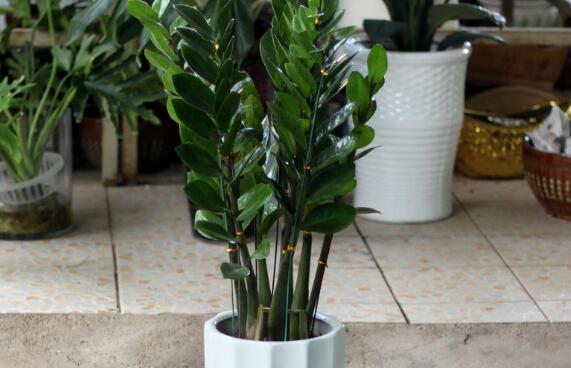
Keeping a Money Tree at home is not like growing it outdoors; with careful care, it is rarely troubled by pests and diseases. However, in a high-humidity environment, the Money Tree can still get bugs and fall ill. So what should you do then? It's actually very simple - we just need to determine which pest or disease it is, and then spray with the appropriate pesticide. The specifics are all covered in the pest and disease control for the Money Tree, so let's continue reading.
II. Pest and disease control for the Money Tree - 1 pest, 4 diseases
1. Scale insects
One of the main pests of the Money Tree, occurring year-round in greenhouses. It pierces its mouthparts into the leaves and sucks the sap from the Money Tree's leaves. Symptoms of infestation: Money Tree leaves turn yellow, and in severe cases the plant will die.
Control methods: When there are few scale insects, you can gently and repeatedly wipe the affected plant with alcohol to remove them; when there are many pests and you see scale insects crawling out from under the mother body, you should immediately spray: dichlorvos at 1000-15000 times dilution, 50% malathion emulsion at 1000 times dilution, etc. for control.
2. Southern blight
This disease is also called sclerotial root rot. As the name suggests, it harms the root and stem area of Money Tree seedlings and young trees. Symptoms: The cortex of the affected root and stem area gradually turns brown and necrotic, and in severe cases the cortex rots.
Control methods: Promptly remove diseased plants; in the early stages of the disease, you can use 25% carboxin wettable powder 50g, add to 50kg of water, and pour it onto the roots of the diseased plant.
3. Brown spot disease
Yet another pest and disease of the Money Tree, it mainly harms the leaves. Symptoms: The lower leaves begin to show the disease, gradually spreading upward. In the early stage, the spots are round or oval and purplish-brown; in the later stage they turn black. In severe cases, the spots can merge into patches, causing the leaves to wither and fall off, affecting flowering.
Control methods: After discovering the above symptoms, immediately spray 50% carbendazim wettable powder at 500 times dilution, or 25% chlorothalonil at 500 times dilution, once every 7-10 days; 2-3 applications will be effective.
4. Stem rot
As the name suggests, this is a disease that harms the stem of the Money Tree. It generally spreads through splashing water, and prolonged moisture retention makes it prone to occurrence. Symptoms: The stem or base of the stem of the Money Tree rots, causing the entire plant to wither and die rapidly.
Control methods: Control measures for Money Tree stem rot: in the early stages of the disease, spray 27% copper hydroxide suspension at 600 times dilution; in severe cases, when drenching the roots or spraying, you can also add some chemical agents, such as: Qingkulike 50ml + hymexazol 15g.
5. Late blight
One of the main diseases of the Money Tree, it occurs mostly in July-August. Symptoms: The tips of the lower leaves of the Money Tree begin to show the disease, initially as dark green water-soaked irregular lesions, which turn brown after expanding. In high humidity, white mold grows at the junction between diseased and healthy parts on the underside of the leaves.
Control methods: Early removal of the initially diseased leaves, and burn them in a centralized manner to reduce the pathogen. This disease is mainly prevented through defense. Before the disease occurs, promptly spray 27% copper hydroxide suspension at 600 times dilution; at the peak of the disease, spray 72.2% propamocarb aqueous solution at 600-700 times dilution for control.
Is the Stringy Stonecrop expensive? What are the uses of Stringy Stonecrop?
Stringy Stonecrop (Sedum lineare) is a type of perennial herbaceous plant in the Sedum genus of the Crassulaceae family. Stringy Stonecrop is a succulent plant with a very high water content. Its leaves and the cuticle on its stem epidermis have an extraordinary ability to prevent water evaporation. Stringy Stonecrop also has strong growth adaptability - it tolerates cold, drought, salinity, and poor soil well, and also resists pests and diseases well. It can be used both as a potted plant for ornamental purposes and as an open-air ornamental ground cover plant.
Growth habits
Stringy Stonecrop is a succulent plant, so its water content is very high. Even in the hot summer, it does not need watering to survive. Its drought tolerance can last up to a month. Other weeds cultivated alongside Stringy Stonecrop would have long since dried up and died, yet it remains perfectly fine and maintains a vibrant green state.
Its uses
Landscaping and ornamental use: Stringy Stonecrop is a relatively drought-tolerant succulent plant. It can often be used for rooftop greening, and can also be grown using soilless cultivation. Its load is very light and it can replace traditional insulation layers and waterproof protective layers. Stringy Stonecrop generally grows on a special growing substrate only 30mm thick. After planting and establishment, it requires no watering or fertilization management. Generally, apart from snails, it rarely has other bugs. It has internationally advanced-level greening and insulation effects.
Not only does it grow very fast, but its spreading ability is also very strong, and its root system can interweave in all directions. Its close combination with the soil can also prevent topsoil from being washed away by heavy rain, so it is even more suitable as a slope-protection grass. In addition, its shade tolerance is also quite outstanding. When configured together in garden woodlands or with flowering shrubs, it can still grow very well.
The landscaping department has used it as a rooftop greening plant, and of course it has the most ideal effect. Planted on rooftops, it can grow on relatively thin substrates and resist high temperatures well. Even when the rooftop temperature reaches 60°C in summer, it can withstand it well and basically requires no watering. In the cold winter season, severe cold will freeze its substrate, and it will enter a dormant state. After temperatures rise in early spring, it can quickly sprout and revive. Moreover, it requires no pruning and rarely has pests or diseases. It belongs to the naturally shaped and ever-green year-round type.
1. Bidirectional regulation, insulation and heat preservation, and energy-saving beautification
After greening with Stringy Stonecrop, it can not only provide insulation in summer but also keep warm well in winter. In other words, it can save three years' worth of air conditioning costs, which can completely earn back the investment cost of the Stringy Stonecrop greening project.
2. Air purification
Its ability to absorb dust is 8.5 times that of other plants. It can not only absorb carbon dioxide well but also release a large amount of oxygen - 30 times more than other plants. It can be said to be a rooftop oxygen bar, effectively improving air quality and the ecological environment.
Price
The weight per square meter is 30-40 kg, and the price on Taobao ranges from 5 fen to several dozen yuan, of course depending on size.
Green plants create a natural “oxygen bar” for the home
With more oxygen in the home, there will naturally be more freshness and comfort. Therefore, in your beloved home, growing some lush plants is not only pleasing to the eye but can also create a “natural oxygen bar” for the room.
1. Green plants are very different
“Being at home yet possessing the whole world” was originally a life philosophy, but with a little effort at home, you can easily achieve this too.
Recommended reading:
China's first flower bonded zone officially settles in Qingzhou City
Taiwan, China flowers fragrance fills the Agricultural Expo
Fresh flowers for teachers, remembering teachers' kindness in our hearts
Zhanggezhuang large cherries go global through exhibitions
[Page break]
Mint - a cooling agent for preventing colds
At the mention of mint, everyone thinks of its refreshing, invigorating properties. What they may not know is that it is also a cooling agent for preventing colds. Mint has extremely strong antibacterial and antimicrobial effects. Drinking it regularly can prevent viral colds and oral diseases, and keep breath fresh. Rinsing the mouth with mint tea can prevent bad breath. Steaming the face with mint tea vapor also has the effect of shrinking pores. Placing brewed tea leaves on the eyes will feel cooling and can relieve eye fatigue. It is said that mint also has the alias “eye grass” and can be used to treat eye ailments.
Money Tree - a blocker of tobacco waste
The elegantly shaped Money Tree is loved by everyone. Acting as a natural “humidifier,” the Money Tree can still carry out efficient photosynthesis in environments with weak light or high carbon dioxide concentrations. For “smoker” households, a mature Money Tree can better counteract the exhaust gases produced by tobacco, and through photosynthesis absorb toxic gases and release oxygen.
Money Tree - a protective umbrella for home decoration
The Money Tree is not only clean and beautiful, easy to care for, but also not prone to pests and diseases, and is drought-tolerant. So even if you go out for one or two weeks, there will be no problem. The Money Tree stays green year-round. While absorbing carbon dioxide, it releases oxygen, increasing the negative ion concentration in indoor air. More importantly, the Money Tree can absorb formaldehyde, benzene series compounds, carbon dioxide and other harmful gases, and kill bacteria in the air. It is especially suitable for newly renovated spaces.
2. Clever care for home flowers
Flower cultivation experts say that to make indoor flowers at home grow well, you must master the ecological habits of the flowers and properly adjust the light, water, fertilizer, temperature, humidity, and pest and disease control needed for home flower growth.
Experts remind: most flowers prefer semi-shaded environments, with a suitable growing temperature between 15°C and 20°C. Therefore, home flowers grown indoors must avoid direct sun exposure. At the same time, spray more water around the flowers to increase air humidity. Try to place flowers in a sunny and well-ventilated spot, which can help avoid pests and diseases.
In addition, flowers mostly prefer neutral or slightly acidic soil. If tap water is alkaline, long-term watering will make the soil alkaline, affecting flower quality. If the soil is heavy and not breathable, it will affect root respiration and even cause root rot. Therefore, watering should follow the principle of "see wet, see dry" - do not water too frequently. Before watering, be sure to touch the potting soil with your hand so you can gauge the degree of dryness and moisture, avoiding blind watering.
Experts also remind that fertilizing home flowers should be done in a greenhouse, with regular fertilization and moderate watering, and using compound fertilizers suitable for each growth stage. At home, however, due to insufficient gardening knowledge, people often either fail to fertilize, causing malnutrition, or apply too much fertilizer at once, burning the flowers. Pay special attention: during the flowering period, you may skip fertilizing or apply only a small amount of compound fertilizer - “excessive fertilizer” is not good for flowering.
Recommended reading:
China's first flower bonded zone officially settles in Qingzhou City
Taiwan, China flowers fragrance fills the Agricultural Expo
Fresh flowers for teachers, remembering teachers' kindness in our hearts
Zhanggezhuang large cherries go global through exhibitions
[Page break]
3. Placement matters
■Living room: The living room usually has a relatively large space, so you can place some larger ornamental green plants and bouquets, such as water-grown lucky bamboo, Japanese evergreen (Rohdea japonica), Money Tree, etc. Also, relatively speaking, the living room has better air circulation, so you don't need to worry too much about whether the plants' scent is irritating or whether they release carbon dioxide. But you should still choose plants according to the size of the living room. On the other hand, the living room is a busy place with people coming and going, with more opportunities to come into contact with pollutants. So for absorbing dust and purifying air, you can grow Money Tree, pitcher plants, and common aloe. These plants can not only deal with bacteria and small insects brought in from outside, but can even absorb dust that even a vacuum cleaner finds hard to reach.
■Kitchen: A kitchen with heavy cooking fumes, high temperatures, and high humidity needs plants with good absorption that can also grow in backlit conditions. Spider plant and pothos have strong air-purifying and insect-repelling effects, making them the best choice for the kitchen. They can also be placed on top of the refrigerator.
■Bedroom: The bedroom is a place for sleep. Generally speaking, ventilation is not very good, so you must never place flowers and plants with strong fragrances, and plants with high oxygen demands are also unsuitable. It is recommended to place some flowers and plants that can absorb carbon dioxide and other waste gases, such as potted citrus, snake plant, spider plant, zebra plant, etc. Plants like pothos with large leaves that like water can also be grown in the bedroom, keeping air humidity at an optimal level. In addition, when arranging bedroom plants, pay special attention to family members' allergy history. If anyone is allergic to pollen, absolutely do not place fresh flowers, especially lilies, balloon flowers, narcissus, and other flowers with exposed pollen. You can place some foliage plants instead, which will be safer.
■Balcony: As an open space, the balcony has very good air circulation, so you can place some larger potted plants. It is recommended to grow English ivy on the balcony. On one hand, climbing plants are excellent air fresheners and also have very good purification effects on benzene, formaldehyde, trichloroethylene, etc. On the other hand, English ivy has strong cold tolerance, and a cooler climate allows it to grow better. At the same time, since English ivy can climb walls and trellises, it takes up relatively little space, making it convenient to create a good exercise and relaxation environment on the balcony.
■Bathroom: The bathroom is difficult to ventilate and tends to form a dark, damp environment with relatively strong odors. So you should place some green plants that purify air, produce oxygen, and can grow in shaded areas. It is best not to place strongly scented fresh flowers, as they will make the smell more mixed and unpleasant. Snake plant leaves can absorb water vapor from the air on their own, making them an ideal choice for bathrooms and washrooms. Bamboo also has a strong ability to release oxygen, can grow in conditions with little sunlight, and has the function of purifying chlorine and ammonia. As for ferns and pepperomia plants, they like moisture, so you might as well place them beside the bathtub.