What to Do When a Money Tree Gets Bugs? 3 Pest and 2 Disease Control Methods
With the development of the times, more and more people are starting to grow plants indoors, and the money tree (Pachira aquatica), as a plant with an auspicious meaning and a sturdy, beautiful form, is loved by many flower enthusiasts. However, because it is not cared for according to the proper money tree cultivation methods, the money tree can also get bugs or diseases, thereby seriously affecting the plant's ornamental value. So what should you do when a money tree gets bugs? Below is a carefully selected guide to money tree pest and disease control. Read on to find out!
I. When a Money Tree Gets Bugs, Spray with Pesticide
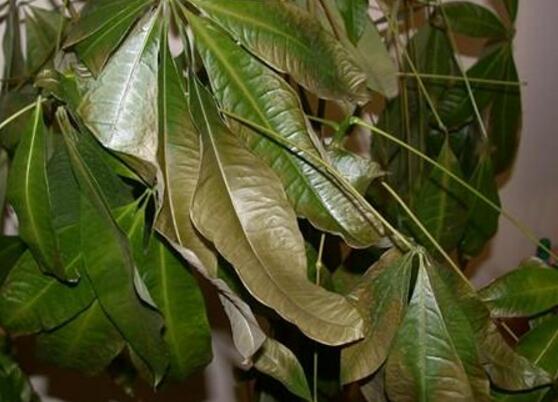
At home, many people keep money trees. They have strong disease resistance and rarely get sick or get bugs, which alone attracts many people to grow them. However, in high-temperature or high-humidity environments, money trees can also get bugs and fall ill. What should you do then? It is actually very simple: identify the pest, then spray with pesticide. As for which pesticide to use, it is all covered in the money tree pest and disease control guide. Let's continue reading.
II. Money Tree Pest and Disease Control, 3 Pests and 2 Diseases
1. Scale insects
One of the main pests of the money tree, it mostly appears in May, piercing into the leaves with its mouthparts and sucking the sap from the money tree's leaves. Symptoms of infestation: the money tree's leaves turn yellow, and in severe cases the plant will die.
Control method: When there are few scale insects, you can gently and repeatedly wipe the affected plant with alcohol, which can remove them, and remove them very cleanly and thoroughly; when there are many scale insects, you can spray with a 1000-fold dilution of 40% omethoate or a 1000-fold dilution of 50% dichlorvos for control, spraying once every 7—10 days, and 2—3 consecutive sprays will be effective.
2. Red spider mites
Red spider mites can harm many flowers and greenhouse plants, and the money tree is one of the common victims. Symptoms of infestation: the leaves first show small yellow-white spots, which gradually turn red and spread to the entire leaf, and can even cause the money tree to drop its leaves.
Control method: When the above symptoms are found, you can spray with a 1500-2000 fold dilution of 40% dicofol emulsifiable concentrate for control, spraying once every 7 days, and 2-3 sprays will be enough, with good results.
3. Whiteflies
A tiny phytophagous piercing-sucking insect that can pierce and suck the sap from the phloem of the money tree. Because this insect develops quickly and reproduces strongly, by the time people usually notice it, it has often reached a very high density, thereby sucking out large amounts of sap and causing the plant to weaken.
Control method: You can spray with a 1000-fold dilution of 25% phosmet emulsifiable concentrate to kill them, and the spraying should be done in the early morning when adult whiteflies are less active.
4. Root rot
One of the most common diseases of the money tree, it mainly harms the root and stem. When it occurs, the money tree's root and stem become soft and rot, and in severe cases the plant dies.
Control method: After discovering root rot in the money tree, you can take the plant out of the pot, cut off the affected parts, then apply fungicide to the wounds, let it dry in a cool place, and replant it.
5. Leaf blight
One of the main diseases of the money tree, many flower enthusiasts believe it is one of the causes of yellowing money tree leaves. Actually, this is incorrect, because leaf blight mainly manifests as: irregularly sized yellow-white or gray-white lesions on the leaves, and when humidity increases, needle-tip-like scattered small granules form. Yellowing leaves, on the other hand, mainly involve overall yellowing of the leaf, dull and lusterless.
Control method: Remove diseased leaves promptly and destroy them to reduce the source of infection. When the disease is severe, spray with a 1000-fold dilution of 50% carbendazim for control.
What to Do When a Fortune Tree Gets Bugs, Fortune Tree Pest and Disease Control / 1 Pest and 2 Diseases, Spray with Pesticide
As a plant with an auspicious meaning and beauty, the fortune tree (Radermachera sinica) is similar to the money tree, and is one of the plants that flower enthusiasts relatively like to grow. However, because it is not cared for according to the proper fortune tree cultivation methods, the plant will get bugs and fall ill, thereby seriously affecting its ornamental value. So what should you do when a fortune tree gets bugs? Below is a carefully selected guide to fortune tree pest and disease control. Read on to find out!
I. What to Do When a Fortune Tree Gets Bugs, Spray Pesticide
The fortune tree, a plant with an auspicious meaning and good looks, is often kept as a potted plant at home. In life, when people get sick they take medicine and see a doctor; plants are actually the same as people, so what should you do when a fortune tree gets bugs? Just use pesticide. As for exactly which pesticide to spray, it is all covered in the fortune tree pest and disease control guide. Let's continue reading.
Before learning about the specific pests and diseases of the fortune tree, let me first introduce a relatively practical insect-repelling method: soak used cigarette butts in water, thirty or forty cigarette butts to one jin of water. Spray the fortune tree with it, twice a day, and any bug will be driven away.
II. Fortune Tree Pest and Disease Control
1. Powdery mildew
According to my research, among the pests and diseases of the fortune tree, the one with the highest incidence is powdery mildew, which is also the most common one encountered by flower enthusiasts in daily life. It is understood that powdery mildew mainly harms the fortune tree's young stems, tender leaves, buds, petals and other parts.
Symptoms: In the early stage, a layer of white powdery substance attaches to the leaf surface, starting as a small yellow dot, then gradually expanding into clump after clump of circles, clogging the normal functions of the leaf surface; in the later stage, the fortune tree's leaves gradually shrivel and curl, and the tender young buds cannot open, seriously affecting the fortune tree's ornamental value.
Control method: When the condition is mild, wipe off the white powder on the leaf surface, then place it in a ventilated, breathable environment; when the condition is severe, appropriately prune the branches and tips of heavily diseased plants, and spray with a 800-fold dilution of 29% triforine, spraying once every 7-10 days, and it will recover after a few times.
2. Leaf spot disease
One of the main diseases of the fortune tree. In environments with high temperature, high humidity and poor ventilation, the fortune tree's leaves are very easily infected with leaf spot disease. Symptoms: Pale yellow and red-yellow spots appear on the leaves, which after expanding become round or oval; if the environment is relatively humid, black granular substances may appear on the lesions, and in the later stage the leaves dry up and fall off.
Control method: When a small number of diseased leaves are found, promptly remove and burn them to reduce the source of infection, then regularly spray with a 600-fold dilution of 50% carbendazim wettable powder, once every half month, for 3 to 4 consecutive times; when severe, use a 1000-1500 fold dilution of emulsifiable concentrate for control, spraying 2-3 times every 7-15 days at 25%, and it will be effective after a few times.
3. Scale insects
A main disease of the fortune tree, it generally appears under conditions of high temperature, high humidity and poor ventilation, harming the plant's stems and leaves. Symptoms of infestation: the fortune tree's leaves turn yellow, wither, and even drop, seriously affecting the fortune tree's indoor ornamental effect.
Control method: When a small number of scale insects are found, promptly wipe them off with a damp cloth, or you can also use transparent tape to stick them off; when there are many pests, you can use 550% malathion and a 0.1% solution of 40% dimethoate alternately to spray and kill them.
4. Other pests and diseases of the fortune tree
① Fortune tree seedlings should be protected against locusts or grasshoppers gnawing on the trunk and tender leaves. Once found, you can spray zinc phoxim, omethoate spray, etc. for prevention.
② In summer, pay attention to controlling black aphids on the tips and tender leaf parts of fortune tree seedlings, usually using insecticide spray for control.
③ Around autumn, the root and stem parts of the fortune tree are prone to rot disease or nematode gnawing; use insecticide mixed with anti-rot medication for spray control.
If Your Plants Show These Problems, Treat Them Quickly, or You'll Regret It!
Leaf spots
(Author: Nongbotong Source: Wohuizhong)
Cause one
Lack of water: If the spots and patches on the leaves are brown and the edges are wrinkled, it is very likely caused by lack of water.
(Source: Baidu Zhidao)
Treatment
On a clear, warm morning, water the plants, watering thoroughly along the flowerpot until water seeps out from the drainage holes at the bottom of the pot.
For indoor semi-shade-loving plants such as pothos, ivy and asparagus fern, you can sprinkle water on the leaves and around the pot to maintain moisture. Note that succulents must not have water sprinkled on their leaves, as this easily causes rot.
(Source: Duitang)
Cause two
Sunburn: When watering and sprinkling, water splashes onto the leaves, and afterward when exposed to the sun, under the focusing effect of the water droplets, the sunlight burns the leaves. (Author: a280810 Source: Tahualiang Forum)
Treatment
Move the plant to a ventilated, shaded place, and cut off the spotted leaves.
(Author: Hailin Source: Tahualiang Forum)
Cause three
Disease: The spots of leaf spot disease are gray-brown, and the spotted areas soften. At first they are small water-soaked spots, which later slowly spread into oval and irregular shapes.
Treatment
1. If plants are infected with leaf spot disease, the remaining leaves will become a source of pathogens, so they must be cut off and cleaned up thoroughly to avoid infecting healthy leaves.
(Author: Nongbotong Source: Wohuizhong)
2. You can spray with a 1000-fold dilution of 70% thiophanate-methyl wettable powder, or a 800-fold dilution of 70% chlorothalonil wettable powder for pest elimination, spraying on the leaves once every 7 or 8 days.
Bud drop
Cause one
Improper watering: Around the flowering period, special attention should be paid to the plants' moisture. Too little watering means water cannot reach the flowers, causing bud drop; too much watering makes the soil sticky and heavy, the roots cannot breathe, and nutrients cannot be supplied, which also causes bud drop.
(Author: Mulan Source: Tahualiang Forum)
Treatment
1. Before watering, first touch the soil, preferably inserting half a finger joint, to feel the soil moisture and determine whether watering is needed.
Whenever you water, be sure to water thoroughly, and only stop when you see water flowing out from the drainage holes.
(Author: Qiannian Lvluo Source: Lvluo Bar)
2. Newly bought Chinese New Year flowers such as azaleas and camellias previously grew in humid, warm greenhouses, and suddenly brought home, the abrupt environmental change may also cause bud drop. At this time, ensure the temperature is above 15 degrees C, and frequently sprinkle water on the leaves and around the plants to maintain moisture.
Cause two
Insufficient nutrition: Blooming is a very nutrient-consuming process for the plant. If nutrition is insufficient, it can also cause bud drop.
(Author: Youmo Source: Tahualiang Forum)
Treatment
Bud thinning: Flower enthusiasts should not feel sorry for the buds. Removing buds now is to preserve nutrients so that the remaining buds bloom better.
You can remove the relatively small, poorly developed buds, and for the denser buds on the sides, you can also remove one or two as appropriate.
(Author: Chaozhou Wubao Source: China Camellia Bar)
Yellow leaves
(Source: Baidu Zhidao)
Cause one
Overwatering: When watered too much in winter, water fills the soil pores, the plant roots' respiration is hindered, and nutrients cannot be absorbed well, causing leaves to turn yellow. This requires urgent rescue, otherwise the plant can easily develop root rot.
Treatment
1. If the situation is not serious and no waterlogging damage has formed, you can move the plant to a cool, ventilated place, loosen the soil promptly, and let the water evaporate as quickly as possible.
Be careful that the temperature does not fall below 10 degrees C, otherwise it can easily cause frostbite.
2. If the situation is very serious and the roots have become soft and black, meaning root rot has already occurred, you must immediately cut off the rotten roots, clean up thoroughly, and repot with fresh soil.
Cause two
Long-term shading: Pothos, spider plants, money trees, lucky bamboo, ivy... These plants that flower enthusiasts often keep indoors like semi-shade and do not have a great demand for sunlight, but they also cannot be shaded for a long time.
Without sunlight for a long time, the leaves cannot carry out photosynthesis, and thus cannot guarantee the plant's nutrients.
Treatment
Sun-loving plants such as succulents can be placed on windowsills or balconies in winter for care. Of course, be careful that the temperature does not fall below 10 degrees C, and do not let cold wind through, otherwise it can easily cause cold damage in winter.
Semi-shade-loving plants such as asparagus fern should be placed indoors in a bright place with scattered light.
Cause three
Temperature too low: Generally speaking, if the indoor temperature is not below 10 degrees C, most common household plants can safely overwinter, but if the temperature is too low or the plant is accidentally exposed to cold wind, it is prone to yellow leaves.
Treatment
Cut off the yellow leaves, raise the temperature of the plant's living environment, and if necessary, cover with a bag for insulation.
After bagging, when the temperature is high at noon, open the bag to let the plant breathe, or you can poke a few small holes in the bag when covering it, to ensure the plant can breathe normally.
(Source: Baidu Zhidao)
Soil compaction
Cause one
Watering with hard water: Tap water contains relatively more soluble calcium and magnesium compounds. Long-term use of tap water for watering can cause calcium and magnesium ions to precipitate, easily leading to pot soil compaction, and when watering again the water cannot seep through.
(Author: Mei Chuniang Source: Sina Blog)
Treatment
1. Boiling can soften hard water, so usually try to minimize direct use of tap water for watering, and you can use purified water or cooled boiled water.
2. After the pot soil compacts, you can use the soaking method to water, which ensures thorough watering and also makes it less likely for water to accumulate in the pot.
The soaking method allows water to seep in from the drainage holes at the bottom of the pot; when the surface of the pot soil is moist, you can take it out. Note that the water in the large basin should not be higher than the top of the flowerpot.
(Author: Zhumeng Yiren 08 Source: Orchid Bar)
Cause two
Overfertilizing: When too much fertilizer is applied, the nitrogen, phosphorus and potassium cannot be fully absorbed by the plant, and will combine with components in the soil, causing soil compaction and hindering the plant roots' respiration.
Treatment
In this case, the soil needs to be changed. The new soil should be loose and fertile, preferably mixed with some vermiculite or clean river sand to improve the soil's air permeability.
Leaves have holes
Cause
This situation is generally mechanical damage, and most often pest damage.
Treatment
1. If there are not many bugs, you can consider manually picking them off to avoid using chemicals that burn the plant.
(Author: nilshuai Source: Orchid Bar)
2. If the pest damage is relatively serious, consider using chemicals to remove the pests. You can dilute Huahuashen at a ratio of 1:200, better too dilute than too concentrated, and spray the leaves, making sure to spray comprehensively. Afterward, place the plant in a cool, ventilated place.
Moss growing on the sides of clay pots
(Author: Huangguo Source: Hongtaopen Home)
Causes
This situation is generally caused by improper watering, or by blocked drainage holes, which makes the potting soil too wet and moss grow on the flower pot.
Of course, if the weather is too humid and the air humidity is high, moss can also grow on terracotta pots. Gardening friends can check whether this applies to their situation.
Treatment
Take the plant out of the pot and check the soil and root condition. If the roots have not rotted yet, you can place the plant with its soil in a cool, shaded spot to dry, and once the soil becomes slightly moist, repot it.
(Source: Shandong Sannong Network)
If the roots have already rotted, you need to cut off the damaged roots, clean them thoroughly, then change the soil and replant. The new soil should be loose, fertile and well aerated.
(Author: Tangguo Hen Tian ya Source: Yantai Forum)
That is all for Huahua's summary today.
If there are other questions gardening friends would like to know about,
you can leave a message for Huahua~