How to deal with pests on dahlias? Control methods for 3 insect pests and 2 diseases
Dahlia is a plant with high ornamental value, and it can be seen in many gardens in our country. However, even a plant with high ornamental value will wither if pests and diseases appear. Regarding how to deal with pests on dahlias, how should pest and disease control for dahlias be done? Below, the editor will guide everyone to understand.
I. How to deal with pests on dahlias / chemical treatment
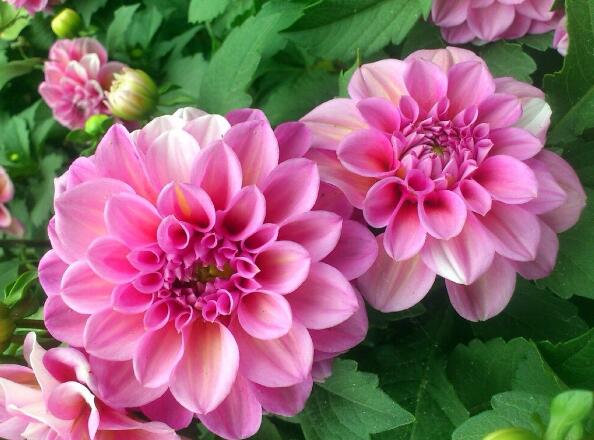
Regarding the question of how to deal with pests on dahlias, first you need to understand what kind of pest or disease has appeared. Only by finding the cause can you deal with it in a targeted way. The most effective method is that we can choose chemicals for prevention and control.
II. Pest and disease control for dahlias
1. Dahlia stem borer pest
In the pest and disease control of dahlias, the dahlia stem borer is one of the most common. The peak period of this pest is from August to September each year, so special attention must be paid at this time. This pest mainly damages the stems of dahlias, gradually eating the sap in the stems. If it is not dealt with for a long time, it will cause the plant to wither and die.
Control method: This pest is easiest to deal with in its larval stage. We can choose a 50% fenitrothion emulsion diluted 1000-1500 times to spray the whole plant for control.
2. Fruit borer pest
The peak period of the fruit borer pest is around May to June each year. It mainly damages the tender leaves and flower centers of dahlias, gradually biting and eating them, thereby causing the plant to wither.
Control method: When this pest appears, it must be dealt with promptly. We can choose to spray the plant with a 4% parathion solution diluted 1500 times. Generally, spray once every 7-10 days, and after 1-2 times, this pest can basically be eliminated.
3. Aphid pest
There are many plants harmed by aphids, and dahlia is one of them. This pest is very small, mostly only about 2 mm, and is difficult to detect with the naked eye, so it can only be judged by symptoms. This pest mainly sucks the sap from the stems of the plant, causing the plant to lose nutrients and wither and die.
Control method: When this pest appears, it is best to carry out control in the early stage. If it is delayed too long, it may become impossible to eradicate. For this pest, we can use a 50% fenitrothion emulsion diluted 1000 times for spraying and killing.
4. Root nodule disease
As the name suggests, this disease mainly harms the roots of dahlias. In the early stage of the disease, a white tumor-like object appears on the roots. As time goes on, it gradually enlarges, and finally causes the plant to wither.
Control method: When this disease is found in its early stage, we should promptly cut off the diseased nodules, then use a 00-times copper sulfate solution for disinfection to disinfect the wound, and this disease can basically be eliminated.
5. Brown spot disease
Brown spot disease is a fungal disease that appears during the growth of many plants. This disease mainly harms the leaves of dahlias. In the early stage, some dark diseased spots appear on the leaves. As time goes on, they gradually spread, and finally cause the leaves to keep falling off, thus withering and dying.
Control method: When this disease appears, we should promptly spray the dahlia with 0.2-0.3°Be lime sulfur mixture. Generally, spray once every 7-15 days, and after 2-3 times, this disease can basically be completely eliminated.
A world of flowers refreshes the spirit
The colorful and splendid summer flowers should not only exist in cool garments and fresh mountain fields; they should also bloom indoors, embellish our surroundings, share a piece of heaven and earth with us, and create a room filled with fragrance, a “world of flowers.” Petal by petal and wisp after wisp of delicate fragrance surround the body, and a pleasant, refreshing mood naturally appears. In leisure time, carefully tending the flowers and plants full of infinite vitality, the process of harvest is always accompanied by an optimistic spirit of enjoying oneself. Dullness and heat are swept away, leaving only refreshed spirits and a room full of fragrance. Flowers brought into the home have many benefitsBenefit one: filtering the air
In summer, air conditioners are used at a very high rate indoors, doors and windows are closed, and air circulation becomes poor. Therefore, it is suitable to grow some flowers that can filter the air indoors. Most flowers carry out photosynthesis during the day, absorbing carbon dioxide and releasing oxygen, and at night carry out respiration, absorbing oxygen and releasing carbon dioxide, while cacti, orostachys, and similar plants do the opposite. Growing these air-filtering flowers together with other flowers in the same room can effectively balance the indoor oxygen and carbon dioxide levels and keep indoor air fresh.
Benefit two: removing toxins
Spider plant, aloe, and snake plant can absorb large amounts of indoor pollutants such as formaldehyde, eliminating and preventing indoor air pollution. Spider plant especially: place one pot in a room, and within 24 hours its leaves will “eat” harmful gases such as carbon monoxide in the indoor air, with an effect even exceeding that of an air filter. Aglaia, orchids, lilac, cacti, asparagus fern, and others can all effectively purify the air.
Camellia can resist harm from harmful substances such as sulfur dioxide, and crape myrtle has relatively strong resistance to toxic gases such as indoor sulfur dioxide, hydrogen chloride, chlorine gas, and hydrogen fluoride. Plum has monitoring ability for pollution in the environment such as sulfur dioxide, hydrogen fluoride, hydrogen sulfide, ethylene, benzene, and aldehydes. Once sulfides appear in the environment, spots will appear on its leaves, and they may even turn yellow and fall off.
Precisely because flowers have these functions, rooms that have just been renovated are more suitable for growing these flowers. It should be pointed out that these functions of plants have certain limits, so it is still necessary to open windows often to allow air convection.
Benefit three: killing pathogens
The volatile oils produced by fragrant flowers such as rose, osmanthus, stock, jasmine, lemon, rose, dianthus, lily of the valley, and crape myrtle have significant bactericidal effects. Plants such as crape myrtle, jasmine, and lemon can kill native bacteria such as diphtheria bacteria and dysentery bacteria within 5 minutes.
The fragrance emitted by plants such as rose, dianthus, lily of the valley, stock, rose, and osmanthus has a clear inhibitory effect on the growth and reproduction of Mycobacterium tuberculosis, pneumococcus, and staphylococcus.
It should be noted that although flowers have many benefits, do not turn the home into a “flower room.” Most flowers release carbon dioxide and absorb oxygen at night, and most rooms are closed at night. In addition, carbon dioxide exhaled by the soil in the flowerpot, the human body, and pets will increase the concentration of carbon dioxide, causing oxygen deficiency in the human body and affecting health.
Experience talks on getting flowers through summer
Veteran flower grower: Grandpa Xie, 61 years old, retired, growing flowers for 40 years.
Key tip: pay attention to placement.
It is very important to decide the placement according to habits. Flowers are divided into shade-loving and sun-loving types. In summer especially, the placement should be determined according to the habits of each kind of flower. Orchids, azaleas, camellias, clivia, and others are shade-loving and should be placed at the base of the south wall or on a north-facing balcony; the light in the morning and evening is enough. Chinese rose, lotus, osmanthus, jasmine, orchid, and others are sun-loving. Whether on a building balcony or downstairs, they should all be placed in a sunny spot. Only in this way can they bloom more, have a strong fragrance, and grow vigorously.
Veteran flower grower: Miss Liu, 25 years old, university lecturer, growing flowers for 5 years.
Key tip: water at the right time and in the right amount.
When watering flowers in summer, do it at the right time and in the right amount. Water in the morning and evening, not at noon. It is best to water with stored rainwater. When there is no rainwater, tap water can be used, but the tap water should be left in the sun for more than one day before watering. The number of waterings depends on whether the flowerpot is dry or wet. The potting soil should be allowed to dry and then be watered wet, so as to ensure that the flower roots can breathe normally. Generally, water 1 to 2 times per day. The leaf surface can also be sprayed appropriately. For acid-loving flowers, it is best to water with 0.2% to 0.3% black alum water to prevent iron deficiency and chlorosis. Some flowers with fleshy roots, such as clivia, cannot withstand strong sun exposure, so a moderate amount of water can be sprayed on the leaf surface at noon when it is relatively dry. Some relatively drought-tolerant flowers, such as cacti and succulents in the Crassulaceae family, should drink less water; too much water easily causes root rot.
Veteran flower grower: Ms. Zhang, 37 years old, civil servant, growing flowers for 14 years.
Key tip: pay attention to moisture retention and sun protection.
The key to growing flowers on a building balcony lies in the issue of humidity, that is, moisture retention and sun protection. Summer sunlight is strong. If the flowers are moved indoors, it will cause poor growth due to lack of sunlight. Flowers that lean toward sun-loving are not afraid of strong sunlight, but they still need shade at noon. If they are neutral, they need appropriate shading. If they are balcony potted flowers, they can be moved indoors every day between 10 a.m. and 3 p.m. If they are shade-loving, contact with strong light must be absolutely prevented. It is best to set up a shade net for the flowers, which can protect against sunlight and also prevent damage from hail. In addition, depending on the variety, place a water-catching tray under the flowerpot to ensure humidity.
Veteran flower grower: Mr. Sun, 43 years old, doctor, growing flowers for 32 years.
Key tip: prevent and control pests and diseases.
The rainy season is a period when potted flower pests and diseases occur frequently. About every half month, spray once with a 20% thiophanate-methyl wettable powder diluted 1000 times, or a 50% carbendazim wettable powder diluted 1000 times, to prevent pests and diseases. When pests such as aphids, red spiders, and scale insects occur, spray 40% dimethoate emulsifiable concentrate diluted 1000 to 1500 times, or 20% fenpropathrin (fenpropathrin) emulsifiable concentrate diluted 1500 to 2000 times, once every 10 days, for 3 consecutive sprays.
Veteran flower grower: Grandma Guo, 74 years old, retired, growing flowers for 53 years.
Key tip: fertilize in appropriate amounts.
Fertilization in summer should be in appropriate amounts. If too much fertilizer is applied, the flowers cannot absorb it and instead the roots are damaged. Generally, flowers that bloom in summer are relatively tolerant of high temperatures, and a somewhat larger amount of fertilizer can be applied, such as for crape myrtle, jasmine, impatiens, cockscomb, dahlia, and others. Fertilizer can be supplemented during the flowering period to make them lush with branches and leaves. For some ornamental-fruit flowers such as kumquat and ornamental pepper, applying phosphorus fertilizer after the flowers fade can make them bear more fruit. For tropical foliage plants such as rubber tree and Monstera deliciosa, nitrogen fertilizer should be applied to make the leaves greener. Apply thin fertilizer frequently; too high a concentration easily causes fertilizer burn.
Expert tips
How to prevent pests and diseases in flowers
Preventing and controlling pests and diseases is an important part of the flower-growing process. Regarding this issue, the solution given by experts is:
1. Detergent kills whiteflies. Whiteflies not only suck leaf sap, but also secrete sticky substances that make leaves wither. Mix one spoonful of detergent with 4 liters of water evenly, spray it on the leaves, and spray once every 5-7 days until the whiteflies are completely eliminated.
2. Milk kills mites. Mites often attach to the stems and leaves of flowers, causing the branches and leaves to discolor and wither. Mix half a cup of fresh milk, 4 cups of flour, and 20 liters of water, then filter with gauze. Spray the liquid on the stems and leaves of the flowers. It can not only kill mites, but also kill insect eggs.
3. Flour prevents and controls pests. If potted flowers develop pests or diseases, take a small amount of flour, first mix it into a paste with cold water, then scald it with an appropriate amount of boiling water until cooked, and prepare a 1:50 solution. Spraying it on a sunny day will have a good effect.
4. Watermelon rind plus cigarette butts can also treat pests. Place a washed watermelon rind upside down on the potting soil. This can eliminate the need for watering for several days and is an excellent nutrient for potted flowers. If a few cigarette butts are placed under the melon rind, after tar and nicotine seep into the potting soil, they can kill many common small insects.
5. In addition, after drying used tea leaves, sprinkle them on the surface of the potting soil. This can also prevent flowers from getting pests.
Clever summer care for flowers
Jasmine Summer is the peak flowering period for jasmine. Sufficient water and fertilizer help produce abundant flowers and lush leaves. On sunny days, spray the leaf surface with clean water, which can clearly stimulate flowering.
Orchid Summer is the peak growing season for orchids, so water and nutrients should be ensured. When disease occurs, thiophanate-methyl can be sprayed once every 10 days for treatment.
Azalea In summer, azaleas grow slowly and are in a semi-dormant state. Avoid harsh sun exposure and excessive fertilization, and provide shade. Water 1 to 2 times daily, and spray water on the leaves and ground to retain moisture and lower the temperature.
Peony It fears heat and moisture. In summer, place the plant in a ventilated, cool place. There is no need to water too much; keeping the potting soil moist is enough to avoid root rot.
Chinese rose It likes fertilizer and water, so a sufficient supply of fertilizer and water must be ensured. Apply decomposed bean cake water once every half month, and stop fertilizing in mid-July. In summer, black spot disease and powdery mildew easily occur. Use Bordeaux mixture for the former and carbendazim for the latter, spraying once every half month for prevention and control.
Aglaia It likes light and heat, and grows vigorously in summer. Before and after flowering, apply dilute alum fertilizer water once every 10 days, and frequently spray water on the leaf surface.
A world of flowers refreshes the spirit (photo)
The colorful and splendid summer flowers should not only exist in cool garments and fresh mountain fields; they should also bloom indoors, embellish our surroundings, share a piece of heaven and earth with us, and create a room filled with fragrance, a "world of flowers." Petal by petal and wisp after wisp of delicate fragrance surround the body, and a pleasant, refreshing mood naturally appears. In leisure time, carefully tending the flowers and plants full of infinite vitality, the process of harvest is always accompanied by an optimistic spirit of enjoying oneself. Dullness and heat are swept away, leaving only refreshed spirits and a room full of fragrance. Flowers brought into the home have many benefits. Benefit one: filtering the air
In summer, air conditioners are used at a very high rate indoors, doors and windows are closed, and air circulation becomes poor. Therefore, it is suitable to grow some flowers that can filter the air indoors. Most flowers carry out photosynthesis during the day, absorbing carbon dioxide and releasing oxygen, and at night carry out respiration, absorbing oxygen and releasing carbon dioxide, while cacti, orostachys, and similar plants do the opposite. Growing these air-filtering flowers together with other flowers in the same room can effectively balance the indoor oxygen and carbon dioxide levels and keep indoor air fresh. Benefit two: removing toxins
Spider plant, aloe, and snake plant can absorb large amounts of indoor pollutants such as formaldehyde, eliminating and preventing indoor air pollution. Spider plant especially: place one pot in a room, and within 24 hours its leaves will "eat" harmful gases such as carbon monoxide in the indoor air, with an effect even exceeding that of an air filter. Aglaia, orchids, lilac, cacti, asparagus fern, and others can all effectively purify the air.
Camellia can resist harm from harmful substances such as sulfur dioxide, and crape myrtle has relatively strong resistance to toxic gases such as indoor sulfur dioxide, hydrogen chloride, chlorine gas, and hydrogen fluoride. Plum has monitoring ability for pollution in the environment such as sulfur dioxide, hydrogen fluoride, hydrogen sulfide, ethylene, benzene, and aldehydes. Once sulfides appear in the environment, spots will appear on its leaves, and they may even turn yellow and fall off.
Precisely because flowers have these functions, rooms that have just been renovated are more suitable for growing these flowers. It should be pointed out that these functions of plants have certain limits, so it is still necessary to open windows often to allow air convection. Benefit three: killing pathogens
The volatile oils produced by fragrant flowers such as rose, osmanthus, stock, jasmine, lemon, rose, dianthus, lily of the valley, and crape myrtle have significant bactericidal effects. Plants such as crape myrtle, jasmine, and lemon can kill native bacteria such as diphtheria bacteria and dysentery bacteria within 5 minutes.
The fragrance emitted by plants such as rose, dianthus, lily of the valley, stock, rose, and osmanthus has a clear inhibitory effect on the growth and reproduction of Mycobacterium tuberculosis, pneumococcus, and staphylococcus.
It should be noted that although flowers have many benefits, do not turn the home into a "flower room." Most flowers release carbon dioxide and absorb oxygen at night, and most rooms are closed at night. In addition, carbon dioxide exhaled by the soil in the flowerpot, the human body, and pets will increase the concentration of carbon dioxide, causing oxygen deficiency in the human body and affecting health. Experience talks on getting flowers through summer
Veteran flower grower: Grandpa Xie, 61 years old, retired, growing flowers for 40 years.
Key tip: pay attention to placement.
It is very important to decide the placement according to habits. Flowers are divided into shade-loving and sun-loving types. In summer especially, the placement should be determined according to the habits of each kind of flower. Orchids, azaleas, camellias, clivia, and others are shade-loving and should be placed at the base of the south wall or on a north-facing balcony; the light in the morning and evening is enough. Chinese rose, lotus, osmanthus, jasmine, orchid, and others are sun-loving. Whether on a building balcony or downstairs, they should all be placed in a sunny spot. Only in this way can they bloom more, have a strong fragrance, and grow vigorously.
Veteran flower grower: Miss Liu, 25 years old, university lecturer, growing flowers for 5 years.
Key tip: water at the right time and in the right amount.
When watering flowers in summer, do it at the right time and in the right amount. Water in the morning and evening, not at noon. It is best to water with stored rainwater. When there is no rainwater, tap water can be used, but the tap water should be left in the sun for more than one day before watering. The number of waterings depends on whether the flowerpot is dry or wet. The potting soil should be allowed to dry and then be watered wet, so as to ensure that the flower roots can breathe normally. Generally, water 1 to 2 times per day. The leaf surface can also be sprayed appropriately. For acid-loving flowers, it is best to water with 0.2% to 0.3% black alum water to prevent iron deficiency and chlorosis. Some flowers with fleshy roots, such as clivia, cannot withstand strong sun exposure, so a moderate amount of water can be sprayed on the leaf surface at noon when it is relatively dry. Some relatively drought-tolerant flowers, such as cacti and succulents in the Crassulaceae family, should drink less water; too much water easily causes root rot.
Veteran flower grower: Ms. Zhang, 37 years old, civil servant, growing flowers for 14 years.
Key tip: pay attention to moisture retention and sun protection.
The key to growing flowers on a building balcony lies in the issue of humidity, that is, moisture retention and sun protection. Summer sunlight is strong. If the flowers are moved indoors, it will cause poor growth due to lack of sunlight. Flowers that lean toward sun-loving are not afraid of strong sunlight, but they still need shade at noon. If they are neutral, they need appropriate shading. If they are balcony potted flowers, they can be moved indoors every day between 10 a.m. and 3 p.m. If they are shade-loving, contact with strong light must be absolutely prevented. It is best to set up a shade net for the flowers, which can protect against sunlight and also prevent damage from hail. In addition, depending on the variety, place a water-catching tray under the flowerpot to ensure humidity.
Veteran flower grower: Mr. Sun, 43 years old, doctor, growing flowers for 32 years.
Key tip: prevent and control pests and diseases.
The rainy season is a period when potted flower pests and diseases occur frequently. About every half month, spray once with a 20% thiophanate-methyl wettable powder diluted 1000 times, or a 50% carbendazim wettable powder diluted 1000 times, to prevent pests and diseases. When pests such as aphids, red spiders, and scale insects occur, spray 40% dimethoate emulsifiable concentrate diluted 1000 to 1500 times, or 20% fenpropathrin (fenpropathrin) emulsifiable concentrate diluted 1500 to 2000 times, once every 10 days, for 3 consecutive sprays.
Veteran flower grower: Grandma Guo, 74 years old, retired, growing flowers for 53 years.
Key tip: fertilize in appropriate amounts.
Fertilization in summer should be in appropriate amounts. If too much fertilizer is applied, the flowers cannot absorb it and instead the roots are damaged. Generally, flowers that bloom in summer are relatively tolerant of high temperatures, and a somewhat larger amount of fertilizer can be applied, such as for crape myrtle, jasmine, impatiens, cockscomb, dahlia, and others. Fertilizer can be supplemented during the flowering period to make them lush with branches and leaves. For some ornamental-fruit flowers such as kumquat and ornamental pepper, applying phosphorus fertilizer after the flowers fade can make them bear more fruit. For tropical foliage plants such as rubber tree and Monstera deliciosa, nitrogen fertilizer should be applied to make the leaves greener. Apply thin fertilizer frequently; too high a concentration easily causes fertilizer burn. Expert tips on how flowers prevent pests and diseases
Preventing and controlling pests and diseases is an important part of the flower-growing process. Regarding this issue, the solution given by experts is:
1. Detergent kills whiteflies. Whiteflies not only suck leaf sap, but also secrete sticky substances that make leaves wither. Mix one spoonful of detergent with 4 liters of water evenly, spray it on the leaves, and spray once every 5-7 days until the whiteflies are completely eliminated.
2. Milk kills mites. Mites often attach to the stems and leaves of flowers, causing the branches and leaves to discolor and wither. Mix half a cup of fresh milk, 4 cups of flour, and 20 liters of water, then filter with gauze. Spray the liquid on the stems and leaves of the flowers. It can not only kill mites, but also kill insect eggs.
3. Flour prevents and controls pests. If potted flowers develop pests or diseases, take a small amount of flour, first mix it into a paste with cold water, then scald it with an appropriate amount of boiling water until cooked, and prepare a 1:50 solution. Spraying it on a sunny day will have a good effect.
4. Watermelon rind plus cigarette butts can also treat pests. Place a washed watermelon rind upside down on the potting soil. This can eliminate the need for watering for several days and is an excellent nutrient for potted flowers. If a few cigarette butts are placed under the melon rind, after tar and nicotine seep into the potting soil, they can kill many common small insects.
5. In addition, after drying used tea leaves, sprinkle them on the surface of the potting soil. This can also prevent flowers from getting pests.
Clever summer care for flowers
Jasmine In summer, jasmine is in its peak flowering period. Sufficient water and fertilizer help produce abundant flowers and lush leaves. On sunny days, spray the leaf surface with clean water, which can clearly stimulate flowering.
Orchid In summer, orchids are in their peak growing season, so water and nutrients should be ensured. When disease occurs, thiophanate-methyl can be sprayed once every 10 days for treatment.
Azalea In summer, azaleas grow slowly and are in a semi-dormant state. Avoid harsh sun exposure and excessive fertilization, and provide shade. Water 1 to 2 times daily, and spray water on the leaves and ground to retain moisture and lower the temperature.
Peony It fears heat and moisture. In summer, place the plant in a ventilated, cool place. There is no need to water too much; keeping the potting soil moist is enough to avoid root rot.
Chinese rose It likes fertilizer and water, so a sufficient supply of fertilizer and water must be ensured. Apply decomposed bean cake water once every half month, and stop fertilizing in mid-July. In summer, black spot disease and powdery mildew easily occur. Use Bordeaux mixture for the former and carbendazim for the latter, spraying once every half month for prevention and control.
Aglaia It likes light and heat, and grows vigorously in summer. Before and after flowering, apply dilute alum fertilizer water once every 10 days, and frequently spray water on the leaf surface.