How to Propagate Globe Amaranth? Detailed Guide to Seed Propagation and Cutting Methods
Globe amaranth is a highly ornamental flower, and people in many regions of our country are growing it. As more people cultivate it, questions about its propagation have become a concern for many. So how do you propagate globe amaranth? What are the propagation methods for globe amaranth? Let me walk you through them below.
I. How to Propagate Globe Amaranth
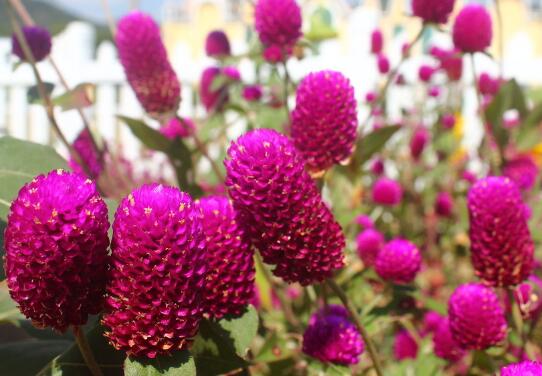
II. Propagation Methods for Globe Amaranth
Seed Propagation
1. Sowing Time
Globe amaranth seeds are generally harvested in September-October each year. After harvesting, store them until April-May of the following year for sowing. The temperature during this period is more suitable for globe amaranth growth, and the survival rate will be relatively higher.
2. Soil Selection
In the propagation methods for globe amaranth, soil selection is a very important step. Generally, we can choose relatively fertile humus soil, because this type of soil has good drainage and aeration, allowing globe amaranth to better absorb nutrients.
3. Sowing Method
After completing the pre-treatment, we can proceed with sowing. Before sowing, we need to soak the seeds for 3-5 days before scattering them, as this makes the seeds germinate more easily. After soaking, we can evenly scatter the seeds on the soil surface, then cover with about 2-3cm of soil and water. When watering, make sure to water thoroughly in one go. After about 10-15 days, seedlings will emerge.
Cutting Propagation
1. Cutting Selection
Before propagating globe amaranth by cuttings, we first need to select the cuttings, which are the branches of globe amaranth. Generally, it is best to choose relatively robust branches, as this will result in a high survival rate. If you choose branches that look frail, they will generally be difficult to keep alive.
2. Cutting Method
Among the propagation methods for globe amaranth, cutting propagation is a relatively commonly used method. When taking cuttings, we can first use a chopstick to poke a hole in the soil, then insert the cutting into the hole, press the soil flat, and water. After watering, roots will form in about 20 days.
How to Propagate Globe Amaranth, Globe Amaranth Cutting Propagation Methods
How to propagate globe amaranth: The propagation methods for globe amaranth include seed propagation and cutting propagation. Flower enthusiasts can choose a suitable globe amaranth propagation method based on their own preferences and conditions. Below are the seed propagation method and cutting propagation method for globe amaranth, which we hope will be helpful to flower enthusiasts.
Globe Amaranth Seed Propagation MethodGlobe amaranth seedlings grow slowly, so they should be sown early in March in a greenhouse. The suitable sowing temperature is above 20°C, and germination is better. Because the seeds have a layer of fine white fuzz on the outside, seedlings emerge slowly. Method:
1. Seed SoakingFirst soak the seeds in cold water for 2 days, or soak in warm water for 1 day. After soaking, remove and wrap in gauze, place in a shallow basin, rinse with clean water 1-2 times daily, and keep in a warm place. After about two weeks, they will germinate.
3. Seed SowingAfter germination, sow in a pot, cover with shallow soil, then cover with glass to keep warm and moist.
4. TransplantingAfter the seedlings have all emerged, thin them once, then transplant. Before transplanting, apply an appropriate amount of base fertilizer to the ground or pot.
5. Post-Planting Care and ManagementDuring the growing period, do not water or fertilize excessively, otherwise it will cause excessive stem and leaf growth and sparse flowering. To keep the plant compact, pinch once during the seedling stage. After flowers fade, promptly remove spent flowers to encourage new branch growth so that it blooms again.
Globe Amaranth Cutting Propagation Method 1. Select Robust Branches, Cutting MethodIn June-July, cut robust branch tips, about 4-6cm long, i.e., 3-4 nodes is suitable. Remove the leaves from the internodes that will be inserted into the soil to reduce water evaporation from the leaf surface. Insert into a sand bed with temperature controlled at 20°C-25°C. After insertion, they can be transplanted into pots in 18-20 days. If the temperature is below 20°C, the rooting days will be delayed by 5-7 days. If treated with "Root Sun" rooting agent, the rooting effect will be faster by about 10-12 days.
From the table above, it can be seen that treating cuttings with "Root Sun" rooting agent has a remarkable effect; they can be transplanted in 7-8 days after insertion. Cuttings not treated with any chemical require about 18-21 days after insertion before they can be transplanted. Therefore, in recent years, I have used "Root Sun" for cutting propagation. The seedling growth period is short, which can greatly save manpower and resources, and the survival rate can reach over 95%.
2. Post-Insertion Management of Globe Amaranth a. Water and Moisture ControlBefore cutting, first wet the seedbed to prevent damage to the cuttings and improve the survival rate. When inserting, the depth of the cutting should not be too deep; one internode into the soil is sufficient. After insertion, water thoroughly promptly so that the cuttings and soil are in close contact. Thereafter, water normally to keep the soil moist, or spray 1-2 times daily, 1-2 minutes each time, or once a day.
b. Light ExposureThe seedbed should be set up in a covered location. In summer, the shading rate should reach 80%-90%, and in spring and autumn, a shading rate of about 70%-80% is sufficient.
c. Temperature ControlThe optimal temperature for cutting rooting is 20°C-25°C. When the temperature is below 18°C, rooting is somewhat affected and the survival rate is low. When the temperature is below 10°C, the cuttings will suffer cold damage. If you want to propagate by cuttings, you must have greenhouse facilities.
3. Management After Transplanting into Pots a. Flower Seedling TransplantingWhen the root system of cutting seedlings grows to 0.5-1.0cm, they can be transplanted into pots. If potted too late, the seedlings will grow weakly in nutrient-free sand, affecting subsequent growth and development. When sowing seedlings grow 3-4 true leaves, they can be transplanted into pots. For pot selection, clay pots should be chosen, as clay pots have better drainage performance than plastic pots.
b. Seedling LightGlobe amaranth is a sun-loving flower. Except during the seedling stage, it should not be exposed to direct sunlight. One week after potting, it can grow in a sunny environment. Sufficient light helps form a rounded, low-growing plant shape. During cultivation, care must be taken to maintain sufficient plant spacing to avoid crowding and lack of light, which results in poor plant shape.
c. Germination Temperature ControlAfter seedlings germinate, they can continue to grow at a temperature of 20°C or above. Globe amaranth is a heat-tolerant species, suitable for spring sowing and autumn flowering, but it is not cold-tolerant. Generally, autumn sowing is not used, otherwise winter heating will make cultivation costs very high.
Globe Amaranth Propagation Methods, How to Sow Globe Amaranth
Globe amaranth is a plant with very strong vitality. Its stem is tall and straight, with a relatively colorful flower at the top of the stem. What makes it different from ordinary plants is its flower; the flower is everlastingly blooming, so it is highly ornamental and deeply loved by people who grow it.
Globe Amaranth Propagation Methods
1. Seed propagation. Every year in spring and summer, around April-May, is the most suitable climate for propagating globe amaranth. Evenly scatter an appropriate amount of globe amaranth seeds into a relatively larger soil environment. Flower enthusiasts with the conditions can directly open a plot in the courtyard and sow seeds there. I believe everyone is already quite skilled at basic soil loosening and sowing methods, so I will not elaborate further here. Remember to disinfect and dress the seeds before planting, which can effectively improve the germination rate. Then by June, when they grow to a certain height, they can be transplanted.
2. Cutting propagation method. Summer is the most vigorous growing season for globe amaranth and also the most suitable season for cuttings. Cut some relatively robust branches from the plant to about 5cm in length, remove the leaves from the portion of the branch that will be inserted into the soil, then insert the branch directly into the soil. A temperature environment averaging around 20-plus degrees is most favorable for root germination and growth. In about three weeks, the roots will grow long enough to transplant into a flower pot, and thus a new globe amaranth is born.
How to Sow Globe Amaranth
1. Globe amaranth seed soaking. Find a relatively shallow container, place the seeds in it, pour in water, just enough to cover the seeds. Soak in cold water for 2 days or in warm water for 1 day. The purpose of soaking is to soften the seed coat and improve the germination rate.
2. Globe amaranth seed germination. After soaking, wrap the seeds in gauze, place in a shallow basin, or use a paper towel. Rinse with clean water 1-2 times daily, place in a warm spot with scattered light. After two weeks, small white sprouts will appear, and at this point they can be sown.
3. Globe amaranth sowing method. After germination, sow in a pot, cover with shallow soil, then cover with glass to keep warm and moist. After all seedlings have emerged, pull out the weak ones. Globe amaranth seedlings grow slowly; growth accelerates after June. When the seedlings grow 7-8 leaves, move them to other flower pots or containers.
4. Globe amaranth sowing. Post-sowing care: during the growing period, do not water or fertilize excessively, otherwise it will cause excessive stem and leaf growth and sparse flowering. In hotter summer weather, pay attention to supplementing water. The flower pot can be placed outdoors for cultivation, but keep it protected from rain.
Field Management of Globe Amaranth
1. Shaping. When seedlings reach 15cm in height, pinch once to encourage branching. Afterward, decide whether to pinch a second time based on growth conditions. When shaping and pruning, attention should be paid to rounding the plant to give globe amaranth higher ornamental value. Once the plant has taken shape, pinching the branches can effectively control the flowering period.
2. Watering. Globe amaranth prefers a slightly moist, somewhat dry soil environment and is relatively drought-tolerant. Therefore, after seedlings grow new leaves again, watering should be appropriately controlled; after the plant begins flower bud differentiation, appropriately increase watering to facilitate normal flower growth.
3. Fertilizing. In addition to using decomposed chicken manure as base fertilizer at planting time, during the vigorous growth stage, apply a dilute liquid fertilizer rich in phosphorus and potassium once every half month.
Disease Control of Globe Amaranth
1. Leaf spot disease. Control method: promptly remove leaves with spots to prevent infecting others. Increase phosphorus and potassium fertilizer and control nitrogen fertilizer content to enhance the plant's disease resistance. At the early stage of the disease, promptly spray chemicals to control the condition. For spray chemicals, you can consult a flower shop; commonly used ones like Hu Hushen and Carbendazim are both fine. Apply once every 15 days, spraying 2-3 times continuously.
2. Damping-off. Control method: In the early stage, when the plant collapses only slightly with mild lodging, promptly spray methyl thiophanate solution, which can alleviate it to a certain extent. If the plant stem has already collapsed and begun to rot, promptly pull out the plant; it cannot be saved. After pulling it out, spray fungicide to avoid infecting other plants.
3. Viral disease. Control method: Prevent and control pests and diseases; once insects are found, promptly remove them. Reduce plant wounds. During care, avoid causing artificial wounds on the leaves, because although our care environment is said to be clean, it is actually full of bacteria. Avoid viruses entering through wounds.
The propagation methods for globe amaranth are similar to those for general flowering plants, with seed propagation and cutting propagation being relatively common. When planting, be sure to do a good job of seed selection and choose the appropriate time to proceed. In the later stages of planting, field management should be carried out. Only in this way can globe amaranth grow better.