How to Propagate Lemon Balm: Three Propagation Methods for Lemon Balm / 100% Survival Rate with Cuttings
Lemon balm has recently become a highly popular indoor potted plant. Not only does it look attractive, but more importantly, it can absorb toxic gases such as formaldehyde. However, one pot of lemon balm clearly isn't as effective as several pots. To increase the number of lemon balm plants, besides buying more, you can propagate them yourself. So how do you propagate lemon balm? Below are three propagation methods for lemon balm, among which cuttings are the most practical. Follow along as we take a look.
I. How to Propagate Lemon Balm: Cuttings / Division / Seed Sowing
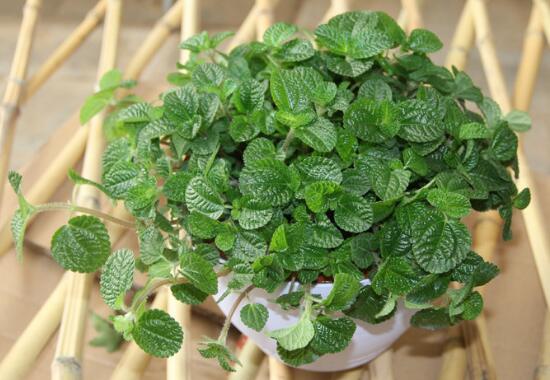
Lemon balm is a plant whose stems and leaves have a lemon fragrance. It looks similar to mint and is extremely easy to grow. The cultivation method for lemon balm is very simple, and propagating it is also very simple. As for how to propagate lemon balm, it can be grown from seed, cuttings, and division. Because cuttings are the most practical and have the best survival rate, they are the method most commonly used by gardening enthusiasts. Next, we will introduce them in detail.
II. Three Propagation Methods for Lemon Balm
(1) Cutting Method for Lemon Balm
Among the propagation methods for lemon balm, cuttings are undoubtedly the simplest. This method is perfect for gardening enthusiasts who already grow lemon balm at home and want to propagate one or even more pots. The operation is also very simple. Just take a few stems and leaves of lemon balm, insert them into a new container with loose soil, water them a bit, and place them in a shaded environment for care. The cutting method for lemon balm is as follows:
1. Cuttings: Choose a healthy lemon balm branch and cut it to about 10 cm.
2. Substrate: Based on the growth habits of lemon balm, we should use clean soil as the cutting substrate. Specifically: plain sand (sand that has been washed with water).
3. Insertion: Insert the cutting into the plain sand in the new container, inserting to a depth of about 1/3. Roots will grow in about 2-3 weeks, and by then it can be transplanted.
4. Note: Lemon balm leaves are thin, so you must water frequently to maintain humidity and provide 50% shade. Otherwise, the cuttings will dry out and die before they can even root. In addition, before rooting, gardening enthusiasts need to mist and replenish water daily to promote rapid rooting.
(2) Division Propagation of Lemon Balm
Division is one of the propagation methods for lemon balm. As the name suggests, it means dividing one plant into two or more, so that one pot becomes multiple pots. Specific operation: Take the existing plant out of the flower pot. Because the parts of the stems that touch the ground easily grow roots, simply divide its roots into two and replant them.
Note: With division propagation of lemon balm, you can operate with confidence, as it will not harm the plant. However, it is suitable for lemon balm plants that have already grown quite large. It is not recommended for plants that are too small.
(3) Seed Propagation of Lemon Balm
Lemon balm produces fruit after flowering, so it has seeds and can naturally be propagated by sowing. Specific operation: Buy some lemon balm seeds from a flower shop, then scatter them in a prepared flower pot (containing sowing soil mixed evenly with soil and basic fertilizer). Add a little water, patiently wait for germination, and carefully manage daily care.
Summary: Among indoor potted plants in recent years, plants like lemon balm that both have ornamental foliage and purify the air are increasingly sought after by people. So, what are you waiting for? Friends who grow lemon balm, hurry up and propagate a few more pots following the methods above! That's all for the introduction to lemon balm propagation methods. We hope it has been helpful.
Lemon Balm Melissa Officinalis Lemon Balm Gallery: How to Grow Lemon Balm / How to Propagate Lemon Balm
Lemon Balm ProfileLemon Balm Melissa Officinalis
Aliases: Mint balsam, bee balsam, bee balm, lemon balm, curly mint
Classification: Perennial herbaceous flower
Family and Genus: Plantae, Angiosperms, Dicotyledons, Lamiales, Lamiaceae, Mentha
Full Bloom Period: Summer
Scientific name of lemon balm: Lemon balm or curly mint. Aliases: Bee balsam, bee balm; Latin name: Melissa Officinalis. English name: Lemon balm. Origin: Native to the Mediterranean coast, found in Europe, Central Asia, North America, and Asia; the main production area is France. Lemon balm is a perennial herbaceous plant of the Lamiaceae family with a perennial root system. It is cold-tolerant, shade-tolerant, drought-tolerant, and also tolerant of pruning. In winter, it can withstand low temperatures below 0°C; in summer, growth is restricted above 30°C. The most suitable growing temperature is between 10-20°C. The plant height is about 50 cm, and the stems and leaves have...
Lemon Balm Cultivation Methods and Precautions: Introduction to Lemon Balm
Scientific name of lemon balm: Lemon balm or curly mint. Aliases: Bee balsam, bee balm; Latin name: Melissa Officinalis. English name: Lemon balm. Origin: Native to the Mediterranean coast, found in Europe, Central Asia, North America, and Asia; the main production area is France.
Lemon balm is a perennial herbaceous plant of the Lamiaceae family with a perennial root system. It is cold-tolerant, shade-tolerant, drought-tolerant, and also tolerant of pruning. In winter, it can withstand low temperatures below 0°C; in summer, growth is restricted above 30°C. The most suitable growing temperature is between 10-20°C. The plant height is about 50 cm. The stems and leaves have a Diaopai soap fragrance. It has verticillaster inflorescences and pale pink-purple labiate flowers. The flowering period is July-August. Lemon balm is easy to propagate and can be grown from seed, cuttings, and division.
Morphological Characteristics of Lemon Balm
Lemon balm has a plant height of 50 cm. The stems and leaves have a soap fragrance. It has verticillaster inflorescences and pale pink-purple labiate flowers. The flowering period is July-August. It is heat-tolerant, cold-tolerant, relatively drought-tolerant, waterlogging-tolerant, and also tolerant of pruning. Prune once before the Start of Winter, and it can safely overwinter. In winter, it can withstand low temperatures below 0°C; in summer, growth is restricted above 30°C. The most suitable growing temperature is between 10-20°C. Lemon balm is easy to propagate and can be grown from seed, cuttings, and division.
Lemon balm is a very cold-tolerant plant. Even at low temperatures below freezing, it remains lush green. It is very popular with bees. Its light green leaves are very beautiful, and when rubbed, they give off a lemon fragrance. It has a lemon-like fresh scent and can relieve headaches, abdominal pain, and toothaches. It also helps treat bronchitis and digestive system diseases.
Ecological Habits of Lemon Balm
Lemon balm is heat-tolerant, cold-tolerant, and shade-tolerant; it is drought-tolerant, waterlogging-tolerant, and tolerant of pruning. In winter, it can withstand low temperatures below 0°C; in summer, growth is restricted above 30°C. The most suitable growing temperature is between 10-20°C. Prune once before the Start of Winter, and it can safely overwinter. Lemon balm is easy to propagate and can be grown from seed, cuttings, and division. The plant height is 50 cm. The stems and leaves have a soap fragrance. It has verticillaster inflorescences and white labiate flowers. It is heat-tolerant and cold-tolerant, relatively drought-tolerant and waterlogging-tolerant.
Lemon balm is robust by nature. Compared to other herbs, it is more heat-tolerant, and it won't suffer root rot even with abundant soil moisture. Because the seeds are positively photoblastic, no soil covering is needed after sowing, and the germination rate is about 50%. For cuttings, use 5 cm long shoot tips as material, cut 5 and insert them into a clean medium; they will easily survive and can be transplanted in about 2-3 weeks. However, note that lemon balm leaves are thin, so you must water frequently to maintain humidity and provide 50% shade. Otherwise, the cuttings will dry out and die before they can even root. For the division method, the parts of the stems that touch the ground easily grow roots; simply cut them off and replant.
Lemon Balm Cultivation Techniques: Watering
Water every 3-5 days with clean water or rice-washing water. If the branches and leaves wilt due to lack of water, replenish water immediately and they will quickly recover. For nutrient solution, a commonly used general plant nutrient solution can be used.
Pruning
Lemon balm grows quickly. It is recommended to prune once a week. Just cut above the new leaves growing on higher nodes. If black-edged leaves or old leaves at the base appear, don't worry, just pluck them off. (In winter, growth is slow, so try to prune less. After pruning, place it in a spot with plenty of sunlight.)
Ventilation
If the room has good lighting, place the lemon balm in a spot with sunlight, and normal indoor ventilation is sufficient. If the room lighting is not very good, such as in a bathroom or kitchen, place the lemon balm in the room for 72 hours, then move it to a spot with plenty of sunlight for 72 hours, or move it back. When the weather isn't cold, it can also be placed outdoors for light and air exchange.
Sunlight
Lemon balm prefers bright light. If the room has good lighting, place the lemon balm in a spot with sunlight, and normal indoor ventilation is sufficient. If the room lighting is not very good, such as in a bathroom or kitchen, place the lemon balm in the room for 72 hours, then move it to a spot with plenty of sunlight for 72 hours, or move it back. When the weather isn't cold, it can also be placed outdoors for light and air exchange.
Temperature
Lemon balm cultivation has low temperature requirements. In winter, it can withstand low temperatures below 0°C, but in summer, growth is restricted above 30°C. The most suitable growing temperature is between 10-20°C.
Distribution Area of Lemon Balm
Lemon balm is native to the southern coast of the Mediterranean in Europe. It can be found in Europe, Central Asia, North America, and Asia. The main production area is France.
Lemon Balm Uses: Can Increase Appetite and Promote Digestion
With a refreshing, sweet taste, it is suitable for drinking when you have a cold or during sweaty summers. It can increase appetite and promote digestion, and is suitable before or after meals. Used to replace lemon for seasoning, lemon balm's fresh lemon scent is best at increasing appetite without the sourness of lemon, making it suitable for adding to all kinds of dishes and desserts. With a lemon-like fresh scent, it can relieve headaches, abdominal pain, and toothaches. It has pain-relieving effects, helps regulate respiratory system diseases, and stabilizes mood; it also helps treat bronchitis and digestive system diseases.
Specifically Absorbs Toxic and Harmful Gases from Indoor Air
Such as: formaldehyde, radon gas, benzene gas, ammonia gas, sulfur dioxide, as well as smoke odors, peculiar smells, and carbon dioxide. It releases negative ions quickly and disinfects and sterilizes. Place one large pot per 10 to 15 sq m, and one small pot per 8 sq m. After renovating a new house or new furniture, open all the doors and drawers of the new furniture, and after 72 hours there will be a noticeable elimination effect.
Cultural Background of Lemon Balm
Tested by the Center for Disease Control and Prevention
1. Lemon balm's 3-hour elimination rate for formaldehyde is 92.4%, and its 72-hour elimination rate is 98.5%. Therefore, lemon balm has a very good absorption effect on formaldehyde;
2. Lemon balm's 3-hour elimination rate for total volatile organic compounds (benzene, toluene, xylene) is 13.6%, and its 72-hour elimination rate is 84.8%. Therefore, lemon balm has a significant absorption effect on gas mixtures of total volatile organic compounds (benzene, toluene, xylene);
3. Lemon balm's 3-hour elimination rate for carbon monoxide is 20.1%, and its 72-hour elimination rate is 71.3%. Therefore, lemon balm has a certain absorption effect on carbon monoxide;
4. Moreover, lemon balm grows well in toxic and harmful environments.
Lemon Balm Pictures
Lemon Balm Cultivation Methods and Precautions: Sharing the Correct Way to Grow Lemon Balm
The lemon balm plant is short and full, with good shade tolerance. When touched by hand, it emits a faint fresh fragrance. It can absorb indoor harmful gases and release fresh negative oxygen ions, purifying the air, beautifying the environment, reducing pollution, and protecting the eyes. It is called the nemesis of hidden killers and the guardian of health, specifically absorbing toxic and harmful gases from indoor air, and is quite beneficial to the home environment. So what are the cultivation methods and precautions for lemon balm? Below, wed114 wedding website shares with you the correct way to grow lemon balm.
Lemon Balm Cultivation Methods and Precautions: Sharing the Correct Way to Grow Lemon Balm
Growth Habits of Lemon Balm
Lemon balm is heat-tolerant, cold-tolerant, and shade-tolerant; it is drought-tolerant, waterlogging-tolerant, and tolerant of pruning. In winter, it can withstand low temperatures below 0°C; in summer, growth is restricted above 30°C. The most suitable growing temperature is between 10-20°C. Prune once before the Start of Winter, and it can safely overwinter. Lemon balm is easy to propagate and can be grown from seed, cuttings, and division.
Lemon balm is robust by nature. Compared to other herbs, it is more heat-tolerant, and it won't suffer root rot even with abundant soil moisture. Because the seeds are positively photoblastic, no soil covering is needed after sowing, and the germination rate is about 50%. For cuttings, use 5 cm long shoot tips as material, cut 5 and insert them into a clean medium; they will easily survive and can be transplanted in about 2-3 weeks. However, note that lemon balm leaves are thin, so you must water frequently to maintain humidity and provide 50% shade. Otherwise, the cuttings will dry out and die before they can even root. For the division method, the parts of the stems that touch the ground easily grow roots; simply cut them off and replant.
Lemon Balm Cultivation Methods and Precautions: Sharing the Correct Way to Grow Lemon Balm
Lemon Balm Cultivation Methods and Precautions
1. Temperature: Lemon balm cultivation has low temperature requirements. In winter, it can withstand low temperatures below 0°C, but in summer, growth is restricted above 30°C. The most suitable growing temperature is between 10-20°C.
2. Watering: Water every 3-5 days with clean water or rice-washing water. If the branches and leaves wilt due to lack of water, replenish water immediately and they will quickly recover. For nutrient solution, a commonly used general plant nutrient solution can be used.
Lemon Balm Cultivation Methods and Precautions: Sharing the Correct Way to Grow Lemon Balm
3. Sunlight: Lemon balm prefers bright light. If the room has good lighting, place the lemon balm in a spot with sunlight, and normal indoor ventilation is sufficient. If the room lighting is not very good, such as in a bathroom or kitchen, place the lemon balm in the room for 72 hours, then move it to a spot with plenty of sunlight for 72 hours, or move it back. When the weather isn't cold, it can also be placed outdoors for light and air exchange.
4. Pruning: Lemon balm grows quickly. It is recommended to prune once a week. Just cut above the new leaves growing on higher nodes. If black-edged leaves or old leaves at the base appear, don't worry, just pluck them off.
Lemon Balm Cultivation Methods and Precautions: Sharing the Correct Way to Grow Lemon Balm
5. Pests: Lemon balm can emit volatile oils with bactericidal effects and can absorb harmful gases, so pest problems basically won't occur. Just maintain the water, light, and temperature needed for lemon balm growth.