How to Propagate Red Tip Photinia? Master the Seven-Step Cutting Technique with Ease
As more and more people grow red tip photinia, its propagation methods have also drawn much attention. As a foliage plant with strong sprouting ability and fast growth, how should red tip photinia best be propagated? Let's take a look at the red tip photinia cutting technique that people care about most.
How to Propagate Red Tip Photinia
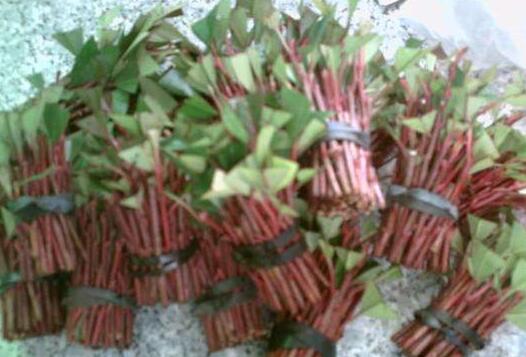
Red tip photinia is native to Southeast Asia and North America. Because of its unique growth characteristics, its propagation methods are also distinctive. So how is red tip photinia propagated? The more commonly used methods are tissue culture and cutting propagation, among which the red tip photinia cutting technique is relatively mature and lower in cost.
Red Tip Photinia Tissue Culture
So-called tissue culture refers to separating the required tissues and cells from the plant, then culturing them under sterile conditions with artificially controlled conditions, thereby obtaining complete regenerated plants. This method requires professional technique and corresponding facilities, so the cost is relatively high, and it is generally not commonly used.
Red Tip Photinia Cutting Technique
1. Preparatory Work
How is red tip photinia propagated when using cuttings? First, the preparatory work needs to be done well. You should choose a site with higher elevation, level ground, good drainage and deep soil. The basic material of the seedbed should be sterilized with a disinfectant to prevent pests and diseases, and preparation can be carried out according to the soil requirements in the red tip photinia cultivation method.
2. Determine the Time
In the red tip photinia cutting technique, the choice of time is relatively flexible. There is spring cutting in early March, summer cutting in early June and autumn cutting in early September. You can also choose a suitable time according to climatic conditions; for example, in some places in the south, cuttings can still be taken in November.
3. Cut the Branches
The branches used as cuttings should be semi-lignified young shoots or lignified current-year branches. Cut them into one leaf and one bud, with a length of 3-4 cm being best, and the cut must be smooth.
4. Rooting Treatment
After cutting, in order to shorten the rooting time, rooting treatment should be carried out before cutting. Generally, a rooting agent is mixed into a solution to soak the cuttings, such as the biochemical raw materials naphthalene acetic acid, indole butyric acid and so on. Put two-thirds of the cutting into the solution and soak for 1 second, then take it out. This can shorten the rooting time to 7-15 days.
5. Cutting
This is a relatively important step in the red tip photinia cutting technique. When cutting, first water the seedbed thoroughly, then insert two-thirds of the cutting into the seedbed, and let the top leaves face the same direction to receive even light.
6. Later Management
1. After cutting, spray with a 600-800 times dilution of thiophanate-methyl or chlorothalonil to prevent disease. Then keep the substrate moist, ensuring a water content of about 60%, a temperature controlled below 38 degrees, and a humidity of about 95%. If the temperature is too high, spray to cool it down, and when the light is too strong, shade it in time.
2. After cutting, rooting generally occurs in 7-15 days. After rooting, the water content of the substrate can be reduced, generally to 40%, and the light transmittance should also be kept at about 50%.
3. When all the cuttings have rooted and grown 2-3 new leaves, the shade net can be removed, and hardening off can begin. During this process, a low-concentration water-soluble fertilizer can be sprayed on the leaves.
How to Propagate Red Tip Photinia by Cutting? Red Tip Photinia Cutting Propagation Methods and Steps
Introduction: There are many propagation methods for red tip photinia, and the most common is cutting propagation. Cutting is simple to perform, has a high survival rate and is lower in cost. It can be used for mass production and is the most common seedling cultivation method on the market. Below, the First Agricultural Economics editor introduces the red tip photinia cutting propagation methods and steps for you!
Red Tip Photinia Cutting Propagation Methods and Steps:
Red Tip Photinia Cuttings
1. Cutting facilities.For cutting in a single-span greenhouse, cover it with greenhouse film and add a shade net. After leveling the ground inside the greenhouse, build a ground-level cutting seedbed. The seedbed width is about 100 cm, and 10-12 cm high boards are installed around it.
2. Seedbed preparation.The soil at the planting site should preferably be loose, fertile, and slightly acidic to neutral, with convenient irrigation and good drainage. Before planting, apply 3,000 kg of decomposed barnyard manure and 50 kg of superphosphate per mu, with a soil plowing depth of more than 25 cm, and at the same time apply insecticide to control underground pests. After plowing, level the soil, open drainage ditches, and make seedbeds, with a bed surface width of about 1 m. Spread a layer of fine sand at the bottom of the seedbed to facilitate drainage. The cutting substrate can be vermiculite plus peat, or clean yellow subsoil plus fine sand. The seedbed and substrate must be disinfected with fungicide and insecticide to prevent pests and diseases.
3. Cutting time.Spring cutting in early March, summer cutting in early June, and autumn cutting in early September.
4. Cutting of the cuttings.Use semi-lignified young shoots or lignified current-year branches, cut into one leaf and one bud, with a length of 3-4 cm, and the cut must be smooth.
5. Cutting treatment.After the cuttings are cut, pay attention to moisture retention and insert them as soon as possible after cutting. Before cutting, treat the cut with a rooting agent to speed up rooting and increase the survival rate. The cutting depth should preferably be 3 cm, with a density of 400 plants per sq m. After inserting, water thoroughly immediately, and spray the leaf surface with a mixed solution of carbendazim and anthracnose Fumei.
6. Management after cutting. After cutting, check the seedbed frequently. The water content of the substrate should be kept at about 60%, the air humidity in the greenhouse should preferably be kept above 95%, and the temperature in the greenhouse should be controlled below 38°C. If the temperature is too high, spray to cool it down. Shade from cutting until rooting and sprouting. After 15 days, some cuttings begin to root, and the water content of the substrate should be appropriately reduced, generally kept at about 40%. When more than 50% of the cuttings begin to root, gradually open the film for ventilation, with a shading light transmittance of about 50%. When all the cuttings have rooted and more than 50% have leafed out, gradually remove the greenhouse shade net and film and begin hardening off. Foliar fertilizer or low-concentration water-soluble fertilizer can be applied in combination to promote robust growth of the cuttings.
How to Propagate Red Tip Photinia? Red Tip Photinia Propagation Methods
The main propagation methods of red tip photinia are tissue culture and cutting. Tissue culture has relatively high requirements for facilities and professional technique as well as high cost, and is not suitable for most nurseries and growers. Here the editor introduces a cutting propagation technique that is low in cost, simple to operate, has a high survival rate, and can be produced in ordinary plastic greenhouses.
Cutting Facilities and Seedbed Preparation
For cutting in a single-span greenhouse, cover it with greenhouse film and add a shade net. After leveling the ground inside the greenhouse, build a ground-level cutting seedbed. The seedbed width is about 100 cm, and 10 to 12 cm high boards are installed around it. Spread a layer of fine sand at the bottom of the seedbed to facilitate drainage. The cutting substrate can be vermiculite plus peat, or clean yellow subsoil plus fine sand. The seedbed and substrate must be disinfected with fungicide and insecticide to prevent pests and diseases.
Cutting Time
The cutting times for red tip photinia are spring cutting in early March, summer cutting in early June and autumn cutting in early September.
Cutting of the Cuttings
Use semi-lignified young shoots or lignified current-year branches, cut into one leaf and one bud, with a length of about 3 to 4 cm, and the cut must be smooth.
Cutting Treatment
After the cuttings are cut, pay attention to moisture retention and insert them as soon as possible after cutting. Before cutting, treat the cut with a rooting agent to speed up rooting and increase the survival rate. The cutting depth should preferably be 3 cm, with a density of 400 plants per sq m. After inserting, water thoroughly immediately, and spray the leaf surface with a mixed solution of carbendazim and anthracnose Fumei.
Management after Cutting
After cutting, check the seedbed frequently. The water content of the substrate should be kept at about 60%, the air humidity in the greenhouse should preferably be kept above 95%, and the temperature in the greenhouse should be controlled below 38°C. If the temperature is too high, spray to cool it down. Shade from cutting until rooting and sprouting.
After 15 days, some cuttings begin to root, and the water content of the substrate should be appropriately reduced, generally kept at about 40%. When more than 50% of the cuttings begin to root, gradually open the film for ventilation, with a shading light transmittance of about 50%.
When all the cuttings have rooted and more than 50% have leafed out, gradually remove the greenhouse shade net and film and begin hardening off. Foliar fertilizer or low-concentration water-soluble fertilizer can be applied in combination to promote robust growth of the cuttings.
The above is the propagation method of red tip photinia introduced by the editor. I hope it is helpful to you!