How to Propagate Dianthus? Detailed Guide to Seed Sowing, Cuttings and Division
Dianthus is a plant native to the northern regions of China, and it is now grown in many parts of the country. As more people grow it, the question of how to propagate dianthus has become a topic of considerable interest. What propagation methods are there for dianthus? Let's take a look below.
I. How to Propagate Dianthus
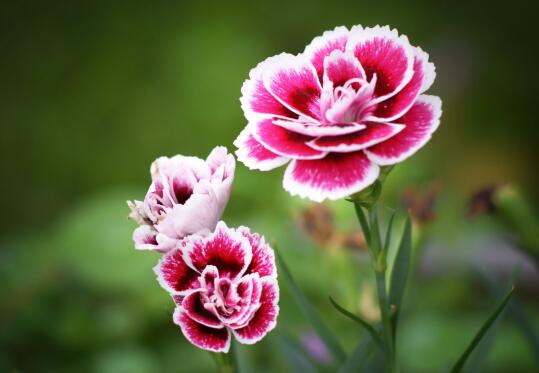
II. Propagation Methods for Dianthus
1. Seed Sowing Propagation
Advance preparation: When propagating dianthus by seed, this is generally done in September each year. The climate during this period is relatively suitable, which can increase the seed germination rate. Before sowing, it is best to choose a relatively loose soil, which naturally has good drainage and allows dianthus to absorb nutrients better.
Sowing method: Among the propagation methods for dianthus, seed sowing is a relatively common approach. Before sowing, we need to soak the seeds for 3-5 days, which can shorten the germination cycle. When sowing, we can evenly scatter the seeds over the soil surface, then cover them with 2-3 cm of soil and water them. Water thoroughly once, and after that seedlings will basically emerge in about 10 days.
2. Cutting Propagation
Advance preparation: When propagating by cuttings, the choice of cuttings is very important. It is best to choose branches that are relatively robust and free of pests and diseases, as this will give a relatively higher survival rate. As for the soil, it is the same as above, so I won't repeat it here.
Cutting method: Among the propagation methods for dianthus, cutting propagation is a relatively simple method. When taking cuttings, we can use a chopstick to poke a hole in the soil, then insert the cutting through the hole. This makes it less likely to damage the cutting. After that, press the soil flat and water thoroughly. Rooting generally occurs in about 15-20 days.
3. Division Propagation
Advance preparation: When propagating by division, it is generally best to do so in the two seasons of spring and autumn each year. The climate during these two seasons is relatively suitable, which can greatly increase the survival rate of the divisions. When selecting divisions, we need to separate the old plants that flowered the previous year from the new plants and replant them.
Division method: Among the propagation methods for dianthus, division propagation is a relatively rarely used method, but the survival rate is by no means low. Division propagation mainly uses old branches that flowered the previous year for division and planting. If division is done in spring, then in summer attention must be paid to drainage, fertilizer should be applied frequently around September, and by October it can bloom again.
How to Propagate Dianthus: 3 Propagation Methods for Dianthus
How to Propagate Dianthus 1. Seed Sowing Propagation MethodDianthus is generally sown in September each year. Sow in an open-ground seedbed, keep the potting soil moist after sowing, sprouts appear 5 days after sowing, and seedlings emerge in about 10 days. The optimum growth temperature during the seedling stage is 10-20°C. When the seedlings grow 4-5 leaves, they can be transplanted, and they will bloom the following spring. They can also be directly sown in the open ground in September, or sown in pots in a cold room from November to December, and planted out in the open ground in April of the following year.
2. Cutting Propagation MethodDianthus cuttings are generally taken from October to late February to March of the following year. During the period of lush branches and leaves, cut 5-6 cm long tender shoots as cuttings. After insertion, they root in 15-20 days.
3. Division Propagation MethodDianthus division propagation is mostly done after flowering using old plants, and can be carried out in autumn or early spring. For example, division can be done in April, drainage should be noted in summer, fertilizer and water management should be strengthened after September, and it will bloom again in early October.
Propagation Methods for Dianthus
Dianthus is a perennial herbaceous plant of the genus Dianthus in the family Caryophyllaceae, and one of China's traditional famous flowers. It is now mostly grown as an ornamental plant, widely introduced and cultivated by humans around the world, and a large number of cultivated varieties have been bred. Dianthus gets its name because its stems have nodes that swell like bamboo.Dianthus has a low plant form, stems like bamboo, and lush green foliage. Its flowering period is from April to October, concentrated in April to May. The capsule is oblong or long-round, and the seeds are flat-round and dark brown. It likes sunlight and is cold-tolerant, drought-tolerant, hates waterlogging, and prefers well-drained, fertile sandy loam. It is cold-tolerant but not tolerant of severe heat, and prefers a sunny, high and dry, well-ventilated spot with well-drained fertile loam.
Propagation commonly uses seed sowing, cuttings and division. The optimum temperature for seed germination is 21 to 22°C. Seed sowing propagation is generally carried out in September, sowing in an open-ground seedbed, keeping the potting soil moist after sowing, sprouts appear 5 days after sowing, and seedlings emerge in about 10 days. The optimum growth temperature during the seedling stage is 10-20°C. When the seedlings grow 4-5 leaves, they can be transplanted, and can be planted the following spring; they can also be directly sown in the open ground in September, or sown in pots in a cold room from November to December, and planted out in the open ground in April of the following year. Cutting propagation is carried out from October to late February to March of the following year; during the period of lush branches and leaves, cut 5-6 cm long tender shoots as cuttings, and they root in 15-20 days after insertion. Division propagation is mostly done after flowering using old plants, and can be carried out in autumn or early spring. For example, division can be done in April, drainage should be noted in summer, fertilizer and water management should be strengthened after September, and it will bloom again in early October. It is often harmed by rust disease and red spider mites. For rust disease, spray with 50% carboxin wettable powder at 1500 times dilution; for red spider mites, spray with 40% omethoate emulsifiable concentrate at 1500 times dilution. Dianthus can be used whole or its roots as medicine. It has the effects of clearing heat and promoting urination, and breaking blood and unblocking menstruation.
Potted dianthus requires sufficient base fertilizer, with 2-3 plants per pot. When the seedlings grow to 15 cm tall, remove the terminal buds to encourage branching. After that, pay attention to appropriately removing axillary buds; otherwise, too many branches will disperse nutrients and result in small flowers. Appropriately removing axillary buds concentrates nutrients and can promote larger and more vividly colored flowers. During the growth period, it should be placed in a sunny, well-ventilated spot for care, keep the potting soil moist, and apply a dilute decomposed liquid fertilizer about once every 10 days. If there is too much rain in summer, pay attention to drainage and loosening the soil. Dianthus hybridizes easily, so those saving seeds need to plant them in isolation. Before flowering, some axillary flower buds should be removed in time, mainly to ensure that the terminal flower buds bloom. In winter, water less; if the temperature is kept at 5-8°C, it will bloom continuously through winter and spring.