How to propagate Magnolia liliflora? All five propagation methods can be used
Magnolia liliflora is a perennial plant. If grown correctly and in a suitable environment, it can bloom multiple times, with gorgeous and elegant flowers. So during the growing process, how should Magnolia liliflora be propagated in a more scientific way? Today, the editor will introduce several common propagation methods for Magnolia liliflora.
How to propagate Magnolia liliflora
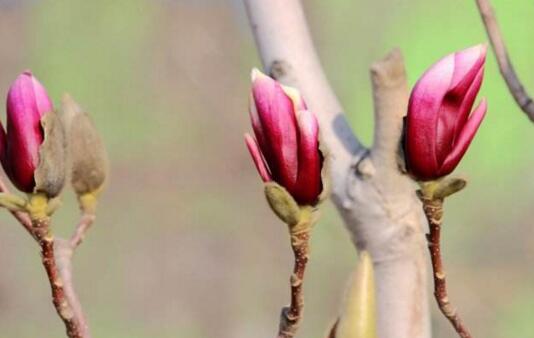
Magnolia liliflora has a very strong root sprouting ability, so it quickly sends up new shoots. So how should Magnolia liliflora be propagated? There are usually five methods: cutting propagation, grafting propagation, seed propagation, layering propagation, and division propagation.
Propagation methods for Magnolia liliflora
1. Cutting propagation
1. Preparing the substrate
The substrate determines the growth rate of the cuttings after propagation. Generally, nutrient soil, river sand, peat soil and other materials are selected, disinfected, and then mixed to make it. Alkaline soil is not suitable as a cutting substrate for Magnolia liliflora.
2. Selection of cuttings
In late spring or early autumn, when Magnolia liliflora grows relatively vigorously, choose thick, healthy branches as cuttings. After cutting the branches off, cut them into sections 10-15 cm long, each with more than 3 leaf nodes. The upper cut should be 1 cm from the topmost leaf node, and the lower cut should be 0.5 cm from the lowest leaf node.
3. Cutting and later management
Insert the cuttings into the prepared substrate, then pay attention to temperature, humidity, light and so on. The suitable temperature for cutting roots is 20-30 degrees; humidity is 75-85%; in addition, sunlight is also needed. Creating these favorable conditions helps the cuttings succeed.
2. Grafting propagation
Among the propagation methods for Magnolia liliflora, grafting is also one of the commonly used ways. Choose a robust 2-3 year old plant as the rootstock. Bud grafting is carried out in July-August, and cut grafting is carried out in autumn. After cut grafting, cover the scion completely with soil, and remove the covering soil in late spring of the following year. Cut grafting can also be done in a greenhouse, then stored in wet sand after grafting. After the graft union heals, transplant before budding in the following spring.
3. Division propagation
This is generally carried out in autumn or spring. Take Magnolia liliflora out of the potting soil, then cut it apart with the roots. Dip the small daughter plants in mud slurry. Large plants must be divided and transplanted with a soil ball, and then properly cared for according to Magnolia liliflora cultivation methods.
4. Seed propagation
The flowering period of Magnolia liliflora is March-April, and its fruit ripening period is August-September. Therefore, seeds are generally collected in September, stored in sand in winter, and sown in the following spring. Before sowing, soak the seeds in warm water at about 50°C. Sow in furrows in rows. Choose fertile sandy loam for the seedling bed. After sowing, cover with 2 cm of soil, water thoroughly, cover with grass, and keep the soil moist frequently. Generally, seedlings emerge after about 2 months.
5. Layering propagation
1. Ordinary layering
Layering is a propagation method for Magnolia liliflora with a relatively high success rate. Ordinary layering is generally carried out in February-March. Cut into the base of the branch to be layered to about half its depth, then separate it upward at a distance. A tile can be inserted in the middle, then gently press it into the soil, being careful not to break it. Then pile soil on top. After roots and shoots emerge, it can be separated and planted.
2. Air layering
Before the dog days of summer, choose healthy, thick young branches from the mother plant, preferably 1.5-2 cm in diameter. Cut a crack from the lower part of the fork, then cover it with a bamboo tube or similar, fill it with potting soil, and tie it tightly with rope. Keep the potting soil moist. After rooting in the summer of the following year, remove it and plant it in place.
Magnolia liliflora Magnolia liliflora Desr Magnolia liliflora illustrated guide: how to grow Magnolia liliflora / how to propagate Magnolia liliflora
Magnolia liliflora profileMagnolia liliflora Magnolia liliflora Desr
Cultivation methods and precautions for Magnolia liliflora Introduction to Magnolia liliflora
Magnolia liliflora (scientific name: Magnolia liliiflora), of the family Magnoliaceae and genus Magnolia, also known as magnolia and xinyi, is a plant endemic to China. It is distributed in Yunnan, Fujian, Hubei, Sichuan and other places in China, growing in areas at altitudes of 300 m to 1,600 m, generally growing at the edges of mountain forests. The flowers of Magnolia liliflora are gorgeous and pleasant, with a delicate fragrance. It looks beautiful whether planted alone or in groups. Its tree form is graceful, with luxuriant branches and flowers. It is an excellent garden and street landscaping plant, and is a traditional flower and Chinese medicine with a history of more than 2,000 years in China. Magnolia liliflora is listed in the IUCN Red List of Plants ver 3.2: 2009. It is also not easy to transplant and maintain, and is a very precious flowering tree.
Mubi, a plant of the Magnoliaceae family, has bright colors, compact flower buds, neat scales and hairs, and a rich fragrance. Magnolia liliflora has the effect of dispersing wind-cold, and is used to treat rhinitis and lower blood pressure; Magnolia liliflora is also a valuable spice and chemical raw material, and is also an ornamental landscaping plant.
Morphological characteristics of Magnolia liliflora
Magnolia liliflora is a deciduous shrub of the genus Magnolia in the family Magnoliaceae. It grows 3 to 5 m tall in the ground and 1 to 1.5 m tall in pots. It is often multi-stemmed. The leaves are obovate or elliptical. The flowers are solitary at the branch tips, bell-shaped, with 9 tepals arranged in 3 whorls. They are purple or purplish red. In spring, it flowers before the leaves emerge or flowers and leaves appear together. Magnolia liliflora likes light and is not tolerant of shade; it is relatively cold-tolerant, likes fertile, moist, well-drained soil, avoids clayey soil, and is not tolerant of salinity and alkalinity; it has fleshy roots and avoids waterlogging; its root system is well developed and its sprouting ability is strong. [2]
Magnolia liliflora is produced in central China and has been cultivated for a long time for ornamental purposes. It was a precious ornamental flower in the courtyards of Jiangnan palaces in the past, with a cultivation history of more than 2,500 years. Magnolia liliflora blooms every year in early spring. The flowers open before the leaves or rarely at the same time as the leaves. Although traces of winter still remain on the deciduous branches, the branch tips are covered with noble and magnificent purple flowers. Each flower stands gracefully, as if carved from powder and jade, elegant and graceful, each striving to be the most beautiful. The scent is fragrant, and the corolla is huge, purple or purplish red, large, bell-shaped, with elegance showing through the purple, very delicate and charming, and the fragrance is enticing. The flowers bloom for about one month, creating a magnificent sight. If white magnolia is like a noble princess, then Magnolia liliflora is like a fashionable woman.
The flower buds of Magnolia liliflora can be used as medicine, and the flowers can be used to extract natural essence for making cosmetics. It is about 3 m tall, and flowers and leaves open at the same time. In the Summer Palace in Beijing, there are Magnolia liliflora more than a hundred years old. This species is produced in Hubei, Sichuan, Yunnan and other provinces. The flower buds of Magnolia liliflora are used as medicine. Propagation mostly uses division. Its other habits and uses are the same as those of magnolia.
Deciduous tree, up to 15 m tall. Young branches are hairy, and winter buds are densely covered with gray-green long downy hairs. Leaves alternate, obovate to obovate-oblong, 10-18 cm long, 6-10 cm wide, with a broad and abruptly pointed apex, gradually narrowed base, entire margin, glossy above, pubescent below. Flowers large, bell-shaped, opening before the leaves; tepals 9, in 3 whorls, white, oblong-obovate; stamens and carpels numerous, spirally arranged respectively on the elongated receptacle; follicle apex rounded, numerous, aggregated into a cylindrical shape. Flowering period February-March. Fruiting period June-July. Cultivated throughout the country except in low-temperature areas. Harvesting and processing: harvested in January-February before the flowers open, remove branches and stems, and dry in the shade. Characteristics: flower buds are pen-tip-shaped or long ovate, 1.5-3.8 cm long, 1-1.8 cm in diameter, with a short woody stalk at the base. Bracts 2-3 layers, each layer with 2-3 pieces, the outer surface densely covered with gray-white or gray-green downy hairs, 3-4.5 mm long, the inner surface brownish purple, thick and brittle, the inner bracts thinner. Tepals 9, similar in size, brownish purple, tightly embracing layer upon layer. Odor fresh and fragrant, taste slightly bitter and pungent.
Ecological habits of Magnolia liliflora
It likes a warm, humid and sunny environment. It is relatively cold-tolerant, but not tolerant of drought, salinity or alkalinity, and fears waterlogging. It requires fertile, well-drained sandy loam.
Magnolia liliflora cannot grow in calcareous and chalky soils; its branches are weak, so it needs to be planted in a slightly shaded location; it has good wind resistance and also strong tolerance to air pollution; it can withstand a brief low temperature of -20°C. It likes warmth and humidity, and likes light, and is not tolerant of waterlogging or drought. Its root system is well developed, with strong sprouting and budding ability, and it is tolerant of pruning and shaping, but its healing ability is relatively poor, so after pruning apply sulfur powder to prevent rot; its fleshy roots are afraid of damage, so it is not easy to transplant. If transplanting is needed, it should be done in late autumn after leaf fall or in late spring after flowering under mild and humid weather. Magnolia liliflora needs frequent pruning and trimming, promptly removing diseased, damaged and dead branches; otherwise the tree shape will develop toward a shrub form, which is also not conducive to the growth of flower buds.
Native to central China, widely cultivated throughout the country.
Mubi flowers before the leaves in March and April. The flowers are large and gorgeous, purple on the outside of the petals and white or pink on the inside. The seeds mature in September. They can be sown immediately after collection; or stored in sand and sown after germination promotion from mid-to-late March to early April of the following year. They can leave the nursery in one year, and in two years can be used as rootstock for Michelia alba, Michelia champaca, Magnolia denudata, Magnolia liliflora 'Nigra', Magnolia liliflora 'Zhusa', Magnolia sieboldii, Magnolia coco, Magnolia grandiflora and Michelia figo.
It likes a warm, humid and sunny environment. It is relatively cold-tolerant, but not tolerant of drought, salinity or alkalinity, and fears waterlogging. It requires fertile, well-drained sandy loam.
Cultivation techniques for Magnolia liliflora
[Potting soil]: Magnolia liliflora likes loose, fertile acidic and slightly acidic soil. Equal parts of leaf mold and vegetable garden soil can be mixed as potting soil, and 50 to 150 grams of bone meal or nitrogen-phosphorus-potassium compound fertilizer can be added to the soil. The pot should be slightly deeper and larger, and some broken hard plastic foam blocks should be placed at the bottom of the pot to enhance air permeability and drainage and prevent root rot. Repot and change the soil once every year or every other year after flowering, retaining 1/2 to 1/3 of the old soil.
[Water and fertilizer]: Magnolia liliflora likes moisture and fears waterlogging, so timely and appropriate watering is very important. From the beginning of spring to flowering, keep the potting soil moist but not wet; after flowering, keep the potting soil moist but not waterlogged; after leaf fall, keep the potting soil slightly moist but not dry. At no time should it be drought-stressed or waterlogged. Especially in the rainy season, pay attention to drainage and flood prevention.
Magnolia liliflora likes fertilizer. Fertilization should seize the two key timings of 2 months before flowering and 5 months after flowering, applying nitrogen-phosphorus-potassium compound fertilizer about once every ten days. The former makes the buds swell and the flowers open, while the latter promotes more flower bud formation and more flowers the following spring. When leaves fall in early winter, apply a fertilizer mainly based on phosphorus and potassium once to enhance its cold resistance and overwintering ability. At other times, apply less or not at all. Avoid applying nitrogen fertilizer alone.
[Light and temperature]: Magnolia liliflora likes light. Place it in a sunny courtyard or rooftop garden. With more sunlight, it grows robustly and luxuriantly. Under semi-shade conditions it can still grow, but it is thinner and weaker and produces fewer flowers. In too much shade, it produces no flowers. It is relatively cold-tolerant, and can overwinter outdoors in Beijing and areas to the south.
[Pruning]: Magnolia liliflora has strong root sprouting ability. If propagation is not needed, cut the sprouts as they grow, and keep 3 main stems per pot. For branches that are too tall or too long, they can be shortened just after flowering when leaves have just unfolded. Because its healing ability is poor, apply sulfur powder after cutting to prevent rot. If unnecessary, do not prune. After flowering, if seeds are not needed for propagation, cut off the spent flowers with the base attached.
[Propagation]: Division, layering and seed propagation are commonly used. After flowering, combine repotting and soil changing, take the plant out, and use sharp scissors or a knife to cut off the rooted daughter plants from the root sprouts and plant them separately. Transplanting can be carried out in autumn or before flowering in early spring. Small seedlings should be dipped in mud slurry, and large seedlings must be transplanted with a soil ball. Apply fertilizer once before and once after the flowering period, mainly phosphorus and potassium fertilizer. In periods of high summer heat and autumn drought, maintain soil moisture. After flowering and before new branches sprout, cut off dead branches and dense branches and shorten excessive growth branches. For seed propagation, collect seeds in September, store in sand in winter, sow in the following spring, and germination occurs 20-30 days after sowing.
Propagation methods of Magnolia liliflora Selection and treatment of Magnolia liliflora rootstock
The rootstock should be selected from inferior varieties at the early or full bud stage that do not form flower buds or form relatively few flower buds. First saw off the tree crown from the main branches and the central leader. The horizontal height from the ground should be similar to avoid imbalance in the vigor of the main branches caused by apical dominance; upper main branches should be shorter than the main branch below them, and the height of the central leader should be slightly higher than the topmost main branch. The graft interface should be selected at a smooth place, and the saw cut should be smoothed with a cut-grafting knife.
Selection and treatment of scions. The scions should be selected from single plants of excellent varieties such as 'Hou Bazhang Chuanyu', 'Da Maotao Chuanyu' or 'Er Maotao Chuanyu', choosing robust, well-developed, pest- and disease-free one-year-old branches, collected as grafting proceeds.
Grafting techniques are best carried out from before spring budding to the leaf expansion stage. Generally, it is mid-to-late March. If the axillary buds do not germinate, the time can be extended. Grafting methods include: cleft grafting, cut grafting and bud grafting. Cleft grafting is mostly used for thick branches. First split open the grafting point with a cleft grafting knife or sharp axe, insert a wooden peg into the center of the split, cut the scion into lengths of about 10 cm, whittle the base into a wedge shape, insert it into the split, and align the cambium layers on the outer side with each other. One scion can be grafted on each side of each split. After grafting, gently pull out the wooden peg. Cut grafting is to make a longitudinal cut at the grafting point slightly into the xylem, cut the scion into lengths of about 5 cm, whittle both sides of the base into one long and one short cut surface (the long surface about 3 cm, the short surface about 1.5 cm), insert the short surface facing outward into the cut, and align the cambium closely along one end. Bud grafting is to use bud grafting to fill gaps where branches are missing within a branch group, so as to make the branch group complete. After grafting by any of the above methods, immediately wrap the graft interface tightly and securely with plastic film strips, and leave the scion exposed.
Post-grafting management
After the scions survive about 20 days after grafting, they can sprout and expand leaves. Note that sprouting buds on the rootstock should be removed in time. For those that do not survive, summer bud grafting should be carried out at suitable positions on the rootstock. When the new shoots of the scion reach 50 cm, the tips can be pinched to increase branching and form a tree crown early.
Medicinal or dietary therapeutic value of Magnolia liliflora
The medical information and healthy dietary information on Hugarden Network is for reference only and cannot be used as a basis for diagnosis or medical treatment. Any health problems should be consulted with professional medical personnel, and the treatment of any disease should follow doctor's advice.
Ultimate flower-protecting mission: love yourself, start from reality, and strictly follow doctor's advice. For illness, do not be careless, do not delay, do not give up hope, face it bravely, use love to warm the silent world, and use your heart to care for the flower field within.
[Drug name]: Xinyi. [Aliases]: Linlan, Mulan, Guilan, Dulan, Magnolia liliflora, Xinshen, Houtao, Fangmu, Xinzhi, Yingchun, Mubihua, Mao Xinyi, Xinyi Tao, Jiangpu Hua. [Source]: This product is the dried flower buds of Magnolia biondii, Magnolia denudata or Magnolia sprengeri of the Magnoliaceae family. [Harvesting and processing]: Harvest in late winter and early spring when the flowers have not yet opened, remove branches and stems, and dry in the shade. [Efficacy]: headache, waist pain, brain pain, rhinitis and other symptoms; can be used as an analgesic. The bark contains magnolia curare, which has the effect of paralyzing motor nerve endings. [Medicinal nature and meridian tropism]: pungent, warm. Enters the lung and stomach meridians. [Usage and dosage]: Oral administration: decoct in soup, 1-3 qian; or make into pills or powders. [External use]: grind into powder and insert into the nose, or soak in water, distill, and drop into the nose. [Contraindications]: 1. Those with yin deficiency and hyperactive fire should not take it. 2. "Bencao Jing Jizhu": Ligusticum chuanxiong is its guiding herb. It is antagonistic to Wushizhi. It is incompatible with Acorus calamus, Typha pollen, Coptis chinensis, gypsum, and Huanghuan. 3. "Bencao Jing Shu": contraindicated for all qi-deficient people, contraindicated for those with head pain due to blood deficiency and hyperactive fire, and contraindicated for those with toothache due to stomach fire. 4. "Bencao Huiyan": for qi-deficient people, even if they occasionally contract wind-cold and develop blocked orifices, it should not be used.
Distribution area of Magnolia liliflora
Produced in Fujian, Hubei, Sichuan, and northwestern Yunnan in China.
Grows at the edges of mountain forests at altitudes of 300-1,600 m.
This species is a traditional flower of China with more than two thousand years of history. It is cultivated in major cities across China and has been introduced to cities in Europe and America. Its flower color is gorgeous and it is renowned at home and abroad. [4] The main cultivation bases include Shuyang in Jiangsu, Zhejiang, Anhui and other places.
Magnolia liliflora pictures
How to propagate Magnolia liliflora Propagation and cultivation methods and garden uses
Magnolia liliflora is an ornamental landscaping plant. Its flowers are gorgeous and pleasant, with a delicate fragrance. It looks beautiful whether planted alone or in groups. Its tree form is graceful, with luxuriant branches and flowers, and it is an excellent garden and street landscaping plant. Below is an introduction to how to propagate Magnolia liliflora, and its propagation and cultivation methods.
How to propagate Magnolia liliflora
Division, layering and seed propagation are commonly used. After flowering, combine repotting and soil changing, take the plant out, and use sharp scissors or a knife to cut off the rooted daughter plants from the root sprouts and plant them separately. Transplanting can be carried out in autumn or before flowering in early spring. Small seedlings should be dipped in mud slurry, and large seedlings must be transplanted with a soil ball. Apply fertilizer once before and once after the flowering period, mainly phosphorus and potassium fertilizer. In periods of high summer heat and autumn drought, maintain soil moisture. After flowering and before new branches sprout, cut off dead branches and dense branches and shorten excessive growth branches. For seed propagation, collect seeds in September, store in sand in winter, sow in the following spring, and germination occurs 20-30 days after sowing.
1. Selection and treatment of Magnolia liliflora rootstock
The rootstock should be selected from inferior varieties at the early or full bud stage that do not form flower buds or form relatively few flower buds. First saw off the tree crown from the main branches and the central leader. The horizontal height from the ground should be similar to avoid imbalance in the vigor of the main branches caused by apical dominance; upper main branches should be shorter than the main branch below them, and the height of the central leader should be slightly higher than the topmost main branch. The graft interface should be selected at a smooth place, and the saw cut should be smoothed with a cut-grafting knife.
Selection and treatment of scions. The scions should be selected from single plants of excellent varieties such as 'Hou Bazhang Chuanyu', 'Da Maotao Chuanyu' or 'Er Maotao Chuanyu', choosing robust, well-developed, pest- and disease-free one-year-old branches, collected as grafting proceeds.
Grafting techniques are best carried out from before spring budding to the leaf expansion stage. Generally, it is mid-to-late March. If the axillary buds do not germinate, the time can be extended. Grafting methods include: cleft grafting, cut grafting and bud grafting. Cleft grafting is mostly used for thick branches. First split open the grafting point with a cleft grafting knife or sharp axe, insert a wooden peg into the center of the split, cut the scion into lengths of about 10 cm, whittle the base into a wedge shape, insert it into the split, and align the cambium layers on the outer side with each other. One scion can be grafted on each side of each split. After grafting, gently pull out the wooden peg. Cut grafting is to make a longitudinal cut at the grafting point slightly into the xylem, cut the scion into lengths of about 5 cm, whittle both sides of the base into one long and one short cut surface (the long surface about 3 cm, the short surface about 1.5 cm), insert the short surface facing outward into the cut, and align the cambium closely along one end. Bud grafting is to use bud grafting to fill gaps where branches are missing within a branch group, so as to make the branch group complete. After grafting by any of the above methods, immediately wrap the graft interface tightly and securely with plastic film strips, and leave the scion exposed.
2. Post-grafting management
After the scions survive about 20 days after grafting, they can sprout and expand leaves. Note that sprouting buds on the rootstock should be removed in time. For those that do not survive, summer bud grafting should be carried out at suitable positions on the rootstock. When the new shoots of the scion reach 50 cm, the tips can be pinched to increase branching and form a tree crown early.
Cultivation methods for Magnolia liliflora
1. Potting soil
Magnolia liliflora likes loose, fertile acidic and slightly acidic soil. Equal parts of leaf mold and vegetable garden soil can be mixed as potting soil, and 50 to 150 grams of bone meal or nitrogen-phosphorus-potassium compound fertilizer can be added to the soil. The pot should be slightly deeper and larger, and some broken hard plastic foam blocks should be placed at the bottom of the pot to enhance air permeability and drainage and prevent root rot. Repot and change the soil once every year or every other year after flowering, retaining 1/2 to 1/3 of the old soil.
2. Water and fertilizer
Magnolia liliflora likes moisture and fears waterlogging, so timely and appropriate watering is very important. From the beginning of spring to flowering, keep the potting soil moist but not wet; after flowering, keep the potting soil moist but not waterlogged; after leaf fall, keep the potting soil slightly moist but not dry. At no time should it be drought-stressed or waterlogged. Especially in the rainy season, pay attention to drainage and flood prevention.
Magnolia liliflora likes fertilizer. Fertilization should seize the two key timings of 2 months before flowering and 5 months after flowering, applying nitrogen-phosphorus-potassium compound fertilizer about once every ten days. The former makes the buds swell and the flowers open, while the latter promotes more flower bud formation and more flowers the following spring. When leaves fall in early winter, apply a fertilizer mainly based on phosphorus and potassium once to enhance its cold resistance and overwintering ability. At other times, apply less or not at all. Avoid applying nitrogen fertilizer alone.
3. Light and temperature
Magnolia liliflora likes light. Place it in a sunny courtyard or rooftop garden. With more sunlight, it grows robustly and luxuriantly. Under semi-shade conditions it can still grow, but it is thinner and weaker and produces fewer flowers. In too much shade, it produces no flowers. It is relatively cold-tolerant, and can overwinter outdoors in Beijing and areas to the south.
4. Pruning
Magnolia liliflora has strong root sprouting ability. If propagation is not needed, cut the sprouts as they grow, and keep 3 main stems per pot. For branches that are too tall or too long, they can be shortened just after flowering when leaves have just unfolded. Because its healing ability is poor, apply sulfur powder after cutting to prevent rot. If unnecessary, do not prune. After flowering, if seeds are not needed for propagation, cut off the spent flowers with the base attached.
Garden uses of Magnolia liliflora
Magnolia liliflora is a famous early spring ornamental flowering tree. When it blooms in early spring, the whole tree is covered with purplish red flowers, with a quiet and refined posture and a unique charm. It is suitable for planting in front of halls and behind courtyards in classical gardens, and can also be planted alone or scattered in small courtyards.
Medicinal or dietary therapeutic value of Magnolia liliflora [Drug name] Xinyi.
[Aliases]: Linlan, Mulan, Guilan, Dulan, Magnolia liliflora, Xinshen, Houtao, Fangmu, Xinzhi, Yingchun, Mubihua, Mao Xinyi, Xinyi Tao, Jiangpu Hua.
[Source]: This product is the dried flower buds of Magnolia biondii, Magnolia denudata or Magnolia sprengeri of the Magnoliaceae family.
[Harvesting and processing]: Harvest in late winter and early spring when the flowers have not yet opened, remove branches and stems, and dry in the shade.
[Efficacy]: headache, waist pain, brain pain, rhinitis and other symptoms; can be used as an analgesic. The bark contains magnolia curare, which has the effect of paralyzing motor nerve endings.
[Medicinal nature and meridian tropism]: pungent, warm. Enters the lung and stomach meridians.
[Usage and dosage]: Oral administration: decoct in soup, 1-3 qian; or make into pills or powders.
[External use]: grind into powder and insert into the nose, or soak in water, distill, and drop into the nose.
[Contraindications]: 1. Those with yin deficiency and hyperactive fire should not take it.
2. "Bencao Jing Jizhu": Ligusticum chuanxiong is its guiding herb. It is antagonistic to Wushizhi. It is incompatible with Acorus calamus, Typha pollen, Coptis chinensis, gypsum, and Huanghuan.
3. "Bencao Jing Shu": contraindicated for all qi-deficient people, contraindicated for those with head pain due to blood deficiency and hyperactive fire, and contraindicated for those with toothache due to stomach fire.
4. "Bencao Huiyan": for qi-deficient people, even if they occasionally contract wind-cold and develop blocked orifices, it should not be used.