A detailed guide to Periwinkle (Catharanthus roseus) cuttings: choosing the cuttings is key
Among the propagation methods for Periwinkle (Catharanthus roseus), cutting propagation is used by fewer people than seed propagation, but its survival rate is by no means low. So how do you take cuttings of Periwinkle? What are the cutting methods for Periwinkle? Below, the editor will walk you through it.
I. How to take cuttings of Periwinkle
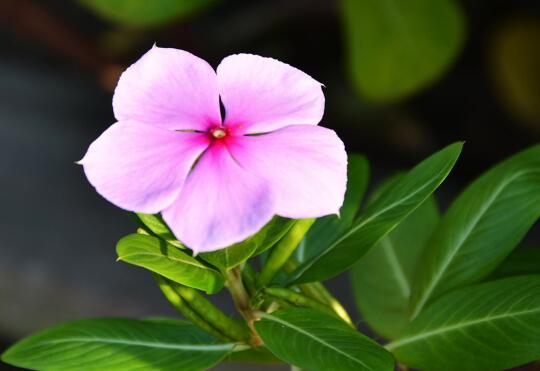
II. Cutting methods for Periwinkle
1. Cutting time
Periwinkle (Catharanthus roseus) is a light-loving plant, and it is best to keep it in sufficient light while it grows. Therefore, the most suitable time to take cuttings is the period from April to July each year; taking cuttings at this time will greatly increase the survival rate.
2. Soil selection
If you want to know how to take cuttings of Periwinkle, soil selection is a fairly key point. Choosing a suitable soil can make the cutting process go more smoothly and make the cuttings root more easily. For soil, we can choose leaf mold with relatively high looseness.
3. Cutting selection
The cutting refers to a branch of Periwinkle (Catharanthus roseus), and this part is very important. Whether the chosen branch is good or bad directly determines the survival rate. In this regard, we had best choose relatively robust branches, which will greatly increase the survival rate. If you choose branches that already look relatively thin and small, the cutting is basically declared a failure.
4. Cutting method
As for how to take cuttings of Periwinkle, the method is actually very simple. First, we need to find an object about as thick as the cutting and poke a hole in the soil, then insert the cutting into the soil and press it flat, and then we can water. When watering, just water thoroughly once. After that, it will take about 20 days to root.
5. Follow-up management
After Periwinkle cuttings have successfully rooted, we can carry out follow-up care. There are also many things to pay attention to in terms of care, such as light, temperature, watering, fertilizing, and so on. For details, you can refer to the article on how to grow Periwinkle; the editor will not introduce too much here.
Cutting methods for Periwinkle
Cuttings are generally taken in spring or early summer. Cut tender branches from perennial overwintered old plants, with a length of 8-10 cm, cut off the lower branches and leaves, and keep only 2-3 pairs of leaves at the top.
Insert the branches directly into a sand bed, keep the soil moist, control the temperature at 20-24°C, and be careful to shade in time. After cutting, they will root in 15-20 days. When the young seedlings grow to about 10 cm, pinch off the tips to promote growth.
You all understand the cutting methods for Periwinkle now, right? Periwinkle has quite a lot of effects and uses.
How does Periwinkle propagate? Propagation methods for Periwinkle / high survival rate with sowing and cuttings
Periwinkle (Catharanthus roseus) is a plant originating from tropical regions and was later introduced to our country. Nowadays, many people in our country grow it. As more people grow it, how Periwinkle propagates has also become a issue people care about more. What propagation methods are there for Periwinkle? Below, the editor will walk you through it.
I. How Periwinkle propagates / sowing / cuttings
As for the question of how Periwinkle propagates, it can actually be roughly divided into two types: seed propagation and cutting propagation. Both methods have been tested many times and both have very high survival rates. As for exactly what needs to be done for these two propagation methods, there is a detailed explanation below. Let us continue reading.
II. Propagation methods for Periwinkle
Seed propagation
1. Sowing time
Among the propagation methods for Periwinkle, seed propagation is a relatively commonly used method. When carrying out seed propagation, choosing a suitable time is very important. Generally, it is best to sow in spring, because the climate is relatively suitable and it can greatly increase the survival rate of the seeds.
2. Seed selection
As for how Periwinkle propagates, seed selection is fairly important. When collecting seeds, when you see the fruit of Periwinkle turn yellow and the black seeds inside can be seen through it, we can collect them. After collection, the seeds need to be soaked in water for 3-5 days before sowing, which will make the seeds easier to germinate.
3. Sowing method
When sowing, because the seeds are relatively small, we need to mix the seeds with fine sand and scatter them. After scattering, cover them with about 2-3 cm of soil and then water. When watering, be careful to use a spray bottle; if you pour water directly with a watering can, it is very easy to wash the seeds away. Be careful to water thoroughly once, and after that they will sprout in about 7-10 days.
Cutting propagation
1. Cutting time
As for how Periwinkle propagates, choosing the propagation time is very important. When taking cuttings, we can choose the period of late spring and early summer, because Periwinkle is relatively light-loving, so this period is the most suitable and can greatly increase the rooting rate of the cuttings.
2. Cutting selection
The cutting mentioned here is also a branch of Periwinkle. At this time, it is best to choose relatively robust branches free of pests and diseases, as the survival rate will be relatively high. If you choose branches that already look relatively thin and small, they will be very difficult to keep alive.
3. Cutting method
Among the propagation methods for Periwinkle, cutting propagation is one of the simpler ones. First, we can use chopsticks to poke a hole in the soil, then insert the chosen cutting into the hole, then press the soil flat and water it. After watering, the cutting will root in about 20 days.