Hoya cutting propagation method: take sturdy branches in late summer and early autumn
Among the propagation methods for hoya, cutting propagation is a relatively common method, and the survival rate is also relatively high, but the premise is that you master the correct operation method. So what exactly is the cutting propagation method for hoya? Below, the editor will walk everyone through it.
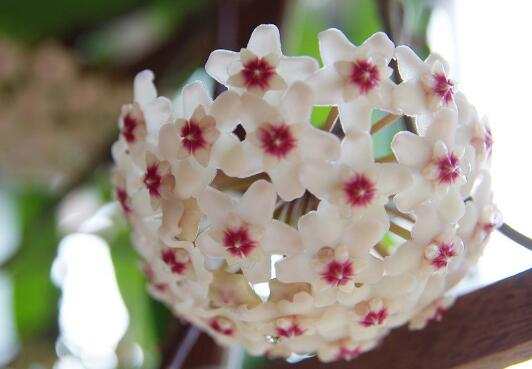
Hoya cutting propagation method
Hoya cutting propagation is a method that has been tested countless times, but if you want the cuttings to succeed, there are still many points to pay attention to, such as the timing of cutting, the selection of cuttings and soil, and the cutting method, none of which can be done carelessly. These points are introduced in detail below, so let's continue reading.
1. Cutting time
When we want to propagate hoya by cuttings, choosing the correct cutting time is very important. Generally, it is best to do it in late summer and early autumn, because the climate is more suitable and the survival rate will be greatly improved.
2. Soil selection
When carrying out cutting propagation, the choice of soil also has a certain influence on the survival rate. As for soil, we had best choose relatively loose humus soil. This kind of soil has better drainage than ordinary soil and can be more conducive to the hoya absorbing nutrients.
3. Cutting selection
If you want to improve the survival rate of cuttings, you also need to pay attention when choosing cuttings. If the branch you choose looks very weak, then the cutting can basically be declared a failure. When choosing branches, it is better to choose robustly growing branches, so the survival rate will be much higher.
4. Cutting method
The cutting method for hoya is actually very simple. First, we need to trim off the leaves at the bottom of the cutting, then wash off the milky sap at the cut, and after it dries, insert it into the soil and water it thoroughly. When watering, remember not to water too much. If too much water causes waterlogging, it can easily lead to root rot. Everyone should remember this point. After the cutting is completed, the cutting can take root in 20-30 days.
5. Follow-up management
After the cutting takes root, we can carry out follow-up care. However, there are many points to pay attention to in terms of care, such as watering, fertilizing, and light. It is hard to explain clearly in just a few words. Friends who want to know the detailed care methods can refer to the article on hoya cultivation methods. The editor will not introduce too much here.
Grafting methods for Christmas cactus: cultivation methods and common problems of Christmas cactus
Christmas cactus is a potted plant that likes sunlight and tolerates drought. It is not as delicate as other flowers and plants, and it is relatively easy to grow. Today, the editor shares with everyone the grafting methods for Christmas cactus, how to make grafted Christmas cactus bloom in the same year, and the cultivation methods and common problems of Christmas cactus. A detailed introduction is provided below.
Grafting methods for Christmas cactus
1. Grafting time
The grafting time can be in late spring and early summer, or late summer and early autumn, but grafting in late spring and early summer is best. In the Zhejiang area, mid-May is most suitable. At this time, Christmas cactus and cactus are in their peak growing season, so ideal scions and rootstocks can be selected; in addition, the temperature is suitable at this time, the compatibility between scion and rootstock is strong, they are not easy to rot, and the survival rate is relatively high. For the scion, vigorous young branches should be used, and the part with the tip is most ideal, about 8-10 cm long. Use cactus as the rootstock, choosing a one-year-old single-pad cactus specially grown as a rootstock, about 15 cm long, with flesh of moderate thickness.
2. Grafting steps
(1) Select a one-year-old cactus branch that is strip-shaped, not too thick in flesh but vigorous in growth, and free of pests and diseases as the rootstock, with a length between 8 and 12 cm. Remove it from the mother plant, cut the lower end into a flat opening, insert it into sandy loam, and cultivate it for 2 to 3 months. After it survives, it can be used as a grafting rootstock.
(2) Select a robust mother Christmas cactus plant, and from it choose a relatively tender top branch of the current year with nodes as the scion, with a length of 3 to 4 cm (if the scion is too long, its growth vigor after sprouting will be weaker). Use an alcohol-sterilized blade to cut both sides of the lower part of the scion into a wedge shape, with the cut length about 0.8 to 1.2 cm.
(3) The cactus selected for grafting should be wider than the scion. Whether the top of the cactus is cut flat or not is optional. When grafting, choose a thin bamboo skewer as wide as the scion, insert it vertically downward from the center of the cactus top along the flat direction to make a groove 1.5 to 2 cm deep as the graft opening, then quickly insert the scion into the rootstock opening.
3. Post-grafting management
Once the Christmas cactus is grafted, that is only the first step of graft propagation. Later management is also very important for the survival of the Christmas cactus.
(1) Do a good job of shading and avoiding light. The newly grafted Christmas cactus, because it has just been separated from the plant, is very likely to wilt from excessive water loss, so at this time it must be moved to a shaded place to reduce water evaporation.
(2) After grafting, water appropriately and just keep the potting soil slightly moist. Under normal circumstances, water once every three or four days, and be very careful when watering to avoid water entering the cut.
(3) Fertilize in a timely manner. After grafting, if it still has not wilted after half a month, it indicates that it has survived. After one month, an appropriate amount of fertilizer can be applied to promptly supply the nutrients needed for plant growth.
(4) Set up supports in a timely manner. After the Christmas cactus graft survives, because its stem segments are relatively soft, supports should be set up in time during its growth to fix it and tie it appropriately, so as to maintain a complete and beautiful plant shape.
(5) Prevent diseases and control pests in a timely manner. Christmas cactus is prone to rot disease. If rot disease occurs, it can be scraped off with a sterilized small knife and disinfected by applying sulfur powder. The main pests of Christmas cactus are scale insects and aphids. If they occur, when the number is small, they can be brushed off with a brush; when the number is large, a 1000-fold dilution of 40% omethoate emulsifiable concentrate or 50% fenitrothion emulsifiable concentrate can be used for spraying, and spray again after 20 days. You can also use washing powder mixed with water at a weight ratio of 1:150, stir evenly, and spray once every 5 days. Spraying continuously 2 to 3 times can prevent and control them.
How to make grafted Christmas cactus bloom in the same year
1. Grafting should be carried out on a sunny day, and the temperature should preferably be around 20°C.
2. The rootstock used for grafting is better if it is a large, sturdy cactus, which is cold-resistant, has strong compatibility, and is easy to survive and grow vigorously; the rootstock should preferably be 30 cm above the pot surface to facilitate later hanging.
3. The scion leaves should be chosen as tender green ones, which have a high survival rate and grow well. The scion should use leaf segments about to bloom, and graft one segment at a time rather than one piece, so that it can bloom in the same year.
4. When grafting, the rootstock should be cut first and the scion cut later, to shorten the time for water evaporation and help survival; Christmas cactus segments are relatively flat and thin, so it is not suitable to cut them with a knife. Use a sharp blade to scrape gently.
5. After the scion is inserted into the rootstock, pinch the joint tightly so that it adheres, and tie it with appropriate tightness, leaving no gaps. In a dry environment, it can be covered with a plastic bag for 3 to 4 days.
6. Two to three days after grafting, if the joint is good and there are no abnormal phenomena, the tie can be removed. After loosening, place it in a shaded place and observe carefully for 20 days. When it is confirmed to have survived, water it thoroughly once, then move it to a sunny place for normal management.
Cultivation methods for Christmas cactus
First, watering. Christmas cactus is not tolerant of waterlogging. If watered too much, it is very easy for the roots to rot, so there must be no water accumulation. Water only after the potting soil is dry. For example, in winter, watering once a week is enough. In addition, it is not suitable to spray water directly on the leaves.
Second, sunlight. Christmas cactus likes light and is also quite shade-tolerant. It does not have high light requirements. Indoor light can ensure its normal growth. In summer, be sure to prevent direct sunlight, otherwise it will be greatly damaged. In other seasons, as long as it is placed in a bright place such as near a window, it can grow very well. After blooming, place it in a cool place to extend the viewing period.
Third, fertilizing. Christmas cactus has a dormant period in midsummer. In order to ensure that the Christmas cactus can grow luxuriantly, fertilizer should be added in time. For the soil, a 1:1:1 compound fertilizer can be used, and for the leaves, a potassium dihydrogen phosphate solution can be used for spraying.
Fourth, potting soil. Christmas cactus likes a semi-shaded environment, so when using potting soil for planting, pay attention to drainage. Drainage must be good, and the soil must be loose and breathable.
Fifth, diseases. The common disease of Christmas cactus is mainly red spider mite. After discovering this disease, immediately use 0.8be lime sulfur mixture to kill it. This pesticide is recommended in ordinary flower and tree shops.
Sixth, pruning. Christmas cactus grows relatively quickly. Generally, after 3 to 5 years of cultivation, its crown width can reach more than 50 cm. In order to control the plant shape, usually in spring, attention should be paid to cutting back the stem nodes, and at the same time removing stem nodes that are weaker or too dense. After thinning and cutting back, the new stems that grow out will be greener and more robust.
Common problems in Christmas cactus cultivation
Q: How should Christmas cactus be disbudded?
The top of Christmas cactus stem nodes often bears multiple flower buds at the same time, and the buds will compete for nutrients with each other. At this time, disbudding is needed, which can both avoid bud drop caused by insufficient nutrient supply and unify the flowering period to achieve the best ornamental effect. The disbudding method is to select buds of uniform size and keep one flower bud per stem node.
Q: After the Christmas cactus blooms, the stem segments become soft and wilt severely. How should this be handled?
Christmas cactus flowering consumes nutrients stored in the stem segments, so soft and severely wilted stem segments after flowering are a normal phenomenon. After flowering, the health condition of the Christmas cactus is relatively poor. Watering should be strictly controlled to avoid root rot. Place the plant in a cool, ventilated place with bright scattered light, and apply a balanced fertilizer as a foliar supplement to promote recovery. This recovery period is about half a month to one month. During this period, the 1 to 2 severely wilted stem segments at the top of the plant can be cut off to shorten the recovery time.
Q: How can a family propagate a new Christmas cactus?
The propagation methods of Christmas cactus include cuttings, grafting, and sowing. The simplest is cutting propagation: prepare a cutting medium with perlite:vermiculite:peat = 1:1:1, select robust and thick stem segments, remove the tender stem segments at the top, wait until the cut is slightly dry, then insert them into the cutting medium. Proper moisture retention can be carried out according to the environment, and rooting begins in about 2 to 3 weeks.
Q: How can Christmas cactus be made to bloom earlier?
Christmas cactus is a short-day plant and can only form buds and bloom under short-day conditions. If you need to make Christmas cactus bloom earlier, short-day treatment can be carried out. An 8-hour short-day shading treatment each day can make it bloom 1 month earlier.
Q: What causes Christmas cactus stem segments to turn yellow, become soft, and fall off?
Too strong light and too high temperature can cause Christmas cactus stem segments to turn yellow, become soft, and fall off. Although Christmas cactus is a cactus-family plant, it cannot be exposed to strong light like terrestrial cacti. In summer, it needs a cool environment without direct sunlight, with relatively high air humidity and good ventilation.
Christmas cactus Zygocactus truncatus Christmas cactus illustrated guide: how to grow Christmas cactus / how to propagate Christmas cactus
Christmas cactus profileChristmas cactus Zygocactus truncatus
Cultivation methods and precautions for Christmas cactus: introduction to Christmas cactus
Christmas cactus (scientific name: Zygocactus truncatus), also known as Christmas cactus, crab claw lotus, and fairy finger flower, is a plant in the cactus family, genus Zygocactus. It is tender green, with new stem segments tinged with red. The main stem is round and easily becomes woody, with many branches, in segmented form. There are bristles on the areoles, and flowers are borne on the areoles at the top of the stem segments. Common cultivated varieties include bright red, pink, apricot yellow, and pure white. Because the shape of the node connections resembles a crab's secondary claws. The leaf-like stems are flat and multi-segmented, thick, ovate, bright green, with a truncate apex and coarsely serrated edges. Flowers are borne at the top of the stems, with the perianth opening and curling back. Flower colors include light purple, yellow, red, pure white, pink, orange, and bicolors.
Christmas cactus. Christmas cactus is also known as Christmas cactus, crab claw lotus, and fairy finger flower, and belongs to the cactus family, genus Zygocactus.
It is tender green, with new stem segments tinged with red. The main stem is round and easily becomes woody, with many branches, in segmented form. There are bristles on the areoles, and flowers are borne on the areoles at the top of the stem segments. Common cultivated varieties include bright red, pink, apricot yellow, and pure white. Because the shape of the node connections resembles a crab's secondary claws, it is called Christmas cactus. In Western countries that believe in Christianity, because it blooms at Christmas, it is also called "Christmas cactus." The stem segments of Christmas cactus often become pendulous because they are too long, so they are also often made into hanging plant decorations. Christmas cactus blooms right at Christmas and New Year's Day. Its plant shape hangs down, and its flower colors are bright and lovely. It is suitable for decoration on windowsills, at entrances, and in exhibition halls, lively and bustling, instantly bringing brilliance to the room. However, due to cultivation methods, some Christmas cacti are regulated to bloom in October. The flowers are delicate and graceful, radiant and charming, bright and moving, and are especially loved and praised by people. In countries such as Japan, Germany, and the United States, Christmas cactus has already been produced on a large scale and has become one of the main indoor potted flowers in winter. China began introducing Christmas cactus in the 1980s.
Christmas cactus is an epiphytic small shrub. The leaf-like stems are flat and multi-segmented, thick, ovate, bright green, with a truncate apex and coarsely serrated edges. Flowers are borne at the top of the stems, with the perianth opening and curling back. Flower colors include light purple, yellow, red, pure white, pink, orange, and bicolors. Flower breeders have all conducted extensive hybrid breeding research.
Variety classification of Christmas cactus
More than 200 cultivated varieties of Christmas cactus have been selected and bred. Common ones include the white-flowered Christmas White, Doxey, Gina, and Snowflake; the yellow-flowered Gold Charm, Christmas Flame, Gold Fantasy, and Cambridge; the orange-flowered Ant and Frido; the purple-flowered Madoga; and the pink-flowered Camilla, Madisto, and Eva. Common ornamental species in the same genus include Zygocactus crenatus with light purple stems and red flowers, the beautiful Zygocactus with white buds and pink flowers when open, and the red-flowered Zygocactus with magenta flowers. There are also Russell's Zygocactus, Buckley's Zygocactus, blunt-angle Zygocactus, and Christmas cactus, etc. They are both ornamental species and good breeding materials.
At the same time, according to the early or late flowering period, Christmas cactus is further divided into early-born types, mid-born types, and late-born types. The flowering period of Christmas cactus is from September to April of the following year. The bright and gorgeous Christmas cactus brings people the breath of spring.
Ecological habits of Christmas cactus
Christmas cactus is native to Brazil in South America.
It is an epiphytic cactus. In the natural environment, it often grows attached to trees or in moist valleys, so the cultivation environment requires semi-shade and humidity. In summer, avoid scorching sun and rain; in winter, it requires warmth and sufficient light. The soil needs a mixture of fertile leaf mold, peat, and coarse sand, with a pH of 5.5 to 6.5. The suitable growth temperature for Christmas cactus is 18 to 23°C, and the flowering temperature is preferably 10 to 15°C, not exceeding 25°C, with 15°C best maintained. In winter, the temperature should not be lower than 10°C. Christmas cactus is a short-day plant, so it can only form buds and bloom under short-day conditions. Christmas cactus is pollinated by birds in its place of origin. When cultivated indoors, artificial pollination is needed for it to set seed normally.
Propagation methods of Christmas cactus: cutting propagation
[Cutting substrate]: This refers to nutrient soil, river sand, peat soil, and other materials used for cuttings. For home cuttings, due to limited conditions, it is difficult to obtain an ideal cutting substrate. It is recommended to use a pre-mixed and sterilized cutting substrate; medium-coarse river sand can also be used, but it should be rinsed several times with clean water before use. Do not use sea sand or river sand from saline-alkali areas, as they are not suitable for the growth of flowers and plants.
In early spring or late autumn (when the maximum noon temperature does not exceed 28°C and the minimum nighttime temperature is not lower than 15°C), during the peak growing season, cut off leaves or stems (with 3 to 4 leaf nodes), wait for the wound to dry, then insert them into the substrate. Slightly spray the cuttings and substrate with water. As long as the substrate is not excessively dry or waterlogged, roots and new shoots can grow quickly. From late spring to early autumn, when the temperature is relatively high, cuttings are extremely prone to rotting, so it is best not to carry out cuttings then.
[Potting]: When potting young seedlings, first place 2 to 2 cm of coarse-grained substrate or ceramic granules at the bottom of the pot as a drainage layer, then sprinkle a layer of fully decomposed organic fertilizer as base fertilizer, about 1 to 2 cm thick, then cover with a layer of substrate about 1 to 2 cm thick, and then place the plant in, so as to separate the fertilizer from the roots and avoid burning the roots.
For the substrate used for potting, one of the following can be chosen. Vegetable garden soil: cinder = 3:1; or garden soil: medium-coarse river sand: sawdust (mushroom residue) = 4:1:2; or one of paddy soil, pond mud, and leaf mold. Or peat + perlite + ceramic granules = 2 parts + 2 parts + 1 part; vegetable garden soil + cinder = 3 parts + 1 part; peat + cinder + ceramic granules = 2 parts + 2 parts + 1 part; sawdust + vermiculite + medium-coarse river sand = 2 parts + 2 parts + 1 part. After potting, water thoroughly once and place it in a slightly shaded environment for one week of care.
[Humidity management]: It likes a relatively dry air environment. If rainy days last too long, it is susceptible to infection by pathogens. It is afraid of rain, and the leaves should be kept dry at night. The most suitable relative air humidity is 40 to 60%.
[Temperature management]: The most suitable growth temperature is 15 to 32°C. It is afraid of high temperature and stuffiness, and enters a dormant state when the summer heat is above 33°C. It avoids cold and frost. The overwintering temperature needs to be kept above 10°C. It also enters a dormant state when the winter temperature drops below 7°C. If the ambient temperature approaches 4°C, it will die from frost damage.
In summer:
1. Strengthen air convection so that the temperature inside it can be released;
2. Place it in semi-shade, or provide it with 50% shade;
3. Give it appropriate misting, 2 to 3 times a day.
In winter:
1. Move it indoors to a bright place for care;
2. Outdoors, it can be wrapped with plastic film to overwinter, but every two days at noon when the temperature is relatively high, the plastic film should be uncovered to let it breathe;
[Light management]: In summer, when placed in semi-shade for care, or given 50% shade, the leaf color will be more beautiful. In spring and autumn, because the temperature is not very high, it should be given direct sunlight to help it carry out photosynthesis and accumulate nutrients. In winter, place it indoors in a bright place for care. If it is usually kept indoors for care, place it near southeast-facing doors and windows so it can receive light, and after every one month or one and a half months, move it outdoors for two months of care; otherwise the leaves will grow thin and yellow, and new branches or leaf stalks will be slender with elongated internodes, in a state of leggy growth.
[Fertilizer and water management]: It has strong drought tolerance and can grow even under dry environmental conditions, but this does not mean not watering or fertilizing it; its root system is afraid of waterlogging. If water accumulates in the flowerpot, or if it is watered and fertilized too frequently, it can easily cause root rot. The principle for watering and fertilizing it is "alternate dry and wet, dry means thoroughly dry, do not water if not dry, water thoroughly when watering." When watering and fertilizing, avoid getting the plant wet:
Spring and autumn: These two seasons are its peak growing seasons. Fertilizer and water management follows the cycle of "Hua Bao" - clear water - "Hua Bao" - clear water, with an interval of about 2 to 4 days for outdoor care and 3 to 6 days for indoor care.
Summer: During the high-temperature period in summer, it often enters a dormant state and has little demand for fertilizer and water, and may even need fertilizer and water control. Fertilizer and water management follows the cycle of "Hua Bao" - clear water - clear water - "Hua Bao" - clear water - clear water, with an interval of about 3 to 5 days for outdoor care and 4 to 7 days for indoor care. On sunny days or during high temperatures, the interval should be shorter; on rainy days or during low temperatures, the interval should be longer or no watering should be done. Try to schedule watering in the morning or evening when the temperature is lower. Also mist the plant frequently.
Winter: During the winter dormant period, the main task is to do a good job of controlling fertilizer and water. Fertilizer and water management follows the cycle of "Hua Bao" -> clear water -> clear water -> "Hua Bao" -> clear water -> clear water, with an interval of about 7 to 10 days. Try to schedule watering at noon on sunny days when the temperature is relatively high.
Grafting: grafting time
The grafting time can be in late spring and early summer, or late summer and early autumn, but grafting in late spring and early summer is best. In the Zhejiang area, mid-May is most suitable. At this time, Christmas cactus and cactus are in their peak growing season, so ideal scions and rootstocks can be selected; in addition, the temperature is suitable at this time, the compatibility between scion and rootstock is strong, they are not easy to rot, and the survival rate is relatively high.
For the scion, vigorous young branches should be used, and the part with the tip is most ideal, about 8-10 cm long. Use cactus as the rootstock, choosing a one-year-old single-pad cactus specially grown as a rootstock, about 15 cm long, with flesh of moderate thickness.
Grafting method
First cut the selected scion from the plant (also called the mother plant). It is best to use a sterilized sharp knife to cut off the top of the cactus used as the rootstock, then use a blade to gently peel off the epidermis on both the front and back sides of the scion. When peeling, try to make the cut as smooth as possible and cut it into a wedge shape, with a length between 3 and 3.5 cm. Then use a pre-prepared wedge-shaped bamboo skewer to slowly insert from the center of the cactus top, with a depth of about 3.5 cm and a width slightly larger than the width of the scion stem segment. Then gently insert the scion into the opening. To prevent it from slipping out, use cactus spines to pierce and fix the scion. After it survives, they can be removed or left in place. In this way, the Christmas cactus is considered grafted successfully.
Post-grafting management
Once the Christmas cactus is grafted, that is only the first step of graft propagation. Later management is also very important for the survival of the Christmas cactus.
(1) Do a good job of shading and avoiding light. The newly grafted Christmas cactus, because it has just been separated from the plant, is very likely to wilt from excessive water loss, so at this time it must be moved to a shaded place to reduce water evaporation.
(2) After grafting, water appropriately and just keep the potting soil slightly moist. Under normal circumstances, water once every three or four days, and be very careful when watering to avoid water entering the cut.
(3) Fertilize in a timely manner. After grafting, if it still has not wilted after half a month, it indicates that it has survived. After one month, an appropriate amount of fertilizer can be applied to promptly supply the nutrients needed for plant growth.
(4) Set up supports in a timely manner. After the Christmas cactus graft survives, because its stem segments are relatively soft, supports should be set up in time during its growth
to fix it and tie it appropriately, so as to maintain a complete and beautiful plant shape.
(5) Prevent diseases and control pests in a timely manner. Christmas cactus is prone to rot disease. If rot disease occurs, it can be scraped off with a sterilized small knife and disinfected by applying sulfur powder. The main pests of Christmas cactus are scale insects and aphids. If they occur, when the number is small, they can be brushed off with a brush; when the number is large, a 1000-fold dilution of 40% omethoate emulsifiable concentrate or 50% fenitrothion emulsifiable concentrate can be used for spraying, and spray again after 20 days. You can also use washing powder mixed with water at a weight ratio of 1:150, stir evenly, and spray once every 5 days. Spraying continuously 2 to 3 times can prevent and control them. Usually keep ventilation and light transmission good, often clean the surface of the stem segments, and after flower buds form, avoid direct rain spraying, because Christmas cactus looks good only when dozens or even hundreds of flowers open in a concentrated bloom at one time. It most avoids large and small buds continuing to open, failing to create momentum. For this reason, keep only one flower bud at the top of each leaf segment and remove the rest, so the flower buds are uniform in size, and remove the small buds.
In addition, note that during the flowering period, do not move the flowerpot casually, otherwise it may cause stem breakage and lead to flower and bud drop.
Specific operation
1. Grafting materials: First choose a cactus with thick fleshy stem pads as the rootstock, because the cactus is plump and rich in stored nutrients, which guarantees an improved survival rate. After selecting it, spray with 1000-fold dichlorvos and 800-fold thiophanate to prevent chaff scale insects and
rot disease, etc. Large clay pots are better for flowerpots. Colored porcelain pots and glazed pots are best kept as decorative outer pots when blooming. The culture soil is prepared with 4 parts garden soil, 5 parts coal ball ash, and 1 part dry fertilizer. After exposing it to the sun for 2 to 3 days in summer, spray with formalin for sterilization. In addition, prepare a budding knife (or use a fruit knife instead). The blade should be sharp and disinfected with medicated cotton. For piercing, cactus leaf spines are best; a pin or bamboo slivers can also be used as substitutes. The above materials need to be fully prepared by mid-September.
2. Selecting and cutting scions: For the scion, choose one with thick stem segments and more nodes and branches. At the top of each branch, there should be flower buds the size of sesame seeds. In order to improve the survival rate of grafting, the scion is best cut and grafted immediately. If long-distance transport is needed or grafting is delayed by 2-3 days, the scion stem segments must be placed in a plastic bag and the bag opening tied tightly to keep warm and moist.
3. Grafting time and technique: In mid-September, choose a sunny day to carry out. Before grafting, first disinfect the grafting knife with medicated cotton, then cut off the selected cactus and insert it into the culture soil, pressing it tightly all around. Next, at the top of the cactus, choose an appropriate position and cut away a small amount of stem flesh to expose the cut. The number of cuts at the grafting opening depends on the size of the cactus stem segment. Then insert the tip of the knife into the cut. The cut should be made horizontally, and the knife tip should be inserted in the middle of the stem segment, not leaning to one side. The depth of the cut should be 4/5 of the scion, and the width should be similar to the base of the scion. Next, gently peel off the epidermis of the first node at the base of the scion, and then insert it into the cut. Because it is a large-branch graft, the entire first stem segment at the base should be buried deep into the cut. After inserting, pierce through with two stem spines to fix it, and set up a support to hold the scion to help it survive. Finally, move the flowerpot to a shaded and ventilated place, and do not let direct sunlight hit it. If the temperature suddenly drops, cover it with a plastic bag at night and remove it in the morning. After watering thoroughly on the same day, water again 3 days later when the soil is dry. Too much water can easily cause root rot. When watering, do not splash into the grafting opening to prevent mildew and rot. If you want the effect of multiple flowers on one tree, you can graft several varieties onto the same cactus, so that when it blooms, it will be colorful.
Cultivation techniques for Christmas cactus
A pot of Christmas cactus that has been grafted into shape and properly supported can reach a crown diameter of two to three chi after three years and can bloom two to three hundred flowers at the same time, with both form and color beautiful. Especially in the deep winter months, when outdoor flowers and plants are all withered, Christmas cactus is in full bloom and full of vitality. The emerald green, thick leaf-like stems set off the bright and colorful small flowers, making them especially beautiful. But to make it colorful year after year is not an easy task. In addition to the usual careful cultivation, care and management before and after flowering are especially important.
After the autumn cools, Christmas cactus can form buds and enter the flowering period. At this time, move the flower indoors to a sunny place to avoid damage to the flower buds caused by the large temperature difference between day and night. At the same time, prune the flower shape, appropriately cutting off uneven stem segments and the weak small buds hanging too much on the main stem nodes. Do not be reluctant to do so. There are two reasons this is necessary: First, after trimming, the plant shape is symmetrical, maintaining an umbrella shape and achieving an attractive appearance. Second, removing weak and excessive flower buds makes the whole flowering period grow vigorously and the flowers uniform in size. Otherwise, the flower buds on the top stem nodes will wilt due to insufficient nutrients.
During the flowering period, apply a granular compound fertilizer once every ten days, shallowly buried in the soil along the pot, and do not let it get close to the roots to avoid burning them. Just keep the potting soil alternately moist and dry. If the pre-flowering care and management are done well, then in winter and early spring of the following year you will see a pot of beautiful and spectacular Christmas cactus as you wish.
From the end of February to early March of the following year, the flowering of Christmas cactus will gradually weaken and finally end. At this time, Christmas cactus is about to enter its dormant period. Most of the stem segments that previously bore flowers become soft and wrinkled. Although some still have a few remnant flowers, all should be cut off, and at the same time attention should be paid to trimming the flower shape. Around the Spring Equinox, place the flower on a balcony or in a ventilated place near a window away from rain. The potting soil should be kept dry, and mist the plant with water frequently to keep the branches fresh and bright. Once the dormant period is over and new buds sprout, normal fertilizing and watering can resume.
Care precautions
1. Christmas cactus is a plant with strong phototropism. During its growth, if its light-facing position is changed, it will affect its growth. Especially during the bud formation period, changing its light-facing position may cause bud abortion and bud drop. Therefore, during the care of Christmas cactus, do not frequently change its light-facing position.
2. Christmas cactus is a plant adapted to weakly acidic soil. Its suitable soil pH is 6.5 to 6.8. Too high or too low will affect its growth and the brightness and color of the flowers. Under normal circumstances, tap water is neutral or above neutral, so long-term watering with tap water will inevitably make the soil alkaline. Therefore, the soil should be adjusted once every half [year] with ferrous sulfate. The method is: use 2 to 3 g of ferrous sulfate, add 200 to 300 ml of clean water, shake evenly to fully dissolve it, and pour it in when the flowers need watering. If pH test paper is available, use 200 to 300 ml of clean water, add an appropriate amount of ferrous sulfate, adjust to 6.5, and pour it in when water is needed.
3. In order to make Christmas cactus bloom luxuriantly and brightly, after passing through the midsummer dormant period, fertilizer should be added in time. For the soil, a 1:1:1 compound fertilizer can be used. For the leaves, a potassium dihydrogen phosphate solution can be used for spraying.
4. For potted Christmas cactus, it is advisable to choose loose, fertile, well-drained acidic culture soil, and never allow water accumulation in the pot. From spring to early summer, apply a thin liquid fertilizer once every 10 to 14 days. Stop fertilizing during the high-temperature period in summer. From the beginning of autumn to flowering, fertilizer and water should be continuous. Generally, apply liquid fertilizer or compound chemical fertilizer once a week, and apply a quick-acting phosphorus fertilizer 1 to 2 times before flowering. During this period, sufficient nutrients should be supplied, which is beneficial both to the formation of flower buds and to the bright color of the flowers. Christmas cactus likes semi-shade. After being taken outdoors in spring, place it in a wind-sheltered, sunny place. After the beginning of summer, move it to a ventilated, cool, shaded place for care. In midsummer, the growth of Christmas cactus is in a stagnant stage. At this time, water less, but mist water 2 to 3 times a day. If watered too much at this time, it is easy for the roots to rot. After the beginning of autumn, it can be placed in a place with more sunlight for exposure to promote flower bud differentiation. Christmas cactus is not cold-tolerant. After autumn cools, move it indoors and place it in a sunny place. The room temperature should preferably be maintained at around 15°C. During the bud formation period, mist water frequently to keep the modified stems and flower buds moist. During the flowering period, the temperature is preferably 10 to 15°C. After flowering, there is a relatively short dormant period. At this time, water less, stop fertilizing, cut off all remnant flowers, and trim the plant shape. After new buds grow on the stem nodes, carry out normal water and fertilizer management.
Christmas cactus is a cactus-family plant native to the tropical rainforests of Brazil. Because in its place of origin it grows attached to large tree trunks or in dark, moist stone crevices, it requires shaded and humid environmental conditions during growth and development. It is a short-day plant and needs 8 to 10 hours of sunlight per day.
During the course of a year's growth, Christmas cactus has two short dormant periods (one during the hottest time in summer, and one after flowering in early spring), and also two peak growing periods (one in mid-to-late May, and one in early-to-mid October). During the autumn growing period, attention should be paid to placing the potted Christmas cactus at a sunny window so that it fully receives sunlight. It is best to build a plastic film shed in a wind-sheltered, sunny balcony corner for cultivation. When the sun shines on the plastic shed, a microclimate forms inside the shed, which can ensure sufficient air humidity and is beneficial to the growth of Christmas cactus. On the other hand, the plastic film shed can increase the temperature and play a warming role. Generally, at night it is about 5°C higher than indoors. When there is sun, the temperature is 5 to 10°C higher than outdoors. In the deep winter months, in the evening, old cotton quilts or blankets can be used to cover the plastic shed, and they can be lifted at sunrise the next day. In this way, the daytime temperature can be maintained at around 15 to 20°C, and at night not lower than 5 to 8°C, which is beneficial to its growth.
When Christmas cactus enters the bud stage, the supply of fertilizer and water must be sufficient. There is a particular need to increase the application of phosphorus and potassium fertilizers and to apply little or no nitrogen fertilizer. This is mainly to prevent excessive vegetative growth, which would affect the formation of flower buds. Generally, apply once a week a diluted liquid fertilizer made from fully decomposed chicken manure, fish waste water, bone meal, and the like. Do not water too frequently; it is best to water only when the potting soil has dried out.
In addition, pay attention to bud thinning in Christmas cactus. Flower buds generally begin to form in mid-to-late October. The tip of a stem segment often bears 2 to 3 flower buds at the same time. At this point, bud thinning should be carried out, keeping the largest one and removing the rest. Sometimes the tip of a stem segment will also bear both a young stem and a flower bud at the same time. The young stem should be removed promptly to prevent the flower bud at the tip joint from wilting due to insufficient nutrients.
Christmas cactus is a short-day plant and prefers semi-shade to partial-sun scattered light. It should be protected from direct scorching sunlight. During care, pay attention to shading, maintain good ventilation, and frequently spray water on the stem surfaces, which can prevent the segments from turning yellow. When infested by red spider mites, the stem segments will also turn yellow.
The causes of bud drop and flower drop are mostly insufficient nutrients, cold wave invasion, and the potting soil being too dry or too wet. Therefore, during the care of Christmas cactus, attention should be paid to reasonable watering and fertilizing. When winter comes, care should be taken to avoid cold wave invasion. Generally, it should be moved indoors for care every year in October.
According to the author's experience, to make the short-day flower Christmas cactus bloom profusely, it must be given a continuous dark environment of more than 12 hours per day for 40 to 70 days before flowering, which is conducive to flower bud formation. Even after being moved indoors, excess light from lamps should be avoided, and attention should be paid to shading.
A grafted, well-supported Christmas cactus in one pot can reach a crown diameter of two to three chi after three years and can bloom two to three hundred flowers at the same time, with both form and color being beautiful. Especially in the depths of winter, when outdoor flowers and plants are all withered, the Christmas cactus is in full bloom and full of vitality. The emerald green, thick, fleshy leaf-like stems set off one after another brightly colored small flowers, making it especially beautiful. But making it colorful year after year is not an easy task. In addition to careful cultivation at ordinary times, the care and management before and after flowering are particularly important.
After the autumn cool arrives, Christmas cactus can form buds and enter its flowering period. At this time, move the plant to a sunny place indoors to avoid damaging the flower buds due to the large temperature difference between day and night. At the same time, prune the flower shape, appropriately cutting away those uneven stem segments and the excessive weak small flower buds hanging on the main stem segments. Do not be reluctant to part with them. There are two necessary reasons for doing this: first, after trimming, the plant shape is symmetrical and maintains an umbrella shape, achieving an attractive appearance. Second, removing the weak and excessive flower buds makes the whole plant vigorous throughout the flowering period and keeps the flowers uniform in size. Otherwise, the flower buds at the tip stem segments will wilt due to insufficient nutrients.
During the flowering period, apply a granular compound fertilizer once every ten days, shallowly buried in the soil along the edge of the pot. Never let it get close to the roots, lest it burn the roots. The potting soil should be allowed to alternate between moist and dry. If the pre-flowering care and management are done well, then in winter and early the following spring you will see a pot of beautiful and spectacular Christmas cactus as you wished.
From late February to early March of the following year, the flowering of Christmas cactus will gradually weaken and then end. At this time, Christmas cactus is about to enter its dormant period. Most of the stem segments that previously bore flowers become soft and wrinkled. Although some still bear a few remnant flowers, all of them should be cut off, and attention should also be paid to trimming the flower shape. Around the Spring Equinox, place the plant in a rain-sheltered, ventilated place on a balcony or by a window. The potting soil should be kept dry, and water mist should be sprayed on the plant frequently to keep the branches fresh and bright. Once the dormant period has passed and new buds sprout, normal fertilizing and watering can resume.
Pruning and fertilizing
The reasons why the flower buds of cultivated Christmas cactus vary in size and are few in total number may be related to factors such as an unbalanced fertilizer ratio, insufficient nutrients, and low room temperature. For Christmas cactus that has already formed flower buds, one should persist in applying a light fertilizer once every 10 days, such as potassium dihydrogen phosphate at a concentration of about 0.2, or a multi-element compound fertilizer may also be used. Under normal circumstances, for Christmas cactus that has already formed flower buds, the winter room temperature should be maintained above 10°C, with a little light, and the potting soil should preferably be on the dry side. It must not be watered too much or be constantly too wet.
The pruning, bud thinning, and tying work for Christmas cactus includes the following: after the flowers fade in spring, promptly cut back to 3 to 4 stem segments below the spent flowers, and at the same time thin out some old stems and overly dense stem segments to facilitate ventilation and home care. In the cultivation of Christmas cactus, sometimes 4 to 5 new shoots will grow from the tip of one segment, and 1 to 2 of them should be removed promptly.
If too many weak small flower buds are borne on the stem segments, some should also be removed, which can help make the flowers uniform in size and bloom vigorously. For plants cultivated for 3 to 5 years, 3 to 4 thick lead wires can be used as supports, inserted into the soil along the pot wall, with the upper parts tied into 2 to 3 layers of circular supports. Tie the segment branches onto the rings to prevent the stem segments from overlapping, pressing, and becoming scattered. At the same time, remove some uneven stem segments so that the plant takes on an umbrella shape. Only in this way can it be beneficial to photosynthesis and display for viewing.
In order to control the plant from becoming too large and make it suitable for indoor display, when the spread diameter of the whole plant reaches more than 50 cm, the stem segments can be cut back in spring, and a portion of the aged and overly dense branches can be thinned out. The new branches that grow after thinning and pruning will appear tender green and sturdy, and will bloom even more profusely. It is worth noting that pruning should be carried out on sunny days, not on rainy days, and not in summer.
The following aspects should be noted in fertilizing Christmas cactus: after Christmas cactus finishes flowering in March, there is a short dormant period, during which fertilizing should be stopped and water controlled until new buds emerge on the stem segments, and only then should normal water and fertilizer management be given. During the growing season, apply a dilute nitrogen fertilizer once every half month, without staining the stem segments, so as to benefit the vegetative growth of the modified stems.
Christmas cactus can be repotted once every 2 years, usually from March to April. In addition to adding about 3 cm of sand and gravel at the bottom of the pot to facilitate drainage, decomposed poultry manure such as pigeon droppings, crushed bone, and fish scales that are relatively rich in phosphorus should also be added to the potting soil, but the roots must not come into direct contact with the fertilizer. When the temperature reaches above 30°C, the plant enters a semi-dormant state.
At this time, not only should direct sunlight and rain be avoided, but it should also be placed in a moist, cool place. At the same time, fertilizing should be stopped and water controlled to prevent the plant from root rot. Autumn and winter are the bud formation and flowering periods of Christmas cactus. In late September, a little sunlight can be given, and in mid-to-late October full sunlight can be given, which can promote flower bud differentiation and the formation of more flower buds. At this time, it is suitable to apply a liquid fertilizer relatively rich in phosphorus once every 7 to 10 days, and stop fertilizing only when flowering begins.
Autumn and winter management
Choose a suitable placement environment. Christmas cactus likes a warm, shaded, and well-ventilated environment. In the early part of autumn, the light may still be very strong, so continue to pay attention to placing it in a shaded place to prevent direct sunlight. At ordinary times, it can be placed on a well-ventilated balcony, by a window, or in a corridor. After Frost's Descent, when the temperature drops, Christmas cactus should be moved to a sunny place indoors to avoid frost damage. In winter, the room temperature is best maintained at 12-15°C. When the temperature is below 6°C or above 20°C, the growth and flowering of the plant will be affected.
Reasonable fertilizing. September to October before flowering is the key period for flower bud differentiation in Christmas cactus. Fertilizing should be mainly phosphorus fertilizer, with the amount of nitrogen fertilizer controlled. Generally speaking, 20% decomposed human urine and night soil, or cake fertilizer water, can be applied as a topdressing once every 7 to 10 days to promote the formation of flower buds. After Christmas cactus enters the flowering period, in order to ensure continuous flowering, a dilute liquid fertilizer can be applied once every 10 days, or a commercially available compound manufactured granular fertilizer can be buried along the edge of the pot according to the instructions.
Water management. Christmas cactus likes a moist environment. If the weather is hot after autumn begins, it should be watered once a day; at ordinary times, once every 2 to 3 days, keeping the potting soil moist. In winter, because the temperature is low, watering should not be excessive, generally once every 4 to 5 days, keeping the soil normally moist. After Christmas cactus has formed flower buds, never let the potting soil alternate between dry and wet, lest the flower buds drop.
Shaping and pruning. The shaping and pruning of Christmas cactus can be carried out after the flower buds have formed. The method is: cut off uneven stem segments and appropriately thin out overly dense and overly weak flower buds on the stem segments. Also use thin bamboo strips or lead wire to make circular supports to hold up the drooping stem segments. This can not only keep the plant shape symmetrical, spreading out in all directions into an umbrella shape, attractive and elegant, but also concentrate the nutrients, so that the plant grows vigorously when flowering,
and extend the ornamental period. If the plant of Christmas cactus is relatively large, 1 or 2 progressively smaller circular supports can continue to be set up above, and then the leaf segments can be evenly drooped on each support, so that the plant is small at the top and large at the bottom, with a pleasing staggered height, giving a special kind of interest.
Pest and disease control. Christmas cactus is prone to damage by red spider mites and scale insects, causing the branches and stems to wither and yellow, reducing ornamental value. If the air is dry and ventilation is poor, the occurrence will be even more serious. Therefore, attention should be paid to ventilation, and water should be sprayed to increase air humidity. After pests are found, they can be caught and killed by hand. In severe cases, spray a 1000-1200 times dilution of omethoate, once every 7 to 10 days, for three consecutive times.
Disease control of Christmas cactus
Christmas cactus often suffers from anthracnose, rot, and leaf blight, which damage the leaf-like stems, especially under conditions of high temperature and high humidity, when the disease is severe.
Severely affected plants should be pulled out and burned in a centralized manner. In the early stage of disease occurrence, use a 500 times dilution of 50% carbendazim wettable powder, spraying once every ten days, for a total of 3 sprays. When scale insect damage is severe, the surface of the leaf-like stems is covered with white scale shells, causing the plant to grow weakly, and the damaged parts appear yellowish white. If the affected plant is relatively mild, the insects can be scraped off with a bamboo strip; in severe cases, spray and kill with an 800 times dilution of 25% phosmet emulsifiable concentrate.
Whether grown in pots or hanging baskets, Christmas cactus is suitable for windowsills. When used to decorate entrances and exhibition halls, it immediately makes the whole room shine and is more beautiful than a brocade curtain. Especially when hung in a hanging basket, the recurved flowers are bright and lovely, making it an excellent indoor decorative plant. As a commercial potted flower, Christmas cactus still has great development value. Potted Christmas cactus is an excellent flower for New Year's Day and the Spring Festival. The colorful Christmas cactus is very attractive, and market demand looks promising. As long as varieties are well matched, the flowering period can run from September to May of the following year. Through short-day treatment, the flowering period can be made even longer.
Medicinal dietary or medicinal value of Christmas cactus
The medical information and health dietary information on Hugarden Network is for reference only and cannot be used as a basis for diagnosis or medical treatment. For any health problem, consult professional medical personnel, and for the treatment of any disease, please follow the doctor's advice.
Ultimate flower-protecting mission: to love yourself, start from reality and strictly follow the doctor's advice. Toward illness, do not be careless, do not delay, do not give up hope; face it bravely, warm the silent world with love, and care for the flower field in your heart with care.
[Medicinal name]: Christmas cactus
[Source]: The whole plant of Christmas cactus, a plant of the genus Christmas cactus in the magnolia family, a dicotyledonous medicinal plant.
[Efficacy]: Detoxifying and reducing swelling
[Textual research]: First recorded in "Flora of Guangzhou."
[Family and genus classification]: Magnolia family
[Main indications]: Sores and swellings from toxic heat; mumps
[Harvesting and storage]: Can be harvested throughout the year, washed clean, and used fresh. It can be used for heat-toxin conditions such as surgical sores, boils, and swellings.
[Resource distribution]: Cultivated in parks in both the north and south.
[Animal and plant morphology]: Succulent plant, often shrub-like, much branched. The flowering stem is lignified, slightly cylindrical, and the young branches and branches are flat. Stem segments are short, oblong or obovate, 3-6 cm long and 1.5-2.5 cm wide, bright green, more or less purplish when young or in winter, truncate at the apex, with 2-4 thick and more or less inward-curving teeth on each side, and a thick midrib on both surfaces. No leaves. Flowers are borne at the tip of young stem segments, rose red, bilaterally symmetrical, 6-9 cm long. Calyx in 1 whorl, united at the base into a short tube, with teeth at the apex. Petals in several layers, the lower part a long tube, the more inward the longer the tube, the upper part separate, folded outward or curved backward. Stamens numerous, in 2 whorls, curving upward. Style longer than the stamens, deep red, stigma 6-9 lobed. Ovary pear-shaped or broadly ovate. Berry red, about 1 cm in diameter. Flowering period January to March.
[Nature and flavor]: Bitter; cold in nature, entering the spleen and stomach meridians.
[Usage and dosage]: External use: appropriate amount, pounded and applied. Internal use: decocted in water, 8-12 g.
[Source]: "Chinese Materia Medica"
[Flower language]: The flower language and symbolic representative meaning of Christmas cactus (adding brilliance to splendor, Christmas cactus): good fortune arriving, turning one's fortunes around.
The flower language of Christmas cactus
The flower language of Christmas cactus (adding brilliance to splendor, Christmas cactus): good fortune arriving, turning one's fortunes around.
Christmas cactus pictures