Detailed Guide to Ivy Propagation Methods and Cutting Steps
Ivy is known as the best plant for absorbing formaldehyde, so more and more people are growing it, and at this point the question of propagation comes up. So what is the best way to propagate ivy? Many plant enthusiasts are not familiar with this, so here we introduce two commonly used ivy propagation methods.
How to Propagate Ivy
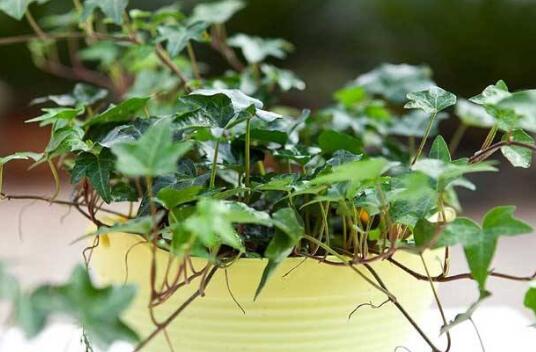
The stems and vines of ivy root fairly easily, so propagating it is not difficult. Botanists use three methods: cuttings, layering, and sowing. Because ivy rarely sets seed in northern regions, the sowing method is used less often; the two commonly used methods are layering and cuttings.
Ivy Propagation Methods
1. Layering Propagation
How do you propagate ivy using the layering method? Choose a robust 3-4 year old plant, bury the stems and vines in the soil, then use a brick to press the stems and vines onto the soil surface to hold them in place. Be careful to keep the soil surface moist. After some time, new roots will grow at the nodes. Cut into sections of every 3-5 nodes. After 30 days, new stems and vines will emerge from the leaf axils, and then they can be transplanted into pots.
2. Ivy Cutting Method
1. Timing for Ivy Cuttings
For ivy grown indoors, the cutting time is generally chosen in spring or autumn, for example April-May and August-September are more suitable; for ivy grown in a greenhouse, there is no time restriction and cuttings can be taken year-round. So how do you propagate ivy using cuttings? The steps are as follows.
2. Cutting Steps
(1) Choosing the substrate. Use a sandy acidic soil; the soil should be as loose, airy, and well-draining as possible. We covered the importance of the substrate in detail in the ivy growing methods and precautions, so we will not go into detail here.
(2) Selecting branches. Choose semi-lignified, robust branches; branches that are too tender or too old are unsuitable, and diseased or dead branches must not be used either. Generally, robust branches from the top of the ivy are preferred.
(3) Making the cuttings. Cut the selected branches into sections of 10-20 cm each, making sure each section contains at least 3-4 nodes and has aerial roots at the base. Remove the leaves at the base, keeping only 3-5 leaves at the top.
(4) Inserting the cuttings. Insert the prepared cuttings into the substrate, pressing the soil around the cuttings slightly to make sure the cuttings stand upright.
(5) Watering. After inserting the cuttings, water promptly and water thoroughly, making sure both the upper and lower parts of the substrate have moisture. Then place the pot in a shaded spot for care.
(6) Later management. Control the temperature and light well. Roots generally form in about 15 days. At this point they should not be transplanted; instead, let them grow in the substrate for a while longer. Roots generally develop fully in about 40 days, and then they can be transplanted.
(7) Transplanting. After transplanting, do not place the ivy directly in sunlight; it needs about 3 days to recover from transplant shock. During this recovery period, the leaves may droop or turn yellow, so water promptly. Once the recovery period has passed, normal care can be carried out according to ivy growing methods.
How Does Ivy Propagate? Ivy Propagation Methods
[Common Questions] How Does Ivy Propagate? Ivy Propagation Methods
Image: Ivy
[Expert Answer]
Ivy can be propagated by sowing, cuttings, and layering. Sowing can generally be done south of the Yangtze River and in South China; in the north it rarely sets seed.
1. Seed Propagation
For ivy seed propagation, simply collect the fruit when ripe, pile it up to after-ripen, soak and rub it, wash the seeds clean and dry them in the shade, and then sow. They can also be stored mixed with moist sand and sown in spring the following year. After sowing, cover with 1 cm of soil and cover with grass to retain moisture. When the seedlings emerge, set up a shade frame, and in the second spring transplant or, after the seedlings are established, grow them on into larger plants.
2. Cutting Propagation
The cutting propagation method for ivy is to use tender branches with aerial roots taken during the growing season, which root most easily. After inserting, build a closed plastic film arch and shade it, maintaining a space humidity of 80%-90%, but the bed soil should not be too wet, to avoid the cuttings rotting. Roots form in about 30 days.
The key to successful ivy cuttings is the selection of the cuttings and the cutting season. Generally, semi-lignified, robust branches should be chosen; branches that are too tender or too old do not root easily. Each section should have 3-4 nodes and be 10-20 cm long. Insert the basal 1-2 nodes that have aerial roots into the growing medium. The best time for cuttings is March-May or August-September. The cutting substrate is disinfected medium sand, with the temperature controlled at 20-26°C and humidity at 80%-90%, covered with plastic film on top. Before inserting, soak in 1000 mg/L rooting powder for 30-50 seconds. Roots form in 20-30 days after insertion. In terms of management, maintain high air humidity and a bright, indirect light environment.
3. Layering Propagation
Ivy layering propagation is done in spring and autumn, using the wavy layering method. After girdling the part to be buried, it roots very easily, making it a relatively simple propagation method.
Ivy is a fairly popular indoor foliage plant. It not only decorates the home but is also quite beneficial for purifying and improving indoor air. That covers ivy propagation methods. We hope that through this introduction everyone can know how to propagate ivy.
[Editor's Summary]
Ivy is a common foliage plant in daily life, mostly used for vertical planting in courtyards. There are three ivy propagation methods: seed propagation, cutting propagation, and layering propagation, but the most common and most used are cutting propagation and layering propagation. The First Agricultural Economics editor gives you a detailed introduction to the specific operations of these three propagation methods in this article, and hopes it is helpful to you.
How to Take Ivy Cuttings? Ivy Cutting Methods
Ivy is a common indoor potted plant with an attractive plant shape and lush green leaves, and it has high ornamental value. Ivy stems and vines root easily, so cutting propagation is usually used in the propagation process. For home cuttings, spring April-May and autumn August-September are generally suitable. So how do you take ivy cuttings? The ivy cutting method is introduced below.
Image: Ivy
1. Preparing the Cuttings
Pinch off a branch about 30 cm long from the top of the ivy. Before inserting, be sure to carefully check the leaves and stems for signs of insects, especially for plants brought back from the wild, as bringing back pests is the biggest concern. Cutting branches will not affect the growth of the mother plant; it may even encourage the mother plant to branch and grow more new shoots. Cut the ivy into small sections about 8-9 cm long. Be sure to use scissors, not your hands, otherwise the plant tissue at the cut end will be damaged. Also remove the lower leaves, keeping only 2-4 leaves at the top.
Image: Ivy
2. Cutting Substrate
Prepare a few disposable plastic cups and cut three or four holes in the bottom to use instead of flower pots. This kind of "flower pot" has several advantages. First, it holds little soil, so it dries and rewets quickly, and the cuttings will not rot because the soil stays too wet for too long. Second, the transparent cup lets you clearly observe the rooting situation; transplanting after the roots have developed well is good for survival. Third, transplanting is convenient: when transplanting, turn the cup upside down and slide out the intact clump of soil, ensuring the roots of the young plant are not damaged. Fourth, it takes up little space. After cutting the holes in the bottom of the cup, put in well-aerated soil, sandy soil is fine too. Use a finger or chopstick to poke a hole in the soil in the middle of the cup, place at least one leaf-stripped node into the soil, then fill with soil and press the soil around the cutting slightly so that it does not wobble when watered.
Image: Ivy
3. Cutting Management
1. Watering management:After watering the ivy thoroughly, place it in a bright spot without direct sunlight. For the first few days, water about once every two days. After about a week, gradually reduce the frequency of watering, and water again after observing that the soil is slightly dry. Be careful not to let the soil dry out completely.
2. Rooting and transplanting:With proper management and suitable temperature, cuttings of ivy can root in about 15-20 days. After rooting, do not rush to transplant; let the young plants continue growing in the cup for a while. After about a month and a half, when the root system has developed well, they can be transplanted into larger flower pots.
3. Care after planting:After the young ivy plants are transplanted, water thoroughly, and first place them in a spot without direct sunlight for two or three days to recover. After that they can be exposed to sunlight. The shape can be chosen according to personal preference. If you like a full, flourishing pot, place it in a spot with plenty of sunlight; when watering, you can mix urea or nitrogen fertilizer into the water, and pinch off the tips frequently to encourage more branching. If you like an elegant, slender look, place it indoors in a bright spot without direct sunlight, and do not fertilize; just let it grow freely.
[Editor's Conclusion]Cutting propagation is the main propagation method for ivy; pinch off one branch and you can grow many pots. The ivy cutting method has been introduced above. Has everyone learned it?