How Do Pitcher Plants Reproduce? Three Methods: Cuttings, Layering, and Sowing
Most people have heard of the pitcher plant (Nepenthes). It is a plant that can repel mosquitoes, and many people grow it as a potted plant at home. As more and more people grow pitcher plants, they are also being propagated in large numbers. So how do pitcher plants reproduce? You can buy plants, or propagate them yourself, and there are mainly three propagation methods for pitcher plants: cuttings, layering, and sowing. Next, let us introduce the methods in detail.
I. How Do Pitcher Plants Reproduce: Cuttings / Layering / Sowing
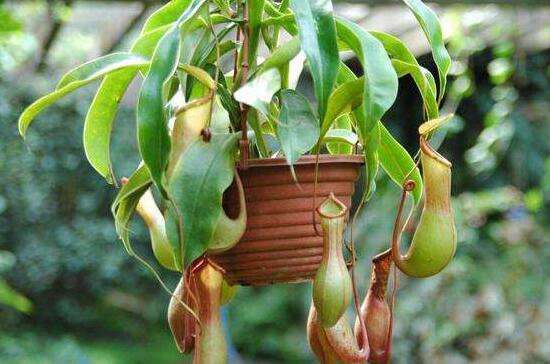
Like most indoor potted plants, pitcher plants can be propagated by cuttings. In addition, pitcher plants can bear fruit after flowering, and with seeds they can naturally be sown. How do pitcher plants reproduce? Generally speaking, there are three methods: cuttings, layering, and sowing, all of which test your potting skills. Let us take a look at the correct methods of operation below.
II. The Three Propagation Methods for Pitcher Plants
(1) Propagating Pitcher Plants by Cuttings
How do pitcher plants reproduce? We recommend cuttings first, because the success rate is very high. For cuttings, you need to pay attention to the cutting material, the substrate, and the method, among other things. The specific steps are as follows:
1. Selecting the Cutting Material
Cut a healthy pitcher plant stem segment, preferably retaining 2-3 growth nodes and keeping 1-2 leaves. Then cut off 1/2-2/3 of each leaf by cutting perpendicular to the leaf veins. Cutting off part of the leaves, and being willing to remove some foliage, is what allows you to get a better plant.
Treating the cutting material: Before inserting the stem segment into the growing substrate, dip the cut end of the stem in a little rooting hormone. This can increase the success rate of the cutting.
2. Cutting Substrate
According to the cultivation methods for pitcher plants, they like loose, fertile, well-aerated leaf mold or peat soil, so we recommend using sphagnum moss or peat.
3. Cutting Method
Insert the prepared cutting material into the prepared substrate. If the stem segment has only one growth node, insert it to a depth that leaves the growth node exposed above the soil surface; if the stem segment has two or three growth nodes, the lowest growth node should be inserted into the soil.
4. After-Cutting Care
Following the steps above, all that remains for propagating pitcher plants by cuttings is care. Place the pot in a high-humidity environment; you can cover the plant with a transparent plastic bag to raise humidity. In addition, the plant needs bright light, but sunlight must never shine directly on the stem segment, to avoid overheating. It takes several months for pitcher plants to root. Once the new shoot has produced two to three leaves, transplant as needed, and the ambient humidity can also be gradually reduced.
(2) Propagating Pitcher Plants by Layering
This is a relatively safe propagation method among pitcher plant propagation methods. It is generally used for pitcher plants with a lower success rate from cuttings. The specific steps are as follows:
Select a stem segment near the tip and perform girdling between 2-3 nodes, with a thickness of one quarter of the stem. Apply a layer of rooting hormone and fungicide to the girdled area, wrap it with a layer of sphagnum moss at least 5 cm thick, and then cover it with plastic wrap. After wrapping, it will take about 2-4 months for roots to grow. During this period, frequently open the foil to check, so as not to damage the new roots. Keep the soil moist, and once roots have grown it can be planted.
(3) Propagating Pitcher Plants by Sowing
Pitcher plants bear fruit after flowering, so they can be propagated by sowing. Pitcher plant seeds do not store well. Even stored in a refrigerator (4°C), they can only be kept for a few weeks; lower temperatures will accelerate the death of the seeds. Therefore, pitcher plant propagation by sowing is best done by sowing as soon as the seeds are collected. The specific steps are as follows:
Pitcher plant seeds are very small, so it is best to use relatively fine soil. When sowing, mix the seeds with a small amount of sand and scatter them directly onto the soil. After sowing, maintain air humidity, cover the pot opening with plastic wrap, and poke a few small holes in it. Then place the pot in sunlight with appropriate shading. It takes about a month for the seeds to germinate. After germination, reduce the air humidity, and after about half a year to a year, simply transplant them.
Overall, pitcher plants can be propagated by cuttings, layering, or sowing, but the method most suitable for the majority of flower lovers is still cuttings. So flower lovers who want to turn one pot of pitcher plants at home into many pots should quickly try it themselves. Even beginners have a very high chance of success. That is all for our introduction to pitcher plant propagation methods. We hope it has been helpful.
Pitcher Plant Nepenthes sp. Pitcher Plant Guide: How to Grow Pitcher Plants / How to Propagate Pitcher Plants
Pitcher Plant ProfilePitcher Plant Nepenthes sp.
Cultivation Methods and Precautions for Pitcher Plants, An Introduction to Pitcher Plants
The pitcher plant is a famous tropical carnivorous plant. "Pitcher plant" is the general name for all species in the genus Nepenthes, and its native range is mainly the tropical regions of Asia. The pitcher plant has a unique organ for absorbing nutrients: the pitcher. The pitcher is cylindrical, slightly swollen in the lower part, and has a lid over the pitcher opening. Because its shape resembles a pig cage, it is called "pig cage plant" in Chinese. In Hainan, China, it is also called "Leigong pot," meaning it resembles a wine jug. Because the soil in its native habitat is poor, the pitcher plant supplements nutrients by capturing insects and other small animals, so it is one of the carnivorous plants. Aside from sundews, plants in the family Nepenthaceae are another group of vines with the ability to prey on insects.
The Origin of the Scientific Name of the Pitcher Plant
The scientific name of the genus Nepenthes first appeared in 1737 in Carolus Linnaeus's work Hortus Cliffortianus. It comes from a passage in Homer's Odyssey. In it, the Queen of Egypt gave Helen a potion called "Nepenthes pharmakon." The meaning of "Nepenthes" is "without sorrow" ("Ne" means without, and "penthos" means sorrow). In Greek mythology, "Nepenthes" is a drug that makes people forget all sorrow. Linnaeus said:
"If this is not Helen's 'sorrow-dispelling draught,' then it will be for all botanists. If one discovered this wonderful plant after a long journey, one would surely marvel at it, forget all displeasure, and exclaim at how magical nature could be so. (Translated from the Latin work of Harry Veitch)"
The pitcher plant Linnaeus described was N. distillatoria from Sri Lanka. In 1753, in Linnaeus's Species Plantarum, the naming of the genus Nepenthes was formally published. Since then, "Nepenthes" has become the official name of the genus. N. distillatoria also became the type species of the genus Nepenthes.
Ecological Habits of Pitcher Plants
Living HabitsMost pitcher plants live in environments with relatively high humidity and temperature and with bright, diffused light. They are generally found at the edges of forests or shrublands, or in clearings. A few species, such as N. ampullaria, prefer to grow in dense, shady forests. Most species have adapted to growing among grass populations similar to grassland species. Pitcher plants grow in acidic and nutrient-poor soils, usually peat, white sand, sandstone, or volcanic soil. But there are exceptions. For example, N. rajah can grow healthily in soil with high metal element content, and N. albomarginata can grow near the high-tide line of sandy beaches. Some pitcher plants also become rupicolous plants growing on rock faces. At the same time, species such as N. inermis can even grow without contacting soil, as epiphytes attached to trees.
Distribution Range of Pitcher Plants
Pitcher plants are vines found in the tropical regions of the Old World. Pitcher plants are native to tropical regions such as Indonesia, Malaysia, the Philippines, China, and Australia in Southeast Asia; east to New Caledonia, with N. vieillardii; west to Madagascar, with N. madagascariensis and N. masoalensis, and Seychelles, with N. pervillei; south to northern Australia, with N. rowanae and N. tenax; and north to southern China, with N. mirabilis, India, with N. khasiana, and Sri Lanka, with N. distillatoria. On Borneo and Sumatra in the Malay Archipelago, there are large numbers of pitcher plants with extremely high morphological diversity, especially in the montane rainforests of Borneo. But most pitcher plants are local endemics, and some even occur in only a few mountain areas. Because of their narrow distribution ranges and the inconvenience of local transportation, some pitcher plants are very difficult to observe again in the wild. For example, when N. deaniana was rediscovered in the wild, it had already been 100 years since its first discovery. About 10 species of pitcher plants have native ranges confined to only some isolated islands or small archipelagos. But N. mirabilis has an extremely wide distribution, occurring from Indochina to the Malay Archipelago and Australia.
Pitcher plants are divided by the altitude of their native habitat. Using 1200 m as the standard, they are divided into lowland pitcher plants and highland pitcher plants. The climate in lowland areas is hot and humid all year round, so lowland pitcher plants do not have excessive requirements for temperature differences; the climate in highland areas is warm during the day and cool at night all year round, so their healthy growth requires an environment with a relatively large temperature difference. N. lamii is the pitcher plant with the highest native altitude; the area where it grows is more than 3520 m above sea level.
Morphological Characteristics of Pitcher Plants
Pitcher plants are perennial vines with woody or semi-woody stems. Some wild plants can reach 20 meters long, climbing on trees or growing along the ground. The leaves are generally oblong-elliptical, with a tendril at the end to facilitate climbing. At the end of the tendril, a bottle-shaped or funnel-shaped pitcher forms, with a lid. Pitcher plants flower only after growing for many years. The flowers are generally racemes, rarely panicles, dioecious, small and plain, with a faint scent during the day and a slight fragrance; at night the scent becomes strong and turns foul. Their ornamental value cannot compare with that of the pitchers. The fruit is a capsule, which splits open when mature to release seeds.The PitcherThe main purpose of growing pitcher plants is to admire their peculiar insect-catching organ, the pitcher. The pitcher of a pitcher plant develops from the end of the tendril. When a new leaf grows out, the end of the tendril already carries the rudiment of a pitcher. In the early stage, the surface of this rudiment is covered with a layer of hairs, which gradually fall off during growth. The pitcher rudiment is initially yellowish-brown and flat; when it grows to 1-2 cm, it gradually turns green or red and begins to swell. Before the lid opens, the pitcher already shows its characteristic colors, patterns, and spots. After the lid opens, the lip at the pitcher opening continues to develop, becoming wider and larger, and rolls outward or inward. At the same time, the lip begins to show color, and the lips of some pitchers bear stripes of different colors. At this point the pitcher is mature, and after about a few days insects can be observed falling into it. Each leaf of a pitcher plant can produce only one pitcher. If the pitcher ages and withers or is damaged for some reason, the original leaf will not grow a new pitcher; only new leaves will grow new pitchers.
The pitcher of a pitcher plant consists of the pitcher body and the lid. The pitcher body has structures such as the pitcher opening, lip, wings, digestive glands, and waxy zone, while the lid has structures such as nectar glands and lid keel. In addition, some pitcher plants' pitchers also have appendages. The tendril tail appears at the junction between the pitcher body and the lid. At the same time, the same species of pitcher plant will produce two different forms of pitchers. This often causes taxonomic trouble, making people mistakenly think they are two different pitcher plants.
In Southeast Asia, local people use the pitchers of N. ampullaria as containers to cook "pitcher plant rice." They stuff rice, meat, and other ingredients into the pitcher and steam it in a pot. The method of making "pitcher plant rice" is similar to that of zongzi. It is a local specialty food with a very Southeast Asian flavor.
The Two Forms of Pitchers
Except for N. campanulata, most pitcher plants produce two forms of pitchers. This difference can sometimes be very great, such as the upper and lower pitchers of N. rafflesiana. Stems near the ground whose internode spacing has not increased produce lower pitchers, while stems above whose internode spacing has increased produce upper pitchers. Lower pitchers are plumper, rounder, and larger in shape. Upper pitchers are longer, thinner, and tend toward a funnel shape. The upper pitchers of most pitcher plants are lighter in color than their lower pitchers and have fewer patterns. The significant differences between lower and upper pitchers are prepared for attracting and preying on different types of insects. If the form of some pitchers is intermediate between lower and upper pitchers, they are called "intermediate pitchers."
Pitcher Body
The pitchers of some pitcher plants can be as large as 50 cm tall and 25 cm wide, equivalent in size to a 10 L household bucket. The pitcher body can be green, orange, red, and other colors, and some have block-like or band-like spots in colors such as brown, purple, black, and white. These spots have special functions in certain pitcher plants. For example, the upper pitchers of N. aristolochioides and N. klossii have white spots that allow sunlight to shine into the pitcher. In this way, when viewed from inside the pitcher, the lip and lid appear very dark, while the white spots on the pitcher body appear very bright. Flying insects inside the pitcher then mistakenly think the white spots are the exit and become trapped inside, eventually exhausting themselves and falling into the digestive fluid.
The LidAbove the pitcher opening there is a lid, which can prevent rainwater from entering the pitcher and can block light shining in from above, confusing insects that have fallen into the pitcher so they cannot find the exit. Some pitcher plants have rather special lids. For example, N. ampullaria has a narrow, elongated lid that folds outward, allowing it to collect fallen leaves from above. Many people think that after an insect falls into the pitcher, the lid will close. In fact, pitcher plants do not do this. The connection between the lid and the pitcher body is fixed and cannot move. So after an insect falls into the pitcher, the pitcher plant will not show such a rapid stress response. This kind of response occurs only in Venus flytraps, sundews, and bladderworts.
Pitcher Opening
The pitcher opening of a pitcher plant is the opening of the pitcher. Pitcher openings can be divided into two types: parallel pitcher openings and slanted pitcher openings. In pitcher plants with parallel pitcher openings, when the pitcher is fully developed, the opening is exactly level with the ground; in pitcher plants with slanted pitcher openings, when the pitcher is fully developed, the opening is slanted. But the upper pitchers of N. aristolochioides are rather special, with openings almost perpendicular to the ground. In most pitcher plants, the lip suddenly stretches upward and contracts at some distance near where it joins the lid, forming a "⊥"-shaped structure called the lip neck. At the lip neck, the left and right lips run parallel upward and almost touch each other. At the same time, most lip necks tilt slightly forward.
The Lip
The lip is a specialized structure at the pitcher opening and gradually develops and matures only after the lid opens. The lip is often the most colorful part of the entire pitcher, being red, purple, yellow, and so on, and some bear horizontal yellow or red stripes. The lip also secretes nectar, making it quite slippery. Its shape and color resemble a flower and it also has nectar, so it serves as one of the important structures for attracting insects.
The lip of the pitcher rolls outward or inward, and its outer edge is often wavy. On the lip there are smooth transverse parallel ridges called lip ribs, whose ends extending to the inner edge of the lip become pointed structures called lip teeth. When an insect slips, the lip can guide it into the pitcher.
In most pitcher plants, the lip suddenly stretches upward and contracts at some distance near where it joins the lid, forming a "⊥"-shaped structure called the lip neck. At the lip neck, the left and right lips run parallel upward and almost touch each other. At the same time, most lip necks tilt slightly forward.Wings
On the front part of the pitcher, there are often two parallel wings extending downward from the pitcher opening and converging at the bottom of the pitcher. On the wings there are also many whisker-like structures called wing fringes. The function of the wings may be to make it easier for insects on the ground to climb to the pitcher opening.[7] Therefore, for upper pitchers that mostly prey on flying insects, the wings are usually reduced or absent, and some varieties are reduced to a pair of ridges.
Digestive Glands and Waxy Zone
The inner surface of the pitcher usually has digestive glands and a waxy zone. Digestive glands are present in the lower part of the inner surface of the pitcher. Digestive glands secrete digestive fluid, so liquid is often present in the pitcher. The function of this digestive fluid is to drown insects that fall into the pitcher and digest them. In addition, the digestive fluid of N. inermis, N. dubia, and N. flava is very special: it is extremely viscous and covers the inner surface of the pitcher. This makes the pitcher both a cage-like trap for catching prey and a highly sticky inner wall that can stick to passing flying insects. The waxy zone is present in the upper part of the inner surface of the pitcher. The smooth waxy zone prevents insects that have fallen into the pitcher from climbing out.
The digestive fluid in the pitchers of pitcher plants often drains away during transplanting or is diluted by rainwater, but this does not affect the health of the plant. In a suitable environment, the pitcher plant will soon produce new digestive fluid. Therefore, adding water to a pitcher without digestive fluid is meaningless.
Nectar Glands
The lower surface of the lid of most pitcher plants has large numbers of nectar glands, which secrete nectar to attract insects to feed. However, this nectar has a narcotic effect, causing insects to become paralyzed and fall into the pitcher. In addition, the lower surface of the lid of N. lowii also secretes white block-like substances to lure treeshrews to feed.
Appendages
Some pitcher plants have characteristic structures on the lid. For example, the lower surface of the lid base of N. bicalcarata has two tooth-like structures; N. lowii and N. ephippiata have fleshy long hairs under the lid; N. lingulata has a slender rod-like structure under the lid; and N. fusca has a tiny protrusion under the lid, among others.
Lid Keel
In some pitcher plants such as N. burbidgeae, there is a protruding beam-like structure under the lid, the lid keel, which plays a supporting role.Tendril Tail
The tendril tail (spur) is a soft rod-like structure behind the base of the lid of most pitcher plant pitchers, occasionally forked, about 1 cm long. It is the end of the tendril left behind after the pitcher rudiment develops and swells, and is morphologically the true end of the entire leaf.
Pitcher Shoulder
The pitcher shoulder is a ring-like ridge in the middle of the pitcher body of some pitcher plants. Usually the pitcher shoulder of lower pitchers is higher, while the pitcher shoulder of upper pitchers is lower.Leaf Blade
The leaf blade of a pitcher plant is morphologically actually the petiole; its morphologically true leaf blade is the bottle-shaped pitcher formed at its end. Therefore, the leaf blade of a pitcher plant is a typical modified leaf. When people usually refer to the leaf blade of a pitcher plant, they mean its morphological petiole.
The leaf blade of a pitcher plant is usually elliptical to lanceolate, sometimes peltate, 10-25 cm long and 4-8 cm wide. On both sides of the midrib there are several longitudinal veins, and some pitcher plants also have obvious pinnate veins. In the juvenile stage of the plant, the leaves are arranged in an approximately whorled manner, forming a rosette overall; after maturity, the leaves become alternate. The leaves are usually bright green or yellow-green. The texture of the leaf blade can be divided into papery and waxy; papery petioles are sometimes covered with a layer of hairs, while waxy petioles do not have hairs.
Petiole
When people usually refer to the petiole of a pitcher plant, they mean the tubular narrowed part where its morphological petiole joins the stem.
Tendril
A thick midrib runs through the middle of the leaf, and after the midrib finally emerges from the leaf it becomes the tendril. The tendrils of upper pitchers are relatively long and also twine around and attach to other objects, allowing the stem to gain support and grow upward. It is similar to a modified leaf in grapes and mung beans that serves for climbing support. If it does not attach to any object, it will still coil by itself one or several times, with a diameter of 1-2 cm, called a tendril loop. At the end of the tendril, a bottle-shaped pitcher forms.
Guide Nectar Glands
Guide nectar glands are evenly distributed on both sides of the leaf. As the name suggests, the nectar secreted by these glands serves to guide insects, especially ants. Following the guidance of these nectar glands, insects will unknowingly arrive at the pitcher opening and eventually fall into the pitcher. They are distributed on the plant's leaves and pitchers.Stem
Pitcher plants are perennial vines. Their stems are relatively thick, usually 1 cm in diameter. Some species are thicker, such as N. bicalcarata, whose stems can reach 10-30 m in length after maturity. Pitcher plants can attach to nearby shrubs or trees, can also creep along the ground, or grow as epiphytes attached to tree trunks.Growth Nodes
On the stem of a pitcher plant, each leaf axil contains a growth node, appearing as a small, undeveloped protrusion. This is because the apical bud of the plant has apical dominance, which inhibits the development of the lateral buds below it. If the pitcher plant loses its apical bud due to accidental damage or artificial pruning, the lateral bud closest to the apical bud will begin to develop and grow. If the upper lateral bud grows large enough, the lower undeveloped lateral buds will again be inhibited and stop developing. This entire process is regulated by auxin concentration.
Internode Spacing
The stem of a pitcher plant shows different forms depending on its stage. During the juvenile rosette stage of the pitcher plant, the stem can produce only lower pitchers, and its internode spacing is very short, with upper and lower leaves almost touching each other. After a period of time, the stem that originally produced only lower pitchers will switch to growing upper pitchers. This change from lower pitchers to upper pitchers is shown on the stem, and its internode spacing suddenly increases. The increase in internode spacing is sudden and rapid, causing the height of the plant to increase greatly within a very short period. This allows the stem to reach farther, helping the plant grow upward and pass through the dense vegetation above. At this point it also marks the maturity of the pitcher plant and its ability to grow an inflorescence. Such a sudden increase in internode spacing allows the plant to keep climbing upward, with the purpose of allowing the pitcher plant's inflorescence to open at a height, which is beneficial for pollination and seed dispersal. After the flowers fade, the stem can continue to grow upward; a stem that has flowered can continue to flower in the following years.
Some growers have found from experience that the morphological change in pitcher plants from lower pitchers to upper pitchers grown on the stem is irreversible, that is, a stem that has already switched to growing upper pitchers cannot grow lower pitchers again. Even after cuttings, an upper-pitcher stem can only grow upper pitchers, but lateral branches growing from an upper-pitcher stem can grow lower pitchers.
Lateral Branches
The base of an adult pitcher plant produces lateral branches. Because the pitcher plant is already very tall at this time and has accumulated many nutrients, the lateral branches growing from the base will quickly produce huge leaves and lower pitchers. After a few more years, this lateral branch that produces lower pitchers also begins to grow upper pitchers, and so the cycle repeats. Eventually, one pitcher plant will grow into a large clump. A pitcher plant that has grown for many years will have a fairly thick main stem, and on the main stem near the soil surface it will produce more than a dozen lateral branches, so the entire pitcher plant can grow very large, producing hundreds of leaves and hundreds of pitchers.
In horticulture, artificial pruning may prevent the pitcher plant from growing huge, and because the cultivation time is not long enough, it may produce only lower pitchers and be unable to flower.RootsThe roots of pitcher plants are fibrous roots, black, brittle and easily broken, and few in number. Compared with other plants, the root system of pitcher plants is quite undeveloped.InflorescencePitcher plants are dioecious plants, so pollination and seed set must occur between two plants of different sexes. In the wild, male pitcher plants account for about 70% of the total, while females account for 30%. Because pitcher plants grow in low-latitude regions, there are no obvious four seasons here. However, there is a distinction between dry and wet seasons. The flowering time of pitcher plants is generally near the end of the dry season, and when the seeds mature they happen to reach the rainy season, which helps the seeds germinate.
The inflorescence of a pitcher plant belongs to the raceme or panicle type within indeterminate inflorescences. A floral axis about 20-40 m long is drawn out from the top of the stem, bearing many nearly equal-length pedicels, each with one to several florets. The number of flowers may range from a dozen or so to over a hundred. The order of flowering begins at the base and ends with the topmost flower.
These florets do not have petals; the structures that look like petals are actually sepals; each floret contains 4 sepals. Male flowers contain one stamen, whose anther is covered with a layer of yellow pollen; female flowers contain one pistil, whose stigma is green and sticky, used to catch pollen. Pitcher plants usually transmit pollen by wind, but the sepals of their florets also secrete nectar to attract insects to help with pollination. After a female flower is pollinated, its ovary begins to swell and turns brown; when the fruit matures, it splits open and releases hundreds of tiny seeds. The flowers of pitcher plants do not have much ornamental value; the flowers are small and plain, and only a few varieties have relatively brightly colored flowers.
In addition, the flowers of pitcher plants emit an unpleasant smell at night, while during the day they have a slight fragrance.SeedsThe fruit of a pitcher plant is a capsule. The seeds inside are very small and slender, spindle-shaped to thread-like. They are about 1 cm long and about 1 mm wide, woody. In the middle there is a tiny raised embryo. Pitcher plant seeds are very light and easily carried away by wind, so pitcher plant seeds are dispersed by wind. Their seeds also lack nutrient-rich flesh and are not attractive to animals. The viability of pitcher plant seeds is also not long; after one or two months their germination rate drops greatly. Therefore, pitcher plant seeds are generally not stored.
Propagation Methods of Pitcher Plants
Pitcher plant propagation methods include two types: sexual reproduction and asexual reproduction. The commonly used propagation methods for pitcher plants are cuttings, layering, and sowing.Asexual Propagation by Cuttings: When taking cuttings of pitcher plants, several key points should be noted:
First, the cut stem segment must carry a growth node, that is, the cut stem segment must carry a leaf. This is because the new branch will develop from the growth node. If you cut only the section of stem between growth nodes, then this stem segment without growth nodes cannot grow a new branch. Second, because the cutting has no roots and cannot effectively provide the plant with enough water, the stem cutting should not carry too many leaves, to avoid dehydrating the plant. The most suitable stem segment length is one with two or three growth nodes. To reduce water loss, part of the leaves on the stem segment must be cut off. The method is to cut off one half to two thirds of each leaf in a direction perpendicular to the leaf veins. Cutting off part of the leaves is very important for cuttings; do not fail at propagation because you cannot bear to part with the leaves. However, do not cut off all the leaves completely, because the leaves can produce the nutrients and growth hormones needed to grow new branches and roots; stem segments without leaves are harder to root successfully.
When cutting the stem segment, the cut should be smooth, so use garden-specific scissors or a sharp knife and cut the stem segment perpendicular to the stem. Do not cut the stem segment at an angle, to reduce the wounded area of the stem segment, and do not use blunt tools to cut the stem segment, otherwise the crushed cut will make the plant more susceptible to microbial infection.
Then, insert the prepared stem segment into the growing medium. If the stem segment has only one growth node, insert it to a depth that leaves the growth node exposed above the soil surface; if the stem segment has two or three growth nodes, the lowest growth node should be inserted into the soil. The growing substrate used for cuttings is best if it is new substrate, to reduce the chance of infection by fungi or bacteria in the soil. Sphagnum moss is a commonly used cutting substrate, and peat can also be used. Before inserting the stem into the growing substrate, you can dip the cut end of the stem in a little rooting hormone to increase the success rate of the cutting. Using a fungicide can reduce the probability of infection of the stem segment.
Finally, place the stem segment inserted into the growing substrate in a high-humidity environment. You can cover the plant with a transparent plastic bag to raise humidity. The cultivation temperature should refer to the characteristics of each variety; stem cuttings of highland pitcher plants and lowland pitcher plants should be kept at their respective most suitable cultivation temperatures. Therefore, the cutting can be placed near the original mother plant. The cutting needs bright light, but sunlight must never shine directly on the stem segment, to avoid overheating. Usually shade netting can be used for shading, or it can be placed in the shade of other taller plants.
The regeneration of new shoots and roots is a slow process, usually taking several months. Because the development of roots cannot be observed, the formation of new shoots can be regarded as an indicator of whether the stem cutting has succeeded. Basically, if the cutting succeeds, a small protrusion will form at the topmost growth node, gradually swelling over time to become a new shoot; after the new shoot produces two to three leaves, transplant as needed, and the ambient humidity can also be gradually reduced.
Air Layering Method
Some varieties of pitcher plants have a lower success rate from cuttings, so air layering can be used instead for propagation. Select a stem segment near the tip and perform girdling about two or three nodes below its apical bud; the thickness of the girdling is about one quarter of the stem diameter; you can also make a cut reaching one half of the stem diameter, which can achieve the same effect as girdling. Apply some rooting hormone and fungicide to the cut on the stem, then wrap it with a thick layer of moist sphagnum moss at least 5 cm thick, and wrap the outermost layer with a layer of plastic wrap to prevent water evaporation. Because roots grow only in darkness, an additional layer of aluminum foil is needed to block light. It takes about two to four months for roots to grow at the cut. Be sure not to open and check frequently, so as not to damage the new roots. During this period, the sphagnum moss must be kept moist. Once roots have grown, this stem segment can be cut from the mother plant and grown separately.
Tissue Culture
For establishment of explants, liquid culture with 1/2MS + 6-BA 1 + NAA 0.06 medium is best carried out in spring (March-June); for callus (or adventitious bud) proliferation, MS + 6-BA 1 + Ad 10 + NAA 0.1 + 100 ml/L coconut water is best; for subcultured shoot proliferation, MS + 6-BA 1.5 + Ad 1-5 + NAA 0.1 + 100-200 ml/L coconut water is best; for rooting culture, use 1/2MS + 6-BA 0.1 + NAA 1.0, and after 20 days 2-4 roots grow.Sexual ReproductionPropagating pitcher plants from seed is not easy. Because pitcher plants are dioecious plants, to get pitcher plants to set seed, you must have plants of both sexes. However, female pitcher plants are fewer in number, so growers with only a small planting are unlikely to get pitcher plants to set seed.
Pitcher plant seeds do not store well. Some people have used refrigerator cold storage (4°C) to preserve pitcher plant seeds for one year (Pietropaolo, J and P. Pietropaolo. 1986), but there are also claims that they can be preserved for only a few weeks at most, and that even low temperatures accelerate the death of lowland pitcher plant seeds (Amato, P. D. 1998). Therefore, pitcher plant seeds should be sown immediately after they are obtained.
Because pitcher plant seeds are very small, it is best to use a relatively fine growing substrate such as peat when sowing, to prevent the seeds from falling into cracks. When sowing, to allow the seeds to spread evenly over the substrate, mix the seeds with a small amount of sand and then sprinkle them onto the substrate. The growing substrate must be kept moist. At the same time, relatively high air humidity is also needed; you can seal the pot opening with plastic wrap and poke a few holes in it. The germination of pitcher plant seeds requires light, so placing them in a bright place helps germination; but sunlight must not shine directly on them, otherwise the high heat caused by strong light will kill the seedlings. Because pitcher plants are divided into highland pitcher plants and lowland pitcher plants, appropriate temperatures should also be provided according to variety when sowing.
Pitcher plants take a relatively long time to germinate, about one month. After germination, the air humidity can be gradually reduced by gradually enlarging the holes in the plastic wrap. After about half a year to a year, the seedlings can be transplanted to avoid overcrowding.
Cultivation Methods for Pitcher Plants
Pitcher plants can be cultivated in a greenhouse. Lowland pitcher plants with lower cultivation difficulty include N. khasiana, N. thorelii, and N. mirabilis; highland pitcher plants include N. truncata, N. alata, and N. veitchii.
Pitcher plants have diverse requirements for their growing environment and conditions. Because hybrids have stronger adaptability, it is difficult to summarize in just a few sentences the living habits of all pure species and hybrids. When growing them, you can improve the environment according to the needs of the pitcher plant. Improve environments that are unsuitable for pitcher plant growth. The basic requirements for pitcher plant growth are: light, water, humidity, temperature, nutrients, and growing substrate.
The pitcher of a Nepenthes is a modified leaf, so like the leaves of other plants it will also age and die. Generally speaking, under suitable conditions each pitcher can survive for several months. When it has already withered, it can be cut off to make the whole plant look more attractive, but this is purely for appearance and has nothing to do with the health of the plant.
Nepenthes has no dormancy period.LightLight is one of the most important factors in growing huge and vividly colored pitcher traps. Providing sufficient air humidity, moderate soil moisture and ample light can give the leaves a red like that of red wine. Plants can be acclimated to accept some direct sunlight, preferably morning sun. On the contrary, full sun will make the plant's color become dull and hinder the plant's growth. The signs of strong-light scorching appear very quickly: at first only the old pitchers are scorched or dehydrated, and finally the whole plant is damaged. When the plant produces new pitchers, it shows that the plant has adapted to the new environment. Generally speaking, the more ample the light, the larger and more vividly colored the pitchers the plant will produce. While providing ample light, a relatively high air humidity must also be maintained at all times, especially in windy and dry, hot weather. Therefore, bright diffused light is more suitable for Nepenthes. When using shade netting, a shading rate of 50-80% is more suitable. If it is grown in a plastic greenhouse, it is best to use transparent polyethylene greenhouse film. In addition, the length of daylight also affects how much light energy the plant absorbs. Most Nepenthes can tolerate a low-light environment, but their growth rate will be limited as a result, and the amount of watering also needs to be reduced. When Nepenthes receives enough light, it will show this in the size and color of its pitchers. If Nepenthes is troubled by insufficient light, then if conditions permit, you can provide it with a few hours of artificial supplementary light, which is beneficial.WaterNepenthes does not have high requirements for the moisture content of the growing medium; Nepenthes generally does not like growing media that are overly wet and not airy. Unlike other carnivorous plants, which only need to keep the soil moist during the growing season, when growing Nepenthes the soil needs to be kept moist at all times. The medium should preferably be loose and not able to have water squeezed out of it. Therefore, watering is a more suitable method for Nepenthes. However, the water-tray method can still be used to supply water, only the air permeability of the growing medium needs to be improved by increasing the proportion of large-particle growing medium, so as to avoid the growing medium becoming too wet.
Although all carnivorous plants need soft water with relatively few minerals to grow, Nepenthes has relatively looser requirements for water quality, but this does not mean that Nepenthes does not need good-quality water. Because Nepenthes has a very long cultivation period, a potential problem with the water-tray method is the accumulation of salts. Many yellow-white mineral deposits will appear on the surface of the growing medium; this is formed by the salts in the water precipitating out, and it has an adverse effect on the growth of Nepenthes. The surface layer of growing medium can be removed and a fresh layer of growing medium spread on top, and the situation can then be improved.Air humidityThe level of air humidity is the key to whether Nepenthes can normally produce pitchers.
Under natural conditions, Nepenthes usually grows in relatively humid regions, with humidity of at least 60%. Therefore in cultivation, many people always encounter the problem of Nepenthes failing to grow new pitchers; the pitcher often withers as if scorched before it has even grown large. The reason Nepenthes does not grow pitchers is mostly that the environment is too dry. But this does not mean the water given is insufficient; rather, it is that the air humidity is too low. To raise the air humidity, you can cover the entire Nepenthes with a transparent plastic bag, and in this way easily obtain a high-humidity environment. Placing Nepenthes in an aquarium, or in a corner, will raise the humidity as long as ventilation is reduced. However, Nepenthes also has the ability to adapt to its environment; once new pitcher traps have grown, you can try gradually lowering the air humidity to acclimate the Nepenthes to a relatively dry environment.TemperatureNepenthes is distributed across a very wide range of altitudes, from lowlands to mountains above 3000 m in elevation. In horticulture, it is divided into two major groups based on its altitudinal distribution: highland species (high land) and lowland species (low land). Nepenthes growing in mountains above 1200 m in elevation are highland species, with a cultivation temperature of 21°C during the day and 10°C at night; Nepenthes growing in lowlands or areas below 1200 m in elevation are lowland species, with a cultivation temperature of 29°C during the day and 21°C at night. The day-night temperature difference is very helpful for the growth of Nepenthes, while seasonal change is not important. Lowland Nepenthes grow in low-latitude regions, where the changes of the four seasons are not obvious and the temperature does not vary much throughout the year. However, highland Nepenthes grow in high mountains, and their characteristic is a very large day-night temperature difference, which can reach more than 10°C.
Lowland Nepenthes
Lowland Nepenthes is not afraid of heat, and also has no strict requirements for the day-night temperature difference. But some lowland Nepenthes are very intolerant of cold. Growth will slow or stop after the temperature falls below 15°C; when the temperature falls below 10°C the plant is at risk of cold damage or even death. Therefore, necessary heating measures should be taken when it is relatively cold in winter.
Highland Nepenthes
Highland Nepenthes has stricter requirements for temperature; temperature control is often the key to successful cultivation. To grow highland Nepenthes, the necessary temperature difference must be provided. When the amount grown is not large, you can buy a refrigerator used for selling beverages, that is, the kind of refrigerator with a glass door, so that light can shine in from outside. The refrigerator's temperature can be set by the person when purchased to the temperature required for cultivation. If temperature control is not achieved, then only a few heat-tolerant highland Nepenthes species can be grown in lowlands, but in summer they will grow poorly due to the high temperatures, and will only grow normally in winter. The reason many highland Nepenthes always fail to grow healthily is closely related to an insufficient day-night temperature difference; some growers who cultivate highland Nepenthes at a constant refrigerator temperature also often mention that the Nepenthes grows slowly. Creating a day-night temperature difference by artificial control can accelerate the growth of highland Nepenthes.
Medium
Most growers have their own preferred medium, and these media are suitable for different environments. The most basic point is that the medium is relatively loose enough and drains well, but can also sufficiently retain water to provide the plant with ample moisture. Some media mixed with bark, formulated for Cymbidium faberi and Dendrobium, can also be used for Nepenthes plants. A mixed medium based on coconut husk and mixed with wood shavings and perlite, or pure sphagnum moss, is also very suitable for growing Nepenthes. Sphagnum moss is not only a medium suitable for the growth of Nepenthes, but also an indicator of whether the growing environment is suitable for Nepenthes. In the native habitats of highland Nepenthes, in most cases they grow on sphagnum moss. When the sphagnum moss begins to grow, it shows that the growing environment is also suitable for Nepenthes. And both lowland Nepenthes and highland Nepenthes can grow well in a mixed medium of peat and sphagnum moss. The only problem is that the mixed medium of peat and sphagnum moss easily adsorbs minerals from the water.Nutrients
Regarding nutrients, it should be noted that Nepenthes is a carnivorous plant, and it already has the ability to obtain nutrients by catching insects or small animals. These carnivorous plants are all very efficient insect catchers. Growing Nepenthes does not require specially feeding it insects; Nepenthes grown outdoors can usually catch insects on its own. And whether regularly providing them with some insects will make them healthier, make the pitcher traps larger, or make them more cold-resistant has not yet been proven by sufficient evidence.
There is no harm in hand-feeding if you want to, and there is no restriction on which kind of insect to feed, but it is not recommended to feed too many or too large insects, such as cockroaches. This is because an insect as large as a cockroach needs several weeks to be completely digested, and during this period the putrid smell it gives off is unbearable. In addition, it is not recommended to feed insects to young or newly transplanted Nepenthes, because they do not yet have complete digestive ability, and blind feeding will cause the dead insects to rot inside the pitcher trap, causing the pitcher trap to necrose.
If Nepenthes has insects to prey on, there is no need to fertilize it. However, when grown indoors, there are usually not enough insects for Nepenthes to catch. And in order to take indoor hygiene into account, you can instead fertilize Nepenthes to supplement nutrients. For Nepenthes, a quick-dissolving foliar fertilizer can be used; absolutely do not apply non-slow-release fertilizer directly into the soil. Because carnivorous plants are relatively intolerant of high-concentration fertilizer, to be safe, it should be further diluted several times according to its usage amount. For example, if the fertilizer's instructions state that its usage amount is a 1000-fold dilution, then when used on Nepenthes it can be diluted to 4000-fold. Spray the diluted fertilizer evenly over the whole Nepenthes with a sprayer. In addition to spraying foliar fertilizer, slow-release fertilizer can also be used. It can be placed directly into the pitcher traps of Nepenthes or mixed into the medium to supply nutrients to Nepenthes.
Other
Nepenthes is a perennial plant, and it will grow very large. If you want Nepenthes to produce huge pitchers, you must consider giving Nepenthes a stable growing environment. Nepenthes is a vine plant, and it must have something to attach to in order to stand, so a support frame needs to be set up for Nepenthes. To set up the support frame, a larger flowerpot is needed. At the same time, using a larger flowerpot can hold more growing medium to give the root system more room to spread, and also makes the flowerpot more stable, able to support a large Nepenthes without being blown over by the wind.
Pest and disease control for Nepenthes
Nepenthes is prone to leaf spot disease, root rot, sunscald, etc. Among these, leaf spot disease and root rot are the more serious.Leaf spot diseaseSymptom characteristics: water-soaked spots and small dots appear on the leaves, gradually expanding to form oval spots, brown in color. The diseased parts produce a black mold layer, which later ruptures. This seriously affects plant growth and ornamental effect.
Control method: strengthen management to promote vigorous plants and enhance disease resistance. Spray with a 1000-fold dilution of 10% antibacterial agent. It is required to spray evenly and thoroughly over the whole plant.Root rotSymptom characteristics: when growth is weak and resistance to pests and diseases declines, the disease is easily induced, causing Nepenthes to grow listlessly, with roots turning brown, no new roots, and rot, and the above-ground parts wilting. It is caused by the invasion of Fusarium, some of which have strong pathogenicity and produce toxins that harm the plant; some have weak pathogenicity and only infect when there is a wound or the plant is weak. Low temperature and overwatering are the main triggers.
Control method: in the early stage of the disease, spray with a 900-fold dilution of 50% Likuijing wettable powder, an 800-fold dilution of 50% Genfuling wettable powder, or an 800-fold dilution of 80% Duofuxin wettable powder.Root mealybugControl method: use a 100 to 200-fold dilution of 2.5% Kaisuling suspension concentrate, a 1000 to 1500-fold dilution of 40% Supusha emulsifiable concentrate, or a 700 to 800-fold dilution of 25% Aikashi emulsifiable concentrate to spray or apply to the roots
The dietary therapy or medicinal value of Nepenthes
The medical information and health dietary therapy information on Huahua Network is for reference only and cannot be used as a basis for diagnosis or medical treatment. Any health problem should be consulted with professional medical personnel, and the treatment of any disease should follow a doctor's advice.
Ultimate flower-protecting mission: to love yourself, start from reality and strictly follow a doctor's advice. Toward illness, do not be careless, do not delay, do not give up hope; face it bravely, warm the silent world with love, and care for the flower field within your heart with your heart.
Traditional Chinese medicinal materialThe original plant of the traditional Chinese medicinal material Leigonghu is the pitcher plant N. mirabilis in the genus Nepenthes.
Medicinal material form:Dried stems and leaves, mainly the sac-like body at the tip of the leaf. The leaves are papery, mostly broken; oblong or lanceolate; the upper surface is grayish-brown tinged with purple, with clear veins, and the lower surface is dark brown: the main vein protrudes and extends into a tendril, about equal in length to the leaf, and the tip of the tendril is connected to a sac-like body. The sac-like body is mostly flattened, with a lid connected at the top; the outer surface is brown to brownish-yellow, relatively shriveled, and the inner surface is reddish-brown to yellowish-brown, smooth, densely covered with glandular dots; fragments of insect corpses often remain at the bottom of the sac.
Collection:Harvest in autumn, cut into sections and dry in the sun.
Place of origin:Mostly grows in sunny, humid areas. Distributed in Guangdong, Guangxi and Hainan.
Chemical composition:The whole plant contains flavonoids, phenols, amino acids, sugars, and anthraquinone glycosides.
Nature and flavor:Sweet, cool.
① "Luchuan Materia Medica": "Nature cold, flavor astringent."
② "Guangdong Traditional Chinese Medicine" II: "Bland, neutral."
③ Guangzhou Army "Handbook of Commonly Used Chinese Herbal Medicines": "Sweet and bland, cool."
Functions and indications:Clears the lungs and moistens dryness, promotes water metabolism, and resolves toxins. Treats dry cough due to lung dryness, whooping cough, jaundice, stomach pain, dysentery, edema, carbuncles, and insect bites.
① "Luchuan Materia Medica": "Anti-inflammatory, resolves toxins, promotes water metabolism. Treats edema, dysentery, sores and carbuncles with redness, swelling and ulceration, insect bites, and also treats bruises."
② "Guangdong Traditional Chinese Medicine": "Clears dry fire from the lungs, treats coughing of blood."
③ Guangzhou Army "Handbook of Commonly Used Chinese Herbal Medicines": "Clears heat and drains dampness, resolves phlegm and relieves cough. Treats icteric hepatitis, pain from gastric and duodenal ulcers, urinary tract stones, high blood pressure, colds and cough, and whooping cough."
Usage and dosage: Oral administration: decoct in water, 0.5-1 liang (1-2 liang if fresh). External use: pound into a paste and apply.
The cultural background of Nepenthes
Plant historyThe earliest records about Nepenthes can be traced back to the 17th century. In 1658, the French colonial governor Etienne de Flacourt gave the first description of Nepenthes in his pioneering work "Histoire de la Grande Isle de Madagascar," writing:
"This plant is about 3 feet tall, with leaves about 7 inches long, and at the end of the leaf there is a lidded vase-shaped structure resembling a fruit or flower. These pitchers are both yellow and red, with the yellow ones being larger. The people of this country will not pick these pitchers. Because they believe that if someone picks them, then it will not rain for several days. And after I and other Frenchmen picked these pitchers, their saying also came true, and indeed it did not rain. After the rain, these pitchers will all be filled with rainwater (translated from the French book "Pitcher-Plants of Borneo")."
Flacourt then named it "Amramatico" using the local common name, and a century later this species was formally named N. madagascariensis.
Afterwards, a second species of Nepenthes was discovered in Sri Lanka, N. distillatoria. In 1677, Bartholinus briefly described a plant named "Miranda herba (meaning 'wondrous herb' in Latin)." Three years later, the Dutch merchant Jacob Breyne named it "Bandura zingalensium" using the local common name. Subsequently "Bandura" became the most commonly used name for Nepenthes thereafter, until 1737, when Linnaeus created the genus Nepenthes.
In 1683, the Swedish physician H. N. Grimm again described N. distillatoria. Grimm called it the "wondrous water drop" or the "marvelous distilling plant." This was the first time someone clearly described Nepenthes. Three years later, in 1686, the English naturalist John Ray, citing Grimm, said:
"Due to the shining of the sun, water vapor from the ground rises and condenses on the plant, and the water drops flow through the stem and leaves into the pitcher. (translated from the French book "Pitcher-Plants of Borneo")" (This view is not correct; it was a guess by early scholars about the source of the liquid in the pitcher traps of Nepenthes.)
The earliest illustration of Nepenthes appeared in Leonard Plukenet's "Almagestum Botanicum," published in 1696.[22] In it, N. distillatoria was given the name "Utricaria vegetabilis zeylanensium."
At about the same time, the German botanist Georg Eberhard Rumphius discovered two new species of Nepenthes in the Malay Archipelago. Rumphius named one of them "great beer-mug plant" and the other "white great beer plant." These two Nepenthes are N. mirabilis and N. maxima in the genus Nepenthes. Rumphius's greatest contribution in his life was that he constructed a plant catalog of Ambon Island and collected a total of 6 volumes of Ambon plant specimens. But these documents were only published after his death.
Rumphius had a rough fate throughout his life, and repeatedly missed the chance to publish descriptions of the genus Nepenthes. In 1670 Rumphius had only completed part of the manuscript. With the help of his staff and artists, by 1687 his paper was nearly complete. But a great fire burned most of the illustrations. In 1690, he and his assistants completed the paper again. But unfortunately, two years later, the Dutch ship carrying his manuscript was attacked by a French ship and sunk. Fortunately, a copy was kept with the governor Johannes Camphuijs, allowing their work to be restarted. In 1696, Rumphius finally brought his work to the Netherlands. But even so, for various reasons his work was still not published. It was not until the 39th year after his death, in 1741, that his work was published. But by this time, Linnaeus had long since published his work and named the genus Nepenthes. In 1737, in Johannes Burmann's work there was an illustration of N. distillatoria. Burmann called it "Bandura zeylanica."
The next description of Nepenthes was by the Portuguese priest Joao de Loureiro in 1790, describing a plant from Vietnam named "Phyllamphora mirabilis," meaning "wondrous jar-shaped plant." Although Loureiro lived in Vietnam for 35 years, judging from his description, he had not seen a living Nepenthes with his own eyes. In his work he wrote:
"...at the end of the leaf is a very long tendril, with several coils in the middle, and the pitcher hanging below is oval or pot-bellied in shape. The edge of the pitcher mouth has a smooth ring of lip, and above the lip is a lid of equal size. The lid can open and close freely to receive and store rainwater... (translated from the French book "Pitcher-Plants of Borneo")"
From this it seems that the mistaken claim that the lid of the Nepenthes pitcher can open and close freely may have originated from this.
This plant was finally placed in the genus Nepenthes in 1916 by George Claridge Druce.
In 1797, Loureiro's mistaken description that the lid of the Nepenthes pitcher could open and close freely was repeated by Jean Louis Marie Poiret. Two of the four Nepenthes species described by Poiret were the then-known N. madagascariensis and N. distillatoria. The other two Nepenthes species actually do not occur in India, but were still called "Indian pitcher plants." In Jean-Baptiste Lamarck's "Encyclopedie Methodique Botanique," Poiret wrote:
"...the pitcher is hollow and is often filled with a smooth, clear liquid. During the day the lid is often open and will lose more than half of the liquid within it. At night the lid closes, and the liquid within is also restored as before. The next day the lid will open again. (translated from the French book "Pitcher-Plants of Borneo")"
As new species of Nepenthes continued to be discovered and Sir Joseph Banks first introduced Nepenthes to Europe in 1789. In the 19th century, scholars around the world took an ever-increasing interest in Nepenthes, reaching a climax in the 1880s, known as the "golden age of Nepenthes." However, people's interest in Nepenthes began to shrink in the early 20th century, and after the Second World War almost no one paid attention to it. This also led to the fact that between 1940 and 1966, no new Nepenthes species were discovered. And the global revival of Nepenthes cultivation and research is thanks to the Japanese botanist Shigeo Kurata. He did a great deal of research on Nepenthes in the 1960s and 1970s, causing people to notice this special plant once again.
In 1789, Nepenthes was first introduced to the United Kingdom, and was then cultivated for ornamental purposes in major European botanical gardens. In 1882 the first artificially hybridized Nepenthes was bred, N. coccinea. In 1911 N. courtii was also selected and bred. By the middle of the 20th century, the breeding, propagation and production of Nepenthes began to be industrialized and entered household ornamental cultivation. Since the 1990s, the United States, Japan, France, Germany, Australia and other countries have established international carnivorous plant associations.
Nepenthes has wild distribution in Zhanjiang's Sanling Mountain, Leizhou and other places, and is used in the field of traditional Chinese medicine. After the 1990s, various excellent Nepenthes cultivars were continuously introduced from abroad. Those visible in ordinary flower markets include Nepenthes × Ventrata, Nepenthes × Miranda, Nepenthes × Dyeriana, etc. Forms that are even more peculiar, such as Nepenthes ampullaria, Nepenthes × Hookeriana, Nepenthes bicalcarata, etc., have also begun to appear one after another. Species overviewAccording to the Convention on International Trade in Endangered Species of Wild Fauna and Flora signed by the contracting parties, Nepenthes belongs to the protected listed species in Appendix II. Although Nepenthes is not an endangered species, trade in it may still accelerate its extinction. Therefore, the convention stipulates that trade in Nepenthes must first obtain a convention permit. Apart from Drosera, plants of the family Nepenthaceae are another type of vine plant with the ability to prey on insects. There are about 67 species of Nepenthes plants worldwide, and only one is produced in the Guangdong region of China. In nature it often grows prostrate. The structure of the leaf is complex, divided into petiole, leaf blade and tendril. The tail of the tendril expands and curls back to form a pitcher shape, which can prey on insects. Nepenthes has a raceme, bearing small green or purple flowers. The pitcher-shaped body at the leaf tip of Nepenthes is a tool for preying on insects. The inner surface of the lid of the pitcher-shaped body can secrete a fragrance to lure insects. The pitcher mouth is smooth, and insects will slip into the pitcher, be drowned by the liquid secreted at the bottom of the pitcher, and the insect's nutrients will be decomposed and gradually digested and absorbed. Nepenthes is the collective name for plants of the genus Nepenthes. It is a perennial herbaceous plant capable of preying on insects, and its main place of origin is tropical Asia. Nepenthes is a terrestrial plant and is a climbing subshrub. Nepenthes has a unique organ for absorbing nutrients - the insect-catching sac. The insect-catching sac is cylindrical, with the lower half slightly swollen, and because its shape resembles a pig cage, it is called Nepenthes. In its place of origin in China, Hainan, it is also called Leigonghu, meaning it resembles a wine pot. This kind of plant, which does not directly take in and manufacture the nutrients needed to sustain life from the inorganic world such as soil, but instead relies on catching insects and other small animals to make a living, is called a carnivorous plant. Although Nepenthes has wild distribution in Sanling Mountain, Leizhou and other places, it is rarely used. It was not until after the 1990s that excellent Nepenthes cultivars were introduced from abroad, mainly for flower exhibitions.
Nepenthes pictures
What are the propagation methods of Nepenthes?
Asexual propagation
Cuttings
This is the most commonly used method for Nepenthes; you only need to cut a branch with growth nodes and insert it directly into fresh soil. When cutting the branch, keep 2-3 growth nodes and leave 1-2 leaves. To understand cutting techniques, read how to take Nepenthes cuttings
Air layering
This is a relatively safe propagation method. For Nepenthes with a low cutting success rate, the layering method can be used.
?Select a section of branch close to the tip, and peel the bark between 2-3 small nodes, to a thickness of one quarter of the stem.
?Apply a layer of rooting hormone and fungicide to the peeled area, wrap a layer of sphagnum moss over it, to a thickness of more than 5 cm, and then cover it with plastic wrap.
?During layering propagation, roots can only form in a dark environment. So wrap a layer of aluminum foil around the outside of the container to avoid light transmission.
?After wrapping, it will take about 2-4 months to grow roots. During this period, frequently open the aluminum foil to inspect, so as not to damage the new roots. Keep the soil moist, and once roots have grown it can be planted!
Tissue culture
Buy special culture medium from a flower shop, and generally carry out the culture from March to June. Roots can grow in about 20 days.
Sexual propagation
Sexual propagation is sowing, but it is not easy.
Seed storage
Nepenthes seeds are not easy to store. Some people store them in a refrigerator (4°C), but low temperature will accelerate the death of the seeds, and they can only be kept for a few weeks, so the seeds after harvest should be planted in time.
Sowing
?Nepenthes seeds are very small, so when choosing soil it is best to use relatively fine soil. When sowing, mix the seeds with a small amount of sand and scatter them directly onto the soil.
?After planting, maintain air humidity, cover the mouth of the pot with plastic wrap and poke a few small holes.
?Place the pot in the sun, with appropriate shading. A slightly bright place helps germination.
?After about a month, the seeds will germinate. After germination, lower the air humidity. After about half a year or a year, just transplant directly.