How to propagate the goldfish plant? Cuttings have a high survival rate
The goldfish plant, a common indoor potted plant, has emerald green leaves and peculiar flower shapes, like a little goldfish swimming around, looking extremely beautiful. Such a beautiful plant is naturally kept by many people, so the goldfish plant is propagated in large quantities. So how do you propagate the goldfish plant? Because cuttings are the most suitable propagation method for the goldfish plant, next the editor will introduce the cutting method for the goldfish plant in detail.
I. How to propagate the goldfish plant: cuttings / sowing / division
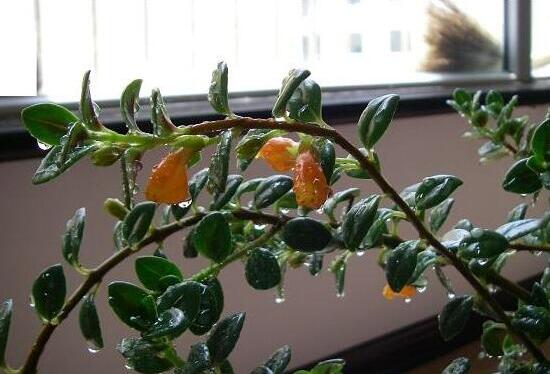
If you are a beginner, then mastering the cultivation method of the goldfish plant is enough; but if you are an old hand, or want to become one, then you also need to understand the propagation methods of the goldfish plant, so that you can understand the goldfish plant from the root.
As for how to propagate the goldfish plant, generally cutting propagation, sowing propagation and division propagation can be used. And because goldfish plant seeds are difficult to obtain and division does not easily survive, sowing and division are rarely used for propagation, and the cutting method is commonly used for propagation.
II. The cutting propagation method for the goldfish plant
1. Cutting time
According to the growth habits of the goldfish plant, its cutting propagation time can be all year round. It is best to do it indoors after the goldfish plant's flowering period.
2. Selection of cuttings
In the cutting method for the goldfish plant, the selection of cuttings is very important; if they are chosen well, more than half of the whole propagation process is a success. To take cuttings of the goldfish plant, you should choose healthy one-year-old branches and cut them to a length of 10-15 cm as cuttings. Note: the cuttings should keep 3-4 leaves, and remove several pairs of small leaves at the base.
3. Cutting medium
For the choice of cutting medium, you can use soil made from clean river sand or vermiculite.
4. Starting the cuttings
With the above preparatory work done, the cutting propagation of the goldfish plant is about to officially begin. Insert the part of the cutting that has small leaves on the lower side into the prepared medium; after cutting, the soil needs to be kept relatively highly moist.
5. Care after cutting
After the cuttings are completed, generally the cut seedlings also need to be covered with a film, and the room temperature adjusted to about 20°C; in addition, the air humidity also needs to be kept relatively high. Generally they will take root in 3-4 weeks, and after rooting, management needs to be strengthened.
After the cuttings have survived for 2 months, they can be pinched, so that there will be more branches and more flowers, and the overall shape will look better. As for how to pinch the goldfish plant, it was introduced in detail earlier, so I will not say more here. After another one or two months, they can be transplanted into pots; generally the seedlings in the first year do not bloom, but after two or three years the goldfish plant will bloom.
Overall, for propagating the goldfish plant, the most suitable method for the majority of flower lovers is cuttings; flower lovers who want to propagate it themselves must learn it~. As for the propagation method of the cactus, the editor has introduced it here, hoping to bring help to everyone.
How to care for the goldfish plant in winter (overwintering) Cultivation methods for the goldfish plant
Cold winter weather is often a test for the survival of living things; overwintering is not only uncomfortable for people, who need to put on thick clothes, but plants are actually quite uncomfortable too. The goldfish plant is a plant that needs special care to overwinter, so only by caring for it well in winter will the goldfish plant grow better next year.
How to care for the goldfish plant in winter
I. Soil requirements in winter
The soil arrangement is best to provide it with soil that has good drainage and good air permeability, and is also slightly acidic.
II. Temperature arrangement
Because this plant likes both high temperature and high humidity, in winter, due to the cold weather, and because it has already entered a dormant period, at this time the temperature of its growing environment needs to be controlled at about 15°C. If the temperature drops below 10°C, its leaves will begin to turn yellow and dry, and are very likely to fall off.
III. Light
This plant likes shady places and cannot accept direct exposure to sunlight, but it can be placed in a shady place with diffused light and ventilation. During the winter dormant period, you can arrange a dry and cool place for it, which can promote the differentiation of its flower buds; but if before it blooms in winter you appropriately increase light for it, its flowering quality will be relatively improved.
IV. Water control
This plant itself needs a great deal of water for growth, but in winter it has a short dormant period, so you can water it less; just keep the soil in the pot slightly dry. When the winter flowering period comes, at that time you need to replenish the water it needs, and the soil in the pot should also maintain corresponding humidity, and you must increase the air humidity for it.
Cultivation methods for the goldfish plant
1. Pot soil selection for the goldfish plant
The goldfish plant is suitable for planting in a greenhouse, and planting mostly uses a medium with good drainage and air permeability for the root system. To prevent water leakage when watering, you can use a round, attractive flower pot for planting, spread coarse grains and stones all over the bottom of the pot, and then add a small amount of mixed culture soil.
2. Planting method for the goldfish plant
In order to improve the survival rate, when planting you must pay attention to the position of the flowering branches, so that the ornamental value of the goldfish plant can be enhanced.
Choose fresh branches with plump roots, plant them evenly in the culture soil, and fill the pot with soil to finish planting. Suitable fertilizer can be added to the pot soil; when the branches grow, they will hang down around the flower pot.
When the potted flowers are in full bloom, each plant will grow more than a dozen goldfish flowers. After new branches grow, they can be pinched, which can make the plant shape symmetrical and the growth more beautiful.
3. Fertilizer and water needs of the goldfish plant
The goldfish plant has very high water requirements and needs appropriate watering in spring, summer and autumn, and the surroundings need frequent watering to maintain humidity. In the high-temperature summer season, it is best to place the flower pot in a shallow dish filled with water. These measures can all avoid leaf drop caused by dry air. The goldfish plant should also be watered a little more before flowering in winter and spring, so that the flowers can bloom fully and the flower color is bright.
During the growth period of the goldfish plant, applying a dilute organic fertilizer solution once every 1-2 weeks can make it grow vigorously; before flowering, phosphate fertilizer should be added, which can make it produce more buds and flowers and enhance its ornamental effect; do not fertilize when flowering, and after the flowers fade, pruning and shaping should be carried out, and more nitrogen-containing fertilizer should be applied.
4. Light and ventilation for the goldfish plant
Apart from needing relatively sufficient sunlight in winter, the goldfish plant needs more shade in the other seasons. In spring, summer and autumn, 60%-70% of sunlight should be blocked, or it should be hung in an outdoor shade shed, or in a cool, ventilated place under the shade of a large tree, receiving more diffused light and no direct sunlight.
Such an environment is very suitable for its growth. Before the goldfish plant blooms in winter, light should be appropriately increased, so that its flowers are abundant and brightly colored.
5. Propagation method for the goldfish plant
The goldfish plant is propagated by cuttings. In spring and autumn, cut branches about 10 cm long with 3 to 4 nodes as cuttings, insert them into a cutting bed with coarse sand as the medium, keep relatively high humidity, and at a temperature of about 20°C, they easily take root and survive.
Can the goldfish plant be grown hydroponically
Flower lovers who like hydroponic plants, do you want to grow everything hydroponically whenever you see it? Can the small pot of goldfish plant you usually have be grown hydroponically? Do you really want to try it? In the eyes of many flower lovers, as long as the branches can be inserted in water, it can be grown hydroponically, and the goldfish plant is among them. It turns out that the goldfish plant can also be grown hydroponically!
Can the goldfish plant be placed in the bedroom
The goldfish plant is a green plant that can be enjoyed both for its leaves and its flowers. Its orange-red flowers, bright and passionate, with peculiar shapes, can number as many as a hundred at peak bloom. Stirred by a breeze, seen from a distance they look like goldfish swimming leisurely and freely in the green, full of interest, with extremely high ornamental value, very suitable for indoor cultivation; it can beautify the room and delight body and mind, and can also purify and absorb polluting substances and turbid gases in the surrounding air, purifying it and increasing humidity. Keeping a pot of it at home can be said to kill two birds with one stone.
Winter is the season when the goldfish plant blooms. Proper care of the goldfish plant in winter can not only help the goldfish plant survive well, but also help extend its flowering period, which is killing two birds with one stone. And the other normal care methods for the goldfish plant are necessary means for its growth.
Schefflera What are the cultivation methods and precautions for Schefflera?
?`?.??.?′′ˉ`?Related recommendations:
?How to grow spider plant ?How to grow water lily
?How to grow carnation ?Desert rose cultivation
?`?.??.?′′ˉ`?Interior decoration, this article originates from [Decoration Information]
Schefflera is evergreen all year round, with broad leaves that droop softly, dense branches, layered foliage, rich emerald green, and a full and elegant plant posture with a good sense of layering. Importantly, its shade tolerance is extremely strong, its wood is relatively soft, and it is commonly used to make matchsticks and steamers. Its leaves and root bark can be used as medicine among the people, to treat flu and bruises. Its cultivation methods are also not very demanding. Below is the editor's sharing:
Cultivation methods 1. Soil:The culture soil for Schefflera can be peat soil or leaf mold plus a little basic chemical fertilizer or sandy soil, and it can then be cultivated directly. This can ensure the air permeability and drainage of the soil.
2. Temperature:The most suitable temperature for Schefflera growth is 15-25°C. Once the temperature is below 5°C, leaf drop will occur, and ventilation also needs to be paid attention to normally.
3. Light:Schefflera is a semi-shade plant and is shade-tolerant. Remember not to place it in direct sunlight; as a potted plant, it is enough to place it on a balcony or in a bright indoor spot.
4. Watering:The pot soil should be kept moist. Except in winter, it should not be watered too much in the other seasons; watering once every three or four days is enough. In winter, watering should be appropriately reduced, and the water temperature is best similar to the soil temperature.
5. Fertilizing:In spring, summer and autumn, fertilize the pot soil every month, with a compound chemical fertilizer in the ratio nitrogen:phosphorus:potassium = 2:1:1.
6. Pests and diseases:The main diseases of Schefflera are leaf spot and anthracnose, which can be sprayed with fungicides; the main pest is scale insects, which can be killed by spraying omethoate emulsifiable concentrate.
Precautions
1、The sap of Schefflera is toxic, but we do not need to "turn pale at the mention of toxicity"; its toxicity is mild. If you touch it, just wash it off with water; even if swallowed by mistake, it will not endanger life.
2、Schefflera cannot be exposed to direct scorching sunlight; it should be placed in a semi-shade environment. Usually, as long as it gets four hours of light a day, that is enough.
3、Note that watering should be moderate; too dry will make Schefflera drop leaves. If the weather is too dry, spray water on the plant, and in rainy seasons you must prevent waterlogging.
4、If you want to take cuttings of the plant, do not rush to repot the plant; wait until the plant is growing well and stably before repotting, which can raise the survival rate of the plant.
5、Schefflera is very sensitive to ethylene and cannot be mixed with plants or other items that produce ethylene, otherwise leaf drop will occur.
Conclusion:In our home decoration, home green plants are indispensable and play a very important role in a home. They can not only add green to the home well and make the home look more vibrant, but of course can also help us purify indoor air. Is this not a kind of home decoration that achieves multiple goals at once? And the editor's introduction to the cultivation methods and precautions for Schefflera ends here, hoping it is helpful to everyone.
[Related recommendations]
?How to grow anthurium? How to grow lily? How to grow lucky bamboo? Cultivation methods for jade plant? Cultivation methods for hydrangea
?How to grow flamingo flower? How to grow snapdragon? How to grow Cuban oregano? Cultivation methods for kalanchoe? Cultivation methods for night-blooming jasmine