How to propagate Peperomia obtusifolia? Either cuttings or division will do
Although Peperomia obtusifolia is a herbaceous plant, it also has some characteristics of succulents. Its propagation is relatively simple, but the propagation methods are rather special, for example, leaf cuttings are one of them. So how do you propagate Peperomia obtusifolia? Let's take a look at the propagation methods for Peperomia obtusifolia.
How to propagate Peperomia obtusifolia
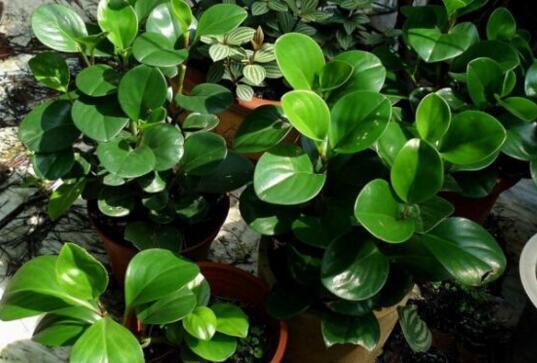
Generally, the propagation methods for Peperomia obtusifolia include stem cuttings, division, and leaf cuttings. The difference between stem cuttings and leaf cuttings is that the former uses a stem with leaves as the cutting, while the latter uses a mature leaf together with its petiole for propagation. Below is a detailed introduction to each propagation method.
1. How to take stem cuttings of Peperomia obtusifolia
1. Timing for stem cuttings of Peperomia obtusifolia
The timing is usually chosen for April-May, when the temperature is between 20-25 degrees, which is most favorable for rooting after cuttings, and subsequent care is also relatively much easier.
2. Stem cutting method for Peperomia obtusifolia
Choose relatively robust growth from the top stems of Peperomia obtusifolia, about 5 cm in length, cut it off, and make sure the stem has 1-2 leaves on it, then place it in a shady spot to let the cut end dry.
Insert the cutting into a prepared sand bed, gently press the soil around the cutting, then water thoroughly. Be careful to keep the temperature at around 20 degrees, and place it in a ventilated, shady spot for care. It will root in about 2 weeks.
2. Division propagation of Peperomia obtusifolia
1. Timing for division
Division propagation is usually carried out in spring or autumn. In autumn it is generally in September-October; avoid dividing when temperatures are lower in late autumn.
2. Division method
When using division, how do you propagate Peperomia obtusifolia? Take the Peperomia obtusifolia out of its pot, then use a tool to divide the plant into several clumps, keeping 3-5 stems in each clump, then plant them separately in prepared potting soil.
Generally, the potting soil used for division is made by mixing leaf mold, peat soil, and perlite. When planting, you can also sprinkle some base fertilizer at the bottom to improve the soil's nutrient conditions. After that, keep the temperature at 18-20 degrees, and after 2-3 weeks the Peperomia obtusifolia can resume normal growth, then manage it according to the cultivation methods for Peperomia obtusifolia.
3. Leaf cutting propagation
1. Timing
Leaf cutting propagation is generally chosen for May, because leaf cuttings need a temperature of around 25 degrees, so the climate conditions in May are relatively suitable.
2. Method
Use a knife to cut from the top of the Peperomia obtusifolia a deep green, glossy leaf with its petiole, then place it in a shady spot for later use. After the leaf has wilted slightly, insert the petiole into the prepared potting soil, then water thoroughly and place it in a shady spot for management. After that, keep the soil moist, and after 2-3 months it will root and sprout.
How to propagate Peperomia obtusifolia: propagation methods for Peperomia obtusifolia
“Cultivation methods and precautions for Peperomia obtusifolia" has already been introduced for everyone, so how do you propagate Peperomia obtusifolia? Let's learn about the propagation methods for Peperomia obtusifolia.
Propagation methods for Peperomia obtusifolia
1. Division method:When the plant has filled the pot, take the plant out and divide it into several pots for planting.
2. Stem cutting method:Using terminal buds for cuttings gives the best results. Generally in May-June, choose a sturdy, full 2-year-old stem 8-10 cm long. It has 3 nodes; cut it off 0.5 cm below a node. The upper part has 3-5 leaves. Place it in a ventilated, shady spot for 1-2 hours, and after the cut end has dried slightly, insert it into a growing medium made of half leaf mold and half garden soil, water thoroughly, and place it in a shaded spot. Keep the potting soil moist at all times, and it will root after 20 days. When the roots are 3 cm long, it can be potted for care.
3. Leaf cutting method:In East China, it is best to do this in May each year. Take a robust, mature leaf from the middle-lower part of the plant, and remove the whole leaf together with its petiole. After drying it for half a day, insert the petiole at a 45° angle into a shallow pot filled with vermiculite or sand, and keep it moist. At a temperature of around 25°C, roots can be produced in about 25 days, and when the leaf has 3-4 leaves it can be potted for care. When doing leaf cuttings, never cover the pot opening with plastic film or glass to retain moisture, otherwise it is prone to rot.
Cuttings and division are mostly used for propagation
Cuttings: In April-May, choose a robust terminal stem about 5 cm long as the cutting, keep 1-2 leaves on the upper part, and after the cut end has dried, insert it into a moist sand bed. Leaf cuttings can also be used: cut off a leaf with its petiole using a knife, let it dry slightly, then insert it obliquely into a sand bed; it will root in 10-15 days. In a greenhouse with temperature control equipment, it can be done all year round.
Division: Mainly used for propagating variegated-leaf varieties. The potting soil can be made from leaf mold and peat soil plus some perlite or sand, with an appropriate amount of base fertilizer added. During the growing season, apply topdressing once every half month. For watering, water that has been left standing in a water tank for 1-2 days is best. Reduce watering in winter. Temperature changes directly affect leaf color. The suitable winter temperature for variegated-leaf types is 18-20°C; for green-leaf types it is around 15°C. They fear heat in midsummer, so they can be placed under a shade shed and misted to cool down, but note that both excessive heat and excessive moisture can cause stems and leaves to turn black and rot. In winter, place them in a spot with sufficient light; in summer, avoid direct sunlight. Repot once every 2-3 years.
[How to grow in water]:Peperomia obtusifolia is an excellent, easy-to-keep model for water culture. With 4-5 leaves per plant, it adapts very easily to a water environment, does not rot, and is easy to grow.
It likes a warm, humid, semi-shady environment, does not tolerate high temperatures, and avoids direct sunlight; it is drought-tolerant, so do not water too much, especially in autumn and winter when watering should be reduced. If the air is dry, spray more water on the leaves. Avoid frost.
[How to grow in soil]:The cultivation substrate for Peperomia obtusifolia requires an organic substrate with good air permeability and good water retention, such as peat soil plus perlite or vermiculite, at a ratio of about 6:1. Avoid excessive moisture in the cultivation substrate; generally keep the cultivation substrate at 40-60% water content.
It is usually placed indoors in a bright spot or outdoors in a shaded spot. The optimum temperature is 20-26°C, and the winter temperature should be above 5°C. Spray water on the leaves regularly to maintain relatively high air humidity. It can also be appropriately pruned after a period of care or transplanted into a courtyard for ornamental display.
The above isHow to propagate Peperomia obtusifoliaintroduced. Friends who want to grow it in soil or in water can both take a look.
Stem cutting propagation method for Peperomia obtusifolia
Peperomia obtusifolia is a very famous and very common indoor foliage plant. Many flower enthusiasts keep a pot at home. It can not only improve the home environment but also improve the air, so it can be said to be a very useful foliage plant. When some flower enthusiasts find their Peperomia obtusifolia has grown to a certain extent, they want to propagate a new pot of Peperomia obtusifolia themselves. Generally, Peperomia obtusifolia is propagated by stem cuttings. Division can also be used, but it is used relatively rarely. The editor will focus on introducing the stem cutting propagation method for Peperomia obtusifolia.
Peperomia obtusifolia (detailed introduction)
During the peak growing season of Peperomia obtusifolia, cut off a stem (with 3-4 leaf nodes). After the wound has dried, insert it into the substrate, and lightly mist the cutting and substrate. As long as the substrate is not excessively dry or waterlogged, it can quickly grow roots and new shoots. When temperatures are relatively high from late spring to early autumn, cuttings are extremely prone to rot, so it is best not to take cuttings then.
The cutting substrate can be nutrient soil, river sand, peat soil, or other materials. Division is relatively simple, so I will not say much about it.
Of course, some flower enthusiasts will ask about leaf cutting propagation of Peperomia obtusifolia. Leaf cuttings of Peperomia obtusifolia root very easily, but the time to sprout is indeed very long; it may not sprout for half a year, which really tests one's patience, so if there are stems, it is best to take stem cuttings.
Of course, some flower enthusiasts like to propagate Peperomia obtusifolia by water cuttings, which looks more trouble-free, but although rooting is easy, transferring it to soil is a bit more work. After it has rooted, take the Peperomia obtusifolia out, let the roots dry slightly, and plant it.