How to grow wisteria? Scarify the seeds before planting
Wisteria is a highly ornamental plant, and its flowers are mostly purple or deep purple, very beautiful, so this flower is also loved by many people, and there are many who want to grow it, so how do you grow wisteria? What is the method for growing wisteria from seed? Below, the editor will walk you through it.
I. How to grow wisteria
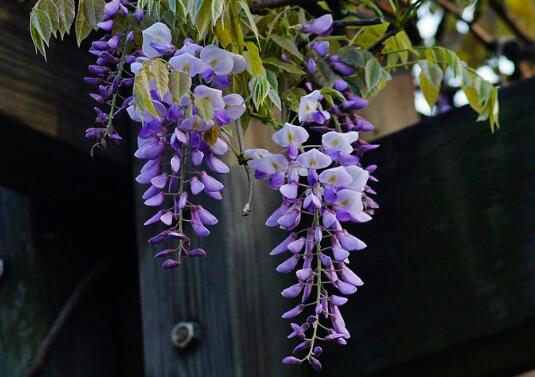
As for how to grow wisteria, we generally use sowing, which is the most common and most frequently used method, and the survival rate is also very high. The specific sowing and planting method is described in detail below, and friends who are interested can take a look.
II. Method for growing wisteria from seed
1. Substrate selection
When growing wisteria, we first need to choose a substrate. Generally, it is best to choose humus soil with high looseness. This kind of soil has good drainage and aeration, and can allow wisteria to absorb nutrients better.
2. Seed collection
Wisteria is generally planted in spring, in which case the seeds will mature around November, and that is when we can collect them. After collecting the seeds, we need to remove the fruit skin, then dry them in the sun and store them, and wait until the next year to sow them.
3. Seed scarification
Before growing wisteria from seed, we need to scarify the seeds. Generally, the seeds are soaked in hot water for 1-2 days, and after the seeds begin to absorb water and swell, they are taken out and sown. This can make wisteria seeds germinate more quickly, and the survival rate will also be greatly improved.
4. Sowing method
As for how to grow wisteria, the method is actually very simple. When planting, we can mix the wisteria seeds with fine sand and scatter them, then cover them with about 1-2 cm of soil and water them. When watering, be careful to water thoroughly in one go, and after about 10 days the seeds will germinate.
5. Follow-up management
After wisteria seeds have been successfully planted, we can carry out follow-up care for them. There are also many points to pay attention to during the care process, such as fertilizing, watering, light, and other issues. The specific details are described in detail in the article on wisteria cultivation methods, so the editor will not repeat them here.
How to grow wisteria seeds: method for growing wisteria from seed
Wisteria is a deciduous climbing and twining large woody vine, and there are quite a few friends who like wisteria, but they do not know much about the growing method of wisteria. Xiao Qi will introduce it to everyone todayHow to grow wisteria seeds。
I. How to grow wisteria seeds
Gently rub each seed against sandpaper, exposing the seed inside; after stopping, break the surface another way. Soak the seeds in a bowl of warm water for 24 hours. These processes weaken the hard coat of the seeds so that they can germinate quickly. If this is not done, it will make it difficult for the seed embryo to break through the hard shell. Seeds are prepared by the weather in nature when they are in the ground freezing and thawing in winter.
Plant the seeds indoors six to eight weeks before the last frost. Prepare individual pots or a single large plant tray with potting soil, water the soil, and add more dirt. It will be an unheated house, away from indirect heating from the laundry room. Provide the plants with sunlight through a window or place them under fluorescent plant lights for at least 12 hours a day. Transfer the seedlings immediately after the last frost to a sunny outdoor area, one seedling per bed or area.
Plant the seeds directly outdoors in early spring or late autumn at a depth of one inch. Bare seeds will not be harmed. Gentle frost is a threat only before sprouting. Train each tree's vine on about each side using one seed. If they are to be twined into an arch or pergola, wisteria will germinate in 30 to 35 days.
II. Wisteria seed growing method
1. Soil: Wisteria has a long taproot, so the growing location needs deep soil. Wisteria tolerates poor soil, but fertile soil is more favorable for growth. Wisteria also has strong adaptability to soil pH.
2. Light: Wisteria likes sunlight and is slightly tolerant of shade. Because wisteria is a large woody vine, in order to make it grow well, a certain trellis is generally set up for cultivation. Wisteria also has relatively shorter species and types that can be grown as potted plants or made into bonsai.
3. Temperature: Wisteria has strong adaptability, can withstand summer heat and also cold, and is cultivated from south to north in our country. So in Guangdong, the temperature throughout the year can meet the needs of wisteria growth.
4. Watering: Wisteria's taproot is very deep, so it has strong drought tolerance, but it likes moist soil. However, the roots must not be soaked in water, otherwise it will cause root rot.
5. Fertilizing: Applying compound fertilizer 2-3 times a year to wisteria can basically meet its needs. If it still does not bloom after being planted for several years, one reason is that the tree vigor is too strong and there are too many branches and leaves, and the second is that the tree vigor is weak and it is difficult to accumulate nutrients. Fertilizer should appropriately include more potassium fertilizer. During the growing season, topdressing can be done 2-3 times.
6. Propagation: Wisteria can be propagated by cuttings, layering, sowing, grafting, and other methods. But generally sowing propagation is the main method. Collect seeds after autumn, dry them in the sun and store them, and sow them in spring.
The above isHow to grow wisteria seedsintroduced. Growing wisteria from seed is still rather troublesome, and I hope it can help everyone.
How to grow wisteria seeds? Wisteria growing method
Wisteria
Introduction: Recently, many netizens asked the editor how to grow wisteria seeds so that the survival rate is relatively high. Here, Yan Shu, editor of First Agricultural Economics, shares with you the methods and steps for propagating wisteria by seed sowing:
1. Collect when wisteria seeds mature (generally November), remove the pod skin, dry them in the sun, bag them, and store them.
2. Wisteria seed propagation by sowing is generally carried out in March. Before sowing, soak the seeds in hot water. When the boiling water temperature drops to about 30°C, scoop out the seeds and rinse them briefly in cold water, then keep them moist and pile them for one day and one night before sowing.
3. Step 2 can also be replaced by storing the seeds in wet sand, and soaking them in clean water for 1-2 days before sowing.
Wisteria seeds have germinated
In addition to seed sowing propagation, wisteria can also be propagated by cuttings, layering, division, and grafting, all carried out in mid-to-late March.
Wisteria cutting propagation generally uses hardwood cuttings. In mid-to-late March before the branches sprout, select robust 1-2 year old branches, cut them into cuttings about 15 cm long, and insert them into a prepared seedbed. The cutting depth is 2/3 of the cutting length. After inserting, spray water, strengthen care, and keep the seedbed moist. The survival rate is very high. In the same year, the plant height can reach 20-50 cm, and after two years it can leave the nursery.
Root cuttings make use of the fact that wisteria roots easily produce adventitious buds. In mid-to-late March, dig out roots 0.5-2.0 cm thick, cut them into cuttings 10-12 cm long, and insert them into the seedbed. Keep the cutting depth so that the upper cut end of the cutting is level with the ground. Other management measures are the same as for branch cuttings.
Tip: If wisteria is sown in a pot, the soil is best disinfected first, otherwise insects are likely to grow in the soil. After the seeds are sown, be careful to keep the soil moist (it must not be waterlogged), and they will germinate very soon.