How to propagate wax begonia from cuttings? Cutting method illustrated, best in April-May
Among the propagation methods for wax begonia, cutting propagation is one of the more commonly used methods, and the survival rate is relatively high, but the prerequisite is that you must master the correct operation method. So how do you take cuttings of wax begonia? What does the illustrated cutting method for wax begonia look like? Below, the editor will walk you through it.
I. How to take cuttings of wax begonia
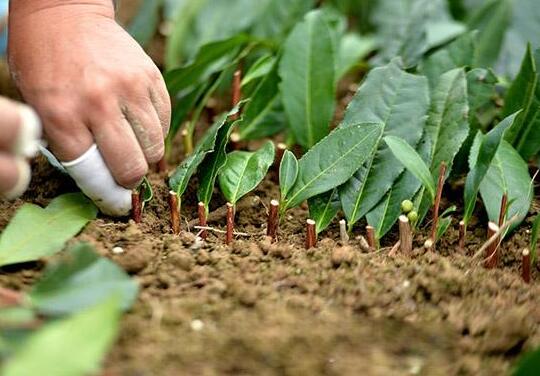
II. Illustrated cutting method for wax begonia
1. Cutting time
When you are preparing to propagate wax begonia by cuttings, it is best to choose a suitable time period, as this can greatly increase the rooting rate. Generally, taking cuttings in April-May is best, because the air humidity during this period is relatively high and the climate is also quite suitable, allowing wax begonia to root quickly.
2. Substrate selection
When taking cuttings of wax begonia, choosing the substrate is a very important part. Generally, it is best to choose a sandy soil with relatively high looseness. This kind of soil has good air permeability and drainage, allowing wax begonia to absorb nutrients better and also improving the success rate of cuttings.
3. Cutting selection
In the cutting method for wax begonia, selecting the cutting is also a relatively important step. Generally, it is best to choose relatively robust branches, as this will give a higher survival rate. If you choose branches that already look very slender, then it will basically be very difficult for them to survive. After selecting the cutting, we need to cut its upper part into a flat-topped shape and its lower part into a horseshoe shape. This can expand the contact surface with the soil and has the effect of promoting rooting.
4. Cutting method
As for how to take cuttings of wax begonia, the method is actually very simple. First, we can use chopsticks to poke a hole in the soil, then insert the cutting into two-thirds of the soil and water it. When watering, be sure to water thoroughly at one time, and remember not to cause water accumulation, otherwise it is very easy to cause root rot. After that, roots can grow in about 10 days.
5. Follow-up management
After wax begonia successfully roots from cuttings, we can carry out follow-up care for it. There are also quite a few points to pay attention to during the care of wax begonia. For specific details, you can read the article on the correct cultivation method for wax begonia, which contains detailed care instructions. The editor will not repeat them here.
[How to take cuttings of wax begonia] Illustrated cutting method for wax begonia
Cutting propagation of wax begonia has undoubtedly become the way most flower lovers propagate begonia, but during the propagation process, flower lovers still find it difficult to know how to take cuttings. So how do you take cuttings of wax begonia? Next, we will talk about the cutting method for wax begonia.
Cutting method for wax begonia: cutting time for wax begoniaThe time for cutting propagation of wax begonia at home should be between April and May each year. When spring warms the flowers into bloom and the temperature rises back to around 20°C, the air humidity is relatively high, the environmental temperature increases, and managing wax begonia is simple, making it even more suitable for wax begonia to root and sprout quickly.
Cutting substrate for wax begoniaThe river sand needs to be washed, dried, and placed in a pot. At this point, the dried river sand has basically achieved the purpose of disinfection. Placing the dried river sand in the pot helps promote the healing of the cut surface of the cutting branches and helps the pot soil warm up under daytime sunlight.
Selection of wax begonia cuttingsWhen selecting cuttings, wax begonia should choose strong 1-2 year old branches for cuttings. Each section of branch should have 3-4 nodes. Cut it into a flat column shape, and cut the lower part into a horseshoe shape. This can expand the contact area between the cutting and the sandy soil and promote rooting of the plant.
Cutting and management of wax begoniaInsert the plant into the pot at a row spacing of 3*4 cm, and it must not be too close. Before cutting, first prepare a bamboo stick the same thickness as the cutting and poke holes in the pot sand, then insert the wax begonia branches through the holes. About 2 days after cutting, there is no need to water, so as to help the cut surface heal and avoid rot.
On the 5th day after cutting, water until it flows out from the bottom of the pot. Place the plant and pot in a cool place and do not water again. After 10 days, roots 3-4 cm long can grow. At this time, place the pot in sunlight and water depending on the weather. After 6-7 days, it can be potted and planted in a fixed location.
How to propagate split rock? Illustrated method for beheading and cutting split rock
Split rock is a particularly cute succulent. Its leaves are thick and lovely, and its color is emerald green, fresh and beautiful, with extremely high ornamental value. The planting method for split rock is also relatively simple, and its growth speed is fast. Especially in conditions with insufficient sunlight, it is very easy to become leggy. So do you know how to behead and take cuttings of split rock?
How to propagate split rock
1. Suitable cutting substrate
The propagation of split rock is mainly based on cuttings. The cutting substrate needs to have good performance. It not only needs good drainage and air permeability, but also good water and air retention. For example, perlite, peat ash, vermiculite, furnace ash slag, etc. can all be used in combinations. However, they must be disinfected before use. At the same time, an appropriate amount of nutrient-rich planting material containing humus needs to be spread below the substrate, and it is best to use larger-particle planting material at the bottom of the substrate to create a drainage layer.
2. Maintain air humidity
After cutting, it is essential to avoid a sudden drop in relative air humidity. It is best to keep it above 70%, especially before rooting. It is recommended to keep the relative air humidity at 90%.
3. Appropriate lighting
After split rock is cut, light should not be too much or too little, otherwise it will affect the growth of adventitious roots and cause insufficient supply of nutrients. It is best to place it in a relatively cool place with scattered light. Avoid direct sunlight, and it also must not be completely dark.
4. Suitable temperature
The most suitable temperature for cutting split rock is between 20 and 35 degrees. During this period, the harm caused by rot fungi can be reduced. Moreover, temperature changes between morning and evening make rooting easier than at a constant temperature.
5. Care and management
The protection details after cutting split rock, summarizing the above, are to choose a suitable temperature and substrate, maintain relatively high air humidity, and avoid direct sunlight. Once fungal threads are found in the substrate, spray with a fungicide promptly. Everyone should remember not to move or touch it casually out of impatience.
Illustrated method for beheading and cutting split rock
1. First, take the split rock completely out of the pot and trim the root system.
2. After trimming the roots, take a look. The split rock has already grown to 10 cm, so beheading is necessary.
3. Cut off the head. Generally, 2-3 stem nodes are enough.
4. This is the split rock after the head has been cut off.
5. Then plant the split rock separately.
6. After taking good care of it for a year, it will again be a robust pot of split rock.
Taboos in split rock care
1. Watering taboos
In winter, be sure to water less. When the temperature drops below 2 degrees, begin to gradually stop watering. As long as the pot soil is kept dry, it can safely pass the winter. Absolutely do not fertilize desperately just to make it grow better, otherwise it will have the opposite effect.
2. Fertilization taboos
Generally, when it is growing relatively vigorously, we can give it a little nutrients and water, but when the temperature is too low, fertilization must be stopped.
3. Attention to pests and diseases
If it is not cared for well in winter, its roots may easily become infested with insects. At this time, be sure to deal with these pests promptly, otherwise it will directly affect its growth and may even cause it to die. So at this time, we can use medication for certain prevention and control, so that it can safely pass the winter.
The value and uses of split rock
1. Ornamental use
Potted split rock is suitable for indoor viewing in winter, and can also be grown as a hanging basket plant, making it appear even more full of vitality and presenting a festive atmosphere. It is also often used to arrange specialized succulent plant gardens.
The split rock plant is not tall, and its many branches are mostly creeping. The leaves are fleshy and have three ridges, which is very special. It blooms in winter, with colors such as white, red, and light purple. Potted plants are suitable for indoor viewing in winter, and can also be grown as hanging basket plants, making them appear even more full of vitality and presenting a festive atmosphere.
2. Purification use
Split rock is a plant that especially likes warm, dry soil and requires growth in an environment with sufficient sunlight. It is especially afraid of cold. However, it is very drought tolerant, and too high a temperature is also not good. It is best to plant it in sandy soil. Many people grow split rock in small flower pots, making it a nice ornamental plant. Of course, placing split rock next to a television or computer can reduce radiation, and placing it indoors can also absorb harmful substances such as formaldehyde, thereby purifying indoor air. Split rock has very high ornamental value.
As mentioned above, the appearance of split rock is very delicate and beautiful, but if it becomes leggy and is left untreated, then split rock will grow into a state with no beauty at all! So everyone should try to let split rock get more sunlight and try not to let it become leggy!