How to Propagate Wax Begonia? A Detailed Guide to the Two Methods: Sowing and Cuttings
Wax begonia (Begonia semperflorens) is a highly ornamental flower, and many people in China grow it. As more people grow it, questions about its propagation have drawn considerable interest. So how do you propagate wax begonia? What propagation methods are there for wax begonia? Below, the editor takes you through it.
I. How to Propagate Wax Begonia
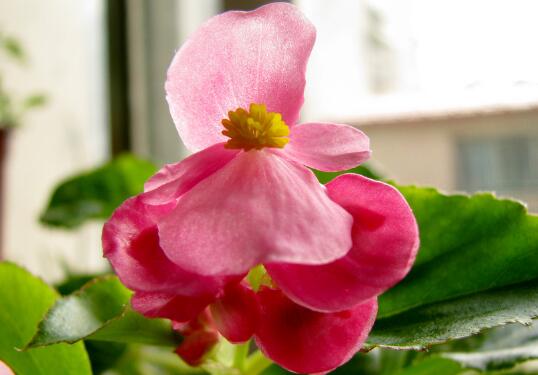
As for how to propagate wax begonia, it can mainly be divided into two methods: sowing propagation and cutting propagation. As long as they are done properly, both methods have very high survival rates. Below are detailed instructions for both propagation methods; interested friends can take a look.
II. Propagation Methods for Wax Begonia
Sowing Propagation
① Seed Germination
When it comes to how to propagate wax begonia by sowing, promoting germination is a very important step. Before sowing propagation, we first need to soak the wax begonia seeds in warm water for about 12-24 hours. Once the seeds begin to absorb water and swell, they can be taken out. This can promote the germination of wax begonia seeds.
② Sowing Method
Among the propagation methods for wax begonia, sowing propagation is a relatively commonly used method. First, we need to mix the seeds with fine sand, then evenly scatter them over the soil surface. After scattering, cover them with about 1-2 cm of soil, then water. When watering, be careful to water thoroughly but not to let water accumulate. About one week after watering, the seeds will sprout.
Cutting Propagation
① Selecting Cuttings
When it comes to how to propagate wax begonia by cuttings, selecting the cuttings is a very important step. Generally, it is best to choose relatively robust branches, as this gives a higher survival rate. If you choose branches that already look very thin, they will basically be very difficult to keep alive. After selecting the cuttings, we need to cut the top into a flat-topped shape and the bottom into a horseshoe shape. This can expand the contact surface with the soil and has the effect of promoting rooting.
② Cutting Method
Among the propagation methods for wax begonia, cutting propagation is relatively simple. First, we can use a chopstick to poke a hole in the soil, then insert the cutting into two-thirds of the soil and water it. When watering, be careful to water thoroughly at one time, and remember not to let water accumulate, otherwise it can easily cause root rot. After about 10-15 days, it will take root.
Wax Begonia Cutting Method: How to Propagate Wax Begonia by Cuttings
Wax begonia propagation mainly consists of three methods: sowing, cuttings, and division. For commercial cultivation, sowing propagation is always used. Wax begonia seeds are tiny and short-lived; seeds that naturally fall into the potting soil often quickly sprout and grow into seedlings, but harvested seeds that are not sown in time will produce very few seedlings. So how do you propagate wax begonia by cuttings? Today, wed114 Wedding Network brings you content related to wax begonia cutting methods. Let's take a look.
Wax Begonia Flower Image
I. Introduction to Wax Begonia
Wax begonia, also known as perpetual begonia and clam-meat begonia, Latin name: Begonia semperflorens Link et Otto. It is a succulent herb in the family Begoniaceae, genus Begonia. Roots fibrous; stems upright, succulent, hairless, much branched at the base, leafy. Leaves ovate or broadly ovate, base slightly oblique, margins serrate and ciliate, glossy on both sides, green, but the main veins are usually slightly red. Native to Brazil. Wax begonia is the most common and most widely cultivated species among begonias. It has a graceful posture, tender and glossy leaves, clustered flowers, blooms in all four seasons, and carries a slight fragrance, making it one of the main potted flowers for indoor and outdoor decoration. People use it in flower bed arrangements with excellent results. With the emergence of some relatively heat-tolerant varieties, wax begonia is very likely to become one of the main flower bed flowers in China, with advantages such as a neat plant shape, abundant and dense flowers, easy pairing with other flower bed plants, and a long ornamental period, so it is becoming increasingly popular. It is generally cultivated in spring and autumn.
Wax Begonia Flower Image
II. Wax Begonia Cutting Method
1. Cutting time.
Wax begonia roots easily, but cutting in summer is not recommended. In high temperatures, it is often in a semi-dormant state, so cuttings do not easily survive and the cuttings are prone to rotting. It is best to take cuttings in spring and autumn, when the survival rate is very high. Generally, no special treatment is needed; it is very simple. For home cuttings, it is suitable to do it between April and May, when the temperature rises above 20°C. At this time, air humidity is high and temperatures are warm, making management simple and suitable for the rapid rooting of wax begonia.
2. Selecting cuttings.
For cuttings, generally choose healthy, disease-free tips about 5-6 cm long, that is, 3-4 nodes, with each cutting bearing at least 2 buds. Cut at 1 cm below a node on the stem. After cutting, the leaves near the base can be removed, and any flower buds should be removed. Cut the top into a flat-topped shape and the bottom into a horseshoe shape to expand the contact surface with the sand and promote rooting, then proceed with cutting.
3. Cutting medium.
Wash river sand, dry it in the sun, and place it in a pot. River sand that has been washed and then sun-dried basically achieves the purpose of disinfection, and the sun-dried river sand helps raise the temperature under daytime sunlight, promoting the healing and rooting of the cut surface of the cuttings.
4. Cutting and management.
Insert into the sand pot at a spacing of 3 cm × 4 cm. Before inserting, first use a bamboo stick the same thickness as the cutting to poke a hole in the pot sand, then insert the wax begonia branch. Do not water for 2 days after inserting, to allow the cut surface to form a healing callus. On the 5th day, spray-water with water at about the same temperature as the sand, watering until water flows out from the bottom of the pot. Place in a cool place, and generally do not water again. After about 10 days, roots 3-4 cm long can grow. At this point, place the pot in sunlight and water according to weather conditions. After another 6-7 days, it can be potted and planted out.
Wax Begonia Flower Image
III. Wax Begonia Propagation Methods
Sowing Method
In East China, spring from April to May and autumn from August to September are generally most suitable. The seeds should be evenly scattered on the fine soil in the pot (no need to cover with soil). Then use the bottom-watering method to let the sowing pot absorb enough water, cover with a piece of glass, and place in a semi-shaded spot. After 10 days, they will sprout. Seedlings sown in spring can bloom in autumn of the same year.
Cutting Method
It can be done in all four seasons, but after the seedlings mature they branch less. Except for double-petaled varieties, this method is generally not used for propagation.
Division Method
Perennial old plants can be divided, and pruning can be done at the same time to encourage new side branches and form a well-shaped plant.
Wax Begonia Flower Image
IV. Wax Begonia Care and Management
Wax begonia has a long flowering period, many flower colors, and rich variation. It is a flower beautiful in both bloom and foliage. It is suitable not only for outdoor cultivation in courtyards and flower beds, but is also an excellent choice for decorating indoor home desks, tea tables, table tops, and shop windows. After Qingming, potted plants can be moved outdoors under a shade shed for care. In East China, from April to October, they should be cared for under full-day shading, but it is best to let them see a little sunlight in the morning and evening; if the leaves are found to curl and develop scorched spots, this is a symptom of sunburn. After Frost's Descent, they must be moved indoors to prevent freezing and keep warm, otherwise they will freeze to death from frost; indoor placement should be in a sunny spot. If the room temperature stays above 15°C and fertilizer is applied, it can continue to bloom.
Light, water, fertilizer, temperature, and pinching are the keys to growing wax begonia well. After planting, wax begonia can receive direct sunlight in early spring; as sunlight intensity increases, appropriate shading is needed.
At the same time, attention should be paid to water management. Too much water easily causes root rot, bud rot, and branch rot; high temperature and high humidity easily produce various diseases. After planting and the seedlings have recovered, apply liquid fertilizer once every 10 days. Prune long branches and old branches in time to encourage new side branches; strengthening pruning helps make the plant shape more attractive. The cultivation soil should be rich in humus, well-drained, neutral or slightly acidic soil. It fears both drought and waterlogging.
How to Propagate Split Rock (Monilaria moniliformis)? Propagation Methods: Sowing Propagation / Cutting Propagation
Split rock is a succulent plant in the family Aizoaceae, native to southern Africa, and today people cultivate it in various parts of China. As more people grow it in different places, questions about its propagation have also drawn interest. How do you propagate split rock? What propagation methods are there for split rock? Below, the editor takes you through it.
I. How to Propagate Split Rock: Sowing / Cuttings
When it comes to how to propagate split rock, it is mainly divided into two methods: sowing propagation and cutting propagation. Among them, sowing propagation is more suitable for indoor potted plants and is generally done in spring, while cutting propagation is generally used for group planting and can be done in both spring and autumn. As long as we do it properly, both methods have relatively high survival rates. The details are below; let's take a look.
II. Propagation Methods for Split Rock
First, whether doing sowing propagation or cutting propagation, we need to choose the soil first. This is the foundational step and is very important. Generally, it is best to choose loose, fertile, sandy loam soil. This kind of soil has good drainage and strong air permeability, allowing the plant to absorb nutrients better, and it is not prone to water accumulation in the pot.
Sowing Propagation
Seed Germination: Before sowing propagation of split rock, we first need to promote germination of its seeds. We can soak its seeds in warm water for about 1 day. When the seeds begin to absorb water and swell, take them out. This allows the seeds to sprout more quickly.
Sowing Method: Among the propagation methods for split rock, sowing propagation is a relatively commonly used method. First, we need to apply an appropriate amount of base fertilizer to the potting soil, then evenly scatter the seeds over the soil surface. After scattering, cover with 1-2 cm of soil and water. When watering, be careful to water thoroughly at one time. After about 10 days, they will sprout.
Cutting Propagation
Selecting Cuttings: Before taking cuttings of split rock, we first need to select the cuttings. Generally, it is best to choose relatively robust branches, as this gives a higher survival rate. If you choose branches that already look very thin, they will basically be very difficult to keep alive. After selecting the cuttings, we also need to trim off the leaves at the bottom, keeping only the upper 2-3 leaves.
Cutting Method: Among the propagation methods for split rock, cutting propagation is a relatively simple method. First, we can use a chopstick to poke a hole in the soil the thickness of the cutting, then insert the cutting into it and water thoroughly. This operation can prevent the cutting from being damaged when inserted, and it is very practical. After we finish cutting, they generally take root in 15-20 days.