How to propagate flowering almond (Prunus triloba)? Both grafting and sowing work
Flowering almond has a strong ability to adapt to its environment, so growing it is not difficult, but once it has grown for a certain period, you need to think about propagating it. Since flowering almond is a small tree in the genus Prunus (subgenus Amygdalus) of the rose family, its propagation methods are not only the same as those of some potted plants, so how do you propagate flowering almond? How do you graft flowering almond? Let's take a look at the propagation methods for flowering almond.
How to propagate flowering almond
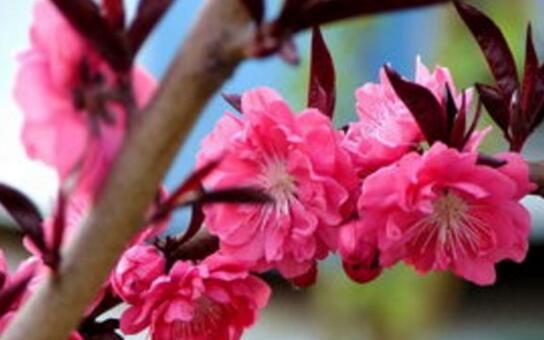
Three propagation methods are more commonly used for flowering almond: grafting, sowing and layering. Among them, grafting gives the best results and is relatively easy to perform, so it is the most commonly used, followed by layering and sowing. You can choose reasonably according to your own needs.
How to graft flowering almond
I. Cleft grafting
1. Timing. Cleft grafting is a type of grafting and is also the most commonly used propagation method for flowering almond. The timing is generally chosen in early to mid-March.
2. Method. Select a vigorous one-year-old branch from a double-flowered flowering almond, cut it into 8 scions 8 cm long, each retaining 3-4 buds, then use a tool to make a vertical cut about 4 cm deep between the xylem and the bark of the rootstock, cut the base of the scion into a duckbill shape, insert it vertically into the cut in the rootstock, tie it tightly with plastic tape, then mound soil around it. It will survive after 20 days, and remove the plastic tape after about 1 month.
II. Bud grafting
1. Timing. Bud grafting is generally done in August-September, when the temperature is suitable, which greatly helps survival after propagation.
2. Method. First determine the bud position on the scion, then use a relatively vigorous branch as the bud stick, use a sterilized budding knife to make an upward diagonal cut at a 30-degree angle into the xylem 2 cm below the bud position, stopping 1 cm above the bud position. Then make a horizontal cut at the bud position to remove the bud, cut a 3 cm long, 2 cm wide incision in the rootstock 3 cm above the ground, insert the bud into the incision, tie it well with plastic tape. If the bud has not wilted after 7 days, it has survived.
How to sow flowering almond
1. Sowing time for flowering almond
There are two ways to sow flowering almond: spring sowing and autumn sowing. Spring sowing is from late April to early May. Autumn sowing can be done in mid-to-late October.
2. Sowing method
[Spring sowing]: Spring sowing generally requires seeds stored over winter. Select high-quality seeds, soak them in 40-degree warm water for 2-4 hours, take them out and mix them evenly with wet sand, then force them to sprout indoors or in a greenhouse. Once 40% of the seeds have cracked their shells and begun to sprout, sow them. Spread the seeds evenly on a sand bed at 3-5 cm intervals, then cover with a thin layer of soil, press down gently and water thoroughly.
[Autumn sowing]: Autumn sowing is generally done as soon as the seeds are collected. Unlike spring sowing, autumn sowing does not require forcing the seeds to sprout; after cleaning the seeds they can be sown directly. So how do you propagate flowering almond when autumn sowing? Before sowing, soak the seeds in a 0.5% potassium permanganate solution for 2-3 hours, then seal them for half an hour, rinse with clean water, and spread them on a sand bed at a sowing depth of 2-3 cm, then irrigate for overwintering.
How to layer flowering almond
1. Timing
Layering is a commonly used method for small trees, but among the propagation methods for flowering almond, layering is not often seen. The timing is generally chosen after the flowering period, that is, late May.
2. Method.
Select a vigorous young branch 1-2 years old from the flowering almond plant, then perform ring-barking below a node, wrap the barked area with garden soil and bind it with plastic film. After binding, keep the garden soil moist, then carry out normal care. Roots generally form in about 90 days, after which normal management follows the flowering almond care methods.
How to propagate flowering almond: propagation methods for flowering almond
Flowering almond is also known as "luanzhi" and can be planted in many places, such as park lawns, courtyard walls and riversides. How do you propagate flowering almond? Today we bring you the propagation methods for flowering almond.
1. Grafting propagation of flowering almond
There are two grafting methods: bud grafting and cleft grafting, and bud grafting is generally used more often. Bud grafting is best done in mid-to-late August. The rootstock can be a one-year-old flowering almond seedling, or seedlings of wild rose species, peach (Prunus persica), or wild peach (Prunus davidiana). For bud grafting, you can select and cut plump leaf buds from one-year-old branches of a superior flowering almond variety for later use. Cleft grafting should be done in spring, February-March. The scion should be cut before the plant sprouts. Scions can also be cut in winter and stored in sandy soil for use in spring.
2. Cutting propagation of flowering almond
Softwood cuttings are usually taken from current-year branches in late spring and early autumn, or hardwood cuttings are taken from last year's branches in early spring. For softwood cuttings, when the plant is growing vigorously from late spring to early autumn, choose thick, strong current-year branches as cuttings. After cutting the branches off, select the sturdy parts and cut them into 5-15 cm long sections, each with more than 3 leaf nodes. When cutting the cuttings, note that the upper cut should be made flat about 1 cm above the topmost leaf node, and the lower cut should be made diagonally about 0.5 cm below the bottommost leaf node; both cuts should be smooth (the knife must be sharp). For hardwood cuttings, after temperatures rise in early spring, select vigorous branches from last year as cuttings. Each cutting usually retains 3-4 nodes, and the cutting method is the same as for softwood cuttings.
3. Division propagation of flowering almond
Division can be done in autumn and in spring after the soil thaws and before the plant sprouts. After division, the plant should have 1/3-1/2 of its branches pruned to reduce water evaporation, which helps the plant survive.
4. Layering propagation of flowering almond
Select a vigorous branch, and remove a ring of bark about 15-30 cm below the top shoot. The wound after peeling should be about 1 cm wide, and the depth should be just enough to remove the outer bark. Cut a piece of plastic film 10-20 cm long and 5-8 cm wide, put some moistened garden soil on it, and wrap the ring-barked area as if bandaging a wound, tying the top and bottom ends of the film tightly so it bulges in the middle. Roots form in about four to six weeks. After rooting, cut off the branch together with the root system, and it becomes a new plant.
5. Seed propagation of flowering almond
Sow in autumn after the seeds mature, or store in sand and sow in spring. Planting can be done from after leaf fall in autumn to before buds sprout in early spring. In cultivation and management, note pruning and fertilizing after flowering to ensure enough flowering branches the following year.
The complete guide to flowering almond propagation methods: the most detailed introduction to flowering almond propagation methods
Flowering almond is a relatively common flowering ornamental plant, widely planted in northern China. It looks even better when planted together with evergreen plants such as pines and cypresses. Below we look at the propagation methods for flowering almond:
Propagation methods for flowering almond:
1. Grafting propagation of flowering almond
There are two grafting methods: bud grafting and cleft grafting, and bud grafting is generally used more often. Bud grafting is best done in mid-to-late August. The rootstock can be a one-year-old flowering almond seedling, or seedlings of wild rose species, peach (Prunus persica), or wild peach (Prunus davidiana). For bud grafting, you can select and cut plump leaf buds from one-year-old branches of a superior flowering almond variety for later use. Cleft grafting should be done in spring, February-March. The scion should be cut before the plant sprouts. Scions can also be cut in winter and stored in sandy soil for use in spring.
2. Cutting propagation of flowering almond
Softwood cuttings are usually taken from current-year branches in late spring and early autumn, or hardwood cuttings are taken from last year's branches in early spring. For softwood cuttings, when the plant is growing vigorously from late spring to early autumn, choose thick, strong current-year branches as cuttings. After cutting the branches off, select the sturdy parts and cut them into 5-15 cm long sections, each with more than 3 leaf nodes. When cutting the cuttings, note that the upper cut should be made flat about 1 cm above the topmost leaf node, and the lower cut should be made diagonally about 0.5 cm below the bottommost leaf node; both cuts should be smooth (the knife must be sharp). For hardwood cuttings, after temperatures rise in early spring, select vigorous branches from last year as cuttings. Each cutting usually retains 3-4 nodes, and the cutting method is the same as for softwood cuttings.
3. Division propagation of flowering almond
Division can be done in autumn and in spring after the soil thaws and before the plant sprouts. After division, the plant should have 1/3-1/2 of its branches pruned to reduce water evaporation, which helps the plant survive.
4. Layering propagation of flowering almond
Select a vigorous branch, and remove a ring of bark about 15-30 cm below the top shoot. The wound after peeling should be about 1 cm wide, and the depth should be just enough to remove the outer bark. Cut a piece of plastic film 10-20 cm long and 5-8 cm wide, put some moistened garden soil on it, and wrap the ring-barked area as if bandaging a wound, tying the top and bottom ends of the film tightly so it bulges in the middle. Roots form in about four to six weeks. After rooting, cut off the branch together with the root system, and it becomes a new plant.
5. Seed propagation of flowering almond
Sow in autumn after the seeds mature, or store in sand and sow in spring. Planting can be done from after leaf fall in autumn to before buds sprout in early spring. In cultivation and management, note pruning and fertilizing after flowering to ensure enough flowering branches the following year.
Flowering almond has luxuriant branches and leaves and bright flowers, making it an excellent flowering ornamental plant. There are also quite a few propagation methods, so you can choose the one you like and find easy to propagate flowering almond.