How to Propagate Coleus? Seed Propagation Requires Choosing a Good Substrate
Coleus is famous for its unique leaf colors, and since its cultivation method is simple, more and more people are growing it. When coleus grows to a certain stage, it needs to be propagated. So how do you propagate coleus? The editor will introduce several common cultivation methods for coleus.
How to Propagate Coleus
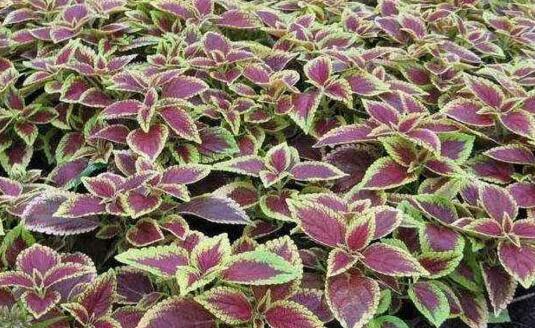
Currently, the more commonly used propagation methods for coleus are cuttings, sowing, and tissue culture. Among these, cuttings are suitable for hobbyists growing potted plants, sowing is suitable for large-scale propagation, and tissue culture is generally used when breeding new varieties, suitable for botanists researching coleus.
I. Coleus Cutting Method
1. Time Selection
In theory, cuttings can be taken year-round, but in most regions, lower winter temperatures are unfavorable for rooting after cuttings, so cuttings are often taken in spring and summer, with March-April being the best time.
2. Selecting Branches
Select branches from healthy 1-2 year old coleus plants, and usually branches with terminal buds are the best.
3. Making Cuttings
Cut the selected branches into 5-10 cm long cuttings, trim the leaves at the base, keeping only 3-5 leaves, and each cutting needs to have 3-5 nodes. Cutting off excess leaves is to avoid nutrient loss.
4. Cutting
After making the cuttings, how do you propagate coleus? Insert the prepared cuttings into the prepared potting soil, then compact the soil around the cuttings, water appropriately to keep the soil moist, but do not let water accumulate in the pot.
5. Later Management
After cutting, place in a cool, ventilated area for care, keep the temperature no lower than 18 degrees, and pay attention to soil moisture. Generally, roots will form in 7-10 days. After 2 weeks, apply a thin liquid fertilizer once, then follow the coleus cultivation method for normal care.
II. How to Sow Coleus
1. When to Sow Coleus
Generally, coleus takes 5 months from sowing to being ready for transplanting, so the sowing time depends on the market time. For example, if you want coleus to be on the market in October, then you need to sow in May. Except for winter, which is not suitable for sowing, the other three seasons are all suitable for sowing, with the best time being March-April.
2. Substrate Selection
How do you propagate coleus when sowing? First, you need to choose a good substrate. The most suitable substrate is a mixture of perlite and peat soil at a ratio of 3:1. Before use, the substrate needs to be disinfected. Generally, soak it in 800 times diluted 75% chlorothalonil wettable powder solution for 30 minutes, then dry it.
3. Sowing
Sowing is the most suitable propagation method for large-scale production of coleus, but since coleus seeds are relatively small, in order to sow evenly, you need to mix fine soil into the seeds, then place 2-3 seeds in each cell, then cover with 2-3 mm of soil, then compact and water.
4. Management
For sowing, the temperature needs to be controlled at around 20 degrees, and generally seedlings emerge in 10-15 days. After emergence, the temperature needs to be controlled at 16-18 degrees. After true leaves grow out, they can be cultivated into seedlings, and after the small seedlings grow to 6-10 cm, they can be soil-cultured.
Coleus Coleus Gallery: How to Grow Coleus / How to Propagate Coleus
Coleus ProfileColeus
Coleus Cultivation Methods and Precautions Coleus Introduction
Perennial herbaceous plant, foliage ornamental flower. Often used for flower beds, venues, and theaters to arrange patterns, and can also be used as accompanying leaves for flower baskets and bouquets. Propagation methods are sowing and cuttings. It likes warmth and tolerates cold, has strong adaptability, and attention should be paid to pest and disease control.
Species name: Coleus
Alias: Colorful leaf amaranth
Category: Colorful coleus
Annual herbaceous plant -- foliage type
Water: Likes moisture. In summer, water thoroughly, otherwise wilting is likely to occur. Also frequently spray water on the leaves to maintain a certain air humidity.
Fertilizer: Apply more phosphorus fertilizer to keep the leaves bright. Avoid applying excessive nitrogen, otherwise the leaves will be dull.
Soil: Requires loose and fertile soil; ordinary garden soil is generally sufficient.
Temperature: Likes warmth, relatively strong cold tolerance. The suitable growth temperature is 15-25°C, the overwintering temperature is around 10°C, and when it drops to 5°C, frost damage is likely to occur.
Light: Likes sunlight, but avoid exposure to scorching sun.
Flower language: Desperate love.
Morphological Characteristics of Coleus
Perennial herbaceous plant. Old plants can grow into a subshrub shape, but the plant shape is unattractive and the ornamental value is low, so it is mostly cultivated as an annual or biennial. Plant height is 50-80 cm, and cultivated seedlings are mostly controlled below 30 cm. The whole plant has hairs, the stem is four-angled, and the base is woody. Simple leaves are opposite, ovate, with a long acuminate tip, and the margin has blunt teeth. Leaves can grow to 15 cm. The leaf surface is green, with bright markings in pale yellow, peach red, vermilion, purple, etc. Terminal raceme, flowers small, light blue or light purple. Nutlets are smooth and glossy. There are extremely many varieties and cultivars of coleus. Five-color coleus (Var. verschaffeltii) has leaf markings in pale yellow, peach red, vermilion, dark red, etc., and grows vigorously. Yellow-green leaf type coleus (Chartreuse Type) has small yellow-green leaves and is dwarf with many branches. Fringed type (Fringed Type) has cracked and wavy leaf margins. Large-leaved type (Large-Leaved Type) has large ovate leaves and tall plants.
Ecological Habits of Coleus
A warmth-loving plant with strong adaptability. The winter temperature should not be lower than 10°C. In summer high temperatures, slightly shade it. It likes sufficient sunlight, and sufficient light can make the leaf color bright.
Distribution Area of Coleus
Coleus is a flower with very strong adaptability. It can be seen in many places in China, especially more commonly in the south. It is often cultivated in gardens in various parts of China. The main cultivation bases include Jiangsu, Zhejiang, Anhui, and other places.
Variety Classification of Coleus
According to propagation methods, coleus can be divided into two types. 1. Seed propagation type: sowing propagation can maintain the excellent traits of the variety. This type has the following 5 leaf-type varieties:
[Large-leaved type] (large-leaved type), has large ovate leaves, tall plants, few branches, and uneven leaf surface.
[Rainbow type] (Rainbow type), leaves small, long elliptical, apex pointed, leaf surface smooth, leaf colors include red, orange-red, yellow-green, white ground with green spots, etc.
[Fringed type] (Fringed type), leaf margins cracked and wavy, with great variation in cracks and waves, and many kinds of leaf colors.
[Willow-leaved type] (Willow-leaved type), leaves slender, willow-leaf shaped, leaf margins with irregular incisions and serrations.
[Yellow-green leaf type] (Coleus chartreuse type), leaves small, yellow-green, resistant to sunscald, plants dwarf and much branched. Vegetative propagation type: some that are non-fertile, low-fertile, or cannot yet use sowing propagation to maintain variety traits. A common horticultural variety is five-color coleus (var. verschaffeltii), whose leaves have markings in pale yellow, peach red, vermilion, dark red, etc. In addition, in the same genus, the more ornamental one is small-patterned grass (C. pumilus), native to the Philippines and Sri Lanka. Plant height 15-20 cm, perennial herb, stem lying horizontally. Leaves opposite, rhombic, 2-3 cm long, leaf surface dark brown, margin green, underside lighter. Flowers blue-green, panicle 10-12 cm long. Clustered coleus (C. thyrsoideus), subshrub, plant height 80-100 cm, leaves bright green, heart-shaped ovate. Margin with coarse serrations. Flowers bright blue, verticillaster, with 3-10 flowers, arranged in spikes. Flowering period November-December, potted in winter for flower viewing.
Cultivation Techniques of Coleus
The genus Coleus has about 150 species, produced in tropical and subtropical regions of Asia, Africa, and Oceania. Common varieties in potted flower cultivation include: Red Rainbow, Velvet Red, Dwarf Peach Red, and others. It likes a warm and humid climate, soft and sufficient sunlight, and fresh air environmental conditions. The suitable indoor winter temperature is 20°C to 25°C, and the minimum overwintering temperature cannot be lower than 10°C. If the temperature is too low, the leaves will turn yellow and fall off, and below 5°C the plant will die. Potted cultivation requires sandy culture soil rich in humus, loose and fertile, and with good drainage and air permeability. For water demand, the potting soil and environment should be kept moderately moist regularly. Avoid drought and prevent waterlogging, so as not to cause leaf dehydration and loss of color, or root infection and soft rot. Soft and sufficient light makes the leaf color brightly prominent, but avoid direct strong sunlight under clear summer skies, which causes the leaf surface to become rough and lose gloss. In shaded environmental conditions, the leaf color is also not bright.
Coleus likes sandy loam rich in humus and well-drained. When potting, apply bone meal or compound fertilizer as base fertilizer. During the growing period, apply an organic liquid fertilizer once every 10-15 days (stop application during midsummer). During the seedling stage, pinch the tips multiple times to promote side branches and make the plant shape full. After flowering, keep 2-3 nodes on some branches and cut off the rest to regrow new branches. The suitable growth temperature for coleus is around 20°C. Move it indoors around Cold Dew, and the winter room temperature should not be lower than 10°C. At this time, watering should follow "dry when dry, wet when wet," keeping the potting soil moist, otherwise root rot is likely.
Coleus is also known as Laolai Bian, a perennial herbaceous flower. Plant height 30-50 cm, few branches. Leaves opposite, rhombic-ovate, thin in texture, can reach more than 15 cm long, margin with deep coarse teeth, leaf surface green, with bright markings in yellow, red, purple, etc., hence the name coleus.
Common varieties in potted flower cultivation include: Red Rainbow, Velvet Red, Dwarf Peach Red, and others.
Coleus likes warmth. Propagation can use pot sowing and cutting methods. Sowing at 18-25 degrees, seedlings emerge in 1-2 weeks. Cuttings are divided into soil cuttings and water cuttings. For water cuttings, use half a cup of cooled boiled water. Select the middle-upper 2-3 nodes of fully grown branches for cuttings, remove the lower leaves, place in water, and when white water roots grow to 5-10 mm, they can be planted in pots. In spring and autumn, it takes 5-7 days; in summer, generally one day is enough to root.
The daily management of coleus is relatively simple. Just pay attention to timely pinching to promote new branches, form a full spherical shape, and develop a plant clump. Once inflorescences form, they should be removed to avoid affecting the leaf ornamental effect.
Coleus is an excellent potted foliage flower. It can also be applied to flower beds in summer and autumn, with bright colors and great beauty. At the same time, branches and leaves can be cut for cut flowers or as ingredients for flower baskets. It can also be planted in the same pot with spiderwort, making good material for decorating living rooms and studies.
Pest and Disease Control of Coleus
During the seedling stage, damping-off is likely to occur, and attention should be paid to disinfecting the sowing soil. During the growing period, leaf spot disease can be harmful; spray with 500 times diluted 50% thiophanate wettable powder. When cultivated indoors, scale insects, red spiders, and whiteflies are likely to be harmful; spray with 1000 times diluted 40% omethoate emulsifiable concentrate for control. Seedling damping-off is a disease often encountered in sowing propagation of cineraria. It is often seen that seedlings with emerald green leaves then lodge and die, or rot or dry up. This disease is mainly caused by Pythium aphanidermatum and Rhizoctonia solani. The pathogen overwinters in soil or diseased residues and is spread by seeds or water splash. For control methods, see impatiens damping-off control. During the seedling stage, pinch according to the desired plant shape. If you want to cultivate a clustered and full cylindrical shape, you must pinch the main stem of the seedling. If you want to cultivate a conical shape, do not pinch the main stem but pinch the side branches multiple times. If not collecting seeds, remove the inflorescences in time.
Coleus Propagation Method: Collecting Seeds
Coleus is native to Java Island, Indonesia. It is a perennial herbaceous plant of the genus Coleus in the Lamiaceae family. Those currently cultivated in green spaces or homes are all artificially improved horticultural varieties. When potted, horticultural varieties are about 30 cm tall, with opposite, ovate or round leaves, and on the green leaf background there are colorful markings in purple, pink, red, pale yellow, orange, etc.
Coleus comes from the tropics, so it likes warmth and is not cold-tolerant. The overwintering temperature should not be lower than 5°C. The suitable growth temperature is 20-25°C. It likes a sunny environment and can also tolerate semi-shade. Avoid exposure to scorching sun. It can be placed indoors for a short time and requires planting in loose, fertile, well-drained soil. If it is only for ornamental use, pinch several times during the growing period to promote branching and make the form full. If you want to harvest seeds, it is best not to pinch.
In the Shanghai area, coleus blooms from August to September. Before flowering, first select plants with bright colors for seed collection. When flowering, artificially pollinate by dipping a brush in pollen and brushing the stigma, then cover with a paper bag for isolation to prevent hybridization and degeneration. In the early flowering stage, apply some phosphorus and potassium fertilizer to ensure the nutritional needs during seed setting.
Generally, after flowering and fertilization, as long as there is sufficient sunlight and no pest or disease damage, coleus can set seeds. One month after seed setting, the seeds mature, and they can be harvested by dividing plants, dried, and stored for sowing the next year. Since coleus seeds are tiny, they should be dried with pods when harvested. It should be noted that self-collected seeds will definitely show some degeneration and variation after sowing the next year, and inferior plants should be eliminated from the seedling stage.
Propagation Methods
Usually, sowing propagation can maintain the excellent traits of the variety. Some that cannot yet use sowing propagation to maintain variety traits need cutting propagation.
Under conditions with a high-temperature greenhouse, pot sowing can be done in all four seasons; generally it is done in a greenhouse in March. Mix fully decomposed humus soil and plain sandy soil in equal parts, mix evenly, and put into a seedling pot. Place the seedling pot containing fine sandy soil in water to soak thoroughly, then sow according to the method for small seeds, cover with a little thin soil, cover with a glass plate or plastic film, keep the potting soil moist, and manage water and care. The suitable germination temperature is 25°C to 30°C, germinating in about 10 days. After emergence, thin the seedlings 1 to 2 times, then divide and pot. Sown seedlings have different leaf colors, and at this time superior ones can be selected and inferior ones eliminated.
Cuttings can be taken in all four seasons and are very easy to root. You can also combine plant pinching and pruning for softwood cuttings. Cut fully grown plump branches, cut about 10 cm, insert into clean disinfected river sand. The part inserted into the soil must often have leaf nodes to root. After cutting, maintain in filtered shade and keep the potting soil moist. When the temperature is higher, rooting is faster. During this period, do not let the potting soil become too wet, so as to avoid root rot. Roots and survival are achieved in about 15 days. Water cuttings can also be used. Use half a cup of cooled boiled water. Select the middle-upper 2-3 nodes of fully grown branches for cuttings, remove the lower leaves, place in water, and when white water roots grow to 5-10 mm, they can be planted in pots. [1]
Potted Cultivation Method
Coleus potted cultivation is better with small pots. Generally, seedlings are potted in a 10 cm inner diameter tube pot. After 20 to 30 days of care, when the plant height reaches 15 cm, they can be placed for viewing. Indoor placement should choose a south window with relatively strong diffused light, keep the potting soil moderately dry and wet, and keep the air fresh and the environment clean. For outdoor care, place in filtered shade in summer. Apply thin liquid fertilizer 3 times throughout the year. If the main stem grows too tall, pinch in time. If not collecting seeds, it is best to remove the flower spikes at the early stage of formation, because after spikes form, the plant posture mostly becomes loose and loses form, reducing the ornamental effect. In early October, move into a medium or high-temperature greenhouse for overwintering. During this period, heavy pruning can renew old plants. At the same time, combine with repotting to change soil. The maximum pot inner diameter is 14 cm; larger pots are inconvenient to place.
Coleus nutlets fall off easily naturally after maturing, and they also fear being beaten by storms, so when the sepals turn yellow, the flower spikes should be gently cut off one by one to thresh. Although some seeds that fall to the ground can germinate and emerge, because they cannot tolerate cold, they cannot play a role in self-sowing reproduction.
Water Cutting Propagation
1. Prepare containers for coleus: The cutting container can be a wide-mouth bottle, or a mineral water bottle with the upper part cut off, using the lower part filled with clean water. The container must be clean, and the water must also be clean. It is best to store water in a large cola bottle for more than one day for cutting and subsequent management.
2. Cut cuttings: When the main branch or a side branch after pinching has 4 nodes or is about 10 cm long, choose a thick stem, keep only the opposite leaves at 1 to 2 nodes at the base, cut off the upper part, and the cut should be smooth without crushed or torn wounds. Then, cut off the lowest pair of leaves of the cutting, and gather every 3 to 5 cuttings neatly at the base, loosely tie them together with white thread, and set aside for water cutting.
3. Water cutting management: Generally, it is best for the cutting to enter the water 3 cm to 4 cm from the bottle mouth. After that, place it in a place with diffused light, note to change clean water every 2 to 3 days (stored water), and pay attention to replenishing the water level in the bottle daily due to evaporation. Generally, under conditions of 18°C to 25°C, white roots can be seen growing in 7 to 10 days.
4. Pot in time: The adventitious roots of coleus are not only easy to grow at stem nodes, but also sprout from the straight and thick stem, which provides conditions for the cutting to take shape as early as possible. When multiple adventitious roots of 1 cm to 2 cm are seen at the base of the cutting, it can be potted or planted in time. Note that the operation should be careful and not damage the root system. Generally, after caring in a shaded place for about another 10 days, it can enter normal management.
Propagation Techniques
The soil used for sowing coleus seeds is peat soil
1. Mixed soil with fine sand, broadcast sow. Coleus seeds are light-loving seeds, so no soil covering is needed after sowing. The suitable germination temperature is 20-25°C. Keep the substrate moist, and germination occurs in 8-10 days. Cuttings can be taken in all four seasons, rooting in about 1 week at around 20°C. Water cuttings also root easily. When sown seedlings grow one pair of true leaves, pot them. The potting soil is peat soil.
2. River sand, with sufficient base fertilizer added. During the growing period, topdress frequently, including superphosphate and bone meal. Keep the temperature above 20°C. During the seedling stage, decide whether to pinch according to the cultivation purpose. If you want to cultivate a full plant shape, remove the main stem to promote side branch growth. If you want to cultivate a conical plant shape, do not remove the main stem. Coleus has strong adaptability and is relatively simple to manage. The temperature adaptation range is 10-30°C. Below 10°C, plant growth stagnates; below 5°C, the plant dies.
Coleus is a light-loving plant. Sufficient light can make the leaf color vivid, but in summer high temperatures, direct sunlight should be avoided. High temperature and strong light will damage pigments, cause chlorophyll to increase, and make the plant color not vivid, or even greenish, affecting ornamental value. Therefore, in summer high temperatures, appropriate shading should be provided. In other seasons, shading should not be used, because dim light will make the leaf color gray and dark. Coleus leaves are large and thin, so water supply should be ensured. When the soil is dry, the colors on the leaf surface fade. Especially in summer, keep the potting soil moist. At the same time, frequently spray water on the ground and leaves to increase air humidity, but there should be no water accumulation. Water accumulation easily causes root rot and leaf fall.
In winter, control watering, maintain the greenhouse temperature at 15°C, and ensure an obvious dry-wet cycle with a short cycle. The fertilizer requirement is not high. During the growing season, apply a thin fertilizer mainly based on nitrogen fertilizer 1-2 times per month. After inflorescences appear, if not collecting seeds, remove them in time to avoid consuming nutrients and also causing the plant shape to become scattered, affecting ornamental value. If collecting seeds, harvest when the inflorescences turn from green to yellow.
Uses and Functions of Coleus: Ornamental Application
Coleus has bright colors, many varieties, and is easy to propagate. It is a widely used foliage flower. Besides being displayed as a small foliage flower, it can also be used to configure pattern flower beds, and can also be used as accompanying leaves for flower baskets and bouquets.
Indoor display is mostly medium and small potted plants. Choose light-colored, smooth-textured decorative pots to set off the gorgeous leaf colors of coleus. To make the plant shape beautiful, often cut off unopened inflorescences and place them on low tables and windowsills for appreciation. Courtyard cultivation can be used as flower beds or plant edging. Several pots of coleus can also be combined into patterns to decorate venues and theater foyers, with clusters of flowers.
Flower Language of Coleus
Flower language of coleus: Desperate love
Coleus Pictures
Sowing and Cutting Propagation Methods of Coleus
The leaves of coleus are very beautiful, so some people also call it Laolai Bian. The leaf colors of coleus are bright, and there are many varieties. Artificial propagation of coleus is not difficult. Coleus can be propagated by sowing and cutting.
Coleus
I. Sowing
Sowing and raising seedlings of coleus can produce plants with richly varied leaf colors. Under suitable conditions, sowing can be done at any time throughout the year. In South China, open-field sowing is often done in March-April, while in northern greenhouses it is mostly done in February-March. In the north, spring sowing is done in greenhouses, using loose bed soil for sowing. Sieve the bed soil finely, put it into a sowing bed or seedling tray, compact slightly and level, water thoroughly with a watering can, sow about 20 grams of seeds per square meter, mix evenly with fine sand and broadcast, cover with fine soil, and control the ground temperature at around 20°C. Seeds emerge in 10-15 days. After emergence, lower the temperature to 16-18°C. After true leaves grow, divide the seedlings and cultivate them into seedlings in containers. During the seedling stage, control the daytime temperature at 18-20°C. Water appropriately, and avoid the seedbed being too wet. When the small seedlings grow to 6-10 cm high, pot and plant them. For open-field cultivation, plant after the temperature warms up and stabilizes. Gradually lower the temperature to harden the seedlings 5-7 days before planting. During the seedling stage, control moisture moderately so as not to cause leaf dehydration and wilting, and prevent seedling legginess and disease occurrence.
II. Cuttings
Coleus easily produces adventitious roots. Some varieties have very poor seed-setting ability, so only cutting propagation can be used for seedling raising. Cutting propagation can be carried out in all four seasons, with spring and autumn being better. Cut 5-7 cm from the upper part of branches as cuttings, remove the leaves. Insert into vermiculite, perlite, or other substrates. Keep warm at 15-20°C, and roots form in 5-7 days. Water cutting can also be used. After rooting, transplant into pots.