How Does Cherokee Rose Propagate? Among Four Propagation Methods, Cuttings and Sowing Are the Most Practical
When it comes to Cherokee rose (Rosa laevigata), anyone who has seen it should be familiar with it. Its pure white flowers and sweet, tasty fruit leave a deep impression. Because Cherokee rose has remarkable benefits, whether steeped in wine or brewed as tea, it is good for human health, so Cherokee rose is widely propagated. So how does Cherokee rose propagate? Below are four propagation methods for Cherokee rose, among which cuttings and sowing are the most practical. Let's take a look together.
I. How Does Cherokee Rose Propagate: Cuttings / Sowing
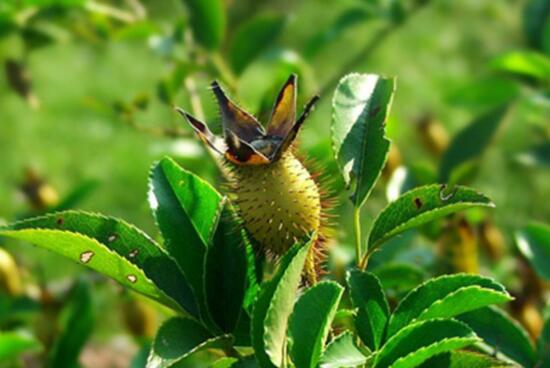
Judging by appearance alone, the pure white flowers of Cherokee rose are pleasing at first sight, and then there is its fruit, covered all over in thorns, practically a dangerous "beauty." As for how Cherokee rose propagates, as far as the editor knows, sowing propagation and cutting propagation are generally used. However, besides these, Cherokee rose propagation methods also include division and layering. Below, the editor introduces the methods.
II. Four Propagation Methods for Cherokee Rose
(1) Cutting Propagation of Cherokee Rose
Among the propagation methods for Cherokee rose, cuttings are the most practical and most convenient, suitable for the broad community of flower growers. The specific steps are as follows:
1. Cutting Time
As long as temperature and moisture requirements are met, Cherokee rose cuttings can be taken at any time, but the temperature must not be too high, otherwise the roots will rot, and if too low, plant growth will become slow. However, considering the climate, spring and autumn are still the best seasons for Cherokee rose cuttings.
2. Selection of Cuttings
In cutting propagation of Cherokee rose, the selection of cuttings is especially important. Once they are well chosen, more than half of the entire propagation process is basically successful. From a healthy Cherokee rose, cut off small disease-free young shoots to use as cuttings.
Note: After the cuttings are selected, they need to be handled immediately, because if left too long, the small young shoots will wither, and it will no longer be easy for them to grow into plants.
3. Cutting Method
Insert the cut end of the small young shoots into plant ash, keep the soil at 24°C, and water appropriately to keep the soil moist. Then seal the opening with plastic film to reduce water loss and also provide some insulation. In addition, after the plastic film is wrapped on, it is not breathable, so it can be opened periodically for ventilation; flower growers who find this troublesome can poke a few holes for ventilation.
(2) Sowing Propagation of Cherokee Rose
Cherokee rose has a long flowering period and bears fruit after flowering, so sowing propagation can be used. Specific steps: according to Cherokee rose cultivation methods, select loose and fertile soil as the sowing substrate; then scatter Cherokee rose seeds directly onto the soil. After planting, maintain air humidity, cover the pot opening with plastic wrap and poke a few small holes. However, because Cherokee rose seeds are very difficult to survive after being planted, not many people cultivate them this way.
(3) Division Propagation of Cherokee Rose
Small branches that emerge beside the roots of Cherokee rose can all be taken out separately and survive. So you can cut off the place where the branch connects to the parent plant, then plant it in another substrate, and in this way one pot can become many pots!
(4) Layering Propagation of Cherokee Rose
Layering is also one of the propagation methods for Cherokee rose. You can choose old branches for layering. Specific steps: bury a sturdy branch that has been growing for a relatively long time in the soil, and use a spray bottle to wet the soil. Before long, the layered branch will develop its own independent roots; then use a knife to cut it off from the parent plant, carry out water and light care, and it can survive.
Overall, for propagating Cherokee rose, whether using cuttings, sowing, division or layering, all are possible, but the only one most suitable for the broad community of flower growers is cuttings, so everyone only needs to learn that one; there is no need to master the rest. That is all the editor has to introduce about Cherokee rose propagation methods, and I hope it can be helpful to everyone.
Propagation Methods of Cherokee Rose and the Benefits of Cherokee Rose
Cherokee rose, also known as mountain pomegranate, is an evergreen shrub that can grow by climbing. Cherokee rose flowers are as white as snow, with a rich fragrance that refreshes the heart. Below, let's look at the propagation methods of Cherokee rose and knowledge about the benefits of Cherokee rose.
Introduction to Cherokee Rose
Cherokee rose is an evergreen shrub, up to 5 m tall, with stout branchlets; leaflets are leathery, 5-10 cm long including the petiole; leaflets are 2-6 cm long, with acute or rounded-obtuse apex, rarely caudate-acuminate; the petiolules and leaf rachis have prickles and glandular hairs.
Flowers are solitary in leaf axils, 5-7 cm in diameter; pedicels are 1.8-2.5 cm long, occasionally 3 cm, and the pedicels and hypanthium are densely covered with glandular hairs that become needle-like prickles as the fruit develops; sepals are ovate-lanceolate, leaf-like at the apex, with pinnately lobed or entire margins, often with bristles and glandular hairs, densely pubescent on the inner surface, slightly shorter than the petals; petals are white, broadly obovate, slightly concave at the apex; stamens are numerous; carpels are numerous, styles are free, hairy, much shorter than the stamens. Fruit is pear-shaped or obovate, rarely nearly spherical, purplish-brown, densely covered with bristles on the outside, fruit stalk about 3 cm long, sepals persistent. Flowering period is April-June, fruiting period is July-November.
Propagation Methods of Cherokee Rose
Cherokee rose is generally propagated by sowing and cuttings, mainly by cutting propagation.
1. Seed Propagation
Sow fresh seeds in winter, open shallow furrows at a row spacing of 750px, scatter the seeds evenly into the furrows, cover with 37.5px of soil, and sow 30-37.5 kg per 1 h㎡. Seedlings emerge in the spring of the second year; after 2-3 years of seedling growth, transplant in spring.
2. Cutting Propagation
Before sprouting in spring, select healthy mother plants, cut 1-2-year-old branches as cuttings, 12-375px long, insert them obliquely into a sand bed, press firm, water, keep frequently moist, and cover with reed blinds for shade. After about 2 months, they can take root and sprout. Transplant in February-March or September-October of the following year. Open holes at both row spacing and plant spacing of 40-1500px, plant 1 plant per hole, cover with soil and press firm, and water.
Benefits of Cherokee Rose
Cherokee rose has effects such as securing essence and reducing urination, stopping nocturnal emission, relieving cough and calming asthma, resisting spasms, lowering blood lipids, and resisting bacteria and reducing inflammation. It is contraindicated for those with excess fire or pathogenic heat, because it has astringent properties. In addition, Cherokee rose should not be eaten together with cucumber or pork liver.
Introduction to Cherokee Rose Propagation
Cherokee rose blooms in summer, and its flowering period is very long, reaching up to 4 months, with very high ornamental value and economic value. It can generally be propagated by sowing, cuttings, division, layering and grafting.
Cherokee Rose
I. Sowing
Seeds can be used for raising seedlings, but because seed cultivation is relatively difficult for survival, it is generally not recommended to use seeds for cultivation. In production, young branches of the current year are mostly used for cutting propagation to raise seedlings, which survive easily. Precious varieties are relatively difficult to propagate by cuttings.
II. Division
This is a propagation method in which small branches growing from the roots and stem base of the plant are cut off at the point where they connect to the parent plant, and then planted separately so that they grow into independent new plants. This method is simple and easy to carry out, and survival is fast. It is widely used in horticulture.
III. Cuttings
Cuttings, also called cutting propagation, are a common propagation method for cultivating plants. Using young branches of the current year for cutting propagation to raise seedlings makes survival easy. Choose branches that grow robustly and are free of pests and diseases as cuttings. After selecting the cuttings, handle them carefully. For softwood cuttings, the cuttings should be inserted immediately after collection to prevent wilting from affecting survival. Generally, if the lower cut end of a plant cutting is dipped in some freshly burned plant ash, it has the effect of preventing rot. For general plant cuttings, maintaining 20-25°C gives the fastest rooting. If the temperature is too low, rooting is slow; if too high, it easily causes the cut end of the cutting to rot. Therefore, if temperature can be controlled artificially, cuttings can be taken in all four seasons. Under natural conditions, the temperatures of spring and autumn are suitable. After cutting, be sure to keep the cutting substrate in a moist state, but do not make it too wet, otherwise it will cause rot. At the same time, also pay attention to air humidity; plastic film can be used as a cover to maintain humidity, but be careful to ventilate within a certain period.
IV. Layering
For rose propagation, choose older branches from superior varieties and use the layering method to raise seedlings. Layering is a method in which the branches or vines of a plant are pressed and buried in a moist substrate, and after they take root, they are cut away from the parent plant to form new plants. The survival rate of adult plants is high, but the propagation coefficient is small, so it is mostly used when propagation by other methods is difficult, or when larger new plants are to be propagated. Layering is a method of artificial asexual propagation (vegetative propagation) of plants. Unlike grafting, the branch remains as it is, that is, it does not leave the parent plant; one part of it is buried in the soil, and after it takes root, it is separated from the parent plant.
V. Grafting
With grafting propagation, asexually propagated seedlings can bloom in the same year. For seedlings used as potted flowers, older branches from superior varieties should be selected.