How to Propagate Daylilies? A Detailed Guide to Division Propagation
After years of cultivation, daylilies have developed many varieties, and they have also become one of the most important ornamental flowers. For home gardeners, what is the best way to propagate daylilies? Today we will take a detailed look at the propagation methods for daylilies.
How to Propagate Daylilies
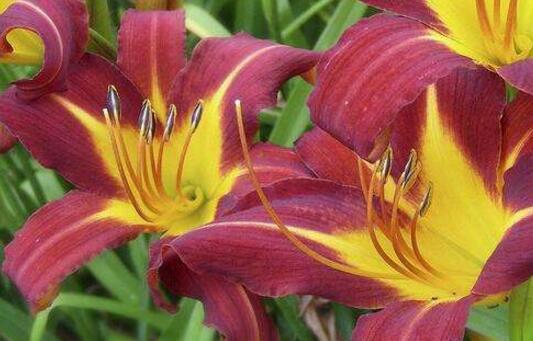
The daylily is a perennial herbaceous plant with persistent roots. It can keep growing and bloom multiple times, and its lifespan can reach more than two years. As an extremely adaptable plant, the daylily is generally propagated in two ways: division and sowing. The specific methods are as follows.
Propagation Methods for Daylilies
I. Division Propagation of Daylilies
1. When Is the Right Time to Divide
Usually, the best time is after the leaves wither in autumn, or before the buds sprout in early spring. Division can also be done at other times, but it may affect the growth of the daylily, so September to October or February to March should be chosen.
2. Division Process
Take the plant out of the soil, avoiding damage to the roots when digging it up, then cut off the dead roots and excess fibrous roots, and divide it into several clumps, keeping 3-4 plants per clump. After disinfecting the roots, plant them in the soil.
After division, move it to a shady place, water it promptly, and keep the soil moist. Roots will generally form after 3-4 weeks, after which normal care can be carried out according to daylily cultivation methods. After division, daylilies can be divided again once they have grown for 4 years. If the division time is appropriate, the divided seedlings can bloom in the same year.
II. Propagation by Sowing
1. Time
When using the sowing method, how are daylilies propagated? The time is generally chosen after autumn, when collecting seeds is easier, and sowing is suitable for sowing immediately after collection, meaning the seeds should be sown as soon as possible after harvesting.
2. Method
Among daylily propagation methods, sowing is usually suitable for breeding. Sow the collected seeds evenly in a sand bed, then cover with 2-3 cm of sandy soil, water thoroughly, and keep the soil moist. Seedlings will emerge after 4 weeks.
From sowing to flowering usually takes 2 years, so it is a relatively long process. For home gardeners growing daylilies in pots, experts recommend division propagation, which flowers quickly and is simple.
Division and Sowing Propagation Methods for Daylilies
The daylily is China's mother flower. After crossbreeding, there are now a great many daylily varieties, making it the type with the most varieties among flowers in the Liliaceae family. Daylilies are generally best cultivated in early spring in early March. Division propagation is mainly used, while sowing propagation can be used for breeding. The editor will now introduce these two propagation methods in detail for you.
Daylily
I. Division Propagation
Division propagation is carried out after the leaves wither or before sprouting in early spring. Dig up the root clump, cut off the dead roots and excess fibrous roots, and divide it. After one division, it can be divided again after 4-5 years, and the divided seedlings can bloom in the same year. Generally, each mother plant can produce 3-4 plants, and individual varieties, such as "Jinjinwa," can produce 6-7 plants.
II. Propagation by Sowing
Seed propagation is suitable for autumn sowing, and seedlings generally emerge about 4 weeks after sowing. If seeds are sown immediately after being collected in summer and autumn, seedlings emerge in about 20 days. Seedlings grown from sowing bloom after 2 years of cultivation.
For sowing propagation, the seeds should preferably be treated by sand storage in autumn and winter. After spring sowing, they germinate quickly and evenly, and seedlings generally bloom in 2 years. Young tender flower buds can also be used for cuttings in summer. When inserted in vermiculite, they root in about 1 month and can bloom the following year.
How to Propagate Daylilies
Growth Habits of Daylilies
Daylilies are native to China, Japan, Siberia and Southeast Asia. They are robust and vigorous, resistant to severe cold, and like to grow in warm, humid environments, while also tolerating drought and semi-shade. Daylilies are not strict about soil, but the editor recommends choosing moist soil that drains well and is rich in humus.
Variety Classification of Daylilies
There are eight types of daylilies in China, namely: Hemerocallis citrina (golden needle vegetable), Hemerocallis citrina (yellow flower), Hemerocallis middendorffii, Hemerocallis thunbergii, Hemerocallis minor, red pirate daylily, Haierfan daylily, Z300 daylily
Propagation Methods for Daylilies
Division Propagation
Daylilies are mainly propagated by division. Carry out division propagation after the leaves wither or before sprouting in early spring. The method is to dig up the daylily's root clump, use scissors to cut off the dead old roots and numerous fibrous roots, and then divide it. After division, water promptly, move it to a shaded place, and keep the soil moist. Fertilize appropriately during the daylily's growing season. In the first year after division, be careful to remove weeds.
Propagation by Sowing
Daylilies are suitable for sowing propagation when breeding. Sow immediately after collecting seeds, and they will sprout the following spring. When sowing in spring, the seeds are best treated by sand storage the previous autumn, which helps promote rapid and even germination.
The above are the propagation methods for daylilies!