How to propagate pot marigold? Two propagation methods for autumn sowing and winter flowering
Pot marigold, also called Calendula, belongs to the Asteraceae family. It is a flower with beautiful flower shapes and bright colors, deeply loved by gardening enthusiasts. In everyday life, as more and more people grow pot marigold, mass propagation is imperative. So how do you propagate pot marigold? In general, there are two propagation methods for pot marigold: cuttings and sowing. The specific operations are described in detail below.
I. How to propagate pot marigold: cuttings/sowing
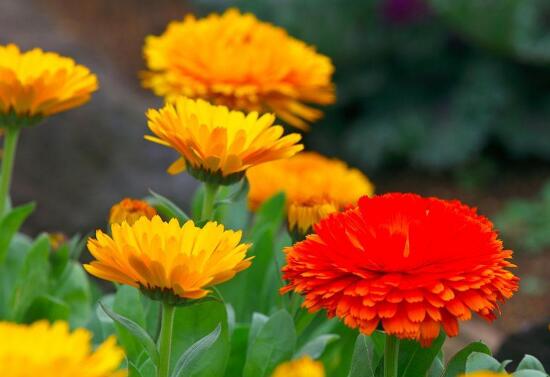
As a beautiful flower that can be grown indoors, pot marigold's propagation methods are no different from those of other plants. It is mainly propagated by cuttings; and because pot marigold produces fruit after flowering, it can also be propagated by sowing. So how do you propagate pot marigold? Let's continue reading for the specific operations.
II. Two propagation methods for pot marigold
(1) Cutting propagation of pot marigold
The commonly used propagation methods for pot marigold are sowing and cuttings, among which cuttings are relatively easier and have a better survival rate. However, when propagating by cuttings, you need to pay attention to three aspects: the cuttings, the cutting soil and post-cutting management. Next, let's take a look at how to take cuttings of a pot of pot marigold!
1. Selection of cuttings
In the cutting propagation of pot marigold, the first thing to do is naturally to select cuttings. Once they are chosen well, more than half of the whole propagation process can be considered successful. You can combine this with pruning (pinching), cutting off the thicker top shoots free of pests and diseases as cuttings.
2. Cutting soil
According to the cultivation methods for pot marigold, the soil for taking pot marigold cuttings should be materials such as nutrient soil, river sand or peat soil. For ordinary gardening enthusiasts propagating at home, because conditions are limited, you can use slightly coarser sand, but rinse it with clean water before use to avoid it containing pathogens.
3. Starting the cuttings
After doing the above preparatory work, the rest is simple. Just insert the cuttings directly into the prepared soil, and then do a good job of care and maintenance.
4. Post-cutting management
After the cuttings are completed, you need sufficient humidity, spraying water 1-3 times a day. During the care process, shade 50%-80% of the sunlight, and after the root system grows out, move them to a shaded place.
Note: You should keep the indoor temperature at 18-25°C. If it is lower than 18°C, the branches will have difficulty sprouting ears and grow slowly; higher than 25°C is also not good, as the cut ends of the cuttings are very likely to rot, and the higher the temperature, the greater the degree of rot.
(2) Sowing propagation of pot marigold
Pot marigold produces fruit after flowering, and afterwards there will be seeds. Try to select seeds that are larger, fresh, plump and complete for sowing. Specific operation: evenly scatter the seeds on the soil, then cover with a layer of soil about 3 mm thick. Keep the temperature at 20-30°C, and they will germinate in 7-10 days. When the young sprouts grow to a certain height, they can be transplanted or planted out.
PS: In winter, keep the temperature above 10°C, otherwise the plant will be frostbitten, and then the phenomenon of yellowing pot marigold leaves will appear. Then carry out normal care, keeping the soil in a slightly moist state and fertilizing normally. It is worth mentioning that if sown in autumn, pot marigold can be made to bloom in winter.
In general, pot marigold can be propagated by either cuttings or sowing, but the method most suitable for the vast number of gardening enthusiasts is still cuttings. So friends who want to turn one pot of pot marigold at home into many pots should quickly try it themselves. Even beginners have a very high probability of success. That is all for the propagation methods of pot marigold. I hope it can be helpful to everyone.
Adonis amurensis Regel et Radde Adonis amurensis picture guide: how to grow Adonis amurensis / how to propagate Adonis amurensis
Adonis amurensis profileAdonis amurensis Regel et Radde
Cultivation methods and precautions for Adonis amurensis Introduction to Adonis amurensis
Adonis amurensis is a perennial understory plant. Also known by other names such as ice flower, pot marigold, golden cup flower, ice flower, ice flower, ice-cold flower, ice-in-the-ice flower, ice-slide flower and Fusou grass, it is called snow lotus in the Liaoning region. Due to its unique biological characteristics, medicinal efficacy and excellent ornamental value in early spring, it is called the divine grass of the understory of the mountainous areas of Northeast China, and is a understory plant with great potential development value.
Ice flower is a perennial herbaceous plant with persistent roots, 18-35 cm tall, with two types of leaves, and flowers borne singly at the top of the main stem and a few branches. Adonis amurensis is short in stature and has the characteristic of braving the spring cold. Its golden-yellow flowers emerge through the ice, and it has long been praised as the "snow lotus of the forest sea." Its blooming time is precisely the extremely cold season of late winter and early spring when the ice and snow have not yet melted. When no other plants have sprouted, how precious it is for it to bloom alone.
Ice flower has excellent ornamental value. This plant has the characteristic of early flowering. In the Zhangguangcai Ling forest area of Mudanjiang region in Heilongjiang Province, the Wandashan and Xiaoxing'anling Qing'an forest areas, it usually germinates and blooms in mid-to-late March, in late winter and early spring when the ice and snow have not yet melted. While the new leaves open, a small golden flower is borne at the top, shaped like a cup or small cup, hence the names golden cup flower and pot marigold. Its flower stem is 1.5-4 cm.
Morphological characteristics of Adonis amurensis
The Adonis amurensis plant is 15-20 cm tall. The bulb is ovoid, about 5-10 mm in diameter, with a brownish-yellow bulb coat, without attached small bulbs. There is 1 basal leaf, linear, 15-22 cm long, 3-10 mm wide, flat, narrowed downward from the middle, hairless. The involucral bracts are lanceolate, nearly as long as the inflorescence, 4-6 mm wide; flowers 3-5, arranged in an umbel; pedicels unequal in length, hairless; tepals linear or narrowly lanceolate, 9-12 mm long, about 2 mm wide, yellow; stamens 2/3 the length of the tepals; anthers oblong, filaments flattened at the base; ovary oblong, style 1.5-2 times the length of the ovary, stigma indistinctly 3-lobed. The capsule is ovoid to obovoid, 2/3 the length of the persistent tepals.
Adonis amurensis is a perennial herb, 5-15 cm tall, up to 30 cm at most. The root-bearing stem is short and thick, with many fibrous roots, dark brown. The stem is single or branched from the base, with several light brown membranous scales at the base, up to 2.5 cm long. The leaves develop and grow after flowering, with long petioles, petioles about 6 cm long; leaf blade triangular-ovate, about 7 cm long, about 8 cm wide, 3-parted, with long petioles, further 2-3 times pinnately finely divided, final segments linear-lanceolate, 1-1.5 mm wide, with short tips, nearly hairless.
Flowers borne singly at the top of the stem, 2-4 cm in diameter; sepals 5-8, oblong or obovate-oblong, 14-17 mm long,
yellow with light blue-purple; petals 8-13, oblong or narrowly obovate, 14-25 mm long, 4-8 mm wide, apex obtuse-rounded, with irregular small teeth, yellow, slightly light purple outside; stamens numerous, about 3 mm long, carpels numerous, ovary covered with short soft hairs, style about 0.8 mm long, slightly curved outward, stigma small, spherical.
Aggregate fruit nearly spherical, about 13 mm in diameter; achenes obovoid-spherical, about 4 mm long, covered with short soft hairs, with a short persistent style.
Flowering period April-May, fruiting period May-June.
Ecological habits of Adonis amurensis
Adonis amurensis grows under forests, in thickets or in grasslands. It is commonly found among shrubs on mountain slopes or at the foot of mountains, under broad-leaved forests and on forest edges, on mountain slopes, and on moist soil rich in humus. It is common in cold mountain areas before leafing, mostly growing in the lower part of mountains, singly or clustered in mixed coniferous and broad-leaved forests, adapted to moist soil rich in humus.
Adonis amurensis has the characteristic of early flowering. In the Zhangguangcai Ling forest area of Mudanjiang region in Heilongjiang Province, the Wandashan and Xiaoxing'anling Qing'an forest areas, and the Xinglong Forestry Bureau, it usually germinates in mid-to-late March, in late winter and early spring when the ice and snow have not yet melted, and its flower stem is 1.5-4 cm. The flowering time can last until early May. A single flower period is about 10 d. It can fill the gap of no flowers in urban greening in late winter and early spring in the cold northern regions. In 2014, photography enthusiasts in Jilin photographed ice flowers in Changbai Mountain, blooming after Qingming Festival.
Cultivation techniques and planting management of Adonis amurensis
For pot cultivation, it is suitable to plant densely in clumps. Generally, pot them in late autumn, and the potting soil needs to be mixed with more humus. When planting, the dormant buds should be level with the soil surface. After planting, place them outdoors in a cool place underground, and place sawdust or broken buds around the flower pot so that they can be taken out at any time. If you want to enjoy the flowers in winter, move the flower pot to a cold room at 0°C-5°C for 1-2 days, then move it indoors at 15°C-20°C, place it in a place with sufficient light, and in about 10-12 days it will sprout, form buds and bloom.
Site selection and fertilization
A cultivation method for Adonis amurensis, characterized in that: the selected plot is sandy loam with PH=(7-8) and organic matter content greater than 2%. For base fertilizer, choose compound fertilizer or a mixture of potassium sulfate fertilizer and diammonium sulfate. Broadcast 3% Miral granular formulation (1.5-1.7) kg per mu. The cultivation mode can adopt direct seeding in the field or seedling transplanting. The sowing depth for direct seeding in the field is (0.5-1) cm. When using seedling cultivation, 1 mu of land requires a seedbed area of 100 square meters. When the first pair of true leaves grows, spray with azoxystrobin fungicide. After that, every 15 days alternate the mixture of prochloraz and cyproconazole with azoxystrobin for 2-3 applications. Transplant when the seedlings grow (1-10) pairs of true leaves. When the seedlings grow to 8 leaves, apply (4-5) Kg of urea per mu. For weeding, manual weeding or chemical weeding can be chosen.
Cultivation status
The resources of Adonis amurensis are limited. According to forestry experts from Northeast Forestry University, under natural conditions, Adonis amurensis takes many years from seed falling to the ground, germinating, growing and blooming. Therefore, while developing and utilizing it in a planned way, on the one hand we should pay attention to protecting the resources, and on the other hand we should speed up research on its artificial cultivation, so that the forest understory wonder grass Adonis amurensis resources can be protected and better benefit mankind.
This plant has the characteristic of early flowering. In the Zhangguangcai Ling forest area of Mudanjiang, the Wandashan and Xiaoxing'anling Qing'an forest areas, it usually germinates in mid-to-late March, in late winter and early spring when the ice and snow have not yet melted, and its flower stem is 1.5-4 cm. The flowering time can last until early May. This flowering time can last until early May.
Propagation methods of Adonis amurensis
The stem of Adonis amurensis is purple, with fine hairs; the roots are dark brown clustered fibrous roots; after the flowers fade, aggregate fruits are produced, and the seeds are light green. It is propagated by roots and seeds, but when propagated from seeds, it takes many years from growing into a plant to flowering.
Adonis amurensis is commonly propagated by sowing or division.
Seed propagation
Seeds mature from mid-May to early June, and mature seeds fall off easily, so they should be harvested in time. They can be sown in autumn, or stored in sand until sowing the following spring. Seedlings grow slowly. In the sowing year, they generally produce 2 cotyledons, and thereafter grow normal leaves year by year, and only bloom after about 5 years.
This is the main method for mass propagation, but the cycle is relatively long. The so-called "seeds" are actually achenes. The outer pericarp is slightly fleshy, light green; the inner pericarp is bony, black; it contains one seed, with a membranous seed coat, white. They mature successively from mid-May to early June and fall off easily, so they should be collected as they mature. After collection, the seeds can be sown directly in the seedling bed, not too densely, to facilitate transplanting. Cover with 1 cm of soil, and pay attention to maintaining soil moisture. After sowing, the seeds undergo after-ripening and winter dormancy, and germinate the following spring. In the current year, the seedlings produce only two cotyledons, and thereafter produce 1-3 normal cauline leaves each year, and generally need 5 years to bloom.
Root division propagation
Root division propagation can be carried out in spring, summer and autumn, with late autumn being best. Select plants with more aboveground stems or dormant buds, cut them into sections, each section needing to carry an aboveground stem or dormant bud, and then transplant.
This method has a small propagation quantity, but they can bloom the following year. Root division can be carried out in spring, summer and autumn, with late autumn being best. Select plants with many aboveground stems (that is, with many rhizome branches), dig out the root system, identify the positions of the rhizome branches and dormant buds, break or cut apart the rhizome branches so that each rhizome section has a dormant bud. After division, plant them in the seedling bed; those with apical buds can also be planted directly in gardens.
Tissue culture
It can propagate rapidly in large quantities, but the method is somewhat complex. Experiments have shown that in a suitable culture medium it can both promote the germination and growth of dormant buds and produce abundant callus on segments of vegetative bodies and differentiate multiple buds. Work in this area remains to be further deepened.
Disease prevention and control of Adonis amurensis
Through observation, both wild and cultivated Adonis amurensis have no obvious pests, and only after the achenes fall to the ground can they be gnawed by insects such as ants. During the flowering period and vegetative growth period, scorching of flowers and leaves can be caused by hot dry weather, excessively strong sunlight or dry winds. The solution is to take timely appropriate shading or spray water.
Distribution area of Adonis amurensis
Adonis amurensis is produced in the various provinces of Northeast China. It is also distributed in Japan, Korea, the Soviet Union and Europe. In addition to being distributed in the broad-leaved forest areas of Northeast China, Adonis amurensis is also distributed in Korea, the Russian Far East and Sakhalin. It is commonly found among shrubs on mountain slopes or at the foot of mountains, under broad-leaved forests and on forest edges, on mountain slopes, and on moist soil rich in humus. It is adapted to moist soil rich in humus. It is mainly distributed in the forest areas of Northeast China and also in Korea, the Russian Far East, Sakhalin and Japan.
In China it is distributed in Liaoning, Jilin and eastern Heilongjiang. It grows on mountain slopes, grasslands or under forests. It also occurs in Korea, Japan and the Soviet Far East.
Uses and purposes of Adonis amurensis: ornamental and pot cultivation
The blooming time of Adonis amurensis is precisely the extremely cold season of late winter and early spring when the ice and snow have not yet melted. When no other plants have sprouted in the northern regions, how precious it is for it to bloom alone. Therefore, it has excellent ornamental value in the north at this time.
It can be used as configuration material for flower beds, flower paths, grassland edges or rock gardens, and can also be potted for ornament.
Medicinal value
The whole plant of Adonis amurensis contains multiple components of cardiac glycosides and non-cardiac glycosides, and appears in the pharmacopoeias of many countries. In traditional Chinese medicine it is called Fusou grass. It has the functions of strengthening the heart, diuresis, sedation and slowing the heart rate. It can reduce the excitability of the nervous system and hyperfunction of spinal reflexes, and is used for acute diseases and chronic cardiac insufficiency. It mainly treats congestive heart failure, cardiac edema and atrial fibrillation. Combined use with silver bromide can strengthen the therapeutic effect on epilepsy. Merchants from Japan and Canada buy this flower from China every autumn for drug extraction.
Medicinal dietary or medicinal value of Adonis amurensis
The medical information and healthy dietary information on Huahua Network is for reference only and cannot be used as a basis for diagnosis or medical treatment. Any health issues should be consulted with professional medical staff, and treatment of any disease should follow doctor's orders.
Ultimate flower care mission: to love yourself, start from reality and strictly follow doctor's orders. For illness, do not be careless, do not delay, do not give up hope, face it bravely, use love to warm the silent world, and use your heart to care for the flower field within.
Medicinal value
The whole plant of Adonis amurensis contains multiple medicinal components of cardiac glycosides and non-cardiac glycosides, and is commonly found in the pharmacopoeias of many countries. In traditional Chinese medicine in China, Adonis amurensis is called Fusou grass. It has the functions of strengthening the heart, diuresis, sedation and slowing the heart rate; it can reduce the excitability of the nervous system and hyperfunction of spinal reflexes, and is used for acute and chronic cardiac insufficiency. It mainly treats congestive heart failure, cardiac edema and atrial fibrillation; its combined preparation with silver bromide can strengthen the therapeutic effect on epilepsy. There used to be many kinds of Chinese and Western medicine preparations, but now they are hard to find on the market.
Contraindications
It is worth noting that when taking preparations of this flower, the prescribed dosage must be used; taking an overdose can cause poisoning symptoms such as nausea, vomiting, excessive sweating, abdominal pain, dizziness, blurred vision and palpitations, and in severe cases can be fatal.
If poisoning occurs, mild cases should stop using it and orally take 2 g-3 g of potassium chloride, three times a day; in severe cases, provide symptomatic treatment and, if necessary, carry out comprehensive rescue.
The whole plant of Adonis amurensis contains multiple components of cardiac glycosides and non-cardiac glycosides, and appears in the pharmacopoeias of many countries. In traditional Chinese medicine it is called Fusou grass. It has the functions of strengthening the heart, diuresis, sedation and slowing the heart rate. It can reduce the excitability of the nervous system and hyperfunction of spinal reflexes, and is used for acute diseases and chronic cardiac insufficiency. It mainly treats congestive heart failure, cardiac edema and atrial fibrillation. Combined use with silver bromide can strengthen the therapeutic effect on epilepsy.
Adverse reactions
Adonis amurensis is toxic and contains multiple cardiac glycosides, with effects basically similar to cardiac glycosides. Large doses of ice flower glycosides excessively inhibit the cardiac conduction system. During poisoning, they can directly inhibit the sinoatrial node, reducing its automaticity, resulting in various arrhythmias. Large doses of ice flower glycosides constrict the coronary arteries, causing acute coronary insufficiency, and can also inhibit the brain tissue's use of oxygen. In addition, they can also inhibit the renal secretory nerves and the vagus nerve.
After poisoning, the first symptoms are nausea, vomiting, anorexia, loss of appetite, salivation, abdominal pain, diarrhea, headache, dizziness, insomnia, tinnitus, fatigue, drowsiness, ataxia, joint pain, neuralgia, muscle pain, toothache, spasms, restlessness, mental confusion, aphasia, hallucinations, stupor, memory loss, loss of orientation, depressive delusions, delirium, blurred vision, photophobia, flashes before the eyes, scotomas, decreased vision, double vision, color vision disturbances, arrhythmias, and finally convulsions, collapse, coma, etc., and in severe cases death from ventricular arrest.
Treatment and rescue
(1) After poisoning, gastric lavage with 1:5000 potassium permanganate solution, catharsis with magnesium sulfate or sodium sulfate, and administration of milk, egg white or tannalbin.
(2) If there are premature contractions or short runs of bigeminy, oral potassium chloride solution can be given. For more severe poisoning with frequent ectopic beats accompanied by tachycardia and ventricular arrhythmias, intravenous potassium chloride can be given.
(3) If there is severe atrioventricular block, sinus bradycardia, atrial fibrillation and junctional escape rhythm, atropine can be given intravenously or subcutaneously. If ineffective, isoproterenol can be used.
(4) For patients with various tachyarrhythmias accompanied by atrioventricular block, atrial tachycardia and ventricular premature contractions, phenytoin sodium can be used. When phenytoin sodium or lidocaine is ineffective, procainamide can be used.
(5) For patients in whom various drugs are ineffective, mexiletine can be used by slow intravenous injection.
(6) Traditional Chinese medicine treatment:
1) Licorice 60 g, mung bean 120 g, decocted in water, taken in 2 divided doses, once every 3 hours.
2) Sophora flavescens 120 g, decocted in water and taken.
Garden uses of Adonis amurensis
Adonis amurensis is short in stature, with large and brightly colored flowers, and has the characteristic of braving frost and cold and pushing through ice and snow. It is suitable for planting in rockeries, rock crevices and at the foot of mountains in courtyards, or for dotting flower beds, flower borders, lawn edges or clump planting. Potted placement in halls and rooms is beautiful and elegant.
Due to the unique living habits of Adonis amurensis, it has excellent ornamental value in late winter and early spring in the north. As early as several thousand years ago in China's Zhou Dynasty, the Xishen people, an ethnic minority living in the Heilongjiang River basin, used "ice flower" as a rare flower and herb tribute to the central regime and the Zhou Son of Heaven. In Beijing and Harbin in the 1950s-1960s, some people used it for outdoor flower exhibitions in early spring, causing quite a sensation.
Cultural background of Adonis amurensis Plant culture
Adonis amurensis, a flower symbolizing good fortune and auspiciousness. It is the whole plant with roots of the traditional Chinese medicine plant Adonis amurensis of the Ranunculaceae family. According to the "Dictionary of Traditional Chinese Medicine": it can strengthen the heart and promote diuresis. It treats palpitations, edema and epilepsy.
Adonis amurensis is a common name. Legend says that Adonis amurensis was a pure and beautiful, elegant and dignified country girl. She was kind, virtuous and gentle, a good girl liked by everyone in the village. One year spring came late and the weather was cold, and people had eaten up all the grain stored for winter. The ice and snow did not melt, and there was not a bit of green grass in the fields. People were about to starve to death. Adonis amurensis was extremely anxious, and she prayed to Heaven: "Great Heaven, quickly let wild vegetables grow in the fields. Save the children, save the old people, save the whole village!" Her sincerity moved Heaven. One night, she dreamed that an old man with a white beard said to her: "Can you walk barefoot through the mountains, rivers and fields in the ice and snow?" "Yes." Adonis amurensis said firmly. "Good, scatter these seeds on the black land under the ice and snow." After saying this, the old man handed a packet of seeds to Adonis amurensis and disappeared. After Adonis amurensis woke up, she saw a packet of seeds in her hand, so she ran quickly barefoot over the ice and snow, and as she ran she looked back and scattered the seeds onto the black land in the footprints melted by her body heat. Where she scattered ahead, small green sprouts grew from the black land in the footprints soaked with blood behind her, and then one after another small yellow flower poked its head out from under the crystal-clear transparent ice and snow. The starving people obtained life-saving wild vegetables. In order not to forget Adonis amurensis's life-saving grace of sacrificing herself for others, they called the yellow flower under the ice and snow "Adonis amurensis."
Introduction
Whether you call it Adonis amurensis, ice-in-the-ice flower, ice gentleman flower or ice-cold flower, this all says that it is the earliest-blooming herbaceous flower in the ice and snow, enjoying the reputation of "snow lotus of the forest sea." People say wintersweet welcomes snow and spits out beauty, blooms fragrance in the cold, and has an iron bone and icy heart, but they do not know that wintersweet can freeze to death below -15°C. It cannot grow in the northern land of "mountains dancing like silver snakes, plains running like wax elephants," and can only bloom in the Yangtze River basin with red flowers and green willows. Saying that wintersweet loves the vast snow is not entirely apt. Some people say: "Growing flowers cultivates the body and nature; appreciating flowers cultivates character." When appreciating flowers, one should appreciate not only the shape, color, fragrance and season of the bloom, but also taste the personality contained in the flower, the spirit it implies and the power of inspiration. The blooming time of Adonis amurensis is precisely the cold season of late winter and early spring when the ice and snow have not yet melted and "the warmth and cold are both unpredictable, and one wants to try on spring clothes but still has not." When no other plants have yet sprouted, with its frail body it drills through frozen soil like iron plates and blooms proudly alone. Its golden brilliant flowers unfold leisurely like gold, breaking the silence left to people by deep winter. How precious this is. If wintersweet is the nobility of "highbrow art," then Adonis amurensis is the commoner in cloth clothes.
Flower language of Adonis amurensis
Flower language of Adonis amurensis: memories.
Flower divination: You care very much about other people's whispered remarks, and masochistically think that you always fail to do well in some place and have offended others. In fact, you should open your mind, let yourself live a little happier, forget the unpleasant shadows of the past, and create a beautiful future.
Flower motto: If you still have not found love, do not keep clinging to memories. Take action as soon as possible.
Adonis amurensis is a plant name. "Spring cold is piercing, freezing the young to death." In the unmelted ice and snow, little green calyxes with yellow tops and flower buds quietly drill out of the frozen soil, and one after another "golden plates" shaped like sunflowers and the size of coins bloom with tilted faces. People named it Adonis amurensis according to the flower's form, which is remarkably true to life. In Western mythology, it is said that the beautiful youth Adonis, in order to comfort his lover Venus who was grieving over his death, was reincarnated as Adonis amurensis.
Adonis amurensis pictures
Sowing propagation methods for Calendula officinalis
Calendula officinalis is an annual or overwintering herbaceous plant, often used for flower bed displays, and has very high ornamental and economic value. Calendula officinalis is not difficult to cultivate, and can self-sow and grows relatively quickly. I will introduce to you the precautions for artificial sowing of Calendula officinalis. Friends who like it can learn together.
Calendula officinalis
Sowing of Calendula officinalis is often carried out after mid-to-late September as autumn sowing: disinfect the substrate used for sowing. The best method is to put it in a pot and heat it by stirring until hot; any pests and diseases will be scalded to death. In addition, for low-temperature seed treatment before sowing, place the seeds in a 0°C refrigerator for 24 hours, take them out and sow directly in the open field. The seedbed should be shaded. They germinate in mid-August. Apply once a week a thin, fully decomposed manure water, and they can also bloom in late September.
I. Accelerating germination
Soak the seeds in warm hot water (temperature similar to face-washing water) for 3-10 hours, until the seeds absorb water and swell. For very common seeds that germinate easily, this work can be omitted.
II. Sowing
For tiny seeds that are difficult to pick up with hands or other tools, you can wet one end of a toothpick with water and stick the seeds one by one onto the surface of the substrate, cover with substrate 1 cm thick, then put the sowing flower pot into water with the water depth at 1/2-2/3 of the height of the flower pot, and let the water slowly soak up (this method is called the "pot soaking method"), so as not to wash the seeds up.
III. Management after sowing
After autumn sowing, when encountering cold waves and low temperatures, you can wrap the flower pot with plastic film to help keep warm and moist; after the seedlings emerge, uncover the film in time, and let the seedlings receive sunlight before 9:30 every morning or after 3:30 in the afternoon, otherwise the seedlings will grow very weak; after most of the seeds have come up, appropriate thinning is needed: pull out diseased and unhealthy seedlings so that the remaining seedlings have a certain amount of space between each other; when most of the seedlings have grown 3 or more leaves, they can be transplanted into pots.