How Does Verbena Propagate? A Detailed Guide to Seed Propagation and Cutting Propagation Methods
Verbena is a highly ornamental flowering plant that can be seen in many gardens across our country, and people in many places are also growing it. However, as more people grow it, questions about its propagation have drawn considerable attention. So how does verbena propagate? What are the propagation methods for verbena? Let's take a look below.
I. How Does Verbena Propagate
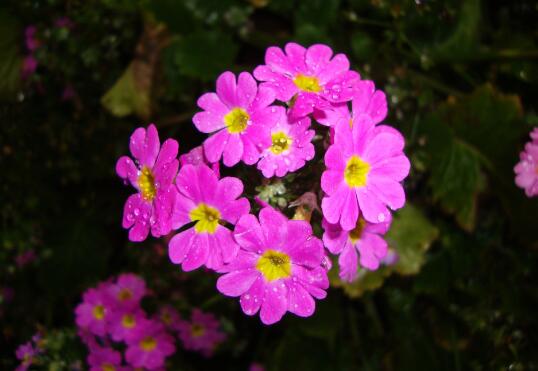
As for how verbena propagates, it is generally divided into two main methods: seed propagation and cutting propagation. As long as they are done properly, the survival rates of these two propagation methods are quite high. Details are in the "Propagation Methods for Verbena" section below. Let's continue reading.
II. Propagation Methods for Verbena
Seed Propagation
1. Soil Selection
Before sowing verbena seeds, we first need to choose the soil. For soil, we can choose humus soil with high drainage. This kind of soil has good drainage and aeration, which can promote seed germination.
2. Seed Germination
Before propagating verbena by seed, we can first soak the seeds in warm water for about 12-24 hours, until the seeds begin to absorb water and swell, then they can be taken out for sowing. This allows the seeds to germinate more quickly.
3. Sowing Method
Among the propagation methods for verbena, seed propagation is a relatively common method. Verbena seeds are small, so when sowing, we can mix them with fine sand and scatter them. After scattering, cover them with 1-2 cm of soil and then water. Be sure to water thoroughly in one go. After 2-3 weeks, seedlings will emerge.
Cutting Propagation
Cutting Propagation
1. Cutting Selection
Before propagating verbena by cuttings, we first need to select cuttings. Generally, it is best to choose relatively robust branches, as the survival rate will be higher. If you choose branches that look frail, they will basically be very difficult to keep alive.
2. Cutting Method
Among the propagation methods for verbena, cutting propagation is a relatively simple method. When cutting, we can first use a chopstick to poke a hole in the center of the soil, then insert the cutting into the hole, press the soil flat, and then water. After watering, roots will form in about 20-30 days.
3. Follow-up Care
After the cuttings have rooted, we need to care for the verbena. There are many things to pay attention to during care, such as watering, fertilizing, and light. For details, you can refer to the article on verbena cultivation methods. I won't go into too much detail here.
How Does Verbena Propagate: Verbena Cutting and Seed Propagation Methods
Verbena can be propagated by sowing and cuttings. With these two propagation methods, flower lovers can choose the appropriate method based on their own conditions. Below is a summary of the seed and cutting propagation methods for verbena.
How Does Verbena Propagate? 1. Seed Propagation MethodThe sowing time for verbena is generally in spring. Usually, after sowing, it will bloom around July. However, with the sowing method, the seed germination rate of verbena is relatively low, at about 50%, and germination is slow and uneven. At a temperature of 15-17°C, seedlings only begin to emerge two to three weeks after sowing.
2. Cutting Propagation MethodAs long as the temperature is suitable, verbena cuttings can be taken throughout the year. First, select slightly woody branches, cut them into 5-6 cm segments as cuttings, and insert them into a wet sand bed. Immediately shade them afterward. After 2-3 days, they can receive a little morning and evening sunlight to promote growth. After about two weeks, new buds will emerge and roots will form.
The suitable time for verbena cuttings is from November to March of the following year, with a cutting survival rate as high as 100%; the next best is September-October, with a cutting survival rate of 80-85%; the lowest cutting survival rate is in May-August, at 10-25%. Based on observations over the past year and combined with its growth characteristics, take corresponding measures and choose a suitable cutting time.
How Does Verbena Propagate: Propagation Methods for Verbena
Verbena is a perennial herbaceous plant, loved for its graceful form and rich flower colors. In the cultivation process of verbena, how verbena propagates has become a rather difficult question for everyone. Let's learn about the propagation methods for verbena together.
Growth Habits of Verbena:
Verbena likes sunlight and is not tolerant of shade. It is relatively cold-tolerant, poor in shade tolerance, and not drought-tolerant. In the north, it is mostly cultivated as an annual herbaceous flower, and it can bloom normally in hot summers. It grows in sunny, loose, and fertile soil, and blooms profusely. It likes a warm and humid climate, likes sun, and is not drought-tolerant. It is not strict about soil requirements, but in loose, fertile, and relatively moist neutral soil, it can root at each node, grow robustly, and bloom profusely. In warmer microclimates in Shanghai, it can overwinter outdoors.
Propagation Methods for Verbena:
1. Seed propagation: Verbena can be propagated by sowing in both spring and autumn, mainly by indoor pot sowing. Select 350 to 390 seeds per gram, and control the temperature between 20 and 22°C, which is suitable for germination. Before sowing, mix the seeds with New High Lipid Film. After sowing, no soil covering is needed; sprinkle a shallow layer of vermiculite, which can both retain moisture and allow light through, then spray New High Lipid Film to retain moisture, which can improve the seedling emergence rate.
After 14 to 20 days of sowing, verbena begins to germinate. During the seedling stage, field management should be strengthened. After 30 days, the seedlings can be transplanted. After transplanting, spray the seedlings with New High Lipid Film in time to prevent evaporation of aboveground moisture. If the seedling body moisture does not transpire, it can isolate pests and diseases, shorten the seedling recovery period, enable the plant to quickly adapt to the new environment, and grow healthily.
2. Cutting propagation: This propagation method is best from May to July. Cut slightly mature branches from the plant, 8 to 10 cm long, and insert them into a sand bed. Before cutting, spray the plants with a cutting seedling treatment for disinfection and sterilization. After cutting, move them indoors, control the temperature at 15 to 18°C, and provide slight shading.
After 14 to 21 days of cutting, the plants begin to root. After 30 days, they can be transplanted into pots. After transplanting, also spray New High Lipid Film in time to prevent evaporation of aboveground moisture. The moisture of the seedlings can also be effectively prevented from transpiring, thereby isolating pests and diseases, shortening the seedling recovery period, and helping the plant quickly adapt to the new environment.
If verbena is watered repeatedly after sowing, its germination rate will be reduced, so it is best to water the soil thoroughly before sowing, and after sowing, just maintain soil moisture and air humidity. In winter, the plant can be moved indoors to overwinter, and the following year it can serve as a mother plant for propagation cuttings.
Spring and autumn are the peak growing seasons for verbena. In summer high temperatures, it often enters a dormant state and has low requirements for fertilizer and water, so in summer, control fertilizer and water. On rainy days or in low-temperature weather, the watering interval can be longer or no watering can be done. Watering should be arranged as much as possible in the morning when the temperature is lower, and the leaves should be kept dry at night.
Through the above introduction, I wonder if everyone has understood the propagation methods for verbena. I hope it can help everyone!