Sowing methods for verbena: autumn sowing gives a higher survival rate
Among the propagation methods for verbena, seed sowing is one of the more commonly used methods. This method has been tested by many flower-growing enthusiasts, and the survival rate is very high. So how do you sow verbena? What are the sowing methods for verbena? Below, the editor will walk you through it.
I. How to sow verbena
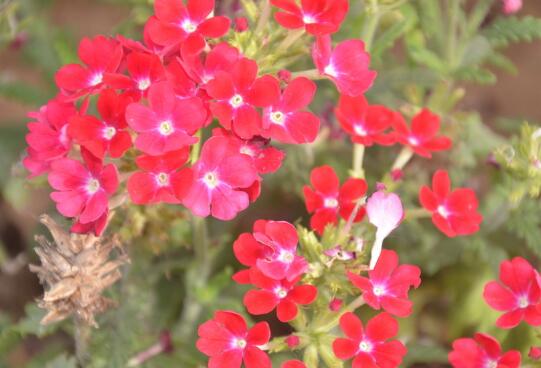
There are many things to pay attention to when it comes to how to sow verbena. The sowing time, seed pre-sprouting, soil selection and other aspects all need to be done according to requirements so that the survival rate will be high. Below are the specific sowing methods for verbena; let's continue reading.
II. When to sow verbena
As for when to sow verbena, it is generally best to do it in autumn, because the temperature in this season is more suitable for verbena growth, and the climate is relatively drier, not as humid as spring, so choosing autumn to sow verbena is ideal.
III. Sowing methods for verbena
1. Choose the soil
Before sowing verbena, we first need to choose the soil. We can choose a relatively loose humus soil. This kind of soil has good drainage and aeration, allowing verbena to better absorb nutrients, thereby increasing the seed germination rate.
2. Disinfect the soil
After choosing the soil, we cannot sow directly. We must first disinfect the soil to prevent harmful substances such as bacteria or pests from being present. There are two disinfection methods. One is to break up the soil and put it under the sun to disinfect it. The other is to put the soil into a pot and stir-fry it over high heat, so that if there are pests, they will be killed directly.
3. Seed pre-sprouting
Before sowing, verbena seeds need to be pre-sprouted in advance. We can soak the seeds in warm water for one day, and when we see the seeds absorb water and swell, take them out and sow them.
4. Sowing method
As for how to sow verbena, the method is actually very simple. First, we need to evenly scatter the seeds on the soil surface, then cover them with about 1-2 cm of soil, and then we can water. Water thoroughly in one go, and after 2-3 weeks the seeds will germinate.
5. Follow-up management
After the seeds germinate, we can grow verbena normally. However, there are many things to pay attention to when growing it. You can refer to the article on verbena growing methods, which has detailed instructions. The editor will not repeat them here.
How to sow verbena?
Verbena is an annual herbaceous flower. Its posture is graceful, its flower colors are rich, and its colors are brilliant. When in full bloom, it looks like a sea of flowers, making people linger. Verbena plants are short and dense, with abundant and colorful flowers. The flowering portion is corymb-like, and the flower colors include white, red, blue, snow blue, pink, etc. The flowering period is from May to November. It is very robust and can be used as flowerbed and flower border material. It is suitable for potted ornamental display or for arranging flower platforms and flower borders. It can also be used as potted flowers and planted in large areas in garden open spaces and tree beds. Common cultivated species in the same genus include Canadian verbena, red-leaf verbena, fine-leaf verbena, etc. The whole plant can be used as medicine and has the effect of clearing heat and cooling blood. So how do you sow verbena?Zuihua Network now introduces it to everyone, hoping that flower enthusiasts can exchange and learn together.
I. Sowing verbena
Verbena is often sown in autumn after mid-to-late September: disinfect the substrate. To disinfect the substrate used for sowing, the best method is to put it in a pot and heat it by stirring, so that any diseases and pests are scalded to death.
Pre-sprouting: soak the seeds in warm hot water (temperature similar to face-washing water) for 3-10 hours, until the seeds absorb water and swell. For very common seeds that germinate easily, this step can be skipped.
Sowing: for tiny seeds that are difficult to pick up with hands or other tools, you can moisten one end of a toothpick with water, stick the seeds one by one onto the surface of the substrate, cover with substrate 1 cm thick, then place the sowing pot into water with the water depth at 1/2-2/3 of the pot height, and let the water slowly soak upward (this method is called the "pot soaking method"); for larger seeds that can be picked up with hands or other tools, place the seeds directly into the substrate and sow them in spots at a spacing of 3 x 3 cm. After sowing, cover with substrate at a thickness of 2-3 times the seed size. After sowing, use a sprayer or a fine-hole watering can to moisten the sowing substrate. Later, when the pot soil is slightly dry, water again, and still be careful not to water too forcefully, so as not to wash the seeds out;
Management after sowing: after sowing in autumn, when encountering a cold wave and low temperatures, you can wrap the flower pot with plastic film to help keep it warm and moist; after the seedlings emerge, promptly uncover the film, and let the seedlings receive sunlight before 9:30 every morning or after 3:30 in the afternoon, otherwise the seedlings will grow very weak; after most of the seeds have sprouted, appropriate thinning is needed: pull out the diseased and unhealthy seedlings so that the remaining seedlings have some space between them; when most of the seedlings have grown 3 or more leaves, they can be transplanted into pots.
II. Verbena propagation
Verbena generally uses cutting propagation.
1. Cutting substrate
This refers to nutrient soil, river sand, peat soil and other materials used for cuttings. For home cuttings, due to limited conditions, it is difficult to obtain an ideal cutting substrate. It is recommended to use a pre-mixed and disinfected cutting substrate; medium-coarse river sand can also be used, but it should be rinsed several times with clean water before use. Do not use sea sand or river sand from saline-alkali areas, as they are not suitable for the growth of flowers and plants. Selection of cutting branches: the branches used for cuttings are called cuttings. Usually, in combination with pinching, the thick, pest-free top shoots that are removed are used as cuttings, and the top shoots are used directly for cuttings.
2. Management after cutting
The optimum temperature for rooting of cuttings is 18°C-25°C. Below 18°C, rooting of cuttings is difficult and slow; above 25°C, the cut ends of cuttings are easily infected by pathogens and rot, and the higher the temperature, the greater the proportion of rot. When low temperatures are encountered after cutting, the main measure for heat preservation is to wrap the flower pot or container used for cuttings with film; when the temperature is too high after cutting, the main cooling measure is to shade the cuttings, blocking 50-80% of sunlight. At the same time, mist the cuttings 3-5 times a day. On sunny days with higher temperatures, mist more often; on cloudy and rainy days with lower temperatures and higher humidity, mist less often or not at all.
III. Key points for daily care of verbena
1. Humidity: after cutting, the relative air humidity must be maintained at 75-85%. Humidity can be increased by misting the cuttings 1-3 times a day. On sunny days with higher temperatures, mist more often; on cloudy and rainy days with lower temperatures, mist less often or not at all. However, excessive misting makes cuttings susceptible to infection by pathogens and rot, because many kinds of pathogens exist in water.
2. Light: cutting propagation cannot do without sunlight, but the stronger the light, the higher the temperature inside the cuttings, the more vigorous the transpiration of the cuttings, and the more water consumed, which is not conducive to the survival of the cuttings. Therefore, after cutting, 50-80% of sunlight must be blocked. After the root system grows, gradually remove the shade net: on sunny days, remove the shade net at 4:00 every afternoon, and cover it again before 9:00 the next morning.
3. Humidity management: it likes higher air humidity. If the air humidity is too low, individual flowers will fade faster. It also fears rain, and the leaves need to remain dry at night. The optimum relative air humidity is 65-75%.
4. Temperature management: it likes a warm climate and fears intense heat. When the summer temperature is above 34°C, growth is obviously poor; it is not tolerant of frost and cold, and when the winter temperature is below 4°C, it enters dormancy or dies. The most suitable growth temperature is 15-25°C. It is generally sown in autumn and winter to avoid high summer temperatures.
5. Light management: in spring, summer and autumn, it needs to be cared for under shaded conditions. When the temperature is relatively high (daytime temperature above 25°C), if it is placed in direct sunlight for care, the leaves will become noticeably smaller, the internodes of the branches will shorten, the lower leaves will yellow and fall off, and growth will be very slow or it will enter a semi-dormant state. In winter, because the temperature is not very high, it should be given direct sunlight to help it carry out photosynthesis and form flower buds, bloom, and set fruit. After being kept indoors for a period during the flowering stage (10-15 days), it should be moved outdoors to a place with shade (and warmth) for a period of care (about one month), alternating back and forth in this way to help the plant accumulate nutrients and continue blooming.
IV. Pest and disease control
Generally, robustly growing plants have strong resistance to pests and diseases, and pests and diseases rarely occur.
How to sow verbena? How to manage it after sowing?
Sowing time
Verbena is often sown in autumn in late September.
Preparation before sowing
1. Disinfect the substrate to prevent infection by pathogens. Commonly used disinfection methods include sun exposure, directly placing the soil under the sun to bake, or putting the soil into a pot and heating it by stirring to directly kill pests and diseases.
2. Pre-sprouting: soak the seeds in warm water for 3 to 10 hours, until the seeds absorb water and swell.
Sowing
Sow verbena evenly into a seedling tray, cover with about 1 cm of soil, and after sowing use a sprayer to moisten the sowing substrate. Later, when the pot soil is slightly dry, still be careful to continue watering, and do not water too forcefully, so as not to wash the seeds out.
Management after sowing
After sowing in autumn, when encountering a cold wave and low temperatures, you can wrap the flower pot with plastic film to help keep it warm and moist; after the seedlings emerge, promptly uncover the film, and let the seedlings receive sunlight before 9:30 every morning or after 3:30 in the afternoon, otherwise the seedlings will grow very weak; after most of the seeds have sprouted, appropriate thinning is needed: pull out the diseased and unhealthy seedlings so that the remaining seedlings have some space between them; when most of the seedlings have grown 3 or more leaves, they can be transplanted into pots.