Bleeding Heart Vine Won't Bloom? Light Is the Key Reason
For Bleeding Heart Vine (Clerodendrum thomsoniae), friends who have seen it should be deeply impressed. Its flower shape is peculiar, like a dragon spitting out pearls, and it is highly ornamental when grown at home. However, although Bleeding Heart Vine is beautiful, when it doesn't "spit pearls," that's another story, and at that point flower lovers must be very anxious! So why doesn't Bleeding Heart Vine bloom? To solve this problem, let's follow along and take a look at the reasons why Bleeding Heart Vine won't bloom.
1. Why Doesn't Bleeding Heart Vine Bloom? Let's Find the Reasons
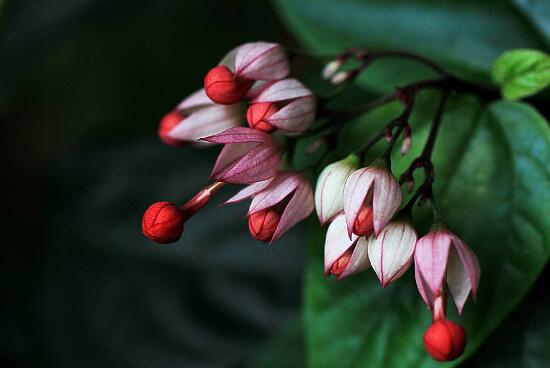
As a common flowering plant, Bleeding Heart Vine is not difficult to grow, and with a little care it will produce beautiful flowers. But because there are many beginners, they often make care mistakes, which causes Bleeding Heart Vine not to bloom, and this seriously affects the plant's ornamental value. In this regard, I have summarized 4 reasons why Bleeding Heart Vine won't bloom. Let's continue reading.
2. Reasons Why Bleeding Heart Vine Won't Bloom
1. Overwatering
When growing Bleeding Heart Vine indoors, the thing flower lovers like to do most is water it. Many people also worry that it doesn't get enough water and won't grow well, so they always give it a lot of water. The result is naturally overwatering, which causes water to accumulate in the pot, the plant's roots cannot breathe properly, and ultimately the leaves of Bleeding Heart Vine turn yellow and gradually fall off, thus affecting blooming.
Solution: At this point, flower lovers should immediately stop watering, help drain the water from the pot, or directly repot with fresh soil. After that, water according to the proper watering method for Bleeding Heart Vine, and gradually it will bloom.
2. Insufficient Light
Bleeding Heart Vine cannot bloom without sufficient light. If it is kept in a dark place for a long time, its stems will grow leggy, which ultimately affects blooming. However, summer light is very intense, and Bleeding Heart Vine is averse to strong light, so at that time appropriate shading is needed.
Solution: During the growing period of Bleeding Heart Vine, flower lovers should give it sufficient light so that it can fully carry out photosynthesis, thus accumulating the nutrients needed for blooming.
3. Failure to Prune in Time
Bleeding Heart Vine is a climbing plant. For its healthy growth and to keep it looking neat, we should prune it regularly. Once pruning is not done in time and its branches and leaves grow too vigorously, blooming will actually be affected, because all the nutrients are supplied to the branches and leaves.
Solution: When the Bleeding Heart Vine seedling grows to about 15cm, it should be cut back at about 10cm above the pot rim to encourage new branches. After that, pinch and prune more often, keeping the plant height at around 30cm. Done this way, Bleeding Heart Vine will bloom profusely.
4. Improper Temperature
Besides the above points, the reason Bleeding Heart Vine won't bloom may also be improper temperature. It is understood that Bleeding Heart Vine prefers a warm environment, and its blooming temperature should be around 17°C. Once the temperature is too high or too low, blooming will be affected. When this happens, simply adjust the temperature, and before long, Bleeding Heart Vine will produce beautiful flowers.
Why Won't Bleeding Heart Vine Bloom: Causes and Solutions for Bleeding Heart Vine Not Blooming
As a flowering ornamental plant, Bleeding Heart Vine has a very peculiar flower shape. Bleeding Heart Vine is also called Pearl Treasure Grass. Its place of origin is mainly distributed in western Africa. Now it is cultivated artificially in many places. Because its flowering period is relatively long, it usually blooms in spring and summer, and the flowers are very beautiful. It is also a potted climbing flowering ornamental plant. So do you know why Bleeding Heart Vine won't bloom? Below, let the editor of Huayu Web answer for you the reasons and solutions for Bleeding Heart Vine not blooming!
Main Reasons Why Bleeding Heart Vine Won't Bloom
1. Why won't Bleeding Heart Vine bloom? Bleeding Heart Vine not blooming is actually due to failure to prune in time. Bleeding Heart Vine is a climbing plant, and as long as it is not pruned it will grow wildly all the way, with nutrients all supplied to the leaves and plant, leaving it no energy to bloom;
2. If its growth lacks fertilizer, the number of flowers will also be very small, so add a little dilute fertilizer to it. The proportion of water can be larger, using it as liquid fertilizer. Why won't Bleeding Heart Vine bloom? You should know that most flowers like fertilizer, because they need a large amount of nutrition during their full blooming period, so add it about once a month, three times in total. Potassium dihydrogen phosphate can be applied.
3. If you want to know why Bleeding Heart Vine won't bloom, you also need to know its sunlight requirements for blooming. Bleeding Heart Vine needs sufficient sunlight. It likes sunlight, and insufficient light will not do. After the flowers fade, prune in time, leaving more than 10 centimeters above the pot rim. Do not leave it too long, lest nutrients be insufficient and the quality of blooming be affected;
4. In fact, why Bleeding Heart Vine won't bloom is also related to its pruning. Because Bleeding Heart Vine grows quickly, if it is not pruned in time, it will only grow vines and not bloom. Bleeding Heart Vine should also be topped in time; do not let it grow tall, lest nutrients cannot keep up. Keep the plant at around 20-30 centimeters.
Solutions for Bleeding Heart Vine Not Blooming
1. Change the soil: Repotting and changing soil should be done before spring budding. Choose a suitable flower pot according to the size of the plant, and properly prune old roots when repotting.
2. Fertilizing: While repotting and changing soil, apply sufficient flower fertilizer to promote the growth of new shoots. During the growing period, fertilization should combine root application and foliar application. For foliar application, a flower nutrient solution can be sprayed on the branches and leaves; for root application, decomposed bean cake fertilizer can be used.
3. Watering: After changing the soil in spring, water thoroughly, place it in a shady spot for a week to recover, and then carry out normal care. During the growing period, water once every two days.
4. Pinching: Practice has proved that to make Bleeding Heart Vine bloom early and bloom more, it is necessary to pinch and thin the buds in time, and promptly cut off dead branches and fallen leaves after blooming.
5. Flowering period management: When Bleeding Heart Vine is blooming, do not water too much, and even more do not splash water onto the flowers. Avoid rain exposure to prevent high humidity from causing premature flower drop. After the flowers fade, cut them off in time and fertilize at the same time, and it can continue to bloom. You can also inject flower nutrient solution into the tips of the young branches of Bleeding Heart Vine to promote blooming.
How to Grow Bleeding Heart Vine: Cultivation Methods and Precautions / Sufficient Light Is Required
Bleeding Heart Vine (Clerodendrum thomsoniae), friends who have seen it should be deeply impressed. Its flower shape is peculiar, like spitting pearls, and it looks very beautiful, deeply loved by flower lovers. In daily life, many people want to grow Bleeding Heart Vine, so how do you grow it? In this regard, I have carefully compiled the cultivation methods and precautions for Bleeding Heart Vine, very detailed. Friends who want to grow it must take a look~
1. How to Grow Bleeding Heart Vine: Understand Its Habits
Bleeding Heart Vine prefers a warm, humid, and sunny semi-shady environment. When growing it indoors, place it in a spot with good light but away from direct sunlight, and take good cold protection measures in winter. As for the soil, it is best to choose a well-drained sandy loam. So how to grow Bleeding Heart Vine is very simple: according to its growth habits, we just need to satisfy them.
2. Cultivation Methods and Precautions for Bleeding Heart Vine
1. Soil
How to grow potted Bleeding Heart Vine? First, the soil should be reselected. The reason is that many Bleeding Heart Vines grown by flower lovers are existing potted plants bought from flower shops or online. Normal care can ensure the plant's growth. But that soil is very cheap. If you want Bleeding Heart Vine to grow well, it is best to reselect the soil.
Pot soil selection: Bleeding Heart Vine likes loose, fertile, well-drained sandy loam, so when potting, a mixed soil of culture soil or peat soil and coarse sand is often used. In this regard, I recommend using a culture soil mixed with 4 parts leaf mold, 4 parts garden soil, and 2 parts sand.
2. Light
Plant growth cannot do without light, so in the cultivation methods for Bleeding Heart Vine, light is extremely important. Also, because Bleeding Heart Vine prefers a sunny semi-shady environment, when growing it indoors, place it in a spot with good light but away from direct sunlight.
Precautions: During the growth process, Bleeding Heart Vine needs sufficient light. Once light is insufficient, it will cause vine-like growth and no blooming. In addition, Bleeding Heart Vine is averse to strong light. In summer under strong light, appropriate shading should be provided, otherwise the leaves of Bleeding Heart Vine will turn yellow.
3. Watering
Water is the source of life, so for how to grow Bleeding Heart Vine, watering is an indispensable part. Bleeding Heart Vine likes a humid environment and needs sufficient water during growth. Flower lovers should water frequently to keep the pot soil moist. Especially in summer, while providing appropriate shade, water thoroughly.
Precautions: Bleeding Heart Vine is relatively sensitive to water. Although it needs sufficient water, watering must not be excessive. Once the amount of water is too large, it will cause Bleeding Heart Vine not to bloom, and even cause leaves to turn yellow, fall off, and roots to rot and die. In addition, reduce watering in winter to let it go dormant so it can overwinter safely.
4. Fertilizing
After watering, let's talk about fertilizing, which is also very important during the growth of Bleeding Heart Vine. Bleeding Heart Vine needs sufficient nutrients to bloom, so during its flowering period, apply decomposed dilute bean cake liquid fertilizer once every 7-10 days, preferably 3-4 times in a row. However, note that too much fertilizer should not be applied, otherwise it will have the opposite effect.
Care tips: During the process of growing Bleeding Heart Vine, if yellowing is found, combined with topdressing, apply 0.2% ferrous sulfate water, and the leaves will gradually turn from yellow to green.
5. Pruning
During the growth of Bleeding Heart Vine, in order to maintain its perfect shape, flower lovers need to prune it appropriately. First, although Bleeding Heart Vine grows short, its branches can grow very long. With attention to shaping and pruning, a very beautiful Bleeding Heart Vine can be cultivated; second, during the growth and development period, pay attention to pinching to control the height of the divisions, so that the plant's divisions are neat and maintain a beautiful appearance.
6. Repotting
The pot soil for Bleeding Heart Vine is generally relatively fertile, but as the cultivation time increases, the soil will gradually become poor, so every 1-2 years we should repot it once. As for the repotting time, it can be done in early spring or after the flowers fade. Note that after repotting, water thoroughly and place it in a shady spot to recover. After recovery, move it to a sunny spot for care.
7. Pests and Diseases
During the growth of Bleeding Heart Vine, the plant will inevitably suffer from insects and diseases. The main diseases include leaf spot, rust, mosaic disease, and gray mold; the main pests include leaf beetles, stinging caterpillars, scale insects, and whiteflies. Their appearance will all affect the growth of Bleeding Heart Vine. So once discovered, spray pesticide immediately for prevention and control. As for what pesticide to spray, you can refer to pest and disease control for Bleeding Heart Vine.