What to do when Aglaonema modestum leaves turn yellow? Adjust water, fertilizer and temperature, and change the potting soil
Aglaonema modestum (Chinese evergreen), a beautiful foliage plant, has green leaves and stays evergreen all year round, making it highly ornamental in the home. But during cultivation, for various reasons, many flower lovers' Aglaonema modestum develops yellow leaves. So what should be done when Aglaonema modestum leaves turn yellow? For this, the editor has summarized 7 causes. Let's take a look together!
I. When Aglaonema modestum leaves turn yellow, find the cause
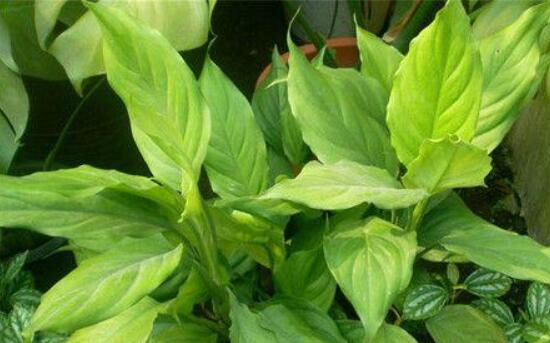
As a common foliage plant, Aglaonema modestum is not difficult to cultivate, but there are many beginners who simply do not care for it as required, and as a result the beautiful leaves turn yellow. By that time, flower lovers must be very anxious! As for what to do when Aglaonema modestum leaves turn yellow, it is actually very simple: find the cause, then solve it.
II. Causes of yellowing leaves in Aglaonema modestum and solutions
1. Light too strong
Aglaonema modestum likes a semi-shaded environment and is extremely shade-tolerant; even growing in a dark place for a long time has little effect on it. But it dislikes direct strong light. Once Aglaonema modestum is placed in the sun and exposed to direct strong light, it is very easy to cause the leaf tips and leaf margins of young leaves to scorch, or the leaves to turn yellow and drop.
Solution: What to do when Aglaonema modestum leaves turn yellow? If it is caused by too strong light, flower lovers should move it to a cool, ventilated indoor spot, water it moderately after a period of time, and then gradually place it in a spot with scattered light. Before long the plant will recover its health.
2. Temperature too low
Aglaonema modestum likes a warm environment and is not cold-tolerant. If the winter temperature is too low and flower lovers have not taken good warmth measures, the plant is easily frostbitten, which causes the leaves to turn yellow.
Solution: Move Aglaonema modestum indoors and keep the room temperature above 5°C. After careful care for a period of time, the plant's leaves will recover.
3. Insufficient watering
Aglaonema modestum likes a humid environment and needs plenty of water during the peak growing season. If watering is insufficient at this time, the plant will develop yellow leaves due to lack of water.
Solution: What to do when Aglaonema modestum leaves turn yellow? If it is caused by insufficient watering, the solution is very simple: just replenish water moderately. Note that Aglaonema modestum has fleshy roots, so it is not difficult for water to accumulate in the pot; otherwise root rot will occur.
4. Improper fertilizing
After watering, let's talk about fertilizing, which is also one of the factors that causes Aglaonema modestum leaves to turn yellow. ① Insufficient fertilizer: the leaves cannot absorb enough nutrients, and will become thin and yellow; ② Excessive fertilizer: new leaves are thick and fleshy, while old leaves dry at the tips, scorch yellow and drop.
Solution: If fertilizing is insufficient, promptly replace with new culture soil, and gradually apply more diluted, thoroughly decomposed liquid fertilizer or compound flower fertilizer; if too much fertilizer has been applied, immediately stop fertilizing, increase the amount of water changed so the fertilizer is leached away, or immediately repot, rinse the bulbs with water, and then replant them in the pot.
5. Soil on the alkaline side
Aglaonema modestum grows best in loose, fertile, well-drained, organic-rich, slightly acidic soil. If the soil is on the alkaline side, or long-term watering with mineral water makes the potting soil alkaline, Aglaonema modestum will show yellow leaves due to a lack of absorbable soluble iron and other elements.
Solution: Very simple: replace the potting soil, switching to a new slightly acidic culture soil; if the yellow leaves are not serious, you can regularly water with alum fertilizer water to change the soil's acidity and alkalinity.
6. Pruning not done in time
With proper water and fertilizer, Aglaonema modestum will grow very densely. If it is not pruned in time, the leaves inside will gradually turn yellow and drop because they cannot receive light for a long time.
Solution: What to do when Aglaonema modestum leaves turn yellow? If it is caused by the plant being too dense, flower lovers should prune appropriately. Cutting away some branches and leaves lets the leaves grow freely, which can make them emerald green and glossy.
7. Damage from pests and diseases
Besides the above points, there is another cause of yellowing leaves in Aglaonema modestum that cannot be ignored: attack by pests and diseases. Solution: Determine which pest or disease it is, then spray accordingly. As for which spray to use, it is described in detail in the pest and disease control section for Aglaonema modestum, so it will not be repeated here.
Overall, Aglaonema modestum is not difficult to grow, but because many flower lovers are beginners, yellow leaves inevitably appear. Still, after reading the whole article, I believe everyone now has a clearer idea. When yellow leaves appear, just follow the methods above. That is all the editor has to introduce about Aglaonema modestum leaves turning yellow, and I hope it helps everyone.
What to do when Aglaonema modestum leaves turn yellow
Aglaonema modestum is also called bright silk grass; because its stems are upright and segmented, with obvious internodes, it is also called bamboo-joint Chinese evergreen. Its leaves are broad and glossy, emerald green all year round, and especially shade-tolerant. It can be cut to make foliage bonsai arrangements or used as a foil in flower arrangements to decorate the environment, and can also be used as a potted plant to accent halls and rooms.
Cause 1 of yellowing leaves in Aglaonema modestum: dense branches and leavesDense branches and leaves are one of the causes of yellowing leaves in Aglaonema modestum. Aglaonema modestum is a plant with relatively strong branch and leaf growth, especially the root system, which will sprout many branches and leaves. If the branches and leaves are too dense, air circulation will be poor, causing the lower leaves to turn yellow.
2. Soil not breathableSoil that is not breathable is also one of the causes. Aglaonema modestum is a plant with fleshy roots and needs well-drained, breathable soil. Otherwise it will affect the plant's healthy growth and cause the leaves to turn yellow.
3. Unsuitable light and temperatureLight and temperature are important factors affecting the leaves of Aglaonema modestum. If it is placed in a hidden indoor spot for a long time, Aglaonema modestum will not receive suitable light, and the lower leaves will turn yellow and become wilted and dry. Temperature refers to the low temperatures of winter, because low temperatures easily cause cold damage; the plant is frostbitten and the leaves turn yellow.
4. Unsuitable water and fertilizerImproper watering mainly means insufficient water. Because Aglaonema modestum likes plenty of water during the growing period; otherwise the leaves will look listless and turn yellow. Unsuitable fertilizing mainly refers to lack of fertilizer. Lack of fertilizer will cause Aglaonema modestum leaves to turn yellow, become fragile in texture, and rapidly age and wilt.
5. Leaf surface contaminationIf the leaves are contaminated, they will also turn yellow. If fertilizer is accidentally sprinkled on the leaves during fertilizing, or if mud and dust stick to them, the leaves may turn yellow.
Solutions for yellowing leaves in Aglaonema modestum 1. Prune in timeIf the Aglaonema modestum plant looks very dense, it is best to prune it appropriately, cutting away some branches and leaves to let the leaves grow freely, which can make them emerald green and glossy.
2. Choose suitable soilWhen growing, Aglaonema modestum does best in slightly acidic sandy soil, so that the plant's root system will grow. The flowerpot should also preferably be highly breathable, and some tile pieces can be placed at the bottom of the pot.
3. Suitable light and temperatureAs for light, indoor cultivation is still best, but preferably in a place with scattered light, and it should often be placed outdoors for care for a period of time. However, be careful not to place it under strong light, to avoid scorching. As for temperature, this mainly applies in winter: keep the room temperature above 5°C, and when moving it outdoors in spring, properly cut off dead leaves.
4. Water and fertilizer managementWater must be sufficient. In relatively dry weather, it is also necessary to spray water on the Aglaonema modestum plant in time. When fertilizing, some nitrogen fertilizer can be applied during the budding stage to make the leaves grow well; afterward, phosphorus and potassium fertilizer should be the main choice to prevent the plant from growing leggy.
5. Clean the leaves in timeTo prevent Aglaonema modestum leaves from turning yellow due to contamination, the leaf surface can be cleaned regularly.
6. Disease controlLeaf spot disease. This disease occurs on the leaves of Chinese evergreen and is likely to occur in humid weather. The lesions initially are small brown spots, with a water-soaked, faded-green surrounding area, and expand in concentric rings, round to oval, with brown edges and grayish-white centers. Later, blackish-brown mold spots appear in the center of the lesions, and under moist conditions they become a blackish-brown mold layer. The method to control this disease is to promptly remove diseased and residual leaves;
What to do when Aglaonema modestum leaves turn white: supplement light / ventilate the environment / replace the potting soil
Aglaonema modestum, a common foliage plant, has broad, evergreen leaves and looks very beautiful. However, the beauty of Aglaonema modestum requires everyone's careful care. Once neglected, its leaves may show symptoms of turning white, seriously affecting the plant's ornamental value. So what should be done when Aglaonema modestum leaves turn white? Today the editor will solve this problem for everyone.
I. When Aglaonema modestum leaves turn white, find the cause
As a common indoor potted plant, Aglaonema modestum is not difficult to cultivate; you only need to pay more attention to light, water, fertilizer and temperature to grow it well. But there are many beginners who simply do not know how to grow it, and over time they grow the leaves white. What should be done then? For this, the editor has summarized 3 causes of Aglaonema modestum leaves turning white, along with solutions. Let's continue reading.
II. Causes of white leaves in Aglaonema modestum and solutions
1. Environment too poor
When it comes to the causes of Aglaonema modestum leaves turning white, the main one is actually environmental problems. This can be divided into the following two points:
① For Aglaonema modestum potted plants bought online, because of the large regional span, the environment changes too much at once, and the plant cannot adapt for a while, so the leaves may turn white.
② Aglaonema modestum is shade-tolerant and very suitable for indoor cultivation; even in a dark place for a long time, it can still grow normally. But indoors is not the same as outdoors, especially in winter, when poor ventilation often occurs. Over time, Aglaonema modestum leaves may turn white.
Solution: According to the growth habits of Aglaonema modestum, give it its favorite growing environment, such as a spot with scattered light and good ventilation. After a period of time, the plant will recover its health.
2. Improper light
Aglaonema modestum is extremely shade-tolerant, but if you want it to grow well, appropriate light is still very important. However, if it has not been in the sun for a long time and is suddenly exposed to the sun, the leaves of Aglaonema modestum are very easily scorched and turn white.
Solution: Immediately move the potted plant to a cool, ventilated indoor spot, water it moderately, and give it careful care for a period of time. If you want to give it sun, it should not be under strong sun; timely shading is necessary.
3. Unsuitable potting soil
Besides environment and light, unsuitable potting soil is also one of the causes of Aglaonema modestum leaves turning white. This also has two situations:
① Aglaonema modestum likes a humid environment, but it has fleshy roots and cannot be soaked in water, so its culture soil needs to be loose and well-drained. Once the potting soil becomes compacted, water easily accumulates in the pot, and the result is that the plant's root system rots, and the leaves above also show signs of turning white.
② Aglaonema modestum likes slightly acidic soil. If the soil is on the alkaline side, or long-term watering with mineral water makes the soil alkaline, the plant will grow poorly, and the result will be symptoms of yellowing and whitening leaves in Aglaonema modestum.
Solution: If it is caused by unsuitable potting soil, it is very simple: just replace the soil, switching to loose, fertile, well-drained, slightly acidic soil. Also loosen the soil in time, and I believe the plant will recover its health before long.