How to grow Lycoris aurea? Master the watering control and avoid strong light: growing methods and precautions
Lycoris aurea is a perennial plant with high ornamental value, and it can be seen in many regions of China. However, to grow it well, there are many things to pay attention to, such as the choice of soil, daily water and fertilizer management, etc. How to grow Lycoris aurea? What are the growing methods and precautions for Lycoris aurea? Let's take a look below.
1. How to grow Lycoris aurea: understand its habits
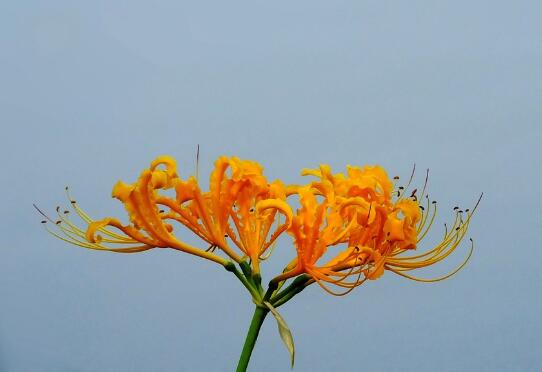
To know how to grow Lycoris aurea, we first need to understand its growth habits, so that we can grow it better. This plant prefers a sunny environment, is fairly tolerant of semi-shade and drought, and also has a certain resistance to cold weather, so it can be said to be a plant with strong vitality.
2. Growing methods and precautions for Lycoris aurea
1. Soil: good drainage
Before growing Lycoris aurea, we first need to choose the soil. Although this plant is highly adaptable, it can still grow better in suitable soil. It prefers to grow in loose, fertile sandy soil. This kind of soil has good drainage and aeration, which can make its flowers bloom especially abundantly.
2. Temperature: constant around 24°C
Lycoris aurea prefers to grow in a warm climate, preferably with an average temperature of around 24°C. The maximum temperature should preferably not exceed 30°C, otherwise its growth will be affected. After entering winter, it is best to keep the average temperature above 8°C, and the minimum temperature should preferably not be lower than 1°C.
3. Fertilization: apply light fertilizer
During the growth of Lycoris aurea, excessive fertilization is not needed. We can apply some quick-acting chemical fertilizers to promote vegetative growth of the leaves. During March to April, we can apply a small amount of additional fertilizer to promote the enlargement of the bulbs. June to July is its dormant period, and we should apply a small amount of organic fertilizer. When the flower stems begin to emerge, we can also apply a thin topdressing of decomposed phosphorus and potassium fertilizer.
4. Water: once every 2-3 days
When growing Lycoris aurea, the frequency of watering should change according to the climate. In spring and autumn, because the climate is relatively suitable, we generally only need to water once every 2-3 days. After entering summer, because the climate is relatively hot and dry, water evaporates faster, so we need to water every day, but the amount of water does not need to be too much. It is enough to keep the soil somewhat moist. It is best not to cause water accumulation, otherwise it can easily cause root rot.
5. Light: avoid strong light
Lycoris aurea is a light-loving plant, but it is not tolerant of strong light. If the light is relatively suitable in spring and autumn, we can grow it outdoors. After entering summer, because the light is stronger, we should shade it appropriately to avoid long-term exposure that causes the plant to dry out and turn yellow.
6. Pests and diseases: deal with them promptly
During the growth of Lycoris aurea, if our care is not careful enough, pests and diseases can easily take advantage of the situation. Such problems are very harmful to the plant, so when we find them, we must deal with them promptly, because the longer it is delayed, the harder they are to control and the greater the harm. For specific treatment methods, you can refer to the article on pest and disease control for Lycoris aurea. I will not introduce too much here.
Growing methods and precautions for Lycoris aurea
Lycoris aurea is a common flower. It is native to China and Japan, and is also called yellow flower lycoris or Tie Lu Jian. It blooms beautiful flowers every summer and autumn. Many people like to grow it at home, but do you understand the growing methods for Lycoris aurea? Do you know what to pay attention to when growing Lycoris aurea? If not, let me tell you.
Growing methods and precautions for Lycoris aurea1. Characteristics of Lycoris aurea
Lycoris aurea is a perennial herbaceous plant that likes to grow in a warm and moist environment. It is fairly cold-resistant, not tolerant of high temperatures and strong light, and grows fastest at 15 to 25 degrees. It has a dormant period in summer and likes to grow in soil with high humus content and good drainage.
2. Purchasing key points
When buying potted Lycoris aurea, be sure to choose one with a low plant clump and broad, dense leaves. In addition, choose a plant with many flowers, bright yellow flowers, and a full, sturdy form. Only Lycoris aurea like this will be easy to grow after you buy it and take it home.
3. Management after Lycoris aurea is brought home
After everyone buys Lycoris aurea, home management is also very important. It should be placed in a bright place with good ventilation, and watered in time to keep the potting soil moist. In addition, after the leaves of Lycoris aurea become dry, you should spray water on its leaves in time, but be sure to remember not to spray its open flowers, otherwise the flowers will wither early. During the period of growing Lycoris aurea, be sure to move it as little as possible to avoid breaking its flower stems and affecting its ornamental value.
Growing methods and precautions for Lycoris aurea
Chinese scientific name: Lycoris aureaLatin scientific name: Lycoris aurea (L'Herit) HerbOther names: Tie Se Jian, yellow flower lycorisKingdom: PlantaePhylum: AngiospermsClass: MonocotyledonsOrder: AsparagalesFamily: AmaryllidaceaeGenus: LycorisSpecies: Lycoris aureaNaming person and year: Herb, 1820Lycoris aurea (scientific name: Lycoris aurea (L'Hér.) Herb) is a herbaceous, terrestrial plant. Bulb ovoid; leaves sword-shaped; umbel with 4-8 flowers, flowers yellow; tepal lobes with a pale green midrib on the back, stamens slightly extending beyond the tepals, filaments yellow; capsule three-angled, loculicidal; seeds few, nearly spherical. It is distributed in Fujian, Taiwan, China, Hubei, Hunan, Guangdong, Guangxi, Sichuan, Yunnan, and other places in China, mostly growing on shady and moist mountain slopes.1. Morphological characteristics
Lycoris aurea is a perennial plant. The bulb is ovoid, about 5 cm in diameter. Leaves emerge in autumn, sword-shaped, about 60 cm long, up to 2.5 cm at the widest point, gradually narrowing toward the base, about 1.7 cm wide, with an acuminate apex and an obvious pale-colored band in the middle.The flower stem is about 60 cm tall; there are 2 involucral bracts, lanceolate, about 3.5 cm long and about 0.8 cm wide; the umbel has 4-8 flowers; flowers yellow; tepal lobes with a pale green midrib on the back, oblanceolate, about 6 cm long and about 1 cm wide, strongly recurved and wrinkled, the perianth tube 1.2-1.5 cm long; stamens slightly extending beyond the tepals, about 1/6 longer than the tepals, filaments yellow; the upper part of the style is rose red.
Capsule three-angled, loculicidal; seeds few, nearly spherical, about 0.7 cm in diameter, black. Flowering period August-September, fruiting period October.
2. Origin and habitat
Distributed in Fujian, Taiwan, China, Hubei, Hunan, Guangdong, Guangxi, Sichuan, and Yunnan in China; also found in Japan and Myanmar. It grows on shady and moist mountain slopes; it is also cultivated in gardens.3. Growth habits
Lycoris aurea likes sunny and moist environments such as shady and moist mountain slopes, rocks, and beneath rock cliffs, but it can also tolerate semi-shade and drought, is slightly cold-resistant, has quite strong vitality, and has no strict requirements for soil. If the soil is fertile and well-drained, its flowers will be especially abundant.