How to prune holly? Holly ball pruning methods and post-pruning care points
Holly is a fairly common plant in people's lives, with high ornamental value, but if you want to keep its plant shape beautiful, besides paying attention to routine care, we also need to prune it regularly. How to prune holly? What are the holly ball pruning methods? Below, the editor will walk you through it.
1. How to prune holly: keep the good and remove the poor
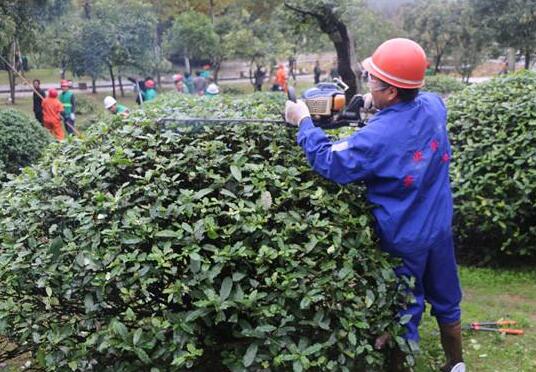
This plant, holly, sprouts multiple times every year, so when cultivating it we should prune it regularly. When pruning, we can flat-prune it or trim it into a ball shape or cone shape according to different needs, which can make the plant look more ornamental, and proper thinning of branches can also promote branching.
1. Pruning time: summer and autumn
The pruning time for holly is generally in the two seasons of summer and autumn. In summer, because holly has more branches and leaves and grows vigorously, some leggy growth is inevitable, and at this time we need to prune it. After entering autumn, we can prune holly into the ideal shape according to the design, and at the same time thin out its branches.
2. Pruning parts: prune side branches/weak branches
When we prune holly, we generally need to prune off its weaker-growing branches. Usually we do not need to prune all of them; we only need to prune about 1/5 of the whole branch, keeping the flower bud part, and properly prune the flowering branches at the top of the holly crown. In addition, we also need to prune its side branches, which can increase its light penetration and air circulation, thereby reducing the intrusion of pests and diseases.
3. Post-pruning care: apply quicklime to the wounds
After we finish pruning holly, it is generally best to apply some quicklime to the pruned wounds to prevent wound infection, because holly after pruning is very fragile and also very prone to infection by some pests and diseases. If it is accidentally infected, we must deal with it promptly. For specific treatment methods, you can refer to the article on holly pest and disease control; the editor will not introduce too much here.
2. Holly ball pruning methods
1. Tool selection
For tool selection, it is best to choose tree shears, and do not casually find a pair of scissors to make do, because if the shears are not sharp enough, they may fail to cut through the cortex when pruning, and may also deform the branches, which greatly affects its growth. So when pruning, you must use a tool specially meant for pruning branches, such as tree shears.
2. Tool disinfection
After choosing the tools, we do not need to rush to prune. It is best to disinfect the tools first, so as to avoid carrying pathogens on the tools and infecting the plant. Even if you think the tools look very clean, you must still disinfect them first, because many bacteria cannot be seen with the naked eye. So whether or not there are bacteria, disinfecting first is definitely not wrong.
3. Pruning method
When pruning, first we need to cut a horizontal band according to the size of the circumference, then turn the pruning shears over, and only by using the reverse side of the pruning shears can we prune a curve on the holly ball. Prune the top of the plant to determine the upper curve of the ball shape, then point the pruning shears downward and turn them over again so that the front side is against the holly ball. Cut away the excess branches and leaves at the top and middle of the plant, then follow the shape of the upper half of the holly ball and prune the branches and leaves of the lower half of the plant down to the soil, so that the ball that comes out of pruning looks as if it is sitting on a pot.
[Holly ball pictures] What is the price of holly balls?
Content introduction: Holly tree, also called evergreen tree, is a plant belonging to evergreen shrubs and is suitable for planting in courtyards and gardens, with extremely strong prunability. Because holly trees are often pruned into round shapes, they are also called holly balls. What this article will introduce to you next is pictures of holly balls and a complete price list.
[Complete price list of holly balls]
Holly ball refers to a holly tree after professional pruning. The plant has extremely high ornamental value and belongs to the evergreen arbor species.
▍Basic information
Holly ball has a clear flowering period, around June, and its maximum growth can reach more than 13 m.
Holly flowers have umbel-like racemes, mostly solitary, with alternate leaves that are leathery, and there are also papery varieties. The leaf shape is elliptical, and the width can reach about 2 cm.
▍Price analysis
Holly balls that can be directly used for garden transplanting are basically already formed. Their biggest advantage is that they are easy to prune, so their price is also much higher than ordinary holly trees.
Plant height: for a holly ball with a height of 80 cm, the price is about 13 yuan; for a holly ball with a plant height of 70 cm, the price is only 6 yuan; for a holly ball with a plant height of 150 cm, the price is about 480 yuan; for a holly ball with a plant height of 140 cm, the price is about 140 yuan.
Crown width: the common range of holly ball crown width on the market is between 50-200, and its market price range is between 6-480 yuan.
[Complete collection of holly ball pictures]
▍Growth habits
Holly ball belongs to the subtropical tree species. Even when cultivated domestically, it is more suitable for survival in warm areas, but on the contrary, holly ball also has extremely strong cold resistance and can also be suitable for cultivation in fertile, moist environments. It itself has good drainage, and there will be no water accumulation or root death.
Holly trees are mainly distributed in Europe and the Americas, while in China they are also widely cultivated in Guangxi, Yunnan, Jiangxi, Fujian, Hunan and other provinces and cities.
▍Main varieties
There are about more than 120 main classifications of holly balls. Common varieties are as follows:
Plum-leaved holly. For this variety of holly ball, the plant height can reach about 3 m at most. It can be used directly as medicine and can be used to treat coronary heart disease. It is mostly distributed in Jiangxi, Fujian and other provinces and cities.
Ficus-leaved holly. The plant height of Ficus-leaved holly can reach more than about 12 m. The leaves are leathery. It is mostly distributed in the Yangtze River basin region, and nowadays it is also widely cultivated in places such as Japan and Taiwan, China.
Guangdong holly. This variety of holly ball is suitable for becoming a garden tree species. The plant itself has relatively strong heat resistance and is mostly distributed in Jiangxi and Fujian regions. It is also planted in appropriate amounts in southern China.
Large-leaved holly. Among all holly ball varieties, large-leaved holly is one with relatively high ornamental value. The plant can reach more than 20 m at most, and the bark color is gray-black. It is a main tree species choice for courtyard greening.
Summary: This article mainly introduces the prices of holly balls and a complete collection of their pictures. After reading the above, do you already have some understanding of holly balls?
How to grow holly: holly cultivation methods and precautions
Holly is a subtropical plant, evergreen in all four seasons with a beautiful tree shape, and is the preferred seedling for landscaping. Holly has a high transplant survival rate, recovers quickly, and has relatively high ornamental value, making it an excellent ornamental tree species in courtyards. So how do you grow such an excellent holly? Today, follow me to take a look at holly cultivation methods and precautions!
Holly cultivation methods: how to grow holly
Soil: Holly is suitable for planting in moist, semi-shaded places. It likes fertile soil and can also grow well in ordinary soil, with no strict environmental requirements.
Sowing: Generally, after the fruit ripens in autumn, we collect holly seeds, rub off the fruit skin, rinse them clean, and stratify the seeds with wet sand at low temperature for germination, then sow before March of the following spring. During the seedling stage, holly grows slowly, so it must be carefully maintained and managed.
Cuttage: Holly is more suitable for softwood cuttings during the plum rain season. The cuttings are about 6 to 8 cm long, then remove the lower leaves, leaving only 1 or 2 leaves, insert them halfway, use sandy soil as the substrate, spray water frequently, and after about one month they can take root. The seedbed for cultivating holly should preferably be chosen in a ventilated, shade-tolerant place, and shaded cuttage can also be used, with an extremely high survival rate.
Precautions for growing holly
The main disease of holly is leaf spot, which can be controlled with carbendazim and chlorothalonil. Holly sprouts and grows branches multiple times each year and is extremely tolerant of pruning. In summer, it should be shaped and pruned once. In autumn, according to different greening needs, it can be flat-pruned or pruned into a ball shape or cone shape, and branches should be properly thinned to maintain a certain crown shape and branch posture. In places where winter is relatively cold, measures such as mounding soil for cold protection can be taken.
The above are the holly cultivation methods and precautions. In fact, holly also has good medicinal value. The seeds and bark are used as medicine and serve as a tonic, and the leaves have the effect of clearing heat and detoxifying, and can treat bronchitis and burns and scalds. So everyone, hurry up and grow some holly of your own!