Cultivation methods and precautions for holly, with plenty of light
Holly is a fairly common plant in people's lives, with high ornamental value, and many people grow it in various places. However, to truly grow it well, there are many points to pay attention to. How to grow holly? What are the cultivation methods and precautions for holly? Below, the editor will take everyone through it.
I. How to grow holly: understand its habits
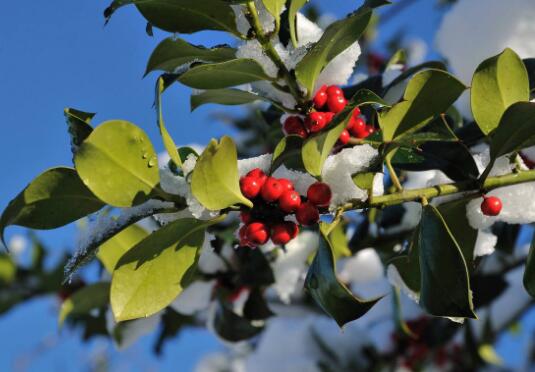
To know how to grow holly, we first need to understand its growth habits. It is a subtropical plant that prefers a warm climate and also has a certain degree of cold tolerance. As long as it is not grown in overly cold climates, there is generally no problem. However, its daily water and fertilizer management is a point we need to pay attention to when cultivating it. For details, everyone can refer to the text below.
II. Cultivation methods and precautions for holly
1. Soil: slightly acidic
This plant, holly, does not have very high soil requirements. It can also grow in ordinary soil, but if you want it to grow better, it is best to choose loose, fertile, slightly acidic humus soil. This kind of soil has good drainage and aeration, and sufficient nutrients, allowing holly to grow vigorously.
2. Temperature: -10°C-30°C
Holly is a plant with relatively low environmental requirements. It has a certain degree of cold tolerance, and as long as the environmental temperature is between -10°C-30°C, it can grow. Although it is relatively cold-tolerant, it is not tolerant of high temperatures, so when growing it in summer, we must pay attention to environmental ventilation and also frequently spray water to cool it down, so as not to affect its growth.
3. Fertilization: topdress 1-2 times during the growing season
During the growth process of holly, its demand for fertilizer is not very high, and it does not need overly frequent fertilization. When planting it, applying an appropriate amount of base fertilizer into its substrate is enough for it to pass through the seedling stage. After that, when its peak growth seasons arrive in spring and autumn, topdressing once or twice is enough. In terms of fertilizer, we can choose thin liquid fertilizer mainly based on nitrogen fertilizer.
4. Water: once every 15 days
Although holly absorbs water relatively well, it is also afraid of waterlogging, so when cultivating it, we do not need to water too frequently. Generally, when the climate is suitable, watering once every 15 days is enough. When watering, be careful to water thoroughly each time, and then control the watering frequency according to climate changes. When the climate is hot, the watering frequency can be increased, while in cold weather it should be reduced.
5. Sunlight: avoid strong light
Holly is a light-loving plant, but it is not tolerant of strong light. In spring and autumn, when the sunlight is not too strong, we can place it outdoors to receive all-day sunlight. After entering summer, because the light is stronger, we need to move it indoors to a semi-shaded place for cultivation, so as not to sunburn the plant and cause dry, yellowing leaves.
6. Pruning: flat pruning or shaping
This plant, holly, sprouts multiple times every year, so when cultivating it, we should prune it regularly. When pruning, we can perform flat pruning or prune it into spherical or conical shapes according to different needs. This can make the plant look more ornamental, and proper thinning of branches can also promote branching.
7. Pests and diseases: handle promptly
In the process of cultivating holly, if we are not careful enough, pests and diseases can easily take advantage of the situation. Such problems are extremely harmful to the plant, and when discovered, we must deal with them promptly, because the longer it drags on, the greater the harm to the plant. The editor has described the specific treatment methods in detail in the article on pest and disease control for holly, and friends who are interested can take a look.
What are the cultivation methods and precautions for Black Prince?
Black Prince, also known by the alias succulent Black Prince, is a perennial succulent herbaceous plant belonging to the genus Echeveria in the Crassulaceae family. Black Prince has a very neat and orderly leaf rosette, as well as a very special leaf color, which makes its ornamental value very high and also very eye-catching. Its propagation and cultivation are relatively simple and easy, and it is a plant suitable for growing as a household potted plant. Below, let us take a look at what the cultivation methods and precautions for Black Prince are.
[Morphological characteristics of Black Prince]
Black Prince is a perennial succulent herbaceous plant. Its plant has a short stem, and the fleshy leaves are arranged in a very neat rosette shape. When Black Prince is growing very luxuriantly, the diameter of its leaf rosette can reach 20 cm, and the number of leaves on a single plant can reach more than a hundred. The leaf shape is spoon-shaped and looks rather thick and fleshy, with a small point at the tip, and the leaf color is blackish-purple. Its inflorescence is cymose, and the small flowers have red and purplish-red colors, giving a noble feeling. Moreover, it is a succulent plant with flowers and leaves, very suitable for home cultivation and viewing.
[Propagation methods of Black Prince]
Black Prince very much likes to grow in a cool, dry environment, and also needs sufficient light, growing in sandy soil with very good drainage. Black Prince is a plant that is very easy to propagate. It can use multiple propagation methods such as cutting the top to encourage sprouting of tiller buds and leaf cuttings, and the survival rate of each propagation method is very high. During the growing season, you can use your hands to break off relatively mature, healthy, intact leaves that have not been damaged by people for cuttings. Place them slightly tilted or flat on leaf vermiculite sand and soil, and keep the soil moist. This is beneficial to the growth of the plant's roots, and new buds will soon grow.
Wait until new buds grow and several new leaves have developed, then they can be planted into new plants. Another method is to take cuttings from young plants beside a long-grown plant. Before cutting, the cut surface needs to be dried, and then the lower stem part is buried in sandy soil, with the rest the same as leaf cuttings. It needs to be cut in loose, fertile sandy soil, which is more conducive to robust root growth.
[What are the cultivation methods and precautions for Black Prince]
1. Soil: Black Prince needs to be planted in loose, fertile, well-drained and well-aerated sandy soil. This is more conducive to draining excess water from the roots, so that the roots can grow better. Sand, garden soil, and leaf mold can be mixed together for cultivation, and then after 1-2 years of growth, repot once, trim off the necrotic old roots, and reduce nutrient loss.
2. Light: When Black Prince grows in an environment with sufficient light and a relatively large temperature difference between day and night, the leaf color will become increasingly black and glossy, thus having very good ornamental value. When the temperature is similar, Black Prince can be placed outdoors for cultivation, and sufficient light needs to be maintained. Under insufficient light and with relatively moist soil, the plant will become leggy. Its whole plant will be light green and dark green, the leaves will be relatively sparse and the spacing will be elongated, thus accelerating the plant's growth and seriously affecting Black Prince's ornamental quality. If light is seriously insufficient, the plant's growth will be hindered and it will die.
3. Watering: Black Prince itself contains a very high amount of water, and growing it in an overly humid environment will cause root rot. When watering, be sure not to pour in too much water, and avoid water accumulating at the roots. The pot used needs to have drainage holes made in the bottom in advance, or a red ceramic pot with relatively good aeration can be chosen for planting.
4. Fertilizer: Black Prince is not particularly strict about fertilizer requirements, and the amount of fertilizer applied should not be too much, especially the application of nitrogen fertilizer, otherwise it will cause the plant to become leggy and the leaf color will not be black. Apply fertilizer once a month, mainly phosphorus fertilizer and potassium fertilizer.
5. Temperature: Black Prince will stop growing or suffer frostbite below 5°C, and below 0°C the cells in the leaves will freeze and die. In summer, when the temperature is above 35°C, it will also stop growing. At this time, watering should be stopped, and watering should resume after the temperature recovers. When the summer temperature is relatively high, pay attention to ventilation to prevent prolonged exposure to the sun from sunburning the plant.
6. Pruning: When pruning Black Prince, dry and old leaves should be removed, otherwise bacteria will breed and cause a series of pests and diseases. When encountering leggy growth, the top branches and leaves should be shaped to control the plant's height and maintain a beautiful plant shape. If carrying out cuttings, be sure to let the cut dry before inserting it into moist sandy soil. This is more conducive to rooting and allows the lower stem and branches and leaves to sprout more side buds.
More related information: tree peony planting techniques snapdragon flower language hairy holly pictures Boston ivy pictures what plants protect against computer radiation
Serissa bonsai making video_Serissa cultivation methods and precautions
Serissa is also known as snowbush, slender-leaf wintergreen, white horse bone, and so on. It is an evergreen small shrub in the Rubiaceae family. Its height is generally 90 cm, and it has a very strong unpleasant odor. Serissa's leaves are leathery, the petioles are very short, and the flowers grow singly or in multiples at the top of small branches or in the leaf axils. The corolla is pale red or white, and the style is relatively prominent. The flowering period is generally from May to July, and it has very good ornamental value. Below, let us learn about the Serissa bonsai making video, as well as Serissa's cultivation methods and precautions.
[Serissa bonsai making video]
Serissa bonsai shapes are very elegant and beautiful. In particular, the leaf edges of golden-edged Serissa among Serissa varieties are yellow, as if inlaid with rings of golden edges. It and the white Serissa flowers blooming in summer set each other off, and it has very good ornamental value. Serissa's plant is very short, and the tree shape is also very beautiful. In the hot summer, it blooms full of small white flowers, giving people a feeling of whiteness like snow, just like its name. Serissa can be propagated at home as a decoration to beautify the home, bringing people a sense of enjoyment of beauty, and there will be a feeling of cool air, just like the feeling of forgetting the summer heat in June.
[Growth habits of Serissa]
Serissa's flowers are relatively small white flowers, the tree shape is very small, and the branches and leaves are also loose. It likes to grow in places with relatively light shade and is afraid of direct strong light. Wild Serissa generally grows in deep mountains in environments with relatively dense trees. It is generally propagated in spring, and cuttings can be taken during the plum rain season. Light tea can be used. Serissa is not particularly strict about temperature requirements. It is generally evergreen in South China, and semi-evergreen in Southwest China. Its drought tolerance is very strong, and its requirements for soil are not particularly strict. If choosing potted Serissa, slightly acidic soil that is loose, fertile, relatively well-aerated, and rich in humus is relatively suitable, and it is very conducive to Serissa's growth.
[Serissa cultivation methods and precautions]
1. Transplanting: The best time is in February-March, and the plum rain season and late autumn are also good seasons. For the transplanting pot, it is best to choose a purple clay pot or glazed pot, and the color of the pot should be relatively dark, so that when the flowers bloom, they form a sharp contrast with the pot soil. For the pot soil, sandy soil is best, and loose, fertile organic matter soil should be chosen, and it also needs good drainage and ventilation. Generally, humus, peat, pine needle soil, and rice husk are mixed together for cultivation, and some base fertilizer is also added into it. This is more conducive to the plant's vigorous growth.
2. Light: Serissa is a plant that likes to grow in an environment with sufficient sunlight, warmth, humidity, and ventilation. In summer, appropriate shading treatment should be carried out, and it cannot be grown under strong light. In winter, it should be placed indoors for cultivation, and a certain temperature also needs to be maintained. The temperature is best at 5-12°C, which is relatively ideal.
3. Watering: When cultivating Serissa, the pot soil should be kept moist, neither too dry nor too wet, maintaining an appropriate amount of water. In winter, the amount of watering should be reduced, and in summer, more water can be sprayed on the leaves, generally 1-2 times.
4. Fertilization: The best time for Serissa is April-May. Generally, phosphorus fertilizer, potassium fertilizer, liquid fertilizer, and so on are applied. In winter, fertilization can also be carried out once more, and thin organic fertilizer can be applied into it. Concentrated fertilizer must not be applied, otherwise it will harm the plant.
5. Repotting: Generally, Serissa is repotted once every other year. This can make the soil looser, and the plant will grow relatively quickly. When repotting, the old soil can be removed, and the roots should be properly pruned. This can effectively improve the ornamental value.
6. Pruning: Pruning Serissa is generally carried out in winter. Long and short plants should be pruned, and relatively dense plants should be pruned. Relatively messy branches and leaves should be removed, thereby improving the ornamental value. When encountering branches and leaves harmed by pests and diseases, they should be pruned promptly to avoid infection. Treatments such as removing branches, pinching, and bud removal should be carried out to keep the plant's shape beautiful.
7. Pest and disease prevention: Serissa encounters relatively few pests and diseases during growth. The common one is aphids, which can be treated by spraying diluted essential balm. Diseases that appear include root rot, which can be treated with root rot remedy or copper abietate emulsifiable concentrate. Generally, spray once a week, and it can heal after three consecutive times.
[Precautions for cultivating Serissa]
Serissa's vitality is very tenacious, but it also needs a certain amount of protection. Avoid cultivating it at low temperatures below 7°C. It must be placed indoors for planting, and humidity should be maintained, otherwise the plant will turn yellow and then the leaves will fall off. Watering should be appropriate. Do not give too much or too little water. In hot or dry climates, the leaves will slowly turn yellow, thereby reducing Serissa's ornamental value.
More related information: what to do if clivia has stuck arrows how to grow orchids how to grow mimosa flower language of black tulip watercress pictures