How do you water Chinese evergreen (Aglaonema)? Watering once a week is enough
Water is the source of life, so when growing Chinese evergreen (Aglaonema), watering is an indispensable part. However, Chinese evergreen has fleshy roots, so it is very afraid of waterlogging; therefore, you cannot water it too much, otherwise it easily causes root rot. So how do you water Chinese evergreen? How often should Chinese evergreen be watered? On this, the editor will now clear up your doubts.
I. How to water Chinese evergreen, timing/method
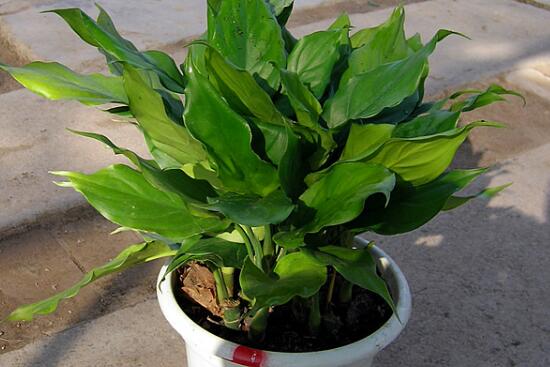
Watering is a skill, and watering Chinese evergreen in particular allows no carelessness. In daily life, not knowing how to water can be said to be one of the important reasons many orchid growers fail to grow Chinese evergreen well. Too much water causes Chinese evergreen leaves to turn yellow, while too little causes poor plant growth. So how to water Chinese evergreen, and mastering the watering method for Chinese evergreen, is crucial.
II. Watering methods for Chinese evergreen
Chinese evergreen likes a moist environment, but it has fleshy roots, so watering should be moderate. In summer, water frequently to keep the potting soil moist; in spring and autumn, do not water too frequently, and water again when the potting soil is almost dry; in winter, watering should be controlled. Now that you know the watering methods for Chinese evergreen, how often should you water, and when should you water? Specifically, let us continue reading below.
(1) How often to water Chinese evergreen
According to the experience of expert gardeners, how often should Chinese evergreen be watered? Generally once a week. Of course, in different regions, the specific watering interval is different; overall, just follow the principle of “do not water until dry.”
(2) How to judge that Chinese evergreen needs watering
After learning the watering methods for Chinese evergreen, flower lovers will still have a question: that is, how to judge that Chinese evergreen needs watering. In different environments, the number of waterings and the amount of water are all different. And this requires us to judge for ourselves. The following are 3 methods for judging whether Chinese evergreen should be watered, with specific operations as follows:
1. Tap the pot: Tap lightly with your finger at the 1/3 point of the flower pot. A relatively crisp sound indicates sufficient moisture in the soil, while a dull sound indicates the pot body is dry, and at this point it needs watering.
2. Weigh by hand: Lift the flower pot and feel its weight. If it feels lighter, then Chinese evergreen should be watered at this point. Of course, this weighing by hand requires frequent practice, otherwise mistakes are easy to make.
3. Probe the soil: Flower lovers can insert a finger into the 1/3 point of the potting soil and feel it. If it is moist, do not water; if it is dry, or even so dry that a finger cannot be inserted, then it is time to water!
Overall, watering Chinese evergreen is not difficult, but the difficulty lies in that many flower lovers are unwilling to learn about it. So in order for Chinese evergreen to grow beautifully, everyone should still keep the above content in mind and strictly follow the cultivation methods for Chinese evergreen when caring for it. Regarding the watering methods for Chinese evergreen, the editor has introduced them here, hoping to bring everyone some help.
How to water Chinese evergreen (how often to water) What to do when Chinese evergreen leaves turn yellow
All people among humanity who can live long lives do so because in daily life they generally pay great attention to their own maintenance, or have a very good mindset in life. So it is not that a person or thing with a good foundation will necessarily live long; more important is the care of one's body and mind in life.
How to water Chinese evergreen
For watering Chinese evergreen, besides keeping the potting soil moist in summer, watering in spring and autumn should not be too frequent, and watering should be controlled in winter. Chinese evergreen has fleshy roots, so it is most afraid of waterlogging; if watered too much, it easily rots the roots. But the air must be kept moist. If the air is dry, undesirable phenomena such as dry leaf tips easily occur. In dry seasons, pay attention to spraying water around the plant to increase air humidity.
How often to water Chinese evergreen
Usually once a week is enough; water when completely dry, and do not water if the soil is not dry. It is afraid of waterlogging. Spraying the leaves with monopotassium phosphate from time to time is better, and the plant will grow better and more vigorously.
What to do when Chinese evergreen leaves turn yellow
1. Prune in time
If the Chinese evergreen plant looks very dense, it is best to prune it. Properly cut off some branches and leaves to let the leaves grow freely, which can make them emerald green and glossy.
2. Choose suitable soil
When Chinese evergreen is growing, slightly acidic sandy soil is best, so that the plant's root system will grow. The flower pot should also preferably be one with strong air permeability, and some tile pieces can be placed at the bottom of the pot.
3. Suitable light and temperature
As for light, indoor cultivation is still best, but it is best to have a place with scattered light, and it should often be placed outdoors for a period of care. However, note that it cannot be placed under strong light, to avoid scorching. As for temperature, mainly in winter, keep the room temperature above 5°C. When moving it outdoors in spring, properly cut off dead leaves.
4. Water and fertilizer management
Water should be sufficient. In relatively dry weather, it is also necessary to spray water on the Chinese evergreen plant in time. When fertilizing, some nitrogen fertilizer can be applied during the budding period to make the leaves grow well. After that, phosphorus and potassium fertilizer should be the main focus to prevent the plant from growing leggy.
5. Clean the leaves in time
To prevent Chinese evergreen leaves from turning yellow due to pollution, the leaf surface can be cleaned frequently.
Key care points for hydroponic Chinese evergreen
To make hydroponic Chinese evergreen grow vigorously, you can make your own nutrient solution for care.
Chinese evergreen growing in nutrient solution continuously consumes oxygen in the water. As the plant grows, the oxygen in the water gradually decreases, and when it decreases to a certain amount, it will have adverse effects on the plant. Therefore, whether hydroponic plants can succeed depends most critically on changing the nutrient solution.
Because the oxygen content in the nutrient solution is inversely proportional to the temperature (that is, the higher the air and water temperature, the lower the oxygen content in the water; the lower the air and water temperature, the higher the oxygen content in the water), and because Chinese evergreen has different oxygen needs at different times, the interval for changing the nutrient solution varies by season.
In spring and autumn, Chinese evergreen grows relatively vigorously and needs to consume more oxygen, but the oxygen content in the water is also relatively high, so change the nutrient solution once every 7 to 10 d; in winter, the plant is in a dormant or very slow growth state, consumes little oxygen, and the water contains sufficient oxygen, so the water-changing interval is longer, generally changing the nutrient solution about once every 15 days; in summer at high temperatures, Chinese evergreen respires strongly and needs to consume a large amount of oxygen, while at the same time the oxygen content in the water is very low. In addition, at high temperatures microorganisms reproduce very rapidly, which easily deteriorates water quality. To ensure the normal growth of Chinese evergreen, water changing must be strengthened, and generally the nutrient solution needs to be changed once every 4 to 5 d.
Along with evaporation, add water on ordinary days back to the original height. The water used for hydroponic Chinese evergreen should be pollution-free and slightly acidic. If tap water is used, it must be drawn in advance and left in the air for more than one day to fully dissolve oxygen and release chlorine. When changing the nutrient solution, wash away the mucus on the roots and cut off rotten roots and scorched leaves.
Although Guangdong longevity grass is itself very long-lived, if it encounters a very irresponsible owner who leaves it uncared for, we believe it also cannot truly live long. Therefore, some important factors and links in the plant cultivation process must be mastered well, and one should be a person responsible both to oneself and to the things around them.
How to water Chinese evergreen
Chinese evergreen's water requirements
Chinese evergreen likes moisture and is not drought-tolerant. Also, because its root system is fleshy, excessive waterlogging can cause root rot, so it is not waterlogging-tolerant either. Overall, it has relatively high water requirements, so water supplementation is an extremely important part. Generally speaking, during its peak growing seasons, such as spring and autumn, maintain sufficient water supply and pay attention to the dryness and wetness of the surrounding soil. In summer, because evaporation is too high, water supply must also be guaranteed, with regular watering once or twice a day. In addition, the humidity of the surrounding space can be increased by sprinkling water, misting, and other methods. In winter, it is best to control water and keep it slightly dry, to avoid root rot or leaf drop caused by overly wet potting soil.
Several points to note
The water temperature should preferably remain basically consistent with room temperature, so that it will not damage the roots.
No matter which season you water in, it is better to let the soil be slightly moist than to let it become too dry.
When watering during the growing season, to promote plant development, some nutrient solution can be properly mixed into the water.
The season that most deserves special attention is summer. Besides regular watering and spraying water on the leaf surface, you can also sprinkle water on the ground, or mist the surrounding environment, to maintain the humidity level in the air.
When watering, control the speed; it should not be too fast. Pour slowly, and only when the water slowly flows into the soil and then flows out from the bottom of the pot is it considered thoroughly watered.
Besides watering, another factor related to moisture is rainwater. You should know that Chinese evergreen should not be drenched by heavy rain when it is blooming, so place it in a spot that will not be hit by heavy rain.