Can Chinese Evergreen be grown in water? 4 tips for successful hydroponic growing
As a currently very popular foliage plant, Chinese Evergreen (Aglaonema modestum) has broad leaves and stays evergreen all year round, and is kept in many homes. However, when growing it indoors, many plant lovers prefer water culture, believing it looks better that way. So, can Chinese Evergreen be grown in water? If so, how do you grow Chinese Evergreen hydroponically? On this point, let us give you a detailed introduction.
1. Can Chinese Evergreen be grown in water? Yes
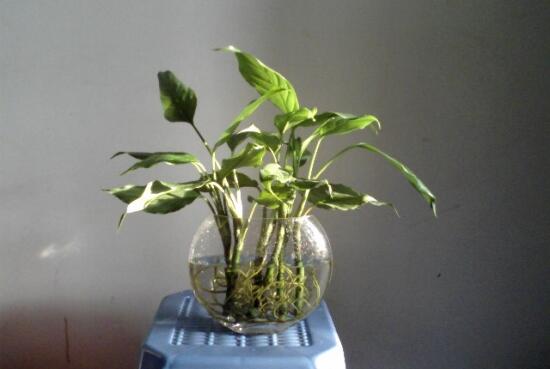
According to the growth habits of Chinese Evergreen, we know it likes warm, humid and semi-shaded environments, can be stored and transported at 90% relative humidity, and its leaves can survive on their own when placed in water. Therefore, can Chinese Evergreen be grown in water? Clearly it can. As for how to grow Chinese Evergreen hydroponically, let us continue reading below.
2. How to grow Chinese Evergreen hydroponically
How to grow Chinese Evergreen hydroponically is, plainly speaking, the water-cutting method: on a healthy Chinese Evergreen plant, select a healthy branch free of pests and diseases, and insert it into water. However, before hydroponic growing, plant lovers must do the preparatory work and gather all materials: one pot of Chinese Evergreen, scissors, a transparent glass bottle, clean water and potassium permanganate.
3. Methods for hydroponic growing of Chinese Evergreen
1. Hydroponic timing
To grow Chinese Evergreen hydroponically, you first need to pick a good time, preferably spring or autumn. This is because Chinese Evergreen likes warm environments; early spring and late autumn do not reach the temperature required for rooting, cuttings are easily infected by microorganisms and rot in the high-temperature summer season, and they are easily frostbitten in winter.
2. Selection of hydroponic seedlings
Among the methods for hydroponic growing of Chinese Evergreen, the most important step is choosing the hydroponic seedling. Method: on a healthy Chinese Evergreen, use sterilized scissors to cut a strong branch about 1 cm in diameter, taking care to keep the aerial roots on the stem nodes.
Treatment of hydroponic seedlings: after the branch is selected, disinfect the cut with potassium permanganate, then place it in a cool place to dry.
3. Starting the hydroponic growing
After the above preparations are done, insert the treated hydroponic seedling into the prepared transparent glass bottle, and add an appropriate amount of water, deep enough to reach about 2/3 of the container. Keep the room at about 25°C and maintain relatively high air humidity; roots will form after 20 days.
4. Hydroponic care
① Changing the water
During the rooting period of hydroponic Chinese Evergreen, respiration is relatively vigorous, so sufficient oxygen is needed. For this reason, plant lovers should change the water frequently to keep the water clean and meet the cuttings' oxygen needs.
Note: when changing the water, rinse the cuttings and the container clean, especially strengthening the rinsing of the cut; once roots have formed, you can switch to normal hydroponic care.
② Light/humidity
After hydroponic growing of Chinese Evergreen succeeds, you should place the plant under bright indirect light; if the light is too strong, Chinese Evergreen's leaves turn yellow, and in severe cases may even be scorched over a large area. In addition, you should often spray water on the leaves to maintain 80% environmental humidity; if water is not sprayed for a long time, the leaf surface becomes rough and loses its luster.
Hydroponic care techniques for Chinese Evergreen
1. Methods for obtaining hydroponic material1. Root-washing method: it can be done in all four seasons, but the best times are spring and autumn, because the temperature is suitable then and Chinese Evergreen grows relatively vigorously; potted plants adapt easily to hydroponic conditions after their roots are washed. The specific steps are
① Select a robust, well-formed Chinese Evergreen grown in soil (or another substrate) that already has ornamental value.
② Take the plant out of the pot and remove the soil around the roots
③ Rinse the soil off in water, cut away some old roots; to prevent root rot in the early hydroponic stage and promote new root growth, you can soak and disinfect with 0.5% potassium permanganate.
④ Place the treated Chinese Evergreen plant into the prepared container, pour in tap water that covers 2/3 to 1/2 of the root system, and grow new roots.
2. Water-cutting method: generally done in spring and autumn, because late autumn and early spring do not reach the temperature required for rooting, and cuttings are easily infected by microorganisms and rot in the high-temperature summer season. Of course, with heating and cooling conditions, Chinese Evergreen can be water-cut in all four seasons. When water-cutting, take a thick, strong branch, keep the aerial roots on the stem nodes, cut it into small sections about 10 cm long, disinfect the cut with potassium permanganate (you may dip it in rooting powder), dry the sap flowing from the wound, then insert it into plain sand or water; keep relatively high air humidity at about 25°C, and in 20 days it will root and sprout to form a plant material suitable for hydroponic growing. During the healing and rooting period of water cuttings, respiration is relatively vigorous, so a sufficient oxygen supply is essential; therefore, at the start of water cutting, change the water frequently to keep the water clean and meet the cuttings' oxygen needs. When changing the water, rinse the cuttings and the vessel clean with fresh water, especially strengthening the rinsing of the cut; once roots have formed, you can switch to normal hydroponic care.
3. Division method: division is usually carried out when growth begins in spring; spring division reduces damage to the plant and allows the divided plants to recover normal growth relatively quickly. When dividing Chinese Evergreen, first take the plant out of the pot, shake off most of the potting soil, untangle the tangled root system, expose the tiller shoots and roots, then according to the desired size use a sharp knife to divide it from the stem of the mother plant into several clumps; disinfect the wounds (coat with plant ash or sulfur), rinse, and then carry out hydroponic care.
2. Key points of hydroponic care
1. Changing the water: Chinese Evergreen growing in water constantly consumes the oxygen in the water. As the plant grows, the oxygen in the water gradually decreases, and when it drops to a certain amount it will have adverse effects on the plant, so the most critical measure for successful hydroponic growing is changing the water. Because the oxygen content in water is inversely proportional to the air temperature (that is, the higher the air and water temperature, the lower the oxygen content in the water; the lower the air and water temperature, the higher the oxygen content in the water), and because Chinese Evergreen needs different amounts of oxygen at different times, the water-changing interval varies with the season;
In spring and autumn, Chinese Evergreen grows relatively vigorously and needs to consume more oxygen, but the water also contains more oxygen, so change the water once every 7 to 10 days; in winter, the plant is dormant or growing very slowly, consumes little oxygen, and the water contains sufficient oxygen, so the water-changing interval is longer, generally changing the water once about every 15 days; in the high temperatures of summer, Chinese Evergreen respires strongly and needs to consume a large amount of oxygen, while at the same time the water contains very little oxygen; in addition, at high temperatures microorganisms reproduce very quickly, which easily deteriorates water quality. To ensure the normal growth of Chinese Evergreen, water changes must be increased, generally once every 4 to 5 days.
The water used for hydroponic Chinese Evergreen must be pollution-free and slightly acidic; if using tap water, draw it in advance and leave it in the air for more than a day to fully dissolve oxygen and release chlorine. When changing the water, wash off the slime on the roots and cut away rotten roots and scorched leaves.
2. Fertilizing: the nutrients in tap water are insufficient for the healthy growth of hydroponic Chinese Evergreen; for water-grown Chinese Evergreen, use a special foliage-plant formula nutrient solution and apply it according to the instructions; in the vigorous spring and autumn growing seasons, add the nutrient solution more often, and in summer's high temperatures and winter's low temperatures, when growth is slow or stalled, reduce the frequency of application.
When growing in a solid substrate, do not add too much nutrient solution; it is best to cover 1/3 to 1/2 of the root system in the container, and top up with water on ordinary days to maintain the water level. Never apply chemical fertilizers such as urea directly into the water-growing container, because urea is a synthetic organic fertilizer; hydroponic plants not only cannot directly absorb the needed nutrients from urea, but some harmful bacteria or other microorganisms can obtain an effective carbon source from urea and multiply rapidly, causing contamination; moreover, urea can also cause ammonia poisoning or harm from excess ammonium ions, poisoning the water-grown Chinese Evergreen.
3. Ventilation: the oxygen content in water is an important factor in whether hydroponic Chinese Evergreen grows well or poorly, and the oxygen content in water is also related to indoor human activity and ventilation conditions. When a room is poorly ventilated and people are frequently active, the oxygen content in the water decreases quickly, thereby affecting the growth of Chinese Evergreen, especially noticeably during high temperatures; therefore, for rooms with hydroponic Chinese Evergreen, you should usually open doors and windows more for ventilation, to regulate room temperature and keep indoor air fresh.
4. Pest and disease control: hydroponic Chinese Evergreen rarely suffers from pests and diseases; in summer, avoid direct strong light to prevent sunscald, and in winter, avoid insufficient light to prevent yellow leaves. Hydroponic Chinese Evergreen rarely develops anthracnose, which causes soft rot and cracking; when it occurs, it can be controlled with a 65% zineb 600 to 800 times solution or a 75% chlorothalonil 800 times solution.
What are the hydroponic care methods for Chinese Evergreen
A few days ago a friend asked me what the hydroponic care methods for Chinese Evergreen are. He said the Chinese Evergreen he was growing showed all kinds of problems, and he was very worried, not knowing how to grow Chinese Evergreen hydroponically. Below, let us introduce what the hydroponic care methods for Chinese Evergreen are.
What are the hydroponic care methods for Chinese Evergreen
1. Changing the water: Chinese Evergreen growing in water constantly consumes the oxygen in the water. As the plant grows, the oxygen in the water gradually decreases, and when it drops to a certain amount it will have adverse effects on the plant, so the most critical measure for successful hydroponic growing is changing the water. Because the oxygen content in water is inversely proportional to the air temperature (that is, the higher the air and water temperature, the lower the oxygen content in the water; the lower the air and water temperature, the higher the oxygen content in the water), and because Chinese Evergreen needs different amounts of oxygen at different times, the water-changing interval varies with the season;
In spring and autumn, Chinese Evergreen grows relatively vigorously and needs to consume more oxygen, but the water also contains more oxygen, so change the water once every 7 to 10 days; in winter, the plant is dormant or growing very slowly, consumes little oxygen, and the water contains sufficient oxygen, so the water-changing interval is longer, generally changing the water once about every 15 days; in the high temperatures of summer, Chinese Evergreen respires strongly and needs to consume a large amount of oxygen, while at the same time the water contains very little oxygen; in addition, at high temperatures microorganisms reproduce very quickly, which easily deteriorates water quality. To ensure the normal growth of Chinese Evergreen, water changes must be increased, generally once every 4 to 5 days.
The water used for hydroponic Chinese Evergreen must be pollution-free and slightly acidic; if using tap water, draw it in advance and leave it in the air for more than a day to fully dissolve oxygen and release chlorine. When changing the water, wash off the slime on the roots and cut away rotten roots and scorched leaves.
2. Fertilizing: the nutrients in tap water are insufficient for the healthy growth of hydroponic Chinese Evergreen; for water-grown Chinese Evergreen, use a special foliage-plant formula nutrient solution and apply it according to the instructions; in the vigorous spring and autumn growing seasons, add the nutrient solution more often, and in summer's high temperatures and winter's low temperatures, when growth is slow or stalled, reduce the frequency of application.
When growing in a solid substrate, do not add too much nutrient solution; it is best to cover 1/3 to 1/2 of the root system in the container, and top up with water on ordinary days to maintain the water level. Never apply chemical fertilizers such as urea directly into the water-growing container, because urea is a synthetic organic fertilizer; hydroponic plants not only cannot directly absorb the needed nutrients from urea, but some harmful bacteria or other microorganisms can obtain an effective carbon source from urea and multiply rapidly, causing contamination; moreover, urea can also cause ammonia poisoning or harm from excess ammonium ions, poisoning the water-grown Chinese Evergreen.
3. Ventilation: the oxygen content in water is an important factor in whether hydroponic Chinese Evergreen grows well or poorly, and the oxygen content in water is also related to indoor human activity and ventilation conditions. When a room is poorly ventilated and people are frequently active, the oxygen content in the water decreases quickly, thereby affecting the growth of Chinese Evergreen, especially noticeably during high temperatures; therefore, for rooms with hydroponic Chinese Evergreen, you should usually open doors and windows more for ventilation, to regulate room temperature and keep indoor air fresh.
4. Pest and disease control: hydroponic Chinese Evergreen rarely suffers from pests and diseases; in summer, avoid direct strong light to prevent sunscald, and in winter, avoid insufficient light to prevent yellow leaves. Hydroponic Chinese Evergreen rarely develops anthracnose, which causes soft rot and cracking; when it occurs, it can be controlled with a 65% zineb 600 to 800 times solution or a 75% chlorothalonil 800 times solution.
That is the introduction to what the hydroponic care methods for Chinese Evergreen are. If you want hydroponic Chinese Evergreen to grow vigorously, you also need to understand its growth habits. We hope this article offers some help to those growing Chinese Evergreen hydroponically.