How to water and fertilize Forsythia? Control the amount of watering, fertilize frequently with dilute fertilizer
Forsythia is a flowering plant with high ornamental value, and it can be seen in many regions of China, and this plant can be grown either in pots or planted over large areas. However, to grow it well, there are many things we need to pay attention to, among which daily water and fertilizer management is the most important. How do you water Forsythia? How do you fertilize Forsythia? Let the editor take you through it below.
I. How to water Forsythia
1. Control watering frequency
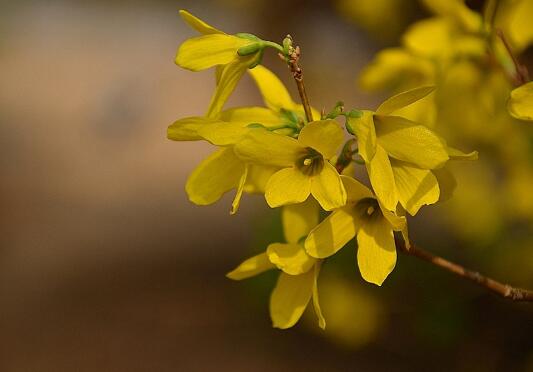
Forsythia has different water needs at different stages. When it has just been planted, you must water it thoroughly; this is the settling water. For the second watering, wait three to five days; for the third watering, wait about 10 days; after that, the interval between waterings can gradually begin to be extended.
2. Control the amount of watering
Forsythia is a relatively drought-tolerant plant, so we do not need to water it too much. Water a little less each time, just enough to keep its soil slightly moist. If we cannot determine the amount of water, we can touch it lightly with our hand; as long as it can clump together or is not particularly dry, that is fine.
3. Precautions
When growing Forsythia, remember to control the amount of watering, because this plant is quite afraid of waterlogging. If water accumulates, it can easily cause its roots to rot. Especially on rainy days, water accumulation is quite likely in the potting soil, so we must be sure to drain it promptly.
II. How to fertilize Forsythia
1. Fertilizing in spring and autumn
Spring and autumn are the peak growing seasons for Forsythia. In these two seasons, its demand for fertilizer is very high. Generally, every 15-20 days we need to apply a liquid fertilizer or compound fertilizer once, which can promote the growth of the plant and also promote the formation and growth of flower buds.
2. Fertilizing in winter
Although the temperature in winter is relatively low and the plant's growth is relatively slow, we can still appropriately apply some fertilizer to Forsythia. Generally, we can choose to use some thoroughly decomposed cake fertilizer, applying it together with weeding and loosening the soil, which can also better help it overwinter.
3. Precautions
Many people wonder why we did not mention how to fertilize in summer. That is because the temperature in summer is very high, and it is not suitable to fertilize Forsythia. Also, when fertilizing Forsythia in the other three seasons, we need to pay attention to one more thing: the fertilizer must be diluted first before application, because if the concentration is too high, it can easily burn the plant.
Forsythia Forsythia suspensa Forsythia illustrated guide: how to grow Forsythia / how to propagate Forsythia
Forsythia profileForsythia Forsythia suspensa
Forsythia growing methods and precautions Introduction to Forsythia
Forsythia is also known as Huanghua Tiao, Lian Ke, Qing Qiao, Luo Qiao, Huang Qi Dan, etc., and its fruit is used as medicine. Forsythia is a traditional Chinese medicine for clearing heat and detoxifying, mainly treating the early stage of febrile disease, wind-heat common cold, fever, restlessness, sore and swollen throat, acute nephritis, etc. Forsythia blooms before the leaves in early spring; the flowers have a light, vivid fragrance, and the branches are full of golden yellow, gorgeous and lovely. It is an excellent early-spring flowering shrub.
Forsythia is one of the traditional Chinese medicines commonly used in clinical practice in China. It is also known as Huanghua Tiao, Lian Ke, Qing Qiao, Luo Qiao, Huang Qi Dan, etc. The Forsythia recorded in Part One of the 2005 edition of the Pharmacopoeia of the People's Republic of China is the dried fruit of the plant Forsythia suspensa (Thunb.) Vahl of the genus Forsythia in the family Oleaceae. When the fruit is first ripe and still green, it is harvested and called Qing Qiao; when the fruit is fully ripe and turns yellow, it is harvested and called Lao Qiao.
Forsythia has pharmacological effects such as antibacterial, cardiotonic, diuretic and antiemetic effects. It is commonly used to treat acute wind-heat common cold, carbuncles, swellings, sores and toxins, lymph node tuberculosis, urinary tract infections and other conditions. It is the main raw material of traditional Chinese medicine preparations such as Shuanghuanglian Oral Liquid, Shuanghuanglian Powder Injection, Qingre Jiedu Oral Liquid, Liancao Jiere Oral Liquid, and Yinqiao Jiedu Granules.
There are 11 major varieties worldwide, most originating from China, some from Korea and Japan, and only one from southern Europe. Its name forsythia was given in honor of the Scottish botanist William Forsyth.
Most of the Chinese varieties used as herbal medicine are the dried fruit of the Oleaceae plant Forsythia suspensa (Thunb.) Vahl. In mainland China, it is distributed in Hebei, Shanxi, Shaanxi, Gansu, Ningxia, Shandong, Jiangsu, Henan, Jiangxi, Hubei, Sichuan, Yunnan and other provinces and regions. In autumn, when the fruit is first ripe and still green, it is harvested, impurities are removed, it is steamed and sun-dried, and is commonly called "Qing Qiao"; when the fruit is fully ripe, it is harvested, sun-dried, and impurities are removed, and is commonly called "Lao Qiao". It is the city flower of Seoul, the capital of South Korea.
Morphological characteristics of Forsythia
Deciduous shrub, up to 3 m tall; branches slender and spreading in an arching shape, internodes hollow, nodes with a spot, lenticels numerous and conspicuous. Leaves simple or sometimes trifoliolate, opposite, leaf blade ovate or ovate-elliptic, 3-10 cm long, margin serrate. Flowers solitary or several born in leaf axils; calyx green, 4-lobed, lobes oblong; corolla yellow, lobes 4, obovate-elliptic, stamens 2, stamens longer or shorter than pistil; opens before leaves in March-April.
The fruit of Forsythia is long ovate or ovate, 1-2.5 cm long, 0.5-1.3 cm in diameter, surface yellow-brown, with longitudinal wrinkles and many raised small spots, with 1 obvious longitudinal groove on each side. Apex acute, base occasionally with a fruit stalk. Pericarp hard and brittle, cross-section flat. Qing Qiao fruit is complete, surface green-brown, mostly without verrucose protrusions, with many seeds inside, yellow-green, slender, winged on one side. Qing Qiao is best when dry, dark green in color and not split open; Lao Qiao is best when brown-yellow in color, thick-shelled and glossy. Medicinal part: the fruit of the plant.
Ecological habits of Forsythia
Forsythia has strong sprouting ability. After coppicing, both the root stumps and the trunk and branches can reproduce and sprout, rapidly increasing the number of ramets and expanding the range of distribution. The annual growth of Forsythia branches is not strong, and replacement is relatively fast. As the tree age increases, the growth of sprouting branches and the short branches produced on sprouting branches decreases year by year, and the short branches change from oblique growth to horizontal growth. According to surveys, in 8-12 year old plants, the annual short branches on 4-year-old sprouting branches are the most numerous, and then gradually decrease. The clump height and branch spread of Forsythia do not change much across different age stages. Forsythia branches are replaced quickly. After sprouting branches produce new branches, they gradually bend and slant outward, so although the plant continuously produces new short branches, its height basically remains at one level.
Light-loving, with a certain degree of shade tolerance; cold-resistant; tolerant of drought and poor soil, afraid of waterlogging; not selective about soil; strong resistance to diseases and insect pests.
Pest and disease control of Forsythia
The willow goat moth harms Forsythia. The larvae damage the branches, boring the surface layer of the xylem into ring-shaped sunken tunnels, causing the affected branches to grow weakly and be easily broken by wind; when the damage is severe, the branches die. The adult is 33-36 mm long, with a wingspan of 61-72 mm. Body color varies greatly, mostly tea-brown; just after emergence it is green-brown, gradually becoming pinkish brown, then tea-brown. The forewing costa has 7 semi-annular markings, the center of the wing has 1 large dark brown triangular patch with a slightly dark green tinge, and the outer margin has a broad transverse band composed of parallel blurred arc-shaped markings. The hindwing is dark brown. The dorsal side of the male's hind femur is densely covered with orange-yellow brush-like hairs. Egg spherical, 0.6-0.7 mm in diameter, black. Larva 50-80 mm long, head brown, body milky white, cylindrical, covered with yellow-brown tumor-like protrusions resembling hair patches. Pupa cylindrical, yellow-brown. [2] When snails are found in mid-March, they can be caught manually or killed by contact with lime powder. In mid-May, use ultraviolet lamps to trap and kill the adults of the stem borer. In early to mid-June, manually wipe off the eggs laid by the stem borer. In early to mid-July, if frass of the stem borer is found on the stems, use a cotton ball dipped in 50% phoxim or 40% dimethoate stock solution.
Efficacy and effects of Forsythia
Properties: bitter, slightly cold. Enters the lung, heart and gallbladder meridians. Forsythia has broad-spectrum antibacterial effects, with strong inhibitory effects on Staphylococcus aureus and Shigella flexneri, and certain inhibitory effects on other pathogenic bacteria, influenza virus and fungi. It has anti-inflammatory effects. The oleanolic acid contained in this product has cardiotonic, diuretic and blood pressure-lowering effects, and vitamin P can reduce vascular permeability and fragility and prevent hemolysis. The decoction has antiemetic and anti-liver-injury effects. Clears heat and detoxifies, reduces swelling and dissipates masses, and disperses wind-heat. Mainly treats carbuncles, swellings, sores and toxins, phlegm nodes and scrofula, externally contracted wind-heat, the early stage of warm disease, painful strangury with heat, etc.
Forsythia has pharmacological effects such as antibacterial, cardiotonic, diuretic and antiemetic effects. It is a traditional Chinese medicine for clearing heat and detoxifying, mainly treating the early stage of febrile disease, wind-heat common cold, fever, restlessness, sore and swollen throat, acute nephritis, carbuncles, swellings, sores and toxins and other symptoms. Its antibacterial effect is broadly similar to that of honeysuckle.
1. Landscape greening: Forsythia blooms before the leaves in early spring; the flowers have a light, vivid fragrance, and the branches are full of golden yellow, gorgeous and lovely. It is an excellent early-spring flowering shrub. It is suitable for placement beside houses, at pavilion steps, in wall corners, under hedges and along roadsides, and is also suitable for planting by streams, beside ponds, under rocks and below rockeries. Because of its well-developed root system, it can be planted as a flowering hedge or a bank-protecting tree.
2. Medicinal plant: stems, leaves, fruits and roots can all be used as medicine.
3. Dietary nutrition: the seeds of Forsythia can be used to extract edible oil.
4. Beauty and skincare: the flowers and unripe fruits of Forsythia, after collection, are boiled in water for 20 minutes. Washing the face with this water every morning or before bed has good sterilizing, mite-killing and skin-nourishing effects. With long-term consistent use, it can eliminate melasma and butterfly spots on the face and reduce acne and wrinkles.
Distribution areas of Forsythia
The flowering period of Forsythia is March-May, and the fruiting period is July-August. Forsythia is distributed in Shanxi, Henan, Shaanxi, Liaoning, Hebei, Gansu, Jiangsu, Shandong, Hubei, Jiangxi, Yunnan and other places. It grows on wild mountain slopes; it is also cultivated. Forsythia is mainly produced in Shanxi, Henan, Shaanxi and Shandong; Hubei, Sichuan, Gansu and Hebei also produce it. The output is largest in Shanxi and Henan. Huang Qiao is sold nationwide and exported, while Qing Qiao is mainly sold in Sichuan, Zhejiang, Shanghai, Beijing, Tianjin and other places. It likes a sunny and moist environment; it is not strict about soil. In March-April, sow seeds in drills, opening furrows at a row spacing of 33 cm, about 4 cm deep, with a sowing width of about 10 cm, and cover with soil after sowing. Thin seedlings when the seedlings are 10 cm tall, and transplant and establish them the following spring or late autumn, with a row spacing of 2 m x 1.5 m and 1 plant per hole. Loosen the soil, weed and fertilize every spring; after adult trees drop their leaves in late autumn, prune and trim them to encourage new branch regeneration. You can also select 1-2 year old tender branches, cut them into cuttings about 33 cm long, and insert them in spring and summer at a row spacing of 33 cm x 17 cm, cultivate them for 2 years, then transplant in spring.
Dietary or medicinal value of Forsythia
The medical information and health dietary information on Hugarden are for reference only and cannot be used as a basis for diagnosis or medical treatment. Any health issues should be consulted with professional medical personnel, and the treatment of any disease should follow a doctor's advice.
Ultimate flower-care mission: love yourself, and start from reality and strictly follow a doctor's advice. Toward illness, do not be careless, do not delay, do not give up hope; face it bravely, warm the silent world with love, and care for the flower field in your heart with care.
[Chinese medicine name]: Forsythia
[Mongolian medicine name]: Xiri-Sulongga
[English name]: Weeping Forsythia
[Scientific name]: Forsythia suspensa (Thunb.) vahl.
[Aliases]: Da Qiao, Da Qiao Zi (from "Tang Materia Medica"), Kong Ke (from "Chinese Materia Medica Records"), Yi Chuan Jin, Han Lian Zi (from "On Medicinal Properties"), Huang Qi Dan, Lian Ke, Huang Hua Tiao, Huang Hua Gan, Huang Hua Ban, Luo Qiao, Huang Shou Dai, Huang Shou Dan, Huang Jin Tiao, Huang Lian Tiao Hua, Gan Cao, Qing Qiao, Luo Qiao, Lian Cao, Yi Qiao (from "Erya"), Lan Hua (from "Shennong Bencao Jing").
[Medicinal part]: the fruit of the Oleaceae plant Forsythia is used as medicine.
[Collection and processing]: In autumn, harvest when the fruit is still green, remove impurities, steam and sun-dry (Qing Qiao); harvest when the fruit is fully ripe, remove impurities and sun-dry (Lao Qiao); collect the seeds (Forsythia core).
[Nature, flavor and functions]: Traditional Chinese medicine: bitter in flavor, slightly cold in nature. Clears heat and detoxifies, dissipates masses and reduces swelling. Mongolian medicine: bitter in flavor, cool in nature. Clears "Xiri", stops diarrhea.
[Main indications]: Traditional Chinese medicine treats the early stage of febrile disease, wind-heat common cold, fever, restlessness, sore and swollen throat, macules, erysipelas, scrofula, carbuncles, sores and swellings, acute nephritis, and heat strangury. Mongolian medicine treats jaundice, intestinal stabbing pain, "Xiri" disease, and intestinal heat.
[Dosage and usage]: Traditional Chinese medicine 6-9 g, decocted in water, or made into pills and powders. Mongolian medicine is made into pills, powders and decoctions.
[Precautions for use]: use with caution in those whose carbuncles and sores have already ulcerated.
Efficacy introduction
[Chinese name]: Forsythia ("Shennong Bencao Jing")
[Category]: fruit category Forsythia
[Synonyms]: Han Lian Zi ("On Medicinal Properties"), Da Qiao Zi ("Tang Materia Medica"), Kong Ke ("Chinese Materia Medica Records").
[Source]: the fruit of the Oleaceae plant Forsythia.
[Collection]: harvested when the fruit is first ripe or fully ripe.
After the first-ripe fruit is picked, it is steamed and sun-dried; it is still greenish, and the commercial product is called Qing Qiao; the fully ripe fruit, after being picked, is sun-dried, and the seeds and impurities are removed.
It is called Lao Qiao; its seeds are called Forsythia core.
[Medicinal material]: the dried fruit is long ovate, 1.5-2 cm long, 0.6-1 cm in diameter.
Apex acute, base with a small stalk, or it has already fallen off.
The surface has irregular longitudinal wrinkles and many raised small spots, with 1 obvious longitudinal groove on each side.
Qing Qiao is mostly unsplit, green-brown, with fewer raised gray-white small spots on the surface, and many seeds, slender, winged on one side, yellow-green.
Lao Qiao splits from the tip or splits into two valves, the surface is yellow-brown or red-brown, the inner surface is mostly light yellow-brown, the seeds are brown and mostly have already fallen off.
Slight aroma, bitter taste.
Qing Qiao is best when green in color and free of twigs and stalks; Lao Qiao is best when yellow in color, thick-shelled, seedless and pure.
Mainly produced in Shanxi, Henan, Shaanxi and Shandong.
In addition, Hubei, Hebei, Sichuan and Gansu also produce it.
[Chemical components]: the fruit contains forsythol, sterol compounds, saponins (non-hemolytic) and flavonol glycosides, matairesinol glycosides, etc.
The pericarp contains oleanolic acid. Qing Forsythia contains 4.89% saponins and 0.2% alkaloids.
[Pharmacological effects]:
Antibacterial effect: concentrated Forsythia decoction has antibacterial effects in vitro, and can inhibit Salmonella typhi, Salmonella paratyphi, Escherichia coli, Shigella, Corynebacterium diphtheriae, Vibrio cholerae, Staphylococcus, Streptococcus, etc.
The in vitro antibacterial effect of Forsythia is broadly similar to that of honeysuckle; it is the main antibacterial component in Yinqiao Powder.
Honeysuckle appears to have a stronger inhibitory effect than Forsythia on Salmonella, especially Salmonella typhi and hemolytic Streptococcus, while Forsythia appears better at inhibiting Shigella and Staphylococcus aureus.
When the two are used in combination, there is no synergistic effect in test tubes. It is said that a compound formula composed with Coptis chinensis and Scutellaria baicalensis has a stronger in vitro antibacterial effect than Forsythia used alone.
There is not much research on the effective antibacterial components in Forsythia. The inhibitory concentration of forsythol against Staphylococcus aureus in test tubes is 1:5120; against Shigella it is 1:1280; against Corynebacterium diphtheriae and Salmonella paratyphi (A) it is 1:640. It may be the effective antibacterial component.
The flowers have a certain therapeutic effect on experimental tuberculosis in mice, but are ineffective in guinea pigs.
In addition, its anti-tuberculosis bacillus effects in test tubes and in clinical practice have also been reported.
The alcohol extract of Forsythia has anti-Leptospira effects in vitro; its strength is less than that of Coptis chinensis, Salvia plebeia or honeysuckle and Scutellaria baicalensis, but similar to that of Phellodendron amurense and Paris polyphylla.
Forsythia water infusion (1:5) has some inhibitory effect on Nocardia asteroides in test tubes.
The ethanol and acetone extracts of the fruit of Korean Forsythia and the resin extracted from F. intermedia have antifungal effects.
(2) Other effects: Forsythia can inhibit the emetic effect of digitalis injected intravenously in pigeons and reduce the number of vomitings, but does not change the latency of vomiting. Its antiemetic effect is similar to the effect of injected chlorpromazine two hours later.
It can also inhibit vomiting caused by subcutaneous injection of apomorphine in dogs, so it is speculated that its antiemetic mechanism may be inhibition of the chemoreceptor trigger zone in the medulla oblongata.
The pericarp of Forsythia contains oleanolic acid (also known as oleanolic acid), so it has cardiotonic and diuretic effects.
Forsythia has a very broad antibacterial spectrum and obvious anti-inflammatory effects. It can promote the formation of an inflammatory barrier, reduce capillary permeability, reduce inflammatory exudation, and eliminate local redness and swelling caused by acne. It has a certain inhibitory effect on sebaceous gland secretion, reduces excessive skin oiliness, and has the effect of improving skin quality for oily skin. Forsythia can protect normal skin and reduce the occurrence of acne and folliculitis. [8]
[Processing]: remove impurities, rub open, and remove twigs and stalks.
[Nature and flavor]: bitter, slightly cold.
(1) "Shennong Bencao Jing": bitter in flavor, neutral.
(2) "Bielu": non-toxic.
(3) "Yixue Qiyuan": "Zhuzhi Mijue" says, cool in nature, bitter in flavor.
(4) "Gangmu": slightly bitter and pungent.
[Meridian entry]: enters the heart, lung and small intestine meridians.
(1) "Tangye Bencao": hand and foot Shaoyang and Yangming meridians.
(2) "Gangmu": Shaoyin heart meridian, Jueyin pericardium qi level.
(3) "Leigong Paozhi Yaoxing Jie": enters the heart, liver, gallbladder, stomach, triple burner and large intestine, six meridians.
[Functions and indications - efficacy of Forsythia]: clears heat and detoxifies, reduces swelling and dissipates masses, disperses wind-heat, and is known as the "sage medicine for sores".
Treats warm heat, erysipelas, macules, carbuncles, sores and swellings, scrofula, painful urinary strangury, and clears heart fire.
(1) "Shennong Bencao Jing": mainly treats cold and heat, scrofula, scrofula, carbuncles, malignant sores, goiter and tumors, and accumulated heat.
(2) "Bielu": removes pinworms.
(3) "On Medicinal Properties": mainly promotes the free flow of the five stranguries, treats urinary obstruction, and eliminates guest heat in the heart.
(4) "Rihua Zi Bencao": frees the small intestine, discharges pus.
Treats sores and boils, relieves pain, and promotes menstruation.
(5) Li Gao: disperses blood accumulations and qi gatherings in the various meridians; reduces swelling.
(6) Wang Haogu: treats deafness with a confused, ringing sensation.
[Usage and dosage]: oral administration: decocted in water, 15-25 g; or made into pills and powders. External use: decocted in water for washing.
[Indications and contraindications]: contraindicated in those with weak spleen and stomach, fever due to qi deficiency, and those whose carbuncles and sores have already ulcerated with thin, pale pus.
(1) "Bencao Jingshu": do not take if carbuncles and sores have already ulcerated; do not take if high fever is due to deficiency; do not take if the spleen and stomach are weak and prone to diarrhea.
(2) "Bencao Tongxuan": long-term use may cause middle-jiao cold disorders.
[Selected formulas]:
(1) To treat Taiyin wind-warmth, warm heat, warm epidemic and winter warmth, with fever but no aversion to cold and thirst at the initial stage: Forsythia 50 g, honeysuckle 50 g, bitter Platycodon grandiflorus 30 g, mint 30 g, bamboo leaves 20 g, raw licorice 25 g, Schizonepeta spike 20 g, fermented soybean 25 g, Arctium lappa fruit 30 g.
Grind the above into a powder. Take 30 g each time, decoct with fresh reed rhizome soup. When the aroma is strong, take it immediately; do not overcook.
For severe cases, take about once every two hours, three times during the day and once at night; for mild cases, take once every three hours, three times during the day and once at night; if the illness does not resolve, take another course.
("Wenbing Tiaobian" Yinqiao Powder)
(2) To treat all kinds of heat in children: Forsythia, Saposhnikovia divaricata, prepared licorice, and Gardenia jasminoides in equal parts.
Grind the above into powder. Take 10 grams per dose with one medium cup of water, decoct until reduced by seven tenths, remove the dregs and take warm. (Lianqiao Yin from Leizheng Huoren Shu)
③ To treat erysipelas with migrating red patches: Lianqiao (Forsythia suspensa) alone, decoct in water and drink. (Yuqiao Yiling)
④ To treat acute mastitis and breast nodules: Lianqiao (Forsythia suspensa), dried rat droppings, dandelion, and Fritillaria cirrhosa 10 grams each. Decoct in water and take. (Yuqiao Yiling)
⑤ To treat scrofula and tuberous nodules that do not resolve: Lianqiao (Forsythia suspensa), Euonymus alatus, Dianthus superbus, and honey-fried licorice in equal parts.
Grind the above into a fine powder. Take 10 grams per dose, mixed with rice washing water at bedtime. (Lianqiao San from Yangshi Jiacang Fang)
⑥ To treat tongue ulcers and sores: Lianqiao (Forsythia suspensa) 25 grams, Phellodendron amurense 15 grams, licorice 10 grams. Decoct in water and use as a gargle. (Yuqiao Yiling)
[Clinical Application]:
① Treatment of acute nephritis: Take Lianqiao (Forsythia suspensa) 30 grams, add water and decoct over gentle heat until reduced to 150 milliliters, divide into 3 doses and take before meals; reduce the dose for children.
Continue for 5 to 10 days as the condition requires; avoid spicy foods and salt.
All 8 patients had edema before treatment, with blood pressure between 140 and 200/96 and 110 millimeters of mercury, and urine tests showed protein, granular casts, and red and white blood cells.
After treatment, edema completely subsided in 6 cases and markedly improved in 2 cases; blood pressure dropped significantly; urine tests turned negative in 6 cases and improved in 2 cases.
② Treatment of purpura: Take Lianqiao (Forsythia suspensa) 6 qian, add water and decoct over gentle heat into 150 milliliters, divide into 3 doses and take before meals; avoid spicy foods.
One case of thrombocytopenic hemorrhagic purpura and 2 cases of allergic purpura were treated.
After 2 to 7 days of treatment, the skin purpura completely subsided.
The effect of Lianqiao (Forsythia suspensa) on this disease may be related to its large content of rutin, which helps maintain normal capillary resistance and reduce capillary fragility and permeability; in addition, Lianqiao (Forsythia suspensa) also seems to have a desensitizing effect.
③ Treatment of lung abscess: Lianqiao (Forsythia suspensa) is made into an injection containing 1 gram of Lianqiao (Forsythia suspensa) per milliliter.
Intratracheal instillation was used in combination with intramuscular injection.
Intratracheal instillation generally uses 6 to 10 milliliters once daily; after symptoms improve, once every other day; when tending toward atrophy or closure, twice a week.
Of 25 cases treated, 14 were cured, 10 improved, and 1 died; according to statistics from 18 cases, fever subsided after an average of 12 days of treatment, with an average of 26.8 intratracheal instillations, and a maximum of 50.
④ Treatment of retinal hemorrhage: Take Lianqiao (Forsythia suspensa) 30 to 35 grams, decoct over gentle heat in water, divide into 3 doses and take before meals. In 2 cases of hemorrhage in the macular area of the retina, after 20 to 27 days of medication, the hemorrhage was significantly absorbed and visual acuity improved somewhat.
[Characters]: This product is oblong-ovate to ovate, slightly flattened, 1.5 to 2.5 cm long, 0.5 to 1.3 cm in diameter. The surface has irregular longitudinal wrinkles and numerous raised small spots, with 1 distinct longitudinal groove on each side. The apex is pointed, and the base has a small fruit stalk or the stalk has fallen off. "Qingqiao" (green forsythia) mostly does not split open, the surface is greenish-brown, with fewer raised grayish-white small spots; hard in texture; seeds numerous, yellow-green, slender, with a wing on one side. "Laoqiao" (old forsythia) splits open from the apex or splits into two valves, the surface is yellow-brown or red-brown, the inner surface is mostly light yellow-brown, smooth, with one longitudinal septum; brittle in texture; seeds brown, mostly fallen off. Slight fragrant odor, bitter taste.
[Nature, Flavor and Meridians Entered]: Bitter, slightly cold. Enters the Lung, Heart, and Small Intestine meridians.
[Functions and Indications]: Clears heat and resolves toxin, reduces swelling and dissipates nodules. Used for carbuncles and abscesses, scrofula, acute mastitis, erysipelas, wind-heat common cold, the early stage of warm diseases, warm-heat entering the nutrient level, high fever with thirst, delirium and skin eruptions, and heat strangury with urinary retention.
The medicinal part of Lianqiao (Forsythia suspensa) is mainly the fruit. Its fruit shell, namely the "qiao" in "Qinqiao Jiedu Wan", contains forsythol, coumarin, oleanolic acid, saponins, vitamin P, and so on. It has effects such as clearing heat, resolving toxin, dissipating nodules, and discharging pus. It mainly treats warm-heat diseases, sores and ulcers, scrofula, erysipelas, skin eruptions, and influenza. The fruit is used 10 to 15 grams, decocted in water, or added to prescriptions. It is often used for wind-heat common cold. [9]
[Source]: In China, the medicinal material is the dried fruit of the Oleaceae plant Forsythia suspensa (Thunb.) Vahl.
Cultivation Techniques of Lianqiao (Forsythia suspensa)
It can be propagated by cuttings, sowing, or division. Cuttings are taken from February to March. For sowing, seeds are collected in October in autumn, stratified in moist sand, and sown in drills in February to March of the following year. Seedlings are transplanted during the deciduous period, choosing a sunny, well-drained, fertile soil for planting; each year after flowering, cut off dead branches, weak branches and leaves, and overly dense or old branches, while paying attention to fertilizing around the roots. Not fertilizing is not a big problem either, because if there is too much fertilizer, many flowers will only grow leaves and not flowers, and this plant has very strong vitality and can grow in almost any quality of soil.
Cultivation Techniques
1. Site selection and land preparation
Choose a plot that is sunny, with fertile soil, loose texture, and good drainage, preferably sandy loam. Plow in autumn to a depth of 20 to 25 cm, and apply base fertilizer while preparing the land, applying 2000 to 2500 kilograms of barnyard manure per mu, then harrow fine and level. For direct sowing, use a plant spacing and row spacing of 130 cm x 200 cm, with holes 30 to 40 cm deep and 30 to 40 cm in diameter; for the seedling bed, make flat beds 1 meter wide, with length depending on the terrain.
2. Propagation methods
Mainly seed propagation and cutting propagation for seedlings, and layering and division can also be used.
1. Seed propagation
For direct sowing, in the south in early to mid-March, and in the north in early April, dig a small hole about 3 cm deep in the prepared planting holes, select mature, plump, disease-free seeds, sow 5 to 10 seeds per hole, cover with soil and press lightly so that the seeds and soil are firmly combined. Generally, they flower and bear fruit after 3 to 4 years.
Seedling raising and transplanting: On a leveled and finely harrowed seedling bed, open furrows 1 cm deep at a row spacing of 20 cm, mix the seeds with fine sand and sow evenly into the furrows, cover with soil and press lightly, using 2 kilograms of seeds per mu. For spring sowing, seedlings emerge in about half a month. When the seedlings are 5 cm tall, thin them; when they are 10 cm tall, loosen the soil and weed, and apply 10 kilograms of urea per mu, applying it with irrigation water to promote seedling growth. Transplant in the same autumn or before sprouting in the following spring. Use a plant spacing and row spacing of 120 cm x 150 cm, with holes 30 cm in diameter, apply 5 kilograms of miscellaneous manure, mix well with soil, plant 2 to 3 seedlings, fill soil to half the hole, lift the seedlings slightly so the roots spread out, then cover with soil to fill the hole and firm it. If the soil is dry, water after transplanting, and after the water seeps down, cultivate soil to preserve moisture.
2. Cutting propagation for seedlings
On cloudy and rainy days in summer, cut the middle and upper parts of 1- to 2-year-old tender branches into 30 cm long cuttings, open furrows 20 cm deep in the seedling bed at a plant spacing and row spacing of 5 cm x 30 cm, place them obliquely in the furrows, then cover with soil and press firmly, keep the bed moist, and they can root and survive in the same year, then transplant before sprouting in the following spring.
3. Field management: For seedlings from seed propagation, during the seedling stage, when the seedlings are 20 cm tall, weed, loosen the soil, and thin them. When thinning, keep 2 plants per hole, and water in a timely manner. When the seedlings are 30 to 40 cm tall, apply diluted human and animal urine once to promote growth. When the main trunk is 70 to 80 cm tall, cut off the top shoot to encourage more side branches and cultivate main branches. Thereafter, select and keep 3 to 4 strong branches on the main branches to cultivate into secondary main branches, and let out side branches; through shaping and pruning, form a natural open-center tree shape that is low with a short crown, hollow inside and round outside, ventilated and light-transmitting, with sparse small branches and early fruiting. At any time, cut off slender weak branches, water sprouts, and diseased and pest-infested branches. During the fruiting period, apply farmyard manure and phosphorus and potassium fertilizers to promote early fruit set and ripening.
Pictures of Lianqiao (Forsythia suspensa)
How to grow Lianqiao (Forsythia suspensa), cultivation methods and precautions for Lianqiao (Forsythia suspensa) / avoid waterlogging / avoid strong light
Lianqiao (Forsythia suspensa) is the city flower of Seoul, the capital of South Korea, and has very high ornamental value. Nowadays, many people in various regions of China also grow it, but if you want to grow it well, there are many things to pay attention to. Regarding how to grow Lianqiao (Forsythia suspensa)? What are the cultivation methods and precautions for Lianqiao (Forsythia suspensa)? Below, the editor will take everyone to learn about it.
1. How to grow Lianqiao (Forsythia suspensa), understand its habits
To know how to grow Lianqiao (Forsythia suspensa), we first need to understand its growth habits. This plant prefers light but is not tolerant of strong light, so when the sunlight is relatively strong, it is best to grow it in semi-shade. In addition, daily water and fertilizer management is also of paramount importance for it, and must be done according to requirements. The details are introduced below, so let us take a look.
2. Cultivation methods and precautions for Lianqiao (Forsythia suspensa)
1. Soil, humus soil
Before growing Lianqiao (Forsythia suspensa), we first need to choose soil. Although this plant does not have high requirements for soil, choosing a suitable soil is still very helpful for its growth. Generally, it is best to choose loose, fertile humus soil, which has good drainage and aeration and is less prone to waterlogging.
2. Fertilization, once every 15 to 20 days
Fertilizer is one of the main nutrients in the growth process of Lianqiao (Forsythia suspensa), especially after entering the growth period, when its demand for fertilizer is very high, and it basically needs fertilizing once every 15 to 20 days. However, when fertilizing, there is one point we must pay attention to: the fertilizer must be diluted first before application. If the concentration is too high, it can easily burn the plant.
3. Water, avoid waterlogging
When growing Lianqiao (Forsythia suspensa), the soil cannot be too dry and must maintain a certain humidity, so we need to water frequently. However, pay attention to the amount of watering, and be sure not to cause waterlogging, otherwise root rot can easily occur, and during the rainy season we must also pay attention to drainage.
4. Light, avoid strong light
Lianqiao (Forsythia suspensa) prefers light but is not tolerant of strong light. In spring and autumn, because the light is relatively suitable, we can place it outdoors to receive all-day light, but after entering summer, because the light is stronger, it is best to move it indoors to a semi-shady place to grow, so as to avoid scorching the plant.
5. Pruning, prune regularly
In the process of growing Lianqiao (Forsythia suspensa), we also need to prune it regularly, cutting off some overly dense branches and some dead, diseased, and weak branches. This can help the plant's ventilation and light transmission, and can also promote branching, allowing Lianqiao (Forsythia suspensa) to grow better.
6. Pests and diseases, prevent and control promptly
During the growth of Lianqiao (Forsythia suspensa), if we do not care for it properly, pests and diseases can easily appear. Such problems are very harmful to the plant, so when discovered, we must deal with them promptly, because the longer the delay, the greater the harm to the plant. The specific treatment methods are introduced in detail in the article on pest and disease control of Lianqiao (Forsythia suspensa), and everyone can learn about them.