Forsythia cultivation methods and precautions: avoid waterlogging and strong light
Forsythia is the city flower of Seoul, the capital of South Korea, and has very high ornamental value. Today, many people in various regions of China also grow it, but if you want to grow it well, there are many things to pay attention to. How do you grow forsythia? What are the cultivation methods and precautions for forsythia? Below, the editor will walk you through it.
1. How to grow forsythia: understand its habits
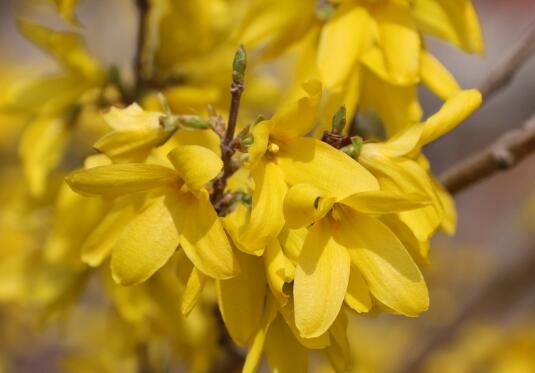
If you want to know how to grow forsythia, you first need to understand its growth habits. This plant is relatively light-loving but not tolerant of strong light, so when the sunlight is relatively intense, it is best to grow it in semi-shade. In addition, daily water and fertilizer management is also of utmost importance for it, and must be done according to requirements. The specific details are introduced below. Let us take a look.
2. Forsythia cultivation methods and precautions
1. Soil: humus soil
Before growing forsythia, we first need to choose the soil. Although this plant does not have high requirements for soil, choosing a suitable soil is still very helpful for its growth. Generally, it is best to choose loose and fertile humus soil. This kind of soil has good drainage and aeration, and is less prone to waterlogging.
2. Fertilizing: once every 15-20 days
Fertilizer is one of the main nutrients in the growth process of forsythia. Especially after entering the growth period, its demand for fertilizer is very high, and it basically needs to be fertilized once every 15-20 days or so. However, when fertilizing, there is one thing we need to pay attention to: the fertilizer must be diluted first before application. If the concentration is too high, it can easily burn the plant.
3. Water: avoid waterlogging
When growing forsythia, the soil must not be too dry and must maintain a certain level of moisture, so we need to water frequently. However, pay attention to the amount of water; be sure not to cause waterlogging, otherwise root rot can easily occur. Also, during the rainy season, we need to pay attention to drainage.
4. Light: avoid strong light
Forsythia is relatively light-loving but not tolerant of strong light. In spring and autumn, because the light is not as intense, we can place it outdoors to receive light all day. However, after summer arrives, because the light is stronger, it is best to move it indoors to a semi-shaded place to grow, so as to avoid scorching the plant.
5. Pruning: prune regularly
In the process of growing forsythia, we also need to prune it regularly, cutting off some overly dense branches as well as dead, diseased, and weak branches. This can help the plant with ventilation and light penetration, and can also promote branching, allowing forsythia to grow better.
6. Pests and diseases: prevent and control promptly
During the growth process of forsythia, if we do not care for it properly, pests and diseases can easily appear. Such problems are very harmful to the plant, so when discovered, we must deal with them promptly, because the longer it is delayed, the greater the harm to the plant. The specific treatment methods are introduced in detail in the article on forsythia pest and disease control. You can take a look.
Duranta repens: Duranta repens illustrated guide: how to grow Duranta repens / how to propagate Duranta repens
Duranta repens profileDuranta repens
Cultivation methods and precautions for Duranta repens: an introduction to Duranta repens
Duranta repens belongs to the Verbenaceae family, genus Duranta. It is native to Mexico, Brazil, and the Indian Ocean islands. It is an evergreen shrub. The branches are long, drooping or prostrate, with opposite leaves in pairs, ovate-elliptic or obovate, with short-pointed or rounded tips, wedge-shaped bases, and serrations above the middle of the margin. The raceme is axillary, arranged into a terminal panicle, usually borne on one side of the rachis, with a blue-purple or white corolla. The drupe is fleshy, ovate, borne in strings enclosed within the calyx, yellow, and glossy. Duranta repens is a flowering and fruiting ornamental plant. It blooms small blue-purple or white flowers all year round, and after autumn the fruit changes color, borne on drooping long branches, very charming. It can be potted to decorate halls, or planted in the ground as a garden hedge or clump, or planted as shrub groups.
Ornamental category: foliage plants.
Morphological characteristics: evergreen trailing shrub, flowers blue-purple, flowering in summer, autumn, and winter, flowering while fruiting, drupe yellow and glossy when mature.
Growth habits: light-loving, tolerant of semi-shade, fond of warm and humid climates, tolerant of pruning.
Landscape uses: hedges, ornamental.
Resource distribution: native to tropical America.
Morphological characteristics of Duranta repens
Duranta repens is an evergreen shrub, with plants 1.5-3 m tall. Branches often droop, with or without thorns, and young branches are hairy. Leaves are opposite, rarely whorled; petiole about 1 cm long, pubescent; leaf blade papery, ovate-elliptic, obovate, or ovate-lanceolate, 2-6.5 cm long, 1.5-3.5 cm wide, base wedge-shaped, margin serrate above the middle, apex short-pointed or obtuse, pubescent. Racemes terminal or axillary, often arranged in panicles; calyx tubular, hairy, about 5 mm long, with 5 ribs, apex 5-lobed, apex twisted when fruiting; corolla blue or pale blue-purple, about 8 mm long, apex 5-lobed, lobes spreading, hairy inside and out; style shorter than the corolla tube, ovary glabrous, drupe spherical, about 5 mm in diameter, red-yellow when mature, glossy, completely enclosed in the enlarged persistent calyx. Flowering and fruiting period May-October.
Evergreen shrub. Stems can reach 6 m long, generally 2-3 m long. Much branched, not upright, semi-climbing, branches with or without thorns. Leaves opposite, margin serrate. Flowering period is long, from mid-April to mid-December, opening successively, with May-September as the main flowering period. Flowers small, salverform, blue-purple, quiet and delicate, deeply loved by people. Fruit round or nearly ovate, apex beaked, fruiting all year round, with June-November as the peak ripening period.
Ecological habits of Duranta repens
It likes warm and humid climates and has relatively low cold resistance. When exposed to long-term low temperatures of 5-6°C or short-term frost, the plant suffers cold damage. In the vast areas from northern South China to Central China and North China, it is only suitable for pot cultivation, overwintering in a greenhouse or indoors for cold protection, with room temperature not lower than 8°C.
It likes light and is also tolerant of semi-shade. It has strong adaptability to soil, and sandy soil, heavy clay soil, acidic soil, or calcareous soil are all suitable. It prefers fertilizer, and grows poorly in barren land. It is tolerant of waterlogging but not of drought.
Whether potted or planted in the ground, it is advisable to apply sufficient base fertilizer, and thereafter apply compound fertilizer 1-2 times each year during the peak growth period. It has strong sprouting ability. According to ornamental requirements, branches can be bent, or in early spring each year, severe pruning can be carried out to facilitate the emergence of new branches that year and avoid a loose and messy crown shape. Old stems can also be cut off to cultivate stump bonsai.
It likes warm, sunny, cool, and ventilated environments. It is slightly shade-tolerant, has poor cold resistance, and the overwintering temperature must be above 5°C. It can grow well in ordinary soil. It has strong sprouting ability, is tolerant of pruning, grows quickly, and the suitable growth temperature is 18-28°C. In warm weather it can bloom all year round.
Cultivation techniques of Duranta repens: site selection and land preparation
For raising forsythia seedlings from seed, it is advisable to choose a wind-sheltered, sunny, well-drained, deep, loose, and fertile sandy loam or loam. Apply 1000 kg of decomposed chicken and sheep manure, 50 kg of superphosphate, and 30 kg of diammonium phosphate per 667 sq m, plow deeply and harrow finely, and make raised beds 100-120 cm wide, 20-30 cm high, and 5-10 m long; for cutting propagation, it is advisable to choose sandy land that is convenient for irrigation and has good permeability; for planting, it is advisable to choose a wind-sheltered, sunny gentle slope.
Cultivation
Mainly by sowing and raising seedlings, but also by cutting propagation.
Seeds can be collected throughout the year. After collection, soak them in water and compost them for about 1 week. When the fruit skin turns black and appears rotten, put them in a basket, rub them in water, and rinse out the seeds. The seed extraction rate of the fruit is about 16%, and the thousand-grain weight of the seeds is about 7.5 grams. After slightly drying, they can be sown. They must not lose water, and cannot be exposed to the sun or stored exposed for a long time. The seeds have no dormancy period and should be sown as soon as collected. The temperature during germination needs to be above 20°C. Generally, they can germinate about 10 days after sowing, with a germination rate of about 50%. Seedlings generally need to be cultivated for 2 years before being suitable for potting or leaving the nursery.
Cuttings are carried out in late spring and early summer. Select 1-2-year-old tender branches, cut them into sections 15 cm long, insert them into a wet sand bed, and they can root after about 1 month. After about 1.5 months, they can be put into the nursery for cultivation, and can leave the nursery the next year or the third year.
For those used for bending branches into shapes, it is advisable to begin when the seedlings are in their second year.
Propagation methods of Duranta repens
Mainly by sowing and raising seedlings, but also by cutting propagation.
Seeds can be collected throughout the year. After collection, soak them in water and compost them for about 1 week. When the fruit skin turns black and appears rotten, put them in a basket, rub them in water, and rinse out the seeds. The seed extraction rate of the fruit is about 16%, and the thousand-grain weight of the seeds is about 7.5 grams. After slightly drying, they can be sown. They must not lose water, and cannot be exposed to the sun or stored exposed for a long time. The seeds have no dormancy period and should be sown as soon as collected. The temperature during germination needs to be above 20°C. Generally, they can germinate about 10 days after sowing, with a germination rate of about 50%. Seedlings generally need to be cultivated for 2 years before being suitable for potting or leaving the nursery.
Cuttings are carried out in late spring and early summer. Select 1-2-year-old tender branches, cut them into sections 15 cm long, insert them into a wet sand bed, and they can root after about 1 month. After about 1.5 months, they can be put into the nursery for cultivation, and can leave the nursery the next year or the third year. For those used for bending branches into shapes, it is advisable to begin when the seedlings are in their second year.
Growing seedlings from seed
After the fruit turns yellow in winter, wash the seeds clean and dry them, then sow. They germinate after 2-3 weeks, and when they have 2 pairs of true leaves, transplant them into flower pots for cultivation.
Select excellent individual plants that grow vigorously, have short and thick internodes, densely and plumply set flowers and fruit, and are free of pests and diseases as mother plants for seed collection; in September-October, pick mature fruit, dry it, thresh it, and store it in sand. That is, dig a storage pit 1.2 m deep and 0.8 m wide (length depends on the amount of seed), fully mix forsythia seeds with wet sand at a ratio of 1:3. The moisture of the sand should be such that it forms a ball when squeezed in the hand and scatter when released, without dripping water.
Then bury 1 layer of soil, 1 layer of sand, and 1 layer of seeds into the pit, and cover with soil slightly higher than the ground; sow in early to mid-March in the south and early April in the north; the sowing rate is about 150 kg/hectare. When sowing, open shallow furrows 4-5 cm deep at a row spacing of 25 cm, evenly scatter the seeds into the furrows, cover with 2 cm of soil, and then press lightly. Seedlings can emerge in about 20 days; after the seedlings emerge completely, loosen the soil, weed, and fertilize in time.
When the seedlings are 5-6 cm tall, start thinning; when the seedlings are 10-15 cm tall, carry out a second thinning. During the seedling stage, frequently loosen the soil and weed, water in time, and keep the soil moist, but forsythia is also afraid of flooding, so open ditches for drainage in time during the rainy season to avoid root rot from waterlogging. During the seedling stage, apply thin fertilizer frequently, each time topdressing 30-75 kg/hectare of urea or 75-100 kg/hectare of ammonium sulfate to promote the growth of stems, leaves, and the plant. Generally cultivate for 2 years, and when the seedlings are over 60 cm tall, they can leave the nursery.
Growing seedlings from cuttings
Both old and tender branches can be used as cuttings. Insert them into sandy soil and maintain humidity at about 80%; they root very easily and have a high survival rate. After rooting, they can be planted in flower pots as single plants or 2-3 plants. Cultivate the young seedlings in the open air. If uneven growth or overly long branches are found, promptly pinch or prune to adjust.
It is advisable to choose a semi-shaded, ventilated, and cool environment. In summer, light should not be too strong, as it easily scorches the leaves. Prune overly dense branches in time and strengthen water and fertilizer management to encourage the plant to bloom more.
After autumn begins, increase light and maintain good plant growth vigor. After the weather turns cool, it needs to be moved into a greenhouse to overwinter. In April, repot and carry out shaping and pruning. During the growing period, sufficient water is required, and from spring to autumn apply liquid fertilizer once every 10-15 days.
In dry seasons, pay attention to watering to keep the air humid. After flowering, proper pruning should be carried out to facilitate re-sprouting and blooming again.
In early summer, cut 1-2-year-old tender branches from excellent mother plants, and cut them into cuttings 20-25 cm long (with 3 nodes). Dip the lower 1/3 of the cuttings in a 500 x 10E-6 rooting powder (ABT) or indolebutyric acid (IBA) solution for 1 min, remove and let them dry slightly, then use an iron rod or small wooden stick to make holes in a previously prepared bed at a spacing of 5 cm x 20 cm, insert 2/3 of the cuttings into the holes, fill and firm the soil, and water. They root and sprout in about 1 month, and can grow into plants 50 cm tall that same year, and be transplanted to the field the following spring.
Propagation by layering
Forsythia has many drooping branches. In spring from March to April, bend the drooping branches of the mother plant into the soil, cut and wound the buried part with a knife and cover it with fine soil. The wounded part can then root and form a seedling. In winter or early the following spring, cut it away from the mother plant, dig up the seedling with roots, and transplant it to the field.
Propagation by division
Forsythia has a well-developed root system and extremely strong sprouting ability. After leaf fall in autumn or before sprouting in early spring, dig up the root suckers around the plant's root zone and transplant and plant them separately.
Disease and pest control of Duranta repens
The common pests and diseases of Duranta repens mainly include aphids, caterpillars, and sunscald. For aphids and caterpillars, biological control is mainly used, combined with pruning in autumn to cut off diseased branches, so as to reduce the occurrence of aphids and caterpillars; a 1000-fold omethoate solution can also be used for foliar spraying. Sunscald is mainly avoided in hot summer by avoiding direct strong light, and proper water spraying and shading are needed.
Duranta repens should be protected against two kinds of insect pests.
(1) Borers
The larvae bore into the pith of the stem's xylem to cause damage. In severe cases, the affected branches cannot bloom or fruit, and even the whole plant dies. Control methods: in winter, clear away dead branches, fallen leaves, and weeds to eliminate overwintering eggs; promptly cut off and burn affected branches; use a 500-fold 40% dimethoate emulsifiable concentrate solution or undiluted 80% dichlorvos on a cotton swab to plug the boreholes and kill the insects.
(2) Snails
They mainly damage flowers and young fruit. Control methods: in the early morning, spread lime powder around the plant for control, or manually capture and kill them.
Distribution area of Duranta repens
It is native to tropical Central and South America, from the West Indies and Mexico to Brazil, and has been introduced and planted in many tropical regions of the world. In the vast areas from northern South China to Central China and North China, it is widely cultivated.
Ecological environment: commonly cultivated or escaped into the wild in southern China.
Resource distribution: native to tropical America. Produced from Mexico to Brazil and the West Indies. Widely cultivated in southern China, mostly potted in the north.
Medicinal or dietary therapy value of Duranta repens
The medical information and health dietary therapy information on Hugarden.com is for reference only and cannot be used as a basis for diagnosis or medical treatment. Any health issues should be consulted with professional medical staff, and the treatment of any disease should follow a doctor's advice.
Ultimate flower-protecting mission: to love yourself, start from reality and strictly follow a doctor's advice. For illness, do not be careless, do not delay, do not give up hope, face it bravely, use love to warm the silent world, and use your heart to care for the flower field within.
Medicinal value
Duranta repens is a commonly used bulk medicinal material in China. In autumn, when the fruit is first ripe and still green, it is harvested, impurities removed, steamed, and sun-dried, and is called "green forsythia." When the fruit is fully ripe, it is harvested, air-dried, and impurities removed, and is commonly called "old forsythia." Forsythia fruit contains forsythol, alcohol compounds, saponins (non-hemolytic) and flavonoid glycosides, lignins, triterpenes, coumarins, etc. Its taste is bitter and its nature is slightly cold. It can dissipate nodules, purge fire, reduce swelling, discharge pus, relieve pain, and promote urination. Modern pharmacology shows that forsythia has antibacterial, antiviral, liver-protecting, anti-inflammatory, and antipyretic effects. It mainly treats carbuncles, scrofula, breast abscess, erysipelas, wind-heat common cold, early stage of warm disease, warm heat entering the nutritive level, high fever with thirst, delirium with macules, heat strangury with urinary retention, and other conditions. The fruit is used as medicine to treat malaria, and the leaves can be pounded and applied to treat painful swelling.
Duranta repens ("Fujian Chinese Herbal Medicine") [Alternative names] Fanzi thorn, fence tree, foreign thorn, flower wall thorn ("Fujian Chinese Herbal Medicine").
[Source] The fruit of the Verbenaceae plant Duranta repens.
[Collection] Can be collected throughout the year.
[Chemical composition] Contains alkaloids, steroids, glucose, and fructose.
[Nature and taste] Sweet and slightly pungent, warm, slightly toxic.
[Functions and indications - effects of Duranta repens] Treats malaria, induces abortion.
[Contraindications] Contraindicated for pregnant women.
[Selected formulas]
1. To treat malaria: 15 to 20 Duranta repens fruits, taken with boiled water two hours before the attack.
2. To treat chest pain from traumatic injury: 5 qian of fresh Duranta repens, pounded, taken with hot wine.
Uses of Duranta repens: ornamental and applications
The racemose infructescence of Duranta repens hangs at the tips of branches, orange-red or golden yellow, glossy, like strings of golden grains, not falling for a long time, extremely gorgeous, and it is an important fruit ornamental plant. It is suitable for planting as hedges, green walls, flower corridors, or climbing on flower trellises, or hanging over stone walls or brick walls, all very beautiful. The branches are soft and tolerant of pruning, and can be curled into many forms for bonsai cultivation, or pruned and cultivated as stump bonsai, with especially good results. The fruit is used as medicine to treat malaria, and the leaves can be pounded and applied to treat painful swelling.
Ornamental value
Duranta repens has a graceful tree form and vigorous growth; in early spring it blooms before leaves emerge, and has a long flowering period and abundant flowers. When in full bloom, the branches are covered in golden yellow and full of fragrance, pleasing to the eye, and it plays an important role in the seasonal changes of early spring. It can be planted as flower hedges, flower clumps, flower borders, and flower beds beside houses, at pavilion steps, wall corners, under hedges, or along roadsides, streamsides, and pond banks. It is widely used in greening, beautifying, and adding fragrance to cities, and is a rare excellent tree species for sightseeing agriculture and modern landscaping.
The racemose infructescence hangs at the tips of branches, orange-red or golden yellow, glossy, like strings of golden grains, not falling for a long time, extremely gorgeous, and it is an important fruit ornamental plant. It is suitable for planting as hedges, green walls, flower corridors, or climbing on flower trellises, or hanging over stone walls or brick walls, all very beautiful. The branches are soft and tolerant of pruning, and can be curled into many forms for bonsai cultivation, or pruned and cultivated as stump bonsai, with especially good results.
Conservation role
Duranta repens has a well-developed root system. Its main roots, lateral roots, and fibrous roots can densely form a network in the soil layer, with strong absorption and water retention capacity; the lateral roots are thick and long, and the fibrous roots are numerous and dense, which can pull and fix the soil and prevent soil blocks from sliding; forsythia has strong sprouting ability, and the canopy coverage increases relatively quickly, which can effectively prevent raindrops from splashing the ground and reduce erosion. It has a good soil and water conservation effect and is an excellent ecological tree species recommended by the state for returning farmland to forest and the best economic plant for controlling soil erosion on the Loess Plateau.
Development and utilization
In today's society that advocates green, environmental protection, and "returning to nature," the development and utilization prospects of forsythia are broad. Forsythia leaf tea has free radical scavenging and antioxidant effects. As a pure natural drug for preventing and treating various diseases caused by reactive oxygen species (such as aging, cardiovascular and cerebrovascular diseases, hyperlipidemia, senile dementia, and even cancer) and a new type of natural food antioxidant, it has a wide range of applications; forsythia has a long flowering period and the flower color does not fade for a long time, making it a resource-rich source of yellow food coloring; forsythia is a very good nectar plant. Placing bees during the flowering period can both increase income and improve the cross-pollination rate, which is beneficial to fruit setting; forsythia seed oil is rich in nutrition and the oil tastes aromatic. Under the current situation of rapid growth in China's vegetable oil consumption, developing forsythia seed oil sources and making full use of China's abundant wild oil resources has important practical significance for improving people's living standards and promoting economic development in mountainous areas.
Landscape uses of Duranta repens: indoor potting
The racemose infructescence of Duranta repens hangs at the tips of branches, orange-red or golden yellow, glossy, like strings of golden grains, not falling for a long time, extremely gorgeous, and it is an important fruit ornamental plant.
Hedges and green sculptures
Duranta repens has fine, soft, spreading branches, elegant blue-purple flowers, and blooms continuously all year round. In autumn the fruit is golden yellow, borne on drooping inflorescences, long like strings of golden beads, charming, and it is an excellent flowering and fruiting ornamental plant. It is suitable for potting, decorating halls and meeting rooms, or as a hanging basket for fruit viewing. It can also be used for group planting in parks and courtyards for ornament, or as flower hedges, or cultivated in color blocks. Its flowers and fruit can both be used as cut flower materials. The fruit can be used medicinally.
Cultural background of Duranta repens: plant toxicity
The mature golden fruit of Duranta repens hangs on the branches, like strings of jewelry, very gorgeous and charming, but this fruit has an abortifacient effect and can induce nasopharyngeal cancer. Landscape experts advise residents not to "keep" this good-looking but toxic plant.
No harm by the roadside, do not plant indoors
In fact, if Duranta repens is planted outdoors, as long as it is not touched, picked, or eaten by mistake, it is basically harmless to people. However, Hu Xiancong, director of the Municipal Landscape Research Institute and senior landscape engineer, also reminds citizens that "if such plants are grown in the home, long-term inhalation of pollen, dust particles, and other reasons may cause cancer." Residents who love growing flowers and plants should not grow cancer-causing plants at home.
Flower language of Duranta repens
The flower language of Duranta repens is evil and witchcraft.
The fruit of Duranta repens is very beautiful, hanging on the branches. When mature, the fruit is orange-red or golden yellow and glossy, just like strings of golden jewelry. The fruit has a long period and does not fall off, very gorgeous and charming, and it is an important fruit ornamental plant in the Lingnan region.
It is especially suitable for planting as hedges, flower corridors, green walls, and other places. It can also hang over stone walls and brick walls in courtyards, all appearing very elegant and beautiful.
The branches are very soft and suitable for making various shapes. It is tolerant of pruning and can be planted as a bonsai plant. However, although the fruit of Duranta repens is very beautiful and charming, its fruit has an abortifacient effect.
It contains substances that can activate the Epstein-Barr virus. Long-term contact may induce nasopharyngeal cancer, so children must stay away from it.
Duranta repens pictures
How to grow Begonia maculata: why do Begonia maculata leaves wither?
Begonia maculata, also known as cane begonia, is a flowering plant in the Begoniaceae family, genus Begonia. It is a perennial subshrub. Because the stems of Begonia maculata are very similar to bamboo nodes, people call it Begonia maculata. Its leaves are green, and when the flowers are in full bloom they are bright red, in drooping clusters, with a very graceful posture and also very gorgeous. It is suitable for growing in warm environments and has very good ornamental value. It generally blooms from April to November each year. Below, let us take a look at how to grow Begonia maculata, and why do Begonia maculata leaves wither?
[Morphological characteristics of Begonia maculata]
Begonia maculata is an upright and spreading subshrub, generally 0.7-1.5 m tall, smooth and glabrous, with many branches. At the stem there are many very obvious bamboo-like shapes. The leaves are simple and alternate, and the petiole is 2-2.5 cm long, cylindrical, purplish-red. The leaf blade is very thick, obliquely oblong or oblong-ovate, 10-20 cm long and 4-5 cm wide, with a heart-shaped base, light-colored wavy dots on the margin, dark green above with many small round white dots, and dark red beneath. Flower colors include pale rose and white. The inflorescence is cymose, axillary and hanging, and the flowers are lanceolate and may fall early. The flowers are upright, the ovary is inferior, and fruit also develops.
[Growth habits of Begonia maculata]
Begonia maculata likes to grow in sunny and humid environments, and its shade tolerance is very good. It is suitable for growing in fertile, loose, and very well-drained soil, and has a certain degree of cold resistance. In winter, it needs to be placed indoors for cultivation. The suitable temperature is 5°C, and it will remain fresh and green as usual. Its growth habit is relatively robust, making it very suitable for cultivation as a household plant, with very good ornamental value. In daily life, it often appears in parks and flower nurseries, suitable as a potted plant. Begonia maculata is native to Brazil.
[Propagation methods of Begonia maculata]
The propagation method often used for Begonia maculata is cutting propagation, and division propagation and water cutting propagation can also be used. For the cutting method, choose relatively robust young branches as the cutting material, cut 10-15 cm sections with 3-4 small nodes, and the lower cut is best made 0.5 cm below the lowest node, generally requiring one day in a cool place. Keep 2-3 leaves so that the moisture of the propagation material is evaporated, then spray water, first place in a cool place for propagation, and transplant after rooting.
[How to Grow Begonia maculata]
Begonia maculata is a shallow-rooted plant that likes to grow in a semi-shaded, semi-cool and relatively humid environment. It is not particularly cold-hardy and dislikes exposure to blazing sun, high temperatures and waterlogged weather. The suitable growing temperature is 15-25°C. Its cold resistance is actually quite strong, but it fears waterlogging, and it likes to grow in loose, fertile soil with good drainage. As a general rule, follow the watering principle of letting the soil dry out between waterings.
1. Fertilizing: Sufficient fertilizer allows Begonia maculata to grow vigorously. It can be applied when the potting soil is relatively dry, and after fertilizing you can reduce watering appropriately so the plant can absorb moisture better. When the stems and leaves are not growing vigorously, do not apply concentrated fertilizer. Generally, during the spring growing season, apply a dilute liquid fertilizer once every half month; in the high-temperature summer season, when the plant is in a dormant state, reduce the amount of fertilizer, and stop fertilizing when the flowers are in full bloom and in winter, as this is more beneficial to the plant's growth.
2. Watering: Begonia maculata is a plant that fears excessive moisture. In summer and during the growing season, keep the potting soil moist, but avoid waterlogging, otherwise it will cause root rot. In the hot summer, not only should you water sufficiently, but you also need to maintain the moisture level of the potting soil, which is more beneficial to flowering.
3. Light: Begonia maculata likes to grow in a relatively shady and warm environment and fears direct sunlight. In spring, autumn and winter, give it sufficient sunlight, and in summer avoid direct sunlight, otherwise the plant will turn yellow and its growth rate will slow down.
4. Pruning: If you want to maintain the ornamental value of Begonia maculata, you need to prune the potted plant appropriately. You should prune the taller plants whose stems have lost their leaves, otherwise it will affect the Begonia maculata plant. Pruning appropriately at the time of Spring Festival is more beneficial to the sprouting of new branches, and the flowers will bloom more brilliantly.
[Why the Leaves of Begonia maculata Wither]
1. High or low temperatures can cause the leaves of Begonia maculata to wither. It likes to grow in a warm and humid environment, and the most suitable growing temperature is 15-18°C. Its cold tolerance is not especially good, and generally below 5°C the leaves will drop. At high temperatures, when the temperature is above 30°C, the plant enters a semi-dormant state, and if it is not carefully tended, the leaves will drop.
2. Growing in direct strong light or in an overly shady environment can cause the leaves of Begonia maculata to wither. Begonia maculata likes to grow under warm, diffused light. In summer, if the light is too strong, the leaves will wither or turn yellow and drop. In conditions of insufficient light, the leaves will also drop, and the plant and flowers will show leggy growth.
3. Being too dry or too wet can both cause the leaves of Begonia maculata to wither. Begonia maculata cannot grow in an overly moist environment, otherwise it will cause root rot, which in turn affects its ability to absorb nutrients and causes the leaves of Begonia maculata to wither. When the temperature is relatively low in winter, control the amount of watering.
More related information: Duranta erecta 'Golden Leaves' pictures Caragana pictures How to plant Rudbeckia hirta Rhododendron pulchrum pictures Caesalpinia pulcherrima pictures