How to grow sage? Cultivation methods and precautions, plenty of sunlight is required
Sage is a flowering plant native to southern Europe and the Mediterranean coast, later introduced to our country, and today many people grow it in our country, but growing it well is not an easy task, and there are many points to pay attention to. About how to grow sage? What are the cultivation methods and precautions for sage? Below, the editor will walk everyone through it.
1. How to grow sage: understand its habits
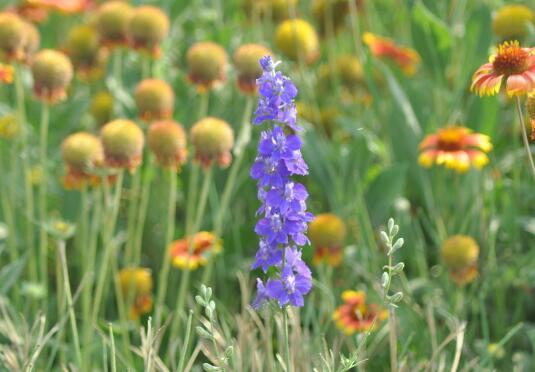
To know how to grow sage, we first need to understand its growth habits. This plant likes an environment with plenty of light and good ventilation, so when growing it we should maintain sufficient light and keep the environment ventilated, so that it can grow more vigorously.
2. Sage cultivation methods and precautions
1. Soil: neutral or slightly alkaline
Before growing sage, we first need to choose the soil; only when it grows in suitable soil will it grow better. Generally, it is best to choose loose, fertile neutral or slightly alkaline soil, so that the soil drains relatively well and the plant can absorb nutrients better.
2. Temperature: 20-25°C
During the growth period of sage, a certain growing temperature must be maintained; the temperature must not be too high or too low. If the temperature is too low, the sage leaves will turn yellow; if the temperature is too high, the sage flowers and leaves will be small, and the plant will grow poorly or even stop growing. Its suitable temperature is between 20-25°C, which we can keep in mind when growing it.
3. Fertilizing: liquid fertilizer once every half month
Fertilizer is one of the main nutrients in the growth process of sage, especially after it enters the growing period, when its demand for fertilizer is very high; basically it needs fertilizing once every half month. For fertilizer choice, we can use ammonium sulfate diluted 1500 times; do not apply urea at low temperatures.
4. Water: avoid waterlogging
During the growth process of sage, watering is an indispensable step, but its water needs differ according to the climate. In dry climates, we should water frequently, while in the corresponding season, we should drain promptly to avoid waterlogging.
5. Light: avoid strong light
Sage relatively likes an environment with plenty of sunlight; only with sufficient light can it grow well. So in spring and autumn, when the light is relatively suitable, we can place it outdoors all day to receive light, but in summer, when the light is stronger, we still need to shade it to prevent strong light from scorching the plant.
6. Pruning: pinching
To let sage grow better, during its growth process we should also prune and pinch it regularly, which can promote new branches. Also, after sage blooms, we should prune its flowering branches, so that it will bloom again in autumn.
7. Pests and diseases: deal with them promptly
When growing sage, if we are not careful enough, pests and diseases can easily take advantage of the situation. Such problems are very harmful to the plant, and when discovered we must deal with them promptly. The specific treatment methods are described in detail in the article on sage pest and disease control, which everyone can look up.
How to distinguish sage from rosemary? Sage cultivation methods and precautions
[Common questions]How to distinguish sage from rosemary? How to grow sage?
[Expert answers]
1. Methods for distinguishing sage from rosemary
1. Differences in family, genus and species:Although sage and rosemary both belong to the phylum Angiosperms and the class Dicotyledons, when further subdivided, the two are quite different. Sage belongs to the genus Salvia, an aromatic plant in the subclass Sympetalae, while rosemary belongs to the genus Rosmarinus, a shrub in the subclass Asteridae.
2. Morphological differences:Sage is shrub-like and relatively short, with oval leaves that are hairy and gray-green or white-green; its verticillasters are purple, pink or white, the flowers have a pungent fragrance, and the flowering period is earlier. Rosemary, on the other hand, is taller, with dark gray stems and hairy young branches; as the young branches grow into old branches, they change from four-angled to cylindrical. Its leaves grow in clusters, with short stalks or no stalks; its flowers are opposite, and its flowering period is later.
Image: Sage
3. Differences in origin:According to the different growth habits of sage and rosemary, their growing regions also differ greatly. In our country, sage is generally distributed along the Yangtze River and in the provinces to the south, except for plateau and basin regions, while rosemary can be planted not only in most parts of the south but also in Shandong, where it is cultivated as an economic crop.
4. Differences in medicinal value:As a medicinal herb, sage's main effects include clearing heat and detoxifying, promoting blood circulation and removing blood stasis, reducing swelling and regulating menstruation, etc. It mainly treats jaundice, dysentery, sores, damp-heat, and traumatic injuries, and is traditionally also used for hospital disinfection. Rosemary's main medicinal function is calming the mind and refreshing the brain, mainly treating insomnia, headache, palpitations, etc.
2. Sage cultivation methods and precautions
1. Pot and soil selection:To grow sage, you can transplant it into a pot when it has grown to a certain extent; generally it is transplanted when the plant has 2——3 leaves. Note that sage likes alkaline soil, and calcareous soil is more suitable, though ordinary garden soil is also acceptable. You can choose loose, breathable soil and mix in some compound fertilizer as a base fertilizer.
2. Light and temperature:Sage likes a warm growing environment and requires sufficient light to grow well. Basically, sage needs to be given sufficient light, but in summer it needs shading, and during the seedling stage sage needs enhanced light to avoid leggy growth. During the growth period of sage, a certain growing temperature must be maintained; it must not be too high or too low. If the temperature is too low, the sage leaves will turn yellow; if the temperature is too high, the sage flowers and leaves will be small, and the plant will grow poorly or even stop growing.
3. Watering and fertilizing:Sage likes a somewhat dry climate, but it must not be too arid. When the sage plant lacks water, it should be watered promptly; of course, in rainy seasons it should be drained promptly to avoid waterlogging. Fertilizing should be reasonable and beneficial to the growth of the sage plant. During the growth period, some thin liquid fertilizer can be applied, and fertilizers rich in growth elements can be applied frequently.
Image: Sage
4. Propagation methods:Sage propagation includes seed propagation, cutting propagation and division propagation, and the operations are relatively simple.
5. Pests and diseases:Common pests and diseases of sage include powdery mildew, stem rot, rust and leaf spot; insect pests are mainly whiteflies, scale insects, aphids and red spiders.
6. Pruning and pinching:Basically, to make sage grow well, it needs frequent pruning and pinching to promote new branches. Also, after sage blooms, the flowering branches can be pruned promptly at the end of August in summer, so that it can bloom again in autumn.
[Editor's conclusion]Sage and rosemary are both aromatic plants from which spices or essential oils can be extracted. They look similar, but in fact there are still many differences. The above not only introduces the methods for distinguishing sage from rosemary, but also introduces sage cultivation methods and precautions. We hope it can be helpful to everyone!
Cultivation methods and precautions for blue sage
Chinese scientific name: Blue sageLatin scientific name: SaiviaofficinalisAlso known as: Common sageKingdom: PlantaePhylum: AngiospermsClass: DicotyledonsSubclass: AsteridaeOrder: LamialesFamily: LamiaceaeSubfamily: LamioideaeTribe: SalvieaeGenus: SalviaSpecies: Blue sageDistribution area: Produced in Zhejiang, southern Anhui, Jiangsu, Jiangxi, Hubei, Fujian, Taiwan, Guangdong, Guangxi.Blue sage (Saiviaofficinalis), also known as common sage, is a perennial plant of the Lamiaceae family, with a well-developed root system and a clustered aboveground part; the stem is nearly woody and relatively short, the leaves are opposite, gray-silver, oval and serrated, with relatively long petioles, densely covered with white down, and feel like velvet; the basal leaves are narrower near the petiole, while the leaves on the stem are longer and more pointed. The flowers, 6-10 in a string, grow in whorls on the inflorescence at the top of the stem and are very beautiful. The seeds are nearly round, with a 1000-grain weight of 4 grams and germination capacity of more than 3 years. The mature plant is 80 cm tall, and 30-50 cm in pots; it blooms blue-purple to pink-purple flowers, is fragrant, and the leaves have a rich fragrance. The flowers can be used to make tea, giving off a fresh scent that can cleanse oils in the body, help circulation, and exert beauty-enhancing effects.1. Morphological characteristics
Blue sage has a well-developed root system and a clustered aboveground part. It is a perennial herbaceous plant, with the base of the stem slightly lignified, plant height 30-90 cm, relatively short, and the whole plant tissue contains volatile oil, with a strong aroma and bitter taste, and a slight astringency. The stem is four-sided, with many branches and hairs. The leaves are opposite, gray-silver, long oval, with a rounded tip, 3-5 cm long, with petioles, entire or with blunt serrations, green, thick in texture, wrinkled on the surface, densely covered with white down, and feel like velvet; the basal leaves are narrower near the petiole, while the leaves on the stem are longer and more pointed. It blooms in August, with about 10 labiate flowers in whorls, opening at the top of the stem or in the leaf axils; the flowers are purple or blue, sometimes white, with a labiate corolla. The flowers, 6-10 in a string, grow in whorls on the inflorescence at the top of the stem and are very beautiful. The seeds are nearly round, with a 1000-grain weight of 4 grams and germination capacity of more than 3 years.2. Growing environment
Blue sage likes a warm, sunny environment, is cold-resistant, and can endure a low temperature of -15°C. It has relatively strong drought tolerance. It likes an environment with slight shade and good ventilation, and can grow in general soil, but prefers well-drained slightly alkaline calcareous soil. It is drought-tolerant but not waterlogging-tolerant, and especially likes soil rich in lime, or sandy, well-drained soil; in extremely cold areas it is cultivated as an annual.3. Distribution
Domestic distribution: Produced in Zhejiang, southern Anhui, Jiangsu, Jiangxi, Hubei, Fujian, Taiwan, Guangdong, Guangxi; grows on hillsides, roadsides, shaded grass clusters, watersides and under forest shade, at an altitude of 220-1100 m.Foreign distribution: Also found in Japan. The type specimen was collected from Japan.