Can Sansevieria trifasciata 'Laurentii' be grown hydroponically? Hydroponic method for Sansevieria trifasciata 'Laurentii' / change the water once every 5 days
Sansevieria is a common household ornamental plant, but in daily life, what we often see is soil-grown Sansevieria, so many people have this doubt: can Sansevieria be grown hydroponically? If it can be grown hydroponically, what are the methods and steps? And how should daily care be carried out? So, in order to answer everyone's many doubts, a detailed summary has been specially compiled, hoping to help everyone understand thoroughly.
I. Can Sansevieria trifasciata 'Laurentii' be grown hydroponically? Yes
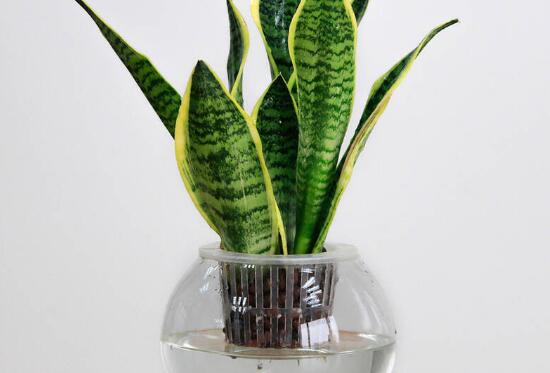
This question is actually very simple, because inserting the leaves of Sansevieria trifasciata 'Laurentii' into water allows them to survive, so it can be grown hydroponically. However, compared with soil culture, although hydroponics looks more refined, it requires more careful attention. As for the hydroponic method and care of Sansevieria trifasciata 'Laurentii', let us continue reading below.
II. Hydroponic method for Sansevieria trifasciata 'Laurentii'
1. Choose the container
To grow Sansevieria trifasciata 'Laurentii' hydroponically, you first naturally need to choose a suitable container. For this, the editor recommends using a transparent glass container, which not only allows it to receive light better, but also enhances the ornamental effect. As for the size of the container, it can be appropriate according to the size of the hydroponic plant.
2. Hydroponic planting
After choosing the container, you need to select hydroponic seedlings. Generally, soil-grown Sansevieria trifasciata 'Laurentii' is converted to hydroponics. Method: take the Sansevieria trifasciata 'Laurentii' out of the pot, then wash the roots. If there are old roots or yellow leaves, they also need to be cut off. This can ensure its perfect shape and also benefit healthy growth. Finally, place the plant into the glass container, add water to submerge part of the roots, and next comes hydroponic care.
III. How to care for hydroponic Sansevieria trifasciata 'Laurentii'
1. Temperature, 5-30°C
The suitable growth temperature for hydroponic plants is 5-30°C, and Sansevieria trifasciata 'Laurentii' is no exception. After successfully growing Sansevieria trifasciata 'Laurentii' hydroponically indoors, there is no need to worry in spring and autumn, but in summer and winter, attention must be paid to regulating the temperature.
2. Light, scattered light
Light is the key to plant growth, so for how to care for hydroponic Sansevieria trifasciata 'Laurentii', it also needs suitable light, but the light should generally be mainly scattered light. Never let it receive direct sunlight.
3. Change water regularly, once every 5-10 days
How to care for hydroponic Sansevieria trifasciata 'Laurentii'? Changing the water regularly is a very important part. Changing the water mainly means replacing the water in the bottle that has nutrient solution added, mainly to ensure the oxygen supply in the water, thereby ensuring the healthy growth of Sansevieria. Generally, in spring and autumn, change the water once every 5-10 days; in summer, change the water about once every 5 days; in winter, change the water once every 10-15 days.
Nutrient solution: buy a nutrient solution specifically for hydroponics on the market and prepare it according to the instructions. When preparing it, let tap water sit for more than two hours, wait until its temperature is close to room temperature and the chlorine in the water has volatilized completely, then add the nutrient solution, and afterward replace the water for the Sansevieria trifasciata 'Laurentii'.
4. Clean the container
How to care for hydroponic Sansevieria trifasciata 'Laurentii'? Finally, there is one more point everyone should note, which is to regularly clean the container. Because during growth, Sansevieria trifasciata 'Laurentii' will develop some root rot, cut off these rotting roots in time and wash the container.
How to grow Sansevieria hydroponically
Choose the container for hydroponic Sansevieria
Choose the pot or container according to the size of the plant to be grown hydroponically, and choose bottles, pots, vats and other containers that match the variety and complement each other. Fleshy charm enhances taste; you can buy or make your own, making the container appropriate and elegant to look at. Try as much as possible to make the container consistent with the room environment, achieving the most ideal ornamental effect.
Take Sansevieria out of the soil and wash the roots
Take the plant out of the pot. About 2-3 days before that, water it appropriately to keep the soil loose and make it easier to remove from the pot.
When converting a plant from soil culture to hydroponics, the organic matter in the soil and attached to the root system must be cleaned off, so as not to affect the normal growth of the flowers and plants and to prevent infection by pests and diseases.
The method for washing the roots is: dig the selected flower plant out of the soil or gently tip it out of the flower pot, shake it gently, tap it slowly, and let the soil around the roots fall off so that all the roots are exposed. Then soak it in clean water for 15-20 minutes, and gently wash the roots by hand. After 2-3 changes of water and washing, until the roots are completely free of soil and the water used for washing the roots is clear and transparent without mud or sand, it is considered washed clean.
However, pay great attention: some flower roots are hard and tangled, with much soil in the gaps. When necessary, use a bamboo skewer, wooden stick, or screwdriver to dig it out. Not a bit of soil may remain. This is one of the important links for successful hydroponics and must not be neglected.
Prune the old roots of Sansevieria
According to the root growth of Sansevieria, appropriately cut off old roots, diseased roots, and old leaves and yellow leaves. Because hydroponics is not only for viewing leaves but also harms roots, in order to ensure the perfect shape of the root system, after pruning, rinse again with clean water to wash away the residual root hairs left by pruning, so as not to bring them into the container and cause water pollution.
Hydroponic Sansevieria
After the plant is prepared, directly put it into the hydroponic container and add water. Do not add too much water; ensure that 2/3 of the roots enter the water.
Care for hydroponic Sansevieria
Temperature and light requirements
The suitable growth temperature for hydroponic Sansevieria is above 5 degrees and below 30 degrees. In other words, at a temperature people find relatively comfortable, Sansevieria will also grow robustly. In addition, hydroponic Sansevieria needs appropriate light; it does not necessarily need to be exposed to the sun, a certain amount of scattered light is enough. In summer, be careful to avoid direct sunlight.
Change water regularly
Changing water means replacing the water in the bottle to which nutrient solution has been added. Generally, in spring and autumn, change the water once every 5-10 days; in summer, change the water about once every 5 days; in winter, change the water once every 10-15 days (after letting tap water sit for half a day, add concentrated nutrient solution in proportion).
Changing the water is to ensure the oxygen supply in the water. Fresh water contains more oxygen, and the plant will grow more healthily. If the water is not changed for a long time, the plant can also hold on for a period, but if the water is not changed for a long time, the water in the bottle is not fresh, and by the time you notice, it has long since died.
Clean the container
Each time you change the water, rinse the plant roots and container with clean water, and prune dead branches, withered leaves and rotten roots. Under normal circumstances, hydroponics will definitely rot part of the roots; just cut off the rotten part.
Moisture retention
In winter, there is very little moisture in the air, especially in the north, where indoors is very dry, which is unfavorable for the growth of Sansevieria. So in daily care, spray the leaf surface with clean water to maintain humidity; you can spray clean water twice a day.
How to grow hydroponic Sansevieria and precautions for hydroponic Sansevieria cultivation
People nowadays increasingly like to grow Sansevieria at home, but soil culture is rather troublesome and easily dirties the indoors, so many people like hydroponic Sansevieria. So how do you grow hydroponic Sansevieria? Today, let us introduce the cultivation methods for hydroponic Sansevieria and the precautions for hydroponic Sansevieria cultivation.
How to grow hydroponic Sansevieria
1. Changing water for hydroponic Sansevieria:
Whether hydroponic Sansevieria succeeds depends most critically on changing the water. First, the respiration carried out by the plant's root system during growth continuously consumes oxygen in the water. The oxygen in the water will gradually decrease with the respiration of Sansevieria. When it decreases to a certain amount, it will affect the growth of Sansevieria (although oxygen in the water will also be supplemented by oxygen from the air, the amount is very small).
Second, the root system produces mucus during growth, and too much mucus will affect water quality. Third, when Sansevieria is grown in water, a certain amount of nutrient solution must be added to the water. Besides the part absorbed by Sansevieria, the rest of the added nutrient elements remain in the water. As the cultivation time lengthens, when the residual substances reach a certain amount, they will also harm Sansevieria, so hydroponic Sansevieria must have its water changed regularly.
2. Temperature for hydroponic Sansevieria:
The amount of dissolved oxygen in water is inversely proportional to the temperature: the higher the air temperature and the higher the water temperature, the less dissolved oxygen in the water; the lower the air temperature and the lower the water temperature, the more dissolved oxygen in the water. Sansevieria's consumption of dissolved oxygen in water is directly proportional to temperature: the higher the air temperature and the higher the water temperature, the more vigorous the plant's respiration and the more dissolved oxygen in the water it consumes; the lower the air temperature and the lower the water temperature, the weaker the plant's respiration and the less dissolved oxygen in the water it consumes. In addition, when the temperature is high, microorganisms reproduce rapidly, easily causing water quality to deteriorate.
Therefore, when the temperature is high, water should be changed frequently; when the temperature is low, the interval between water changes can be longer.
3. Growth of hydroponic Sansevieria:
If the Sansevieria plant grows vigorously and normally, the interval between water changes can be longer. When Sansevieria grows poorly, water should be changed more frequently. Especially at high temperatures or when root rot is caused by overly concentrated fertilizer, besides promptly cutting off the rotten roots, the water must also be changed every day, until the plant resumes normal growth and sprouts new roots, only then can it return to normal care.
Precautions for hydroponic Sansevieria cultivation
Different types of Sansevieria have different degrees of adaptability to hydroponic conditions. Some types of Sansevieria are suitable for hydroponic conditions; after being grown in water, they can sprout new roots from the original root system and continue growing. But for most types of Sansevieria, the root system originally grown in soil or other media cannot adapt in water, and they must wait until new roots that can adapt to hydroponic conditions grow again before they can grow normally. Some types of Sansevieria will even develop a certain amount, or even rather serious, root rot in the early stage of hydroponics. Therefore, for Sansevieria plants that have just had their roots washed and are grown in water, the water should be changed every day to prevent deterioration of water quality and failure of hydroponics. When changing the water, promptly cut off any rotten roots that appear, and wash the plant roots and vessel with clean water, then pour in clean water again. Only after new roots grow can it return to normal care and management.
When growing in water using the basin-washing method, prevent the roots in the water from rotting. When roots rot, it often causes the roots and even all the water to stink. To judge whether the roots are rotten, take the plant out of the water and smell it. If there is a foul odor, it can be certain that root rot has occurred (those without root rot have a fresh fragrance unique to plants). In addition, after hydroponic Sansevieria roots rot, a layer of oily substance often appears floating on the water surface. For many Sansevieria, after the root system rots, there is no obvious difference in appearance and color, so the water should be changed in time.
After being grown in water, new roots sprout after 50 days, while for those with heavily pruned roots, new roots sprout 39 days after being grown in water.
Appropriate pruning of the roots mainly refers to Sansevieria types and plants with well-developed root systems. For Sansevieria types that themselves have relatively little root growth, such as newly cut or divided plants and plants with poor growth vigor and sparse roots, the roots should not be pruned. If the roots are pruned, it will instead affect the plant's absorption of water and nutrients, weaken the plant's growth vigor, and be unfavorable for the sprouting of new roots. For those with fewer roots and no root pruning, new roots sprout 5 days after being grown in water, while for those with heavily pruned roots, new roots sprout only after 47 days, a difference in rooting time of as much as 42 days.