Black leaves on a ginseng ficus mean you need to add light, water moderately, and keep it warm in winter
As a common ornamental plant, the ginseng ficus (Ficus microcarpa) is kept indoors by many people because of its oddly shaped roots and lush foliage. By rights, the ginseng ficus is highly adaptable and very easy to grow. But during cultivation, many plant lovers find their ginseng ficus developing black leaves. So what should you do when the leaves of a ginseng ficus turn black? Today, the editor will solve this problem for you.
1. Find the cause of black leaves on a ginseng ficus
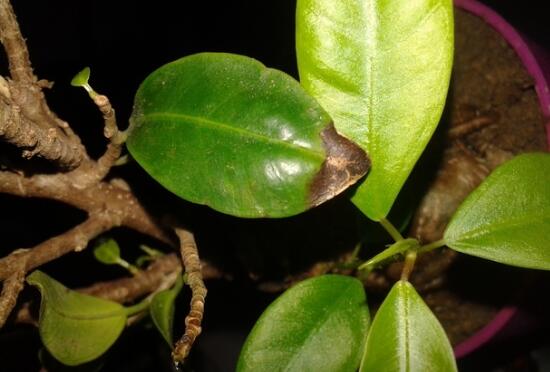
Among the many indoor potted plants, the ginseng ficus is not difficult to grow, but since most growers are beginners, they end up turning the leaves black as they care for it, which seriously affects the plant's ornamental value. As for what to do when the ginseng ficus's leaves turn black and fall off, there are actually many causes. In that case, we need to identify the cause in time and then solve it accordingly. Let's look at the details below.
2. Causes of black leaves on a ginseng ficus and their solutions
1. Improper light
① Insufficient light: The ginseng ficus likes light, and ample light lets it grow more lushly. If you keep it in a dark indoor spot for a long time, its leaves will turn black because of insufficient photosynthesis.
Solution: It is very simple. Move it to a semi-shaded spot indoors and put it in the sun for a moderate amount of sun exposure.
② Too much light: During growth, although the ginseng ficus needs ample light, it dislikes strong light. If it is exposed to direct strong sunlight, its leaves may also turn black.
Solution: Immediately move the ginseng ficus to a semi-shaded spot indoors, then replenish the water. Before long, it will return to health.
2. Overwatering
The ginseng ficus likes a moist environment, and normally we need to water it frequently to keep the potting soil moist. However, you must not water too much, otherwise it will cause waterlogging in the pot, which prevents the plant from absorbing oxygen and also cuts off its nutrient uptake. After a long time, the plant's leaves will certainly turn black.
Solution: For routine watering, you must be scientific and reasonable, and never give too much water at once. If the ginseng ficus's leaves have turned black, first check whether the roots have rotted. If not, put it in a ventilated place so the water drains away quickly; if the roots have already rotted, you also need to cut off the rotten roots, then soak it in disinfectant water before replanting.
3. Temperature too low
The ginseng ficus is not cold-tolerant, so when caring for it in winter you must pay attention to keeping it warm. It is best to move it indoors and keep the indoor temperature above 10°C. Otherwise, once the growing temperature of the ginseng ficus drops below 6°C, it is very prone to cold damage. After being frozen, its leaves are very likely to turn black.
Solution: After discovering that the leaves, or even the branches, have been frostbitten, you need to cut off all the frostbitten parts, then spray them with disinfectant water, and put the plant back in a warm, sunny indoor environment for care. If the roots have also been frostbitten, the plant is basically beyond saving, so do not waste your effort.
4. Pests and diseases
Besides the points above, there is another cause of black leaves on a ginseng ficus, namely attack by pests and diseases. For example, when a ginseng ficus suffers from brown spot disease, round or oval spots appear on the leaves, appearing purplish brown and later turning black; in severe cases, the leaves even turn yellow and drop off.
Solution: Besides brown spot disease, when the ginseng ficus is attacked by insects, its leaves may also turn black. So once you find this, you should immediately spray pesticide for control. As for what pesticide to spray, that is described in detail in the section on ginseng ficus pests and diseases, so I will not say more here.
Overall, the ginseng ficus is a plant with extremely strong adaptability, and as long as you care for it attentively, it will grow very beautifully. But if you are careless in caring for it, over time symptoms such as yellowing leaves, black leaves, and leaf drop on the ginseng ficus will also appear, so you must be attentive when caring for it!
How to grow a ginseng ficus: cultivation methods and precautions / ample light is required
The ginseng ficus is a very beautiful indoor potted plant. Its root system is well developed, and its roots often bulge above the ground. Its unusual shape makes it deeply loved by plant lovers. In daily life, many people want to grow a ginseng ficus, so how do you grow one? For this, the editor has carefully compiled the home cultivation methods for the ginseng ficus, very detailed, so anyone who wants to grow one must take a look.
1. How to grow a ginseng ficus: understand its habits
The ginseng ficus likes a warm, moist environment with ample sunlight. It tolerates semi-shade but not cold. When growing it indoors, you should place it in a semi-shaded spot for care, water it more often to keep the potting soil moist, and take good warming measures in winter. As for the growing medium, it is best to use a loose, fertile, well-drained, organic-matter-rich, slightly acidic soil. So how to grow a ginseng ficus is very simple: just satisfy its growing habits.
2. Cultivation methods and precautions for the ginseng ficus
1. Pot and soil
How to grow a ginseng ficus: first of all, you should reselect the pot and soil. The reason is that many plant lovers' ginseng ficus plants are ready-made potted plants bought from flower shops or online, and normal care can keep the plant growing. But those pots and soils are very cheap, and if you want the ginseng ficus to grow well, it is best to reselect them.
Pot: If it is a home potted plant, choose a small pot, about 20cm-30cm tall and 15cm-20cm wide. Soil: based on the growing habits of the ginseng ficus, it is best to choose a loose, fertile, well-drained, organic-matter-rich, slightly acidic sandy loam.
2. Light
As a green plant, the ginseng ficus has a fairly large demand for light, so in the cultivation methods and precautions for the ginseng ficus, light is an extremely key part. Because the ginseng ficus likes light and also tolerates semi-shade, it is best to place it on a windowsill or a table.
Precautions: If you want the ginseng ficus to grow robustly, you need to let it get more sun. Of course, when the light is strong, it needs shading.
3. Temperature
How to grow a ginseng ficus: properly adjusting the temperature is also very necessary. The ginseng ficus likes a warm living environment, and its most suitable growing temperature is 18-33°C. If you want it to grow well, it is best to maintain this room temperature.
Precautions: The ginseng ficus is not tolerant of high temperatures, so in the very hot summer, pay attention to sun protection; at the same time, the ginseng ficus is also not cold-tolerant, so in winter pay attention to frost protection, and it is best to keep the room temperature no lower than 10°C. If it drops below 6°C, the plant will wither and even die.
4. Watering
Water is the source of life, so when growing a ginseng ficus, watering is an indispensable part. The ginseng ficus likes a moist environment, but it dislikes waterlogging, so when watering, you should control the watering frequency and amount. It is best to follow the watering principle of “water when dry, stop when wet” and just keep the potting soil consistently moist.
5. Fertilizing
Having covered watering, let's talk about fertilizing, which is also very important in the cultivation methods for the ginseng ficus. To promote the growth of the ginseng ficus, during its growing season you should fertilize it once a month, mainly with phosphorus and potassium fertilizers, and simply bury them shallowly near the plant's roots.
6. Repotting
For the ginseng ficus to grow quickly, timely repotting is necessary. However, do not repot too frequently; generally, repotting once every one or two years is enough. Repotting can be done in spring, and when adding soil, it is best to add a suitable base fertilizer, which benefits growth in the coming year.
7. Pruning
As the cultivation time increases, the ginseng ficus will gradually grow larger. At this point, to maintain a good tree shape, we also need to prune it in a timely manner. Every year in spring and autumn, prune the plant's thin, weak and diseased branches to increase branching growth and enhance the ornamental value of the ginseng ficus.
Introduction to the banyan tree and how to grow it
Banyan bonsai have a unique appearance and extremely high ornamental value. Among home plant bonsai, banyan bonsai are relatively popular because they stay green all year round. Are banyan bonsai easy to grow? We had this doubt when growing banyan bonsai for the first time, afraid that the survival rate would not be high. After all, what you put in is all your effort. Fortunately, at the time we consulted quite a few methods and precautions for growing banyan bonsai, and successfully grew our first banyan bonsai. Overall, growing banyan bonsai is a simple matter; as long as you grow it according to its growing habits, the survival rate is very high! How do you grow banyan bonsai? Let's take a look below.
Introduction to the banyan tree
Banyan tree. Scientific name, Moraceae, evergreen tree. According to use, banyan trees can be divided into landscaping trees, banyan stump bonsai, and banyan melon (sweet potato banyan, ginseng ficus) bonsai. Because the banyan tree has a well-developed root system and its roots often bulge and protrude above the ground, and because its root blocks have a unique shape, the people of Zhangzhou have a special affection for the banyan tree. Scientific cultivation of the banyan tree based on plant physiology makes the banyan root blocks grow faster and controls the growth height of its branches, producing bonsai of different specifications, different styles and varied forms, with a cultivation method that blends natural carving with artistic processing. This enhances the ornamental value of banyan bonsai and makes it another unique flower of Zhangzhou after the narcissus. From miniature banyan as small as 50 grams to bonsai of different specifications up to 2000 grams. The ginseng ficus, with its natural form, exposed root base, lush crown and unique charm, is delightful to view and admire and lifts the mood. It is suitable for display at home, in offices and in public places. In recent years it has swept Europe, the United States, Japan, South Korea and other countries and regions, and won the favor of a large number of consumers. It is the company's main export product, occupying a large share of the bonsai market, and is a high-end fashionable flower.
How to grow banyan bonsai
1. Pot and soil: Banyan bonsai are different from generally delicate indoor plants. They are inherently tough and do not have high soil requirements. You can choose ordinary soil for cultivation, and those who have the conditions can also choose sandy soil mixed with coal cinders.
2. Light: The banyan tree is a sun-loving plant. Without light it drops yellow leaves. If it is kept in a dark place for a long time without light, the bonsai easily drops yellow leaves, and in severe cases directly causes the plant to die. Those growing banyan bonsai can place the banyan bonsai in a sunny, airy and ventilated place. One thing must be noted: although the banyan tree is a sun-loving plant, the sunlight conditions also need to be adjusted according to the season. In midsummer the sun is strong, so you should appropriately avoid direct sun exposure to ensure the normal growth of the banyan bonsai.
3. Temperature: The banyan tree is a southern plant. If you want the banyan bonsai to grow healthily, you must ensure that the temperature difference for the banyan tree is not too large. When the temperature difference is 10 degrees, it easily causes the banyan tree to drop leaves or even die. When the temperature is around 5°C, move it indoors to a warm, sunny place to keep it warm and prevent frost damage. In winter the potting soil should be on the dry side. In late autumn and early winter, when the nighttime minimum temperature drops to 6-7°C, it should be moved indoors to a sunny place to overwinter, and the winter room temperature should preferably be no lower than 5°C.
4. Watering: Because banyan bonsai are planted in shallow pots, avoid excessive watering that causes waterlogging and root rot. Generally, you can water according to the principle of "water when dry, stop when wet". Those who choose sandy soil for the potting medium can water a bit more when watering, since sandy soil has higher air permeability than clay soil. Therefore, those who choose clay soil must avoid watering too much, as too much water easily causes root rot in banyan bonsai. Watering method: start by spraying water on the leaves, then water thoroughly down to the roots, avoiding the phenomenon of half-watering, that is, the surface of the pot being dry while the inside is dry. In summer, water the bonsai appropriately more, and in winter water less.
5. Fertilizing: The banyan tree's fertilizer needs differ at different stages of growth. Summer and autumn are the growing seasons for the banyan tree, when it needs more nutrients, so it is recommended to fertilize once a month. Use decomposed cake fertilizer water. In winter, fertilize less. It is also fine not to fertilize. When fertilizing, bury the fertilizer into the soil along the edge of the flower pot, and water immediately after fertilizing. The main components of the fertilizer are nitrogen, phosphorus and potassium.
6. Pruning: Banyan bonsai tolerate pruning. If you want a beautiful banyan bonsai, you need to prune it in a timely manner. The most suitable season for pruning is early spring, and during ordinary care you can also appropriately prune new shoots. Trim it into the shape you like. This can greatly enhance its ornamental value.
7. Repotting: Every two years, banyan bonsai need to be repotted and the soil changed once. When repotting, crush and decompose organic fertilizer, mix it into the pot in a certain proportion, and it will slowly provide nutrients. It is best to repot in early spring or late autumn during the banyan tree's dormant period, and at the same time thin out overly dense roots. (The time should preferably be April or May.)
8. Pest and disease control: 1. If a banyan bonsai is placed in a stuffy, unventilated location, it is prone to scale insect infestation, which should be controlled promptly. You can directly remove them manually with a brush. 2. The roots of the banyan tree are also prone to various root rots or root nodule diseases caused by bacteria and fungi. Normally, without harming the roots, you should often gently turn over the soil to check the roots, and pay appropriate attention to spraying pesticide for control.
From the introduction above, everyone should now have a clear understanding of how to grow a banyan tree, right? It is a relatively simple and easy bonsai to grow. If you have just finished renovating, what are you waiting for? Just grow a pot. If you are interested, please follow our other content.