How to Grow and Care for Ginseng Ficus: Give It Plenty of Light
Ginseng Ficus (Ficus microcarpa), a very beautiful indoor potted plant, has a well-developed root system with roots that often swell and protrude above the soil surface. Its unusual shape makes it deeply loved by plant enthusiasts. In daily life, many people want to grow a Ginseng Ficus, so how do you grow one? For this, we have carefully compiled a very detailed guide to growing Ginseng Ficus at home. If you want to grow one, you must take a look~
I. How to Grow Ginseng Ficus: Understand Its Habits
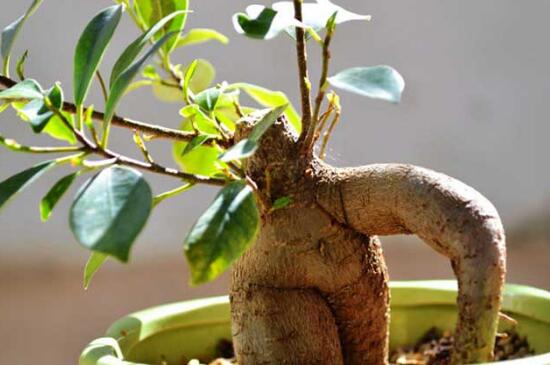
Ginseng Ficus loves a warm, humid environment with plenty of sunlight. It tolerates partial shade but is not cold-hardy. When grown indoors, it should be placed in a spot with partial shade, watered regularly to keep the potting soil moist, and given good protection from the cold in winter. As for the growing medium, a loose, fertile, well-draining, organic-rich, slightly acidic soil is best. So how do you grow a Ginseng Ficus? It's simple - just meet its growing requirements.
II. How to Grow and Care for Ginseng Ficus
1. Pot and Soil
How do you grow a Ginseng Ficus? First, you should choose a new pot and soil. The reason is that many plant enthusiasts' Ginseng Ficus plants are existing potted specimens bought from flower shops or online. Normal care can keep the plant growing, but those pots and soils are very cheap. If you want your Ginseng Ficus to grow well, it's best to choose new ones.
Pot: For a home potted plant, choose a small pot, about 20cm-30cm tall and 15cm-20cm wide. Soil: Based on the growing habits of Ginseng Ficus, it's best to choose a loose, fertile, well-draining, organic-rich, slightly acidic sandy loam.
2. Light
As a green plant, Ginseng Ficus has a high demand for light, so in the growing and care guide for Ginseng Ficus, light is an extremely key element. Because Ginseng Ficus loves light and tolerates partial shade, it's best to place it on a windowsill or table.
Note: To make your Ginseng Ficus grow strong and healthy, you need to let it get plenty of sun. Of course, when the light is intense, it needs shade.
3. Temperature
How do you grow a Ginseng Ficus? Proper temperature adjustment is also very necessary. Ginseng Ficus loves a warm living environment. Its optimal growing temperature is 18-33°C. To make it grow well, it's best to maintain this room temperature.
Note: Ginseng Ficus does not tolerate high temperatures. During the very hot summer, pay attention to sun protection. At the same time, Ginseng Ficus is not cold-hardy either. In winter, pay attention to frost protection. It's best to keep the room temperature no lower than 10°C. If it drops below 6°C, the plant will wither and may even die.
4. Watering
Water is the source of life, so when growing Ginseng Ficus, watering is an essential part. Ginseng Ficus loves a humid environment but dislikes waterlogging, so when watering, you should control the frequency and amount. It's best to follow the "water when dry, let dry between waterings" principle, keeping the potting soil consistently moist.
5. Fertilizing
After watering, let's talk about fertilizing, which is also very important in the care of Ginseng Ficus. To promote the growth of Ginseng Ficus, during its growing season, fertilize it once a month, mainly with phosphorus and potassium fertilizers. Simply shallow-bury them near the plant's roots.
6. Repotting
For Ginseng Ficus to grow quickly, timely repotting is necessary. However, don't repot too frequently. Generally, repotting once every one to two years is sufficient. Repotting can be done in spring. When adding soil, it's best to add some base fertilizer appropriately, which will benefit growth in the coming year.
7. Pruning
As growing time increases, Ginseng Ficus will gradually grow larger. At this point, to maintain a good tree shape, we also need to prune it timely. Every spring and autumn, prune thin, weak, and diseased branches to increase branching growth and enhance the ornamental value of the Ginseng Ficus.
How to Grow and Care for Ginseng Ficus: The Benefits of Ginseng Ficus
Ginseng Ficus is one of the most common feng shui plants. So, how do you grow a Ginseng Ficus? Below, we'll tell you about the growing methods and care tips for Ginseng Ficus and its benefits.
Growing Methods for Ginseng Ficus:
1. Temperature: Ginseng Ficus has the same requirements for light, heat, water, and fertilizer as the common small-leaved ficus. It prefers warm, humid, and sunny environments, is not cold-hardy, tolerates partial shade, and its optimal growing temperature is 20°C to 30°C. In winter, the greenhouse temperature should be maintained no lower than 5°C.
2. Soil: River sand or sandy soil is best for cultivation. To make the roots of Ginseng Ficus large and fat, add a little fertilizer, preferably one with a higher proportion of phosphorus and potassium. When cultivating Ginseng Ficus, be sure to use seed sowing to produce fat roots.
3. Repotting: Ginseng Ficus bonsai can be repotted once every 2 years, with the best time being before bringing it out in spring. First, loosen the soil around the pot, then gently remove the large root-tuber plant, shake off some of the old soil, cut away some lifeless aged roots, and replant with fresh, fertile, loose, well-draining, nutrient-rich growing medium. As the plant grows larger, you can switch to a slightly larger pot to meet its normal growth needs. While repotting, moderately prune and adjust the branches and leaves to maintain a good plant shape. Right after repotting, do not water too much. Wait until the temperature rises above 20°C before giving normal water and fertilizer management.
4. Growing medium for Ginseng Ficus bonsai: The ficus is very robust, and its soil requirements are not strict. If conditions permit, you can use sandy soil mixed with coal cinder. If not, general flower-growing soil will also work. Ready-made products can also use coconut coir as a growing medium. The growing soil should be loose, fertile, well-draining, organic-rich, acidic sandy loam. Alkaline soil can easily cause leaf yellowing and poor growth.
5. Watering: Watering for the roots of Ginseng Ficus bonsai. When the root medium (coconut coir or soil) is nearly dry, water thoroughly in one go. Then wait until it dries again before watering. Generally, watering once every three to five days is sufficient. In summer, you can water more frequently, depending on conditions. Watering for the leaves of Ginseng Ficus bonsai. The leaves can be regularly sprayed with a small amount of water (in a mist). During the growing season, sufficient water supply is required. It's better to keep it moist than dry, always keeping the potting soil moist. During the period of shooting branches and growing leaves, appropriately control watering, or spray more and water less, which can promote shorter internodes and thicker leaves. At the same time, give sufficient light so that the leaves are thick and glossy.
6. Fertilizing: Fertilizer management for Ginseng Ficus bonsai. The ficus does not like heavy fertilizer. You can apply a small amount of compound fertilizer (slow-release fertilizer) once per season. The main components of the fertilizer are nitrogen, phosphorus, and potassium. Fertilize 3 to 4 times a year, and do not overdo it, otherwise it can easily cause excessive branch and leaf growth and ruin the plant's shape.
7. Pest and disease control: Its leaves are often susceptible to leaf spot disease, which can be sprayed with 70% thiophanate-methyl wettable powder at 800 times dilution. A small number of diseased leaves can also be removed and destroyed early to prevent the disease from spreading.
8. Light: Note that during the growing season, the potting soil should not be too wet, and light should not be insufficient, otherwise it will cause massive leaf drop and affect its display and ornamental value.
Care Tips for Ginseng Ficus:
1. If a newly purchased Ginseng Ficus drops leaves, don't panic or randomly look for solutions. This is because a newly purchased Ginseng Ficus is adapting to a new environment, and it may also have been recently potted by the seller. So leaf drop at the beginning is normal. After bringing it home, first let it acclimatize (the process of adapting to a new environment) by caring for it in indirect light. Do not expose it to sun. Only after it has acclimatized should you consider sun exposure, fertilizing, and other care methods.
2. Do not move it around randomly. After choosing a good spot, besides watering or occasionally tending to it, don't fuss over it three times a day.
3. Pay attention to ventilation. Because Ginseng Ficus tolerates partial shade, some plant enthusiasts grow it indoors, which leads to poor indoor air circulation and causes the Ginseng Ficus to lose its vitality.
4. Pay attention to pruning. Ginseng Ficus looks good because of its nice tree shape. If left unpruned for a long time, it will grow wild and lose its ornamental value. So pruning is a must and can be done every spring.
5. Repotting. Actually, Ginseng Ficus doesn't need frequent repotting. Generally, once every one to two years is sufficient.
Benefits of Ginseng Ficus:
In terms of home applications, Ginseng Ficus can beautify the environment and is very popular among gardening enthusiasts. It can be placed in courtyards, halls, on terraces, and in corridors for viewing at any time, and can be moved at any time. It is the most sought-after collectible for ficus bonsai enthusiasts, collectors, and high-end hotels and museums. Ginseng Ficus is also regarded as a symbol of longevity and good fortune, implying prosperity and wealth. Therefore, it is the best gift for birthday celebrations.
In terms of medicinal use, it is often used to treat various diseases. The medicinal parts include roots, bark, leaves, and sap. Its important properties are slightly bitter, astringent, and cooling. Its main effects are clearing heat, relieving exterior symptoms, inducing sweating, promoting rash eruption, and resolving dampness. It is used for influenza, malaria, bronchitis, acute enteritis, whooping cough, tonsillitis, rheumatic bone pain, and bruises.
How to Prune Ginseng Ficus Bonsai, Growing Methods and Care Tips for Ginseng Ficus
Flower Bonsai Network Introduction: Today, Flower Bonsai Network editors are sharing an article about how to prune Ginseng Ficus bonsai, and the growing methods and care tips for Ginseng Ficus. Let's take a look.
Ginseng Ficus has a unique shape and distinctive ornamental value, making it suitable for bonsai. So when making bonsai, how should you prune it?
Ginseng Ficus, Latin name Ficus microcarpa. Moraceae, evergreen tree, ficus stump bonsai. Because the ficus has a well-developed root system with roots that often swell and protrude above the soil surface, its uniquely shaped root tubers make consumers particularly fond of it. In China, it is distributed in Guangxi, Guangdong, Hainan, Fujian, Yunnan, and Guizhou. It is also cultivated in India, Myanmar, and Malaysia.
A plant that grows in tropical and subtropical regions. It is famous for "a single tree forming a forest" and is produced in Shaxi, Fujian.
Bonsai Shaping and Pruning of Ginseng Ficus
Actually, shaping Ginseng Ficus bonsai is not very difficult. When growing Ginseng Ficus, the first step is to cultivate a basic framework. In the first year, don't do heavy pruning; just cut off incorrectly growing buds. By the second year, the branches begin to lignify, and at that point you can proceed with pruning.
When shaping the form, you can focus on pruning, supplemented by wiring, to achieve a perfect effect. Pruning is generally done once a year. If the plant is growing vigorously, you can prune once more.
Generally, after repeated pruning, the plant shape becomes fuller and fuller, and the growth and distribution of branches become more reasonable. In this way, a highly ornamental Ginseng Ficus bonsai is created.
Pruning the Branches and Leaves of Ginseng Ficus
Actually, besides pruning to achieve the overall shape of the Ginseng Ficus, you also need to appropriately prune its branches and leaves.
When growing Ginseng Ficus, for ornamental purposes, it is grafted. After the grafted plant grows and takes shape, you can remove all the leaves, keeping a small portion on each branch, and let it re-sprout.
When new buds emerge on the plant, promptly remove the leaves and thin out the buds, so that they are well-spaced and have ornamental value.
Appropriate pruning of branches and leaves can increase ventilation and light penetration, promote good growth, and reduce the occurrence of pests and diseases.
Growing Methods and Care Tips for Ginseng Ficus
Ginseng Ficus loves a warm, humid, and sunny environment, is not cold-hardy, tolerates partial shade, and its optimal growing temperature is 20°C to 30°C. In winter, the greenhouse temperature should be maintained no lower than 5°C. The growing soil should be loose, fertile, well-draining, organic-rich, acidic sandy loam. Alkaline soil can easily cause leaf yellowing and poor growth.
Although Ginseng Ficus is not difficult to care for, there are still many noteworthy points in its growing methods and care tips. The growing methods are easy, but there are quite a few care tips.
Ginseng Ficus likes to grow in warm, humid places with plenty of sunlight. It is not cold-hardy and is suitable for care in a 20-30°C environment. Winter temperatures must not drop below 5°C. The growing soil should be relatively fertile, well-draining sandy soil. However, one thing to note here is that alkaline soil may cause leaf yellowing.
During the growing season, it needs a generous water supply! It's better to keep it moist than dry, keeping the soil moist. In summer, spray water on the leaves. For fertilizing, 3-4 times a year is sufficient. Do not overdo it, otherwise it will cause excessive branch and leaf growth and ruin the shape.
During the period of shooting branches and growing leaves, control watering. Water less and spray more, which can make the internodes short but the leaves thick. If there is sufficient sunlight, the leaves will be very thick and glossy. Note that during the growing season, the potting soil should not be too wet to cause waterlogging. Be sure to pay attention to light. This is to prevent massive leaf drop.
I. Growing Methods for Ginseng Ficus
Ginseng Ficus has extremely strong vitality, so the growing methods are actually quite simple. We'll analyze the growing methods for Ginseng Ficus one by one from different aspects such as care environment and watering.
1) Care environment: Try to care for Ginseng Ficus in an environment with plenty of sunlight (because it's a potted plant that doesn't tolerate intense sun, so shade it when the light is strong). Of course, Ginseng Ficus also tolerates partial shade, so it can also be cared for in indirect light, but you should still give it some light occasionally.
2) Temperature: The optimal growing temperature for Ginseng Ficus is between 18-33°C. So in winter and summer, pay attention to sun protection and frost protection. Especially in winter, the temperature must not be too low, otherwise leaf drop is the least of your problems - it could freeze to death.
3) Watering: It must be said, watering is the most difficult part. Ginseng Ficus can be kept with slightly moist potting soil, but it must never be waterlogged. No flower or plant can tolerate waterlogging, so you should control the frequency of watering and water when the potting soil is dry (dry doesn't mean very dry - don't go to extremes).
4) Pruning: Ginseng Ficus is relatively tolerant of pruning, so don't be afraid. As long as you're creative, you can prune it.
II. Care Tips for Ginseng Ficus
Actually, the care tips all correspond to the growing methods - it's basically repeating everything again. Patient readers can continue reading.
1) If a newly purchased Ginseng Ficus drops leaves, don't panic or randomly look for solutions. This is because a newly purchased Ginseng Ficus is adapting to a new environment, and it may also have been recently potted by the seller. So leaf drop at the beginning is normal. After bringing it home, first let it acclimatize (the process of adapting to a new environment) by caring for it in indirect light. Do not expose it to sun. Only after it has acclimatized should you consider sun exposure, fertilizing, and other care methods.
2) Do not move it around randomly. After choosing a good spot, besides watering or occasionally tending to it, don't fuss over it three times a day.
3) Pay attention to ventilation. Because Ginseng Ficus tolerates partial shade, some plant enthusiasts grow it indoors, which leads to poor indoor air circulation and causes the Ginseng Ficus to lose its vitality.
4) Pay attention to pruning. Ginseng Ficus looks good because of its nice tree shape. If left unpruned for a long time, it will grow wild and lose its ornamental value. So pruning is a must and can be done every spring.
5) Repotting. Actually, Ginseng Ficus doesn't need frequent repotting. Generally, once every one to two years is sufficient.