Is Dendrobium orchid toxic? Non-toxic and suitable for indoor growing
Dendrobium orchid is a flowering plant in the subtribe Dendrobiinae with very high ornamental value, and precisely because of this, many people want to keep one at home. However, many plants on the market today carry a certain degree of toxicity, so we need to be clear about this before growing one. Is Dendrobium orchid toxic? Is Dendrobium orchid suitable for indoor growing? Below, the editor will walk you through it.
1. Is Dendrobium orchid toxic? Non-toxic
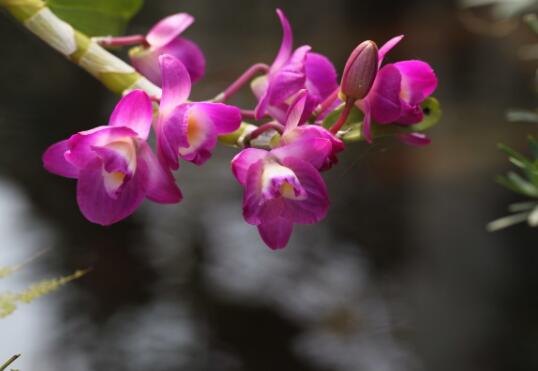
The answer to the question of whether Dendrobium orchid is toxic is no. This plant itself is not toxic, and moreover, it has high medicinal value and has certain therapeutic effects on many ailments. If you want to learn about its specific medicinal uses, you can refer to the article on the effects and functions of Dendrobium orchid, which has a detailed introduction.
2. Is Dendrobium orchid suitable for indoor growing? Yes, it is suitable
Dendrobium orchid is generally cultivated in pots, so it is very suitable for growing indoors, and growing it indoors also has many benefits, such as beautifying the indoor environment and purifying indoor air. The details are introduced below, and those interested can take a look.
3. Benefits of growing Dendrobium orchid indoors
1. Beautifying the indoor environment
Dendrobium orchid is a flowering plant with high ornamental value. This plant has a strong character and a gentle, amiable temperament, so people call it the flower of fathers. If we grow this plant at home, it can not only beautify the home environment but also bring a peaceful and tranquil atmosphere to the home.
2. Purifying indoor air
Most plants on the market today have the ability to purify air, and Dendrobium orchid is no exception. This plant is a natural air purifier. It can absorb most harmful gases and dust in the air, and at the same time release oxygen, thereby making the surrounding air fresher. If we grow it at home, it will also be a good safeguard for everyone's health in daily life.
3. Improving household feng shui
Dendrobium orchid is a plant with very good feng shui symbolism. The homophone of "Shihu" (Dendrobium) is "Shifu" (blessing), so this plant also represents happiness, good fortune and auspiciousness. If we grow it at home, it can improve household feng shui and bring good luck to the home. At the same time, this plant has a rather elegant appearance, and looking at it will also make people feel more relaxed and cheerful.
Is Dendrobium orchid suitable for indoor growing
Is Dendrobium orchid suitable for indoor growing
Although Dendrobium orchid is a semi-shade plant, it still needs very strong light during its growth process, and it is difficult to achieve such strong light under indoor conditions. If we use ordinary fluorescent lamps for supplemental lighting, it will consume too much electricity. In addition, the indoor ventilation conditions cannot possibly be good.
Indoor growing requirements for Dendrobium orchid
Dendrobium prefers to live in a warm, moist and cool environment, and is rather afraid of severe cold. Therefore, the substrate used for indoor Dendrobium can be prepared by mixing 5 parts broken tiles, 2 parts rotted manure and 3 parts bamboo garden soil.
When potting it, spread a layer of broken tile pieces and fill in the growing soil. Dendrobium avoids direct sunlight. During usual care and viewing, place it in a ventilated spot with diffused light. In spring and autumn, it should receive morning sunlight. In winter, for overwintering indoors, place it at a south-facing window with sunlight.
For indoor Dendrobium cultivation, the temperature should be kept at 10-15°C at night and 18-24°C during the day. In autumn, it needs a period of low temperature kept at around 10°C to promote flower bud differentiation, which helps with flowering the following year.
After the editor's explanation, I believe you are already thoroughly familiar with this plant. Actually, in the editor's personal opinion, although Dendrobium orchid can be grown indoors, the editor thinks it is still better not to grow it indoors.
How to grow Dendrobium orchid, cultivation methods and precautions for Dendrobium orchid / water frequently
Dendrobium orchid is a flowering plant that is relatively common worldwide and has high ornamental value. It can be seen in many regions of our country. However, if we want to grow it well, there are many things we need to pay attention to. How to grow Dendrobium orchid? What are the cultivation methods and precautions for Dendrobium orchid? Below, the editor will walk you through it.
1. How to grow Dendrobium orchid: understand its habits
To know how to grow Dendrobium orchid, we first need to understand its growth habits. This plant relatively prefers a warm and humid environment and is not cold-tolerant, so when growing it we must control the temperature well and must not let the temperature get too low, otherwise it is very easy to freeze and damage the plant. In addition, daily water and fertilizer management are also points that need attention. The details are below, so let's take a look.
2. Cultivation methods and precautions for Dendrobium orchid
1. Soil: good drainage
Before growing Dendrobium orchid, we first need to choose the soil. This is like laying the foundation for a house, very important. Generally, it is best to choose well-drained, highly breathable materials such as broken fern roots, sphagnum moss, charcoal chips, broken tiles and perlite, preferably with broken fern roots and sphagnum moss as the main components.
2. Temperature: 18-30°C
During its growth process, Dendrobium orchid has very high requirements for ambient temperature. Its suitable growth temperature is between 18-30°C, with 16-21°C being most suitable during the growing period, 16-18°C during the dormancy period, and a nighttime temperature of 10-13°C. A temperature difference kept at 10-15°C is best. A daytime temperature above 30°C has little effect on Dendrobium growth, and the winter temperature should not be lower than 10°C. Seedlings are prone to freezing below 10°C.
3. Fertilizing: 1-2 times per month
Fertilizer is one of the main nutrients during the growth of Dendrobium orchid. Especially after entering the growing period, its demand for fertilizer is very high, and it basically needs fertilizing 1-2 times every month so that it can grow better. However, before fertilizing there is one thing we need to note: the fertilizer must first be diluted with water before application, because if the concentration is too high it will burn the plant.
4. Water: keep the soil moist
Dendrobium orchid relatively prefers a warm and humid environment, so when growing it we should water frequently to keep the soil somewhat moist. However, the watering frequency does not need to be too frequent. Spring and summer are its peak growing seasons, so we can choose to water more. But after entering October, because the temperature gradually drops, we should also control the watering frequency.
5. Light: avoid strong light
Dendrobium orchid relatively prefers a semi-shaded environment, so when growing it we should not place it in direct sunlight, as this is not conducive to its growth. Especially after entering summer, because the light is relatively strong, we also need to shade it to prevent strong light from scorching the plant.
6. Pests and diseases: deal with them promptly
During the process of growing Dendrobium orchid, if we are not careful enough, pests and diseases are very likely to appear. Such problems are very harmful to the plant, not only affecting its ornamental value, but in severe cases also causing the plant to wither and die. So when we discover a problem, we must deal with it promptly. For specific treatment methods, you can refer to the article on pest and disease control for Dendrobium orchid, which has a detailed introduction.