Why does plumeria get bugs? 3 pests and 1 disease control methods
Plumeria is a fairly common flower in people's lives, with high ornamental value, but for this kind of ornamental flower, the most feared problem is pests and diseases. Once such problems appear, they not only greatly affect the appearance, but if left untreated for a long time, they can also cause the plant to wither and die. So why does plumeria get bugs? And how should pest and disease control for plumeria be done? Below, the editor will walk everyone through it.
I. Why does plumeria get bugs
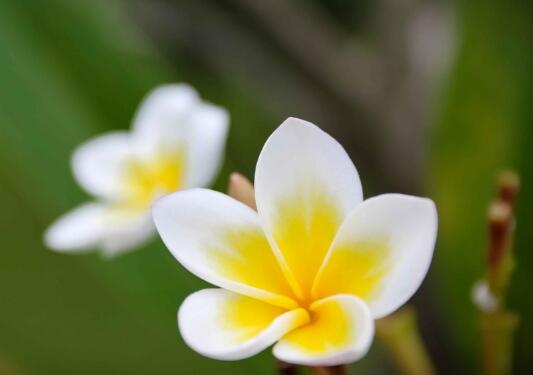
As for why plumeria gets bugs, this phenomenon is actually mainly caused by improper cultivation. Everyone should pay more attention to care in daily life, and can also refer to the article on plumeria cultivation methods, which contains detailed care instructions. Everyone can study it, and it is guaranteed to keep your plumeria free from pests and diseases.
II. Pest and disease control for plumeria
Pests
1. Scale insects
Scale insects often appear in humid environments, so when cultivating plumeria, ventilation must be maintained. This pest mainly feeds on plumeria leaves, gradually sucking the sap from the leaves, which causes the leaves to turn yellow and wither.
Control method: When controlling this pest, it must be done as early as possible. If it drags on and causes too much nutrient loss, it becomes very difficult to control. For this pest, we can use a mixture of 40% omethoate EC and 40% Supesha EC to spray and kill the pests.
2. Whiteflies
In the process of plumeria pest and disease control, whiteflies are a relatively common pest. This pest mainly sucks the sap from the plumeria plant, causing massive nutrient loss, leaf shrinkage, and the plant to wither and die.
Control method: When dealing with whiteflies, we can use pesticides such as buprofezin or insect chitinase inhibitors for spraying and killing.
3. Aphids
Aphids are a pest found on many plants, and plumeria is no exception. The peak period for this pest is every summer, so special attention must be paid during this time. It mainly feeds on the sap in the plumeria plant, causing nutrient loss and the plant to wither and die.
Control method: For aphids, we can use 40% imidacloprid water-soluble concentrate at 1500—2000 times dilution for spraying and killing.
Diseases
1. Rust disease
In the process of plumeria pest and disease control, rust disease is a relatively common disease. This disease is mainly caused by fungi. It first harms plumeria leaves, causing blister-like objects to appear on the leaves, and over time it gradually spreads, eventually causing the plant to wither and die rapidly.
Control method: When controlling rust disease, we can use 25% triadimefon at 1500—2000 times dilution to spray plumeria. Generally, spray once every 7-10 days, and after 2-3 times it can be cured.
The effects and benefits of cockscomb, and cockscomb cultivation methods
What is cockscomb? Looking for the answer from its appearance, we find:
1. Its appearance closely resembles a rooster's comb. It is an annual herb, with plant height 40-100 cm, stems upright and sturdy, leaves alternate, long ovate or ovate-lanceolate, spike-like inflorescences terminal, fan-shaped, kidney-shaped, flat spherical, etc., natural flowering period from summer and autumn to the first frost. It is commonly propagated by seeds, likes high temperatures during the growing period, and grows well in full light and dry air. It is relatively drought-tolerant but not cold-tolerant, with strong reproductive capacity. It is harvested when the flowers are in full bloom in autumn, then sun-dried. Leaves are ovate-lanceolate to lanceolate, with entire margins. Inflorescences are terminal and axillary, flat and cockscomb-shaped. Flowers come in white, pale yellow, golden yellow, pale red, fiery red, purple-red, brown-red, orange-red, and other colors. The utricle is ovate, and the seeds are black and glossy. Some also have red or pale greenish-white stems; leaves are alternate and petiolate, with colors including deep red, emerald green, yellow-green, red-green, and many others; flowers cluster at the top, shaped like a cockscomb, flat and thick-soft, appearing on the plant in an inverted broom shape. Flower colors are also rich and varied, including purple, orange-yellow, white, red-yellow mixed, and other colors. The seeds are tiny, purple-black, and hidden within the fuzz of the flower crown. Cockscomb plants come in three types: tall, medium, and dwarf. The dwarf type is only 30 cm tall, while the tall type can reach 2 m.
2. Cockscomb has many aliases, but all are tied to the rooster's comb. Cockscomb, also called cockscomb flower, old-age red, reed-flower cockscomb, pen cockscomb, large-head cockscomb, phoenix-tail cockscomb, rooster flower, rooster-foot root, red cockscomb, is an annual herbaceous plant that blooms in summer and autumn. The flowers are mostly red and cockscomb-shaped, hence the name.
3. Cockscomb has a rather special growing environment. It is native to Africa, tropical America, and India, and is widely cultivated around the world as an annual herbaceous plant. It likes ample sunlight, warmth, and humidity, and is not tolerant of frost. It is not tolerant of barren soil and prefers loose, fertile, well-drained soil. The flowering period is summer and autumn until the first frost. It likes a warm, dry climate, fears drought, likes sunlight, and is not tolerant of waterlogging, but has no strict requirements for soil. It can generally be planted in ordinary soil courtyards. It is a new way to develop courtyard economies at present, and people with insight may want to give it a try.
Cockscomb used as medicine has first-rate effects. Cockscomb tea is made from the inflorescence of the Amaranthaceae plant cockscomb, harvested when the flowers are in full bloom in autumn, then sun-dried. It is sweet and astringent in taste. It astringes and stops bleeding, stops leukorrhea, and stops diarrhea. It is used for hematemesis, abnormal uterine bleeding, bloody stool, hemorrhoidal bleeding, red and white leukorrhea, and chronic diarrhea that does not stop.
Cockscomb has many more characteristics. If you want to learn more, you need to pay more attention. Below, we introduce the effects and benefits of cockscomb and its cultivation methods.
The effect of cockscomb on the home environment
Next, we will explain one by one the influence of cockscomb on the home environment.
1. Cockscomb really does green up your home. Cockscomb has good resistance to sulfur dioxide and hydrogen chloride, and can play multiple roles in greening, beautifying, and purifying the environment. It is suitable for factory and mine landscaping, and can be called a popular ornamental flower resistant to polluted environments. Tall-stem varieties can be used in flower borders, as accents at the edges of tree clusters, and as cut flowers, dried flowers, and so on. Dwarf varieties are used for planting flower beds or as potted ornamentals. The phoenix-tail cockscomb native to India has upright, much-branched stems and spike-like inflorescences. It is also widely used. With such a strong attraction to harmful components in the air, can you still say it cannot green your home?
2. Cockscomb lets you live a tasteful home life. The flower language of cockscomb: sincere love. Loves dressing up, holds its head high. Loves beauty, is sentimental. Undying. I crane my neck and wait. Because cockscomb withstands wind and frost, its flower posture does not diminish, and its flower color does not fade, it is regarded as a symbol of love that never fades or unchanging love. In Europe and America, the first flower given to a lover is the fiery red cockscomb, implying sincere love. Flower astrology: the guardian flower of Virgo, it will enhance your desire to dress up and emit the charm of neatness and cleanliness. Look, with a cockscomb-filled home full of romance, would you still refuse it?
3. Its ability to beautify the home environment leaves you nothing to criticize. Cockscomb is named for its red, flat inflorescence shaped like a rooster's comb, and enjoys the reputation of "the poultry among flowers." Cockscomb is one of the famous outdoor herbaceous flowers in gardens. Its inflorescences are terminal and prominent, varied in shape and color, bright and lively, with high ornamental value, and it is an important flower-bed plant. Tall varieties are used in flower borders and flower beds, and are also very good cut flower materials; cut flowers can be kept in a vase for more than 10 [days]. They can also be made into dried flowers and do not wither for a long time. Dwarf varieties are potted or used as edge plantings. A fiery color and a curvy appearance are enough to make your home stunningly beautiful.
4. Cockscomb also leads you to a healthy home life. Cockscomb has spike-like inflorescences, flat and fleshy-thick, cockscomb-shaped. They are 8 to 25 cm long and 5 to 20 cm wide. The upper edge is broad, wrinkled, densely covered with linear scales, and the lower end gradually narrows, often with residual stem. The surface is red, purple-red, or yellow-white; below the middle, many small flowers are densely born, and the bracts and perianth segments are persistent and membranous. The fruit is circumscissile, and the seeds are flat, round-kidney-shaped, black, glossy, light in weight, and flexible in texture. Odorless, mild in taste. Those that are large, flat, and brightly colored are considered better. By convention, white ones are considered superior in quality. According to different processing methods, it is divided into cockscomb, cockscomb charcoal, and vinegar cockscomb. After processing, store in a dry container; fried cockscomb and cockscomb [minor details] are placed in a cool, dry place. After being decocted into soup, it is sweet and astringent in taste and cool in nature. It enters the liver and large intestine meridians. Light in texture and astringent. It astringes to stop bleeding, stop diarrhea, and stop leukorrhea. It mainly treats hematemesis, abnormal uterine bleeding, bloody stool, hemorrhoidal bleeding, bloody strangury, red and white leukorrhea, diarrhea, chronic diarrhea that does not stop, and carbuncles, swellings, sores, and boils. Add a free private doctor to your home.
The feng shui role of cockscomb
Cockscomb has feng shui benefits for specific groups of people. People born in the Year of the Rooster have the earthly branch You for their birth year, and their five elements belong to metal. Auspicious colors include gold, coffee, coffee-yellow, and yellow; avoid green, red, blue, and gray. Cockscomb is their lucky flower.
1. From the perspective of personality, people born in the Year of the Rooster need cockscomb. People born in the Year of the Rooster are frank and straightforward, saying whatever comes to mind. They think highly of themselves, do not like others pointing fingers behind their backs, and are equally strict with others, making them relatively inflexible. They strictly observe discipline and have a keen sense of color. From this, it can be seen that the very bright and eye-catching colors of cockscomb are very consistent with the personality of this type of person. People born in the Year of the Rooster who plant cockscomb at home can definitely encourage each other.
2. Cockscomb reminds people that they must have perseverance in doing things. The task heaven gave to the "rooster" is to wake people up on time, hence the saying that the rooster announces the dawn. Therefore, people born in the Year of the Rooster who want to succeed must have the habit of getting up on time and with perseverance in order to succeed. Looking across industries in the world, carving is closest to the rooster's habits. To succeed in carving, one must work at fixed times and complete the carved product with perseverance. Therefore, when creating characters, the character "carve" placed a "zhou" beside "jia" to indicate that its perseverance and a certain amount of time are needed for success. Hence "carve" follows the rooster, and that is the reasoning here. Carving also emphasizes perseverance, so cockscomb has a reminding effect on people.
3. Cockscomb is the lucky flower of people born in the Year of the Rooster. For people born in the Year of the Rooster, men and women from afar are both easily tempted by the opposite sex. They date quite a lot, and each time they give true feelings. They have high self-esteem, dislike relying on others, and have a straightforward personality, so not every type of person is suitable for you. Therefore, when choosing a partner, you must think twice before acting. Thus, for the sake of your love luck, people born in the Year of the Rooster should consider placing a cockscomb in the space where they live.
The benefits of cockscomb
How cockscomb serves as medicine, how it is used as food for people, and what other effects it has, below, these questions are solved for you one by one.
1. It has a good decorative effect on the home; this is unquestionable. Cockscomb, also known as reed-flower cockscomb, pen cockscomb, large-head cockscomb, phoenix-tail cockscomb, etc. Because its flower shape and color resemble the comb on a rooster's head, it is named cockscomb. Cockscomb is native to India and is an annual herbaceous flower of the Amaranthaceae family. Cockscomb has red or pale greenish-white stems; leaves are alternate and petiolate, with colors including deep red, emerald green, yellow-green, red-green, and many others; flowers cluster at the top, shaped like a cockscomb, flat and thick-soft, appearing on the plant in an inverted broom shape. Flower colors are also rich and varied, including purple, orange-yellow, white, red-yellow mixed, and other colors. The seeds are tiny, purple-black, and hidden within the fuzz of the flower crown. From its appearance, we can see that it will definitely not disappoint us as home decoration.
2. It can effectively treat gynecological diseases. According to differences in inflorescence morphology, cockscomb varieties can be divided into broom cockscomb, face cockscomb, mandarin-duck cockscomb, tassel cockscomb, etc. In vitro tests prove that the decoction of cockscomb has a good effect on human vaginal trichomonads; after the parasites contact the medicinal liquid for 5-10 minutes, they tend to disappear. It mainly cools the blood, stops bleeding, treats hemorrhoidal fistula bleeding, red and white dysentery, hematemesis, hemoptysis, bloody strangury, women's uterine bleeding, and red and white leukorrhea.
3. It is an ideal healthy food. Per 100 grams of fresh [material], the main components come from the cockscomb inflorescence, containing a large amount of protein, as well as rich potassium, sodium, calcium, magnesium, iron, phosphorus, zinc, beta-carotene, vitamins 1 and 2, vitamins, and other minerals and vitamins; in addition, the protein content in the tender stems, leaves, and seeds of cockscomb is also very high, accounting for 2.29%-5.14% of fresh weight, and it also contains a certain amount of fat, minerals, vitamins, natural coenzymes, dietary fiber, etc., and has a good nourishing and strengthening effect on the human body. After long-term observation and research, Italian scientists proposed two years ago: "Cockscomb and its seeds can provide amino acids especially needed by the human body." Some children often go blind because their food lacks amino acids. The protein content of cockscomb seeds reaches 73%, and the seeds taste like hazelnuts and can be stir-fried to eat. Mixing the seeds with wheat to make flour is an ideal food. Eating 100 grams of cockscomb petals every day can also help supplement the amino acids needed by the human body.
4. Cockscomb can make very [tiring] delicious soup.
(1) Turtle gelatin cockscomb egg soup: Beat 150 grams of eggs in a bowl, add 20 grams of gelatin and stir evenly; wash 75 grams of cockscomb and cut into slices; heat melted chicken oil in a wok, add the egg mixture and stir-fry until puffed, add pork broth and refined salt, bring to a boil for 2 minutes, then add cockscomb and pepper, cook until done, remove from the wok into a bowl, add 25 grams of chopped scallions, and it is ready to eat. This soup has the effects of nourishing yin and moistening dryness, nourishing and enriching blood, and cooling blood and stopping bleeding.
(2) Bird's nest cockscomb lung slice soup: Add 18 grams of high-grade bird's nest to clear water and steam until the bird's nest is soft, then put half [portion of] high-grade clear soup, refined salt, cooking wine, ginger-scallion juice, the softened bird's nest, and 300 grams of blanched clean pork lung slices into a clean pot. Place over high heat and bring to a boil, then add 60 grams of clean cockscomb slices, bring to a boil, cook until done and flavorful, and it is ready to eat. This soup has the effects of nourishing yin and moistening dryness, benefiting the spleen and stomach, clearing lung heat, stopping diarrhea and coughing, and treating hemoptysis and hematemesis.
(3) Cockscomb yellow catfish soup: Put stock in a clean pot and bring to a boil, add 750 grams of initially prepared yellow catfish and bring to a boil, skim off the foam, add ginger slices, pepper, and refined salt, cook until flavorful, then add chicken essence and 100 grams of clean cockscomb slices, cook until done, sprinkle in 20 grams of chopped scallions, and it is ready to eat. This soup has the effects of clearing damp-heat, preventing blood diseases, tonifying the spleen and stomach, reducing water swelling, promoting urination, and preventing cancer.
(4) Cockscomb clam meat soup: Put pork broth, 70 grams of clean soaked wood ear slices, and 200 grams of clean clam meat into a clean pot. After bringing to a boil, skim off the foam, add pepper, cooking wine, and ginger-scallion juice and cook until soft, then add refined salt, 100 grams of clean cockscomb slices, and chicken essence, cook until done, remove from the pot and drizzle with 10 grams of sesame oil, and it is ready to eat. This soup has the effects of cooling blood and stopping bleeding, clearing heat and detoxifying, clearing the liver and improving eyesight, and nourishing yin and moistening dryness.
5. Cockscomb has a very good effect in greening the home. Cockscomb[3] is named for its red, flat inflorescence shaped like a rooster's comb, and enjoys the reputation of "the poultry among flowers." Cockscomb is one of the famous outdoor herbaceous flowers in gardens. Its inflorescences are terminal and prominent, varied in shape and color, bright and lively, with high ornamental value, and it is an important flower-bed plant. Tall varieties are used in flower borders and flower beds, and are also very good cut flower materials; cut flowers can be kept in a vase for more than 10 [days]. They can also be made into dried flowers and do not wither for a long time. Dwarf varieties are potted or used as edge plantings. Cockscomb has good resistance to sulfur dioxide and hydrogen chloride, and can play multiple roles in greening, beautifying, and purifying the environment. It is suitable for factory and mine landscaping, and can be called a popular ornamental flower resistant to polluted environments. Tall-stem varieties can be used in flower borders, as accents at the edges of tree clusters, and as cut flowers, dried flowers, and so on. Dwarf varieties are used for planting flower beds or as potted ornamentals. The phoenix-tail cockscomb native to India has upright, much-branched stems and spike-like inflorescences. It is also widely used.
Cockscomb has many uses. You might as well buy one and take it home to observe it. Gradually, you will discover more of its effects.
The role of cockscomb in matching home styles
From historical background to practical application, we have made great discoveries.
1. Cockscomb once came from the mouth of an emperor, reflecting a noble home style. In the Ming Dynasty there is also an interesting legend. One day, the emperor wanted to test the literary talent of the Hanlin scholar Xie Jin, so he had him compose a poem on the theme of cockscomb. Xie Jin, of course, did not hesitate and blurted out: "The cockscomb was originally dyed with rouge, ..." Unexpectedly, as soon as the words were spoken, the emperor suddenly took from his sleeve a white cockscomb that had been prepared earlier, and said with a smile to him: "This one is white." Seeing this, Xie Jin had a quick idea and immediately changed his words and chanted: "Why is it lightly made up today? Only because at the fifth watch it craved announcing the dawn, and to this day it wears frost all over its head." He very cleverly changed the red cockscomb he had just begun to praise into a white cockscomb. The emperor and everyone present could not help but admire Xie Jin's quick wit and talent. It can be seen that cockscomb has considerable fame; even the emperor liked to use it as an object of play. From this it can be seen that it can enter the kitchen and also appear in the hall. Using it as home decoration is not at all unrefined.
2. Placed in the bedroom, it reflects a home style that advocates love. The flower language of cockscomb: sincere love, loves dressing up, holds its head high, loves beauty, is sentimental, undying, I crane my neck and wait, because cockscomb withstands wind and frost, its flower posture does not diminish, and its flower color does not fade. It is regarded as a symbol of love that never fades or unchanging love. In Europe and America, the first flower given to a lover is the fiery red cockscomb, implying sincere love. The astrology of cockscomb: the guardian flower of Virgo, it will enhance your desire to dress up and emit the charm of neatness and cleanliness. Its astrology can even more explain the pursuit and appreciation of love. Placed in the bedroom, the place the owner faces most, it has an even better influence.
3. Behind it there are also beautiful stories hidden. Placed at home, it reflects a home style that loves fantasy. The ancients chanted and admired cockscomb mostly starting from color and image. For example, the Tang Dynasty poet Luo Ye wrote: "A branch of rich beauty faces the autumn light, dew drips and wind sways beside the steps. In the morning scene, at first glance what does it resemble? The Xie family's newly dyed purple silk skirt." The Song Dynasty poet Zhao Qi wrote: "Autumn light reaches all things, the eyes still blur; leaves dance, as if mimicking the green pheasant. Its splendor is almost about to move; at the fifth watch it lacks only a cry." The Yuan Dynasty writer Yao Wenhuan wrote: "Where is there a cry that makes the world white? Frost flowers brush the crimson cloud crown in the evening. After the fights in Wuling are over, it stands alone in the autumn pavilion, blood not yet dry." And so on. These both vivid and beautiful lines express the poet's endless love for cockscomb. For people who love literature, as long as cockscomb is at home, they will most easily recall these intoxicating lines. It must be said that cockscomb has added much charm to our lives.
Cockscomb cultivation methods
Below, from the basic requirements of cockscomb care to special requirements, we introduce cockscomb care.
I. Its basic living requirements:
1. Starting from its personality, give cockscomb rough cultivation. Cockscomb likes sunlight, tolerates barren soil, fears waterlogging, is not cold-tolerant, and grows well under high-temperature, dry climate conditions. Under normal circumstances, it does not need watering or fertilizing. Cockscomb can be used as a potted ornamental flower. When potting, generally do not use seedling pots for cultivation; instead, during the flowering period, select plants from field-grown cockscomb for potting. When potting, plant slightly deeper, so that the leaves are close to the soil surface. When transplanting, do not let the root ball break apart. After planting, water thoroughly. Start fertilizing after 7 days, applying liquid fertilizer once every half month. Before the inflorescence forms, the potting soil should be kept somewhat dry to favor inflorescence development. After the flower buds form, apply liquid fertilizer once every 7-10 days and water appropriately.
2. Prevention and treatment of common cockscomb diseases. If root rot occurs at the seedling stage, quicklime can be broadcast in the field. During the growing period, small bridge caterpillars are likely to occur. Spraying diluted detergent, dimethoate, or pyrethroid pesticides on the leaves can have a control effect. Propagation and cultivation.
(1) Ring spot disease, the main symptom is large round lesions with brown edges appearing on the leaves. The surface of the lesions has obvious concentric rings, and later the center of the lesion becomes grayish-brown and scattered with small black grains.
(2) Blight, the main symptom is that small dark green spots first appear on the leaves, then expand. Under high humidity the lesions are soft-rot-like, and under low humidity they are light brown and dry.
(3) Leaf spot disease, the main symptom is that lesions on the leaves are polygonal or round, 1-5 mm in diameter, with dark brown edges and a light brown center.
(4) Damping-off, the main symptom is that the pathogen mainly infects the root crown. If disease occurs before emergence, the seed buds rot in the soil, showing missing seedlings on the ground. If disease occurs after emergence, the affected root crown appears dark brown, softened, and water-soaked. Later the top of the plant wilts, and finally it dies. When the disease is severe, leaves touching the ground also easily develop dark green to brown water-soaked large spots, causing leaf rot.
(5) Stem rot, the main symptom is that this disease mostly harms the base of the stem. In the early stage, yellow-brown spots appear at the affected area, then gradually expand into oval or elongated lesions, with brown edges and a yellow or gray-white center, and finally small black grains are produced on the lesions.
3. Treatment mainly starts from two aspects.
(1) Spray pesticides in time in the early stage of disease. The pesticides include Bordeaux mixture at 1:1:200, 50% thiophanate-methyl wettable powder, 50% carbendazim wettable powder at 500 times dilution for spraying, 40% [Junduqing] suspension concentrate at 600-800 times dilution for spraying; or drench with zineb wettable powder at 300-500 times dilution.
(2) In addition to using diluted detergent, modern environmentally friendly methods of removing pests also include planting some plants around them that keep insects away, or releasing some beneficial insects that eat those pests.
II. Its special living requirements:
If you want the cockscomb plant to be sturdy, with a plump, thick flower crown and brilliant colors, you can switch it to a larger pot after the inflorescence forms, but note that when transplanting, the root ball must not break apart, because its root system is extremely weak; otherwise it will not easily survive. Cockscomb is cross-pollinated, and varieties easily hybridize and mutate. Therefore, varieties kept for seed should be isolated during the flowering period. When saving seeds, collect seeds from the lower part of the inflorescence, which can preserve the characteristics of the variety. There are many cockscomb varieties. Plant types include tall, medium, and dwarf, 3 kinds; shapes include cockscomb-shaped, torch-shaped, pom-pom-shaped, feather-shaped, fan-shaped, etc.; flower colors include bright red, orange-yellow, dark red, purple, white, red-yellow mixed, etc.; leaf colors include deep red, emerald green, yellow-green, red-green, etc., extremely attractive, making it a commonly used flower-bed flower in summer and autumn. In cultivation, if management and care are improper, it often blooms sparsely and with dull colors, affecting the ornamental value of cockscomb. To make cockscomb flowers large and colorful, attention should be paid during cultivation and care:
(1) Plant it in sandy loam with high, dry terrain, facing the sun, fertile, and well-drained.
(2) Do not water too much during the growing period. Control watering after flowering. Water appropriately during dry weather, and drain promptly during rainy days.
(3) Remove all axillary buds starting from the seedling stage.
(4) After the cockscomb forms, apply a dilute compound liquid fertilizer once every 10 days, 2 to 3 times.
The above is an introduction to the effects and benefits of cockscomb and its cultivation methods. For more home plants, please stay tuned.
Strongly recommended: A succulent lover's three years of succulent-growing experience
![A summary of blog posts collected from Japanese succulent lovers; corrections are welcome]
Introduction:
South Africa is located in the southern part of the African continent. The vast majority of the region has a tropical savanna type climate, with rainy summers and dry winters. Due to the influence of the warm Indian Ocean current and the cold Atlantic current, the climate differences between South Africa's east coast and west coast are very obvious. The east is warm and humid, while the west is relatively arid. Precisely because of this, the terrestrial plant species on the east coast are clearly greater than in other regions. Among them, the Liliaceae Haworthia genus plants that we are relatively familiar with (also called the 12-volume genus, or the Bulbine genus) and most species in the Aizoaceae grow on South Africa's east coast.
As for the cultivation of succulents, the author's involvement is not very deep. The main research direction is the two [groups] mentioned above. Although I, Jiang, also have a slight understanding of the Agavaceae plants native to Mexico, due to climate and environmental reasons and from the perspective of cultivation research, Agavaceae plants belong to another system, so they are temporarily not discussed in the following sections.
South Africa has nearly 3000 species of succulents. The above two large genera account for at most one or two tenths. The reason the article dares to use such a broad title is not because the author is ignorant and arrogant, but because there is a premise - namely home cultivation. Home cultivation is a cultivation form with a vague concept. Due to limitations of environment and conditions, in a home environment it is impossible to carry out categorized management to satisfy the tiny differences in the physiological needs of different plant species. Instead, one can only carry out relatively unified management based on the characteristic that plants from the same origin have relatively greater commonality. For example, among winter-growing succulents, the habit differences between varieties are not very large. Although there are many varieties, if you really get serious, 100 plants can have 100 ways of being grown. But if you play dumb and treat them as one variety, serve them the same way, in the end they will still grow about the same. This is what the author calls the vague cultivation concept. The principle of this concept is - make full use of the controllable space and grow more plants well at the lowest cost. And it is precisely because of the guidance of this vague concept that this long article could be written.
I. Definition and characteristics of the home environment
The so-called definition of home cultivation does not mean that if this place is yours, it is a home environment. (Now society's wealth gap is so large; living in a 500-square-meter garden villa and living in a pigeon cage where the kitchen and toilet are all in one certainly cannot be mentioned in the same breath.) In order not to cause unnecessary arguments and eliminate all discordant factors, it is necessary to define it here first. In my view, the home environment refers to: amateur cultivation only in simple environments such as indoor balconies, windowsills, and flower racks, and without intervention by high-tech means such as artificial chemicals and hormones. Open-air courtyards, terraces, small greenhouses, etc. are not included. Of course, local heating, humidifying, and other measures using simple methods should belong to the category of the home environment.
The main characteristics of the home environment are:
1. It is mainly indoor, non-open-air environment, with shelter above the space, rarely direct sunlight, and lighting mainly relies on scattered light. (Do not think that your behavior of pulling up a lounge chair and sitting on the balcony to sunbathe is a sunbath. Light passing through an awning and glass can only be called light, not sunlight. Or you can first go to the street and feel it.)
2. The day-night temperature difference is lower than the theoretical temperature difference in the weather forecast, and the high temperature is not high, the low temperature is not low, and the high and low extreme temperatures throughout the day are close to the local average temperature of the day. If this is not the case, I can only think that you live in a pavilion.
3. The space is relatively closed, and air circulation volume and convection intensity need to rely on artificial intervention. After watering, moisture easily accumulates, but under normal circumstances air humidity changes little, and the all-day average is lower than the outdoor air humidity average.
4. The implementers of home cultivation and care are mostly ordinary hobbyists, not professionals. They do not understand what hormone levels are, what the pharmacological effects of pesticides are, what the physiological structure of plants is, and so on. Of course, a little basic knowledge is still needed. Otherwise, growing a Lithops into a long-nosed king and still being pleased with oneself will inevitably affect the popularization effect of this long article.
II. Physiological characteristics of South African succulents
Because of its special geographical location and strange environmental climate, South Africa's east coast produces succulents with very distinctive personalities. Leaving aside the uniquely independent ones, generally speaking, these plants like coolness and dislike heat, but cannot resist freezing point. They like humidity and dislike dryness, but are not accustomed to waterlogging. They like sun and fear shade, but cannot be exposed to excessive direct sun. Finally, the biggest characteristic is that after integrating the above three points and then intensifying them by acting in the opposite way, they still live perfectly well. Of course, to reach this level there are also prerequisites. Under ordinary circumstances, in everyone's home, tragic events should be happening all the time.
1. Physiological characteristics of Haworthia genus plants
Haworthia genus plants are winter-growing plants. In South Africa, the local winter from May to August has abundant rainfall and is exactly the growing season. Since they are winter-growing plants, that shows this species likes coolness. But South Africa is, after all, Africa, close to the equator, and its geographical location determines that even in winter the temperature will not be too low. Taking Cape Town, South Africa, as an example, the local average winter temperature is 7 degrees, while during the day under sunlight it generally briefly rises to about 25 degrees, and at night there are occasionally extreme low temperatures of 2-3 degrees. Overall, however, this temperature is much easier to endure than winter in our southern cities. (Both have the word "south," so why is the difference so great? Thinking of the cold, damp quilt in Hangzhou winter, the author, indulging in reverie on a June day, cannot help but shiver continuously.) There are also unfair things: every year from November to February of the following year is South Africa's summer, with an average temperature of 26 degrees. Due to the influence of the geographical environment, low temperatures of around 15 degrees often appear at night. This is what is called a treasured place with warm winters and cool summers. For our vast number of flower lovers suffering from the southern climate, South Africa can absolutely rank first among immigration destinations.
In the origin area in summer, because rainfall is rare, most Haworthia genus plants are in a protective dormant state. Very few varieties grow in summer. Apart from a few rare highland species, most other varieties rely on shortening their bodies and being half buried in the soil to resist intense sunlight and water evaporation. Fortunately, however, because the day-night temperature difference is extreme and water vapor from the sea often invades the inland, at night it condenses into water droplets on the plant surface, slightly moistening the parched life. This is also why Haworthia genus plants in their native habitat can continue life under long-term summer water shortage.
Haworthia genus plants belong to semi-shade plants. Of course, the so-called semi-shade is also relative. The semi-shade mentioned here does not mean they must be placed in sheltered places for a long time, but rather the degree and duration of light they receive. From pictures of plants in their places of origin, in exposed rocky areas, the number of Haworthia genus plants is clearly very small, and their condition is not very plump; they can even be described with words such as shriveled and scorched. (Imagine an 80-year-old grandmother in a rural area of the northwest, and you will have a relatively intuitive impression.) Under forest, in grass, the number and appearance of Haworthia genus plants are relatively more abundant. It is believed that the main influencing factor is sunlight. Based on the author's accumulated experience and reference to relevant literature, I believe Haworthia genus plants are suitable for 3-4 hours per day of medium-to-weak intensity sunlight, which is what we call semi-shade.
Since they are semi-shade plants, relatively speaking, their water needs must also match. Logically analyzing, since they fear intense sunlight, they must fear water loss, so uninterrupted water supply is necessary. In Africa's sunny, hot, and rain-scarce geographical environment, it is destined that the place of origin cannot have abundant rainfall year-round. This requires the plants to have the ability to store water. Having the ability to store water also shows that Haworthia genus plants also have drought resistance. And generally, plants with several resistances, if suddenly given too much, will instead be overwatered to death. This is a consensus, and can also be regarded as an axiom in this discussion process, requiring no proof. From this, the final conclusion is that Haworthia genus plants need water, but do not need frequent large amounts of water. In plain language - if water supply is divided into four levels: wet, moist, humid, and dry, then Haworthia genus plants should be suited to "humid."
The water storage capacity of Haworthia genus plants, as well as the soil texture relationship of their place of origin (this is relative to cacti native to Mexico), has caused Haworthia genus plants to have thick fleshy root systems, rather than capillary roots like those of cactus balls. Fleshy root systems have a large oxygen demand. Unlike capillary roots, most of the function of fleshy roots is storing and transporting nutrients, playing the role of a "pipe." Therefore, their epidermal cells are slightly thick and tight. The purpose, of course, is to consolidate their physical form, equivalent to strengthening the "pipe" function. But such tissue often has slow metabolism, and old cells cannot be replenished in time. Dead cells under oxygen-deficient conditions are extremely easily used by anaerobic bacteria as a breeding hotbed - this is the reason fleshy roots easily rot. However, the root systems of Haworthia genus plants are not completely different from those of cactus balls. They have a very tragic common point, namely extremely low osmotic pressure, meaning salts in the external soil very easily penetrate into cell tissues, causing cell dehydration. We all know how to cure meat and salt vegetables. A piece of plump fresh meat or cabbage, sprinkle a handful of salt, and after half an hour a puddle of water will flow out. Leeches are the same; when they encounter salt, they dissolve into water. This uses the principle of osmotic pressure. The root osmotic pressure of Haworthia genus plants and the like may only be comparable to that of Ox tongue and leeches. This of course is related to water shortage in the place of origin; lower osmotic pressure allows the limited external water to be absorbed more conveniently.
2. Physiological characteristics of Aizoaceae plants
Lithops and Conophytum are also representative succulents of South Africa's east coast. Different from the Haworthia genus plants introduced earlier, plants of these two genera mostly grow in exposed rocky areas, under all-day sunlight, lacking clothing and food. Every year, as long as there are just a few millimeters of rainfall, they can happily bear and raise offspring in the reproductive season. But once heaven opens its eyes and sprinkles a few extra drops of rain, it often causes serious consequences of mass rotting. Basically, this type of plant is a typical ungrateful type: the harsher the environment (relative to most plants), the more prosperous it grows.
Compared with Haworthia genus plants, Lithops and Conophytum belong to full-sun plants, have semi-lignified root systems with a main root, and have extremely low water demand (for example, varieties such as Lithops otzeniana have annual rainfall of only a few millimeters in their place of origin). The resistance of the plants and their ability to withstand external erosion are stronger than those of Haworthia genus plants, especially their ability to endure low temperatures (they can roughly withstand short-term low temperatures of minus 5 degrees).
What they have in common with Haworthia genus plants is that they also belong to winter-growing types and their root osmotic pressure is also very low.
III. Selection and application of planting media
Planting medium refers to the medium in which the root system of potted flowers grows. Its main functions are fixing the plant and providing nutrients. This medium is not only soil, but also includes various organic and inorganic soilless cultivation media, commonly such as bark, peat, vermiculite, ceramsite, orchid stone, etc., and alternative ones such as coal cinders, rock wool, polyester foam particles, rotten cotton, etc. Of course, it also includes hydroponics and air cultivation.
In short, theoretically speaking, materials that can maintain their physical structure without easily changing during water wetting and root growth, will not produce drastic chemical changes, can absorb and slowly release water and nutrients, and have moderate particle size can all be used as cultivation media.
But this is only theory. In most cases, plants can only grow in media suitable for themselves. The "suitable" mentioned here includes many factors, among which the main ones are such as pH, soil salt content (EC), medium composition, organic matter content, degree of decomposition, particle size, etc. In addition, a single medium is also not suitable for cultivating plants because it cannot provide comprehensive nutrients, or the content of a certain component is too concentrated. (Hydroponics is not discussed here; in fact, hydroponics also requires rich nutrients supplied from outside for plants to grow.)
A concept needs to be promoted here - the root-friendliness of the medium. The root-friendliness of the medium should actually be called the selectivity of the root system toward the medium. Simply put: whichever objects the plant's root hairs like to climb on, those objects have stronger root-friendliness. This characteristic is determined by the chemical properties, physical form, and particle size of the planting material. Generally, media with smaller particles, lower hardness, looser texture, and slight acidity have stronger root-friendliness. Root-friendliness is important because it shows that various properties of this medium are very suitable for plants. The root hairs on the root system can grow and absorb water and nutrients on it for a long time. Of course, it does not mean that there are no root hairs attached to other planting materials with poor root-friendliness, because the plant root system's selection of planting material is not foreseen in advance but corrected afterward. Therefore, root hairs will also try to grow on planting materials with poor root-friendliness, but their lifespan will be very short, invisibly increasing the plant's consumption and wasting energy. Over time, the difference in plant growth will become very large. When we usually repot, we will see that some plants' root systems are very clean, with both thick and fine roots smooth and bare. Other plants' root systems are very dirty, covered with planting material from top to bottom. If you observe carefully, you will find that the latter's root hairs are more developed, and the upper half is often healthier. The planting materials used by these two potted plants showing this phenomenon are often not the same. This shows that the root-friendliness of the medium exists.
1. Introduction to various cultivation media:
(1) Akadama soil
For home succulent cultivation, the best is of course to imitate the soil texture of the place of origin. The company where the author works has a project department in Africa near the south, so the author previously entrusted local colleagues to help study wild soil. Overall, Africa's local soil is mainly sandy, with sand and gravel content at about 80%. In some shaded and grassy areas, the soil surface is covered with a thin layer of humus. Soil water content is extremely low. In vast areas, digging down 1 meter reveals no moisture at all, but in areas covered by shrubs, slight moisture can be seen below 30 cm. From the above situation, the soil composition of the place of origin is equivalent to coarse sand + leaf mold + gravel. It should be said that such soil is not difficult for the vast number of succulent lovers to obtain, and lovers in Europe and America are indeed using such media to grow succulents, with good results. But for home cultivation, such a soil mix appears too heavy. For hobbyists growing in large quantities on balconies or flower racks, it is not very suitable. It is also somewhat rough and does not match the preferences of most [people] (most people who like succulents have cleanliness obsessions, right? Right?)
Therefore, the petty-bourgeois group represented by the Japanese developed cultivation soil based mainly on volcanic ash such as Akadama and Kanuma. In addition to satisfying the needs of most domestic hobbyists, it also contributed several percentage points to the island country's economy. The soil mix materials represented by these two are indeed quite standard, and their composition can theoretically satisfy the plant's requirements for media to the greatest extent. The history of Japanese use of Akadama soil can be traced back 20 years with evidence. Back when "Chibi Maruko-chan" was popular, in one episode Maruko's grandfather was there sifting Akadama soil. It is estimated that this could also count as product placement at the time.
In addition to succulents, Japanese people also use Akadama extensively in the cultivation of other plants. They have also developed products suitable for different uses based on different origins. The author is not helping to advertise Akadama soil. Japan is a major horticultural country, but its land area is small and resources are scarce. Making full use of its own volcanic conditions is also a helpless move. Poor people naturally have poor people's ways of living, so they run to the foot of Mount Fuji to dig some volcanic ash, check some rotten leaves under the crooked-neck tree in the backyard, mix it together and use it to grow flowers. Unexpectedly, the effect is quite good, so this limited resource has been continuously developed, researched, systematized, and marketized. After decades of accumulation, a very sound industrial chain has formed. Large-scale and corporatized things will of course have sufficient competitiveness, so Sichuan's immortal soil was bested, and Northeast China's peat was also bested. To be fair, I am not blindly worshipping Japanese goods; what I trust is the system. Things under a system are generally much more stable than things from small workshops randomly mined and dug.
The biggest advantage of akadama is its low fertility, slight acidity, air permeability, and water retention. These four qualities alone satisfy the physiological needs of most plants, and for the physiological characteristics of succulents, they are almost a perfect match. Ordinary beginners who use akadama for succulent cultivation can grow them well without much guidance, so akadama can also be called "idiot-proof soil." Its characteristics greatly lower the threshold for succulent cultivation, and coupled with its middling price, akadama can be said to be an important factor in promoting the rapid development of succulents in China.
What needs special attention here is that not all akadama is suitable for succulent cultivation. As mentioned earlier, different origins mean different functions. For succulents, among the akadama sold in China, the "Longquan" brand is the most suitable. Many hobbyists like to use "Nihon Line," but "Nihon Line" emphasizes hardness and resistance to breaking down. Its texture is high-temperature-sintered heavy clay, and its air permeability is relatively poor. Once it breaks down, the soil structure in the pot will be greatly destroyed. And because its texture is hard, its root-friendliness is also poor. It can barely be used for orchids, herbaceous flowers, and Pinaceae plants, but for succulents, it is not quite suitable. The texture of "Longquan," however, is sandy soil. Although its granule structure is poor and it easily crumbles, its texture determines that even if it completely breaks apart, it is still sandy loam. Its basic functions will not be entirely lost. Moreover, "Longquan" is not a sintered soil like "Nihon Line," so its internal organic matter content is relatively higher, and its soil composition is closer to the soil of the plants' places of origin. (Don't ask Lao Jiang why he knows so much. Back when I tirelessly pestered one expert after another asking what akadama they used, I was laughed at countless times. So the experts I questioned can bear witness that this conclusion is not fabricated by the author.)
Of course, aside from akadama, other materials are not without merit. On the contrary, many materials, although not comprehensive in function, greatly surpass conventional akadama in certain characteristics. For example:
(2) Peat
Peat is formed from the remains of shrubs and mosses that have decayed and accumulated over thousands of years. Low-moor peat, evolved from swamp plants, has high water content, a severe degree of decomposition, and high humus content, but its EC value is very high and its pH value is on the low side. Northeast black peat is a representative of this type. High-moor peat, evolved from mosses and lichens in plateaus and localized plains, has a lower degree of decomposition and lower humus content due to long-term dry conditions and frequent exposure to sun and rain, but its EC value is also very low and its pH value is slightly low. Imported FFD peat is a representative of this type. For plants, a low degree of decomposition, high humus, low EC value, and slightly acidic pH are the best choice, so the two types of peat each have their own strengths in terms of characteristics. But overall, high-moor peat is more advantageous for succulent cultivation.
We habitually use peat as the medium in soil mixes that provides organic matter. Adding an appropriate amount to a fully granular medium can also loosen the soil and strengthen the soil's buffering capacity for fertilizer and water. Additionally, due to its fibrous structure, it can create a microenvironment suitable for the growth of plant root hairs, with special effectiveness for root development and rejuvenation of seedlings and weak plants.
(3) Kanuma stone
Kanuma stone is generally believed to be a volcanic ash product, that is, a high-temperature foamed mineral like pumice or foot-scrubbing stone, though there are also synthetic substitutes such as Tochigi kanuma and Hyuga stone. Since their properties are all similar, they will not be described separately, and this article collectively refers to them as kanuma stone.
Because kanuma stone is harder in texture relative to soil, its water retention capacity after absorbing water is much weaker, so it can be considered a hydrophobic material. Although its internal pores can briefly store water, they cannot reach the level of producing "capillary action," so it dehydrates quickly. However, its pores can reduce soil density and achieve a soil-loosening effect. The pH of natural volcanic ash kanuma stone should be acidic, but according to the author's tests, synthetic ones are weakly alkaline, so they must be treated differently in use.
Since kanuma stone has a lower degree of water saturation relative to soil, adding kanuma stone to a soil mix can reduce the overall water saturation of the potting soil, which relatively speaking increases the oxygen content in the soil. This is not what we usually think of as "air permeability." Stones do not breathe; the so-called air permeability is merely an indirectly achieved effect.
Kanuma stone has no fertility, and its EC value varies greatly depending on origin or source. It is generally believed that synthetic ones have slightly higher EC values, so in practice natural materials should be chosen first.
(4) Bark
There are two common types of bark that can be used as horticultural material. One is pine bark (the knobby outer bark of pine trees). Pine bark is relatively expensive and has a very low degree of decomposition, so it is generally used as a horticultural mulch material and is not quite suitable as a growing medium. The other is the decomposed bark of deciduous trees. This type of bark mostly comes from natural decomposition layers in deciduous forests in the hilly areas of the Central Plains region. A relatively suitable degree of decomposition is 3-5 years. Compared with peat, its structure is more stable, it is not easily compressed and deformed to cause soil compaction, and bark has a better ability to slowly release organic matter, so it is a rather good material.
The only drawback of bark is that it easily contains mixed impurities. Since it is mostly harvested naturally, it inevitably contains insect eggs, weed seeds, and other incompletely decomposed organic matter. This can easily lead to an excessive number of organisms in the pot after planting. In plain terms, pests and miscellaneous fungi will breed. Therefore, bark needs to be screened, sun-exposed, or heat-treated before use, which is also a major drawback restricting its use in the home environment.
(5) Perlite
It is also a hydrophobic, air-permeable material. Aside from being cheap, it has no other advantages. It can be used as a substitute for kanuma stone in large-scale cultivation to save costs. However, for home cultivation, it is not recommended. First, because it is too light, it flies everywhere as soon as you water, which is extremely unsightly. Second, this material produces a great deal of dust and may contain heavy metal components, so from the perspective of environmental protection and human health, it does not meet requirements. For the succulents we are focusing on, there are 2 systems for soil mixing: one is the fleshy-rooted plants represented by Haworthia, and the other is the semi-lignified fibrous-rooted plants represented by Lithops.
(1) Soil mix for Haworthia plants
Haworthia plants, as we discussed earlier, have thick, succulent fleshy root systems, and their soil requirement is that air permeability is greater than water retention. In the soil mix, we need to make extensive use of the soil's air permeability to create a growing medium that satisfies air circulation while also maintaining moisture and fertility. But we must also consider the overall supporting capacity of the potting soil for the plant.
Now that we know the characteristics of akadama, the main material in the formula is of course akadama. But akadama soil lacks complete nutrients, and using it in a large proportion will create nutrient deficiencies in the plants. And fertilizer for home cultivation is hard to master, so we need to add nutrients to the soil in advance. Here it is recommended to use peat as the nutrient material, and preferably granular peat derived from Northeast peat. This increases soil nutrients while maintaining the granular structure of the soil and preserving air permeability.
Of course, for experienced growers with mature technique, fibrous peat can produce even more unexpected results, because as mentioned earlier, the fibrous structure can create a root microenvironment and increase the contact area between roots and soil. So for hobbyists who can properly control moisture, using fibrous peat compared to granular peat can be more beneficial for the attachment and growth of root hairs, thereby greatly increasing the plant's growth rate. For slow-growing Haworthia plants, increasing the growth rate also means earlier manifestation of the plant's characteristics, earlier flowering and fruiting, and earlier propagation of the next generation.
Next is the addition of hydrophobic materials. Although akadama soil has a granular structure, with large gaps between soil particles that can drain excess water, the particles themselves have a large water storage capacity, and akadama will also crumble over time under the action of roots. Therefore, relatively stable kanuma stone is still needed to strengthen and maintain the potting soil's water permeability and reduce the average water content. Kanuma stone is the regulator in the soil mix; by increasing or decreasing kanuma stone, you can create a medium suitable for different plants.
The above 3 components are defined respectively as: main soil, nutrient additive, and water content control material. Particle size 3-6 cm; for fibrous peat, use a 1 mm sieve to remove dust before use. The ratio of these 3 can meet most of the plant's needs. As for other materials, they can be appropriately added according to personal preference. For example, if you like richer colors, you can add some red volcanic stone or kiryu stone. Those who need vigorous roots can add vermiculite. Those growing Lithops can add some charred charcoal (this thing actually only serves to adjust soil pH, so it is useless in Haworthia cultivation, unless it is semi-carbonized, which can provide a slight amount of organic matter), and so on.
Here are several soil mixes that I personally use and find quite satisfactory:
Akadama : kanuma stone : granular peat = 5:3:2. Suitable for deep pots and varieties with thick, large roots, such as Haworthia maughanii and Haworthia truncata.
Akadama : kanuma stone : fibrous peat = 4:4:2. Suitable for shallow pots, varieties with less thick roots, or half-grown seedlings still developing.
Fine akadama : vermiculite : fine kanuma stone = 1:1:1. Suitable for leaf propagation, root development, and seedling cultivation.
(2) Soil mix for Mesembryanthemum plants
Most Mesembryanthemum plants mainly have semi-lignified fibrous roots, and because these plants have a dormant characteristic and need to keep the potting soil dry during a certain period, the key to the soil mix is to simultaneously satisfy the tight environment needed by fibrous roots and the requirement for rapid drying.
Tightness and rapid drying seem contradictory concepts, but if we analyze the soil of their places of origin, these two characteristics actually coexist. The sandy soil of their places of origin has exactly these 2 coexisting characteristics, which is what ensures the plants' growth. Hobbyists in Europe and America also like to use similar sandy soil for Mesembryanthemum cultivation and have achieved good results. But as we said earlier, in the home environment it is best to use other things as substitutes to avoid excessive soil density causing the potting soil weight to exceed standards and affecting the scale of cultivation.
Still mainly using akadama and kanuma stone. Here we need 1-3 particle-size akadama and kanuma stone. Additionally, considering nutritional content, fibrous peat must also be added. This can initially produce a synthetic soil similar to that used for Haworthia cultivation, but this only satisfies the tightness requirement and does not yet take the rapid-drying requirement into account. So we need to add an appropriate amount of vermiculite to the above ratio. As mentioned earlier, vermiculite has a strong effect of promoting vigorous root clusters and water conduction capacity. The former is greatly beneficial for fibrous-rooted plants, while the latter allows moisture in the lower part of the pot to be conducted promptly to the pot surface for rapid evaporation, which exactly addresses the rapid-drying requirement of the potting soil. And the practice of repotting Mesembryanthemum plants once a year compensates for vermiculite's drawback of easily crumbling and compacting. In addition, vermiculite can greatly reduce potting soil density and lighten weight, fundamentally distinguishing home cultivation soil mixes from native soil. This highlights the advantages of home soil mixing.
Here is my personal soil ratio for growing Mesembryanthemum:
Akadama : kanuma stone : fibrous peat : vermiculite = 1:1:1:1, plus a little charred charcoal. Particle size 1-3 cm. Suitable for Lithops and Conophytum over 2 years old and mature plants.
Akadama : vermiculite : fibrous peat = 1:1:1. Particle size about 1 cm. Suitable for seedlings within 2 years.
Vermiculite powder : fibrous peat powder = 1:2. Suitable for sowing.
Regarding soil mix ratios, many references emphasize adapting to local conditions and adjusting the ratio according to individual care habits. But the author suggests: you should adjust your care habits according to the soil mix ratio. Because soil mix ratios are not arbitrary; on the contrary, they should be very rigorous and unique, and at most can only be adjusted according to the latitude of your location. The author believes there exists a unique "formula" for soil mixing, it is just that no one has summarized it yet.
3. Recycling and reuse of growing medium
Due to the limitations of home cultivation conditions, even the best-mixed growing medium has a service life. Due to long-term flushing by irrigation water, the original granular structure of the growing medium will be destroyed by the massive loss of organic matter. The growing medium will gradually break down and compact. Compared to soil in nature, which self-renews through air, fallen leaves, and the death and decomposition of organisms, the potting soil in home cultivation needs to be renewed manually.
However, among the replaced growing medium, many materials still retain their original shape. (Such as kanuma stone, etc.) Dumping it all is clearly not in line with the spirit of environmental protection and conservation. So, for this soil that is more expensive than rice, many hobbyists choose to recycle and reuse it.
Making the best use of everything is certainly a good thing, but everyone probably knows the dangers of old soil, it's just a matter of selective amnesia. Today you're out of luck, because you've run into an author who loves digging into the bottom of things, and here I will help everyone recall.
First, old soil contains a large amount of acidic substances. You probably know that these acidic substances are the products of plant metabolism during growth. Some textbooks even say this is a form of self-protection by plant roots to neutralize soil alkalinity. In any case, this acidic substance is not simply "acidic." Otherwise, wouldn't acidic soil be even more suitable for plant growth, and why would there be any need for repotting? Humic acid in soil and metabolically excreted acid are two different things. The former is a nutrient, the latter is waste. Although both have a pH value below 7, the latter's chemical composition is far more complex, and its impact on plant health is also unknown.
Second is the accumulation of salts. During care, there will inevitably be times of fertilizing and spraying pesticides, and the water used for regular watering will more or less have salt precipitates. These will ultimately penetrate into the soil and accumulate. Although watering will wash away a little, the water poured in simultaneously brings in new salts. So the salts in the potting soil will only increase.
Third is dead leaves and rotted roots. In nature, these two things are green compost, but in a flower pot they become a breeding ground for bacteria. Sometimes when we repot (especially deep pots), we will see patches of fungal fuzz growing in the potting soil, in colors such as yellow and blue-green. This is bacteria growing after the plant's own root system rots. Succulents are not like herbaceous flowers; their roots do not secrete much antibacterial substance, and a bit of miscellaneous bacteria can cause contamination of the potting soil, ranging from root rot and stunted growth to infecting the whole plant. If your own rotted roots can do this, imagine the consequences of rotted roots of unknown age in old soil.
Finally, there is the loss of nutrients. Old soil in a flower pot is subjected to long-term irrigation flushing, and since succulent growers all like to make the soil very permeable, compared to growing herbaceous flowers, the soil used for succulents experiences faster water flow, and correspondingly more severe nutrient loss. Compared to new soil, old soil has much less water-soluble, plant-absorbable effective components.
However, old soil also has one advantage, taking akadama as an example. In potting soil that has been used for more than a year, the parts that have not yet broken down will, under long-term irrigation, have greatly increased gaps within the particles, making the particles more permeable. From the physical perspective of air and water permeability, almost no ready-made material can compare with this kind of soil.
In view of the above, old soil must be properly treated before it can be used again. In response to the above defects, the author offers the following treatment plan for everyone to discuss.
(1) First filter with a 2 mm aperture sieve. Because granular soil will crumble and break down under the extension and squeezing of plant roots, the soil around the roots is generally broken. Removing fragments below 2 mm is equivalent to removing the portion with the most root excreta.
(2) Pour into a potassium permanganate solution and soak, to achieve disinfection and remove excess salts, and use the different densities of materials such as kanuma stone and akadama to separate them for subsequent differentiated treatment. While separating, pay attention to dead leaves and rotted roots floating on the water surface, and be sure to clean them thoroughly.
(3) Scoop out and dry in the sun. If the mixed soil is not cleanly separated, after drying you can repeat the soaking-drying steps, but potassium permanganate is not necessary; clean water will do.
(4) After drying, kanuma stone can be directly mixed into new soil for use, with the ratio unchanged. The treated old akadama should be mixed with an equal volume of new akadama and half a volume of granular peat (ratio converted to 2:2:1), bagged and set aside. During normal use, mix it in according to the akadama ratio mentioned earlier (that is, use this mixed soil as if it were all akadama, because old akadama is very permeable but lacks nutrients, while granular peat has nutrients but is not permeable, and mixing them together exactly cancels out each other's shortcomings).
IV. The impact of temperature difference on succulents and its control
1. The impact of temperature difference on succulents
For succulents native to South Africa, the most suitable growing temperature for most varieties is between 12-28°C. This data should also correspond exactly to the average high and low temperatures of the growing season in their places of origin.
In the Jiangnan region represented by Hangzhou, where the author lives, because it is located in the zone where northern and southern air currents meet and struggle, it is often the case that just as cold air leaves, the subtropical high takes over. The days throughout the year that can maintain 12-28°C are only about 4 months: May, June, October, and November. Most other months are either too cold or too hot, so that often you transition directly from a cotton jacket to short sleeves, and after wearing short sleeves for two days, you suddenly need to wear a sweater again. (This is also why spring and autumn clothing doesn't sell well in Hangzhou.)
Such a climate is barely tolerable for people, but for plants, especially succulents, it is quite troublesome. Some people say that a large temperature difference can promote plant growth. That's right, the day-night temperature difference can indeed promote plant growth. But you may not have understood the principle behind this growth. So let me slowly explain it to you.
How well a plant grows depends on how many nutrients it accumulates within its body. During the day, plant photosynthesis is a process of manufacturing nutrients. Within a reasonable upper temperature limit, the higher the temperature, the stronger the photosynthesis, and the more nutrients are manufactured. This process can be seen as a plus-score process for the plant's nutrient accumulation.
At night, because there is no light, the physiological process of manufacturing nutrients stops in most plants, and the plus score is zero. But the plant's transpiration continues. The so-called transpiration is the plant relying on environmental temperature to evaporate water from its leaves, and at the same time, through the siphon effect brought by evaporation, prompting the roots to absorb water. This process consumes nutrients from within the plant, and can also be seen as a minus-score process for the plant's nutrient accumulation. The higher the environmental temperature, the greater the transpiration, and the more the minus score. So how many nutrients a plant can accumulate in a day depends on how much is manufactured during the day and how much is consumed at night.
Through the above explanation, I believe everyone should have gained an understanding. The higher the daytime temperature, the more nutrients the plant manufactures; the lower the nighttime temperature, the fewer nutrients the plant consumes. The effect of the day-night temperature difference is embodied here. Why are the grapes of ** so sweet they stick to your teeth? Why can the tomatoes of ** be eaten with a persimmon taste? It is not because the locals are hardworking, but because of the climate of "wear a fur coat in the morning and gauze in the afternoon."
Alright, now that we know this principle, I believe no one will argue with the author about the difference between the two concepts of temperature difference measured in days caused by sudden warming or cooling and the day-night temperature difference.
In fact, sudden rises and drops in temperature due to climate reasons not only bring no benefit to plants but also cause extremely serious harm. They not only disrupt the plant's normal physiological order but also promote the occurrence of various accidents. In terms of physiological order: for example, in spring, after the temperature has finally risen for a period, the plant begins to show signs of growth, and you have already started happily watering and fertilizing, busy as can be. Then suddenly the temperature drops. The newly grown leaves immediately freeze in place. Never mind what consequences the water you poured and fertilizer you applied will have. Just this frozen leaf alone may later trigger your urge to behead the plant. You say you won't behead it. Fine, don't behead it. A few months later the frozen leaf starts growing, pointed on top and round on the bottom, the whole thing shaped like a gourd. This is still the good scenario. If all of them were this shape, you could at least pass it off as a new variety to fool yourself. The problem is among a ring of good leaves there is just this one gourd leaf. Do you still behead it or not? Then there are accidents. A sudden temperature drop after high heat is actually fine. South African succulents are fine with short-term subzero temperatures. But a sudden temperature rise after low temperatures is troublesome. In the dead of winter, the temperature suddenly rises to 25°C. What was properly sealed in the greenhouse suddenly shoots up to 50°C. Done for. By the time you get back at night, a whole greenhouse of steaming steamed pork is waiting for you to lift the lid. Besides these, there are also pests, diseases, fungi, etc., all related to sudden temperature changes.
I think the summary of this subsection needs to be stated separately: temperature difference can promote the growth of succulents and the accumulation of nutrients, but it must be a controlled day-night temperature difference. Temperature differences caused by sudden weather changes are harmful and not beneficial to plants.
2. How to create and utilize temperature difference
The home cultivation environment also defines that it is very difficult for us to achieve the perfect artificial temperature difference of a greenhouse. (A greenhouse relies on the sealing effect of polyester film to store heat in sunlight, increasing daytime temperatures to widen the temperature difference.) But home also has its advantages. As long as you don't live in a pavilion, at least it is warm in winter and cool in summer, and it is still possible to avoid extreme temperatures. So how to create a temperature difference requires finding a way within this not-so-obvious temperature difference at home.
(1) How to create a temperature difference in winter
Although mentioned earlier, I still advocate going with nature, trying not to fuss, and making the most of existing environmental facilities. But for the harsh winter in the south, going with nature is equivalent to acknowledging nearly half a year of dormancy for succulents, especially Haworthia plants. This is unfair to the many southern hobbyists. (Why should northerners have heating? The south has no coal but it has natural gas. No family lacks that little heating fee, right?) So winter temperature difference should mainly rely on daytime insulation.
Insulation first requires sealing. Hobbyists in Shanghai have achieved considerable results using large storage boxes or building "pigeon cages" outside windowsills. I hold a positive attitude toward both of these methods. When I discussed moisture control earlier, I did not advocate them, but when it comes to winter insulation, I think these two methods are still feasible.
But both methods have their own defects. Storage boxes are too small in volume; for hobbyists with a larger cultivation scale, it is simply a drop in the bucket. Pigeon cages work during the day, but at night when the cold wind blows outside the windowsill, the internal temperature immediately drops close to the air temperature. Given that the coldest winter temperature in Hangzhou is -5°C, within a week the Haworthia leaves will all turn white and foggy, and then begin to rot after spring arrives. Unless you install air heating wires and temperature controllers, these two things no one with an electrician's license dares to use. Why? Go take the electrician's license exam and you'll find out.
In the end, the less fuss the better. Wrapping and sealing an existing flower rack is a relatively environmentally friendly approach. Common flower racks generally come in two types: wooden and metal. For wooden flower racks, it is recommended to wrap and seal directly with polycarbonate sheets (more aesthetically pleasing, and insulation effect is also good). Except for the front and bottom, the other 4 sides can all be fixed with wood screws. The front can be made into a roll-up curtain form using greenhouse film or soft glass, for easy opening. Under the flower rack, you can place a few saucers with some water. First, this serves to increase humidity; second, the water can store daytime heat and slowly release it at night, preventing too rapid cooling when the sun is not shining at night. Metal flower racks can be entirely wrapped and sealed with greenhouse film. To enhance insulation, double or even 4 layers can be used. Everything else is the same as for wooden flower racks.
A flower rack treated this way needs to be placed where it can get sun during the day. Generally, on a clear day with an outdoor temperature of about 5°C, the temperature inside the enclosure can rise to about 25°C. At night, no matter how low the outside temperature is, due to the double insulation effect of the home environment, the temperature inside the enclosure can be slightly higher than room temperature. (Is there any hobbyist whose home room temperature is below 0°C? If so, please raise your hand, and the author will help you organize donations of sweaters.)
The above methods are suitable for Haworthia plants and Mesembryanthemum plants.
(2) How to create a temperature difference in summer
This topic is rather tragic. The sauna-like days in the south have heat that seeps in everywhere, and apart from air conditioning there seems to be no very good solution. Never mind the daytime; frying eggs on manhole covers happens every day. At night it is slightly better; at least outdoors it can be below 30°C. But indoors, the zero temperature difference of 30°C during the day and 30°C at night is very hard to change. You say there's air conditioning, but after all, only a minority of families have central air conditioning. With split air conditioners, at night only the bedroom will have the AC on, and you're not going to put your plants in the bedroom, are you? Some hobbyists install small air conditioners in their flower rooms or even greenhouses. This is of course a good approach. But if everyone did this, what would the author be rambling about for? After all, there are still more hobbyists who prefer practicality.
We have said that Haworthia plants are in deep dormancy in summer, which is a sign that the growing season has come to an end. Compared with winter dormancy, summer dormancy is a physiological cycle behavior, and controlled dormancy can allow the plant to accumulate momentum for growth in the next growing season, which is relatively beneficial for the plant. So in summer, the purpose of creating a temperature difference is not growth, but maintenance. Appropriately widening the temperature difference during summer dormancy can prevent physiological disorders caused by high temperatures. It can also use the relatively low nighttime temperature to dissipate heat accumulated in the potting soil during the day, thereby maintaining root health.
Therefore, summer temperature difference should mainly focus on lowering nighttime temperature, letting daytime take its natural course. As long as you do a good job of shading, let it be whatever temperature it is. At night, without using air conditioning equipment, use physical cooling methods such as misting and electric fans. Misting needs to be done until the soil surface changes color and water droplets cover the plant surface, then turn on the electric fan to blow air. Water evaporation can carry away heat. The data I measured using this method is: in midsummer, after 8 p.m., when the air temperature around the flower pots is 32°C, after misting and blowing air, it can cool to 29°C within 1 hour. Then combined with opening windows for ventilation, or sharing air conditioning airflow from the room, etc., the minimum nighttime temperature in the flower room can reach a level comparable to outdoor temperature (about 27°C). For Haworthia summer dormancy, this low temperature is sufficient.
The above methods are only suitable for Haworthia plants. For Mesembryanthemum plants, the author recommends not cutting off water in summer and growing them freely. As long as they are healthy plants over 2 years old, the more sun they get, the more vigorous they become.
(3) How to create a temperature difference in other seasons
In winter, focus on daytime insulation; in summer, focus on nighttime cooling. Then in the golden spring and autumn seasons, the focus should be on getting close to nature.
Getting close to nature means making the cultivation environment's temperature difference close to the outdoor temperature difference. In spring and autumn in the south, there is a natural large temperature difference outdoors of about 10-15°C, plus fresh outdoor air and natural dew nourishment. It would really be a pity to waste it.
The methods here need not be elaborated. Open windows for natural ventilation, use electric fans for forced ventilation, place them outdoors in the open, and so on. As long as the flower room becomes a pavilion, the goal is achieved. Of course, beware of the late spring cold spells mentioned earlier and the return of the subtropical high.
(4) Utilization of temperature difference
Once we have learned to create temperature differences, we can use them to regulate plant growth. The plump or squat specimen plants you see on Japanese websites are also the result of extensive use of temperature differences.
For succulents, the few weeks before the theoretical dormancy period are the reproductive growth stage. During this stage, apparent growth will be very weak, but the rate of nutrient accumulation within the plant reaches its peak. And the timing differs for plants of different families and genera: Haworthia plants show it in early summer, Mesembryanthemum plants show it in late autumn.
During this period, increasing the temperature difference can enhance the plant's nutrient accumulation. The plant will become plump due to the increase in dry matter within its body, and the thickening of stems and leaves can correct the etiolation accumulated during the growing season. Coupled with the slow growth caused by low nighttime temperatures, the plant will naturally exhibit a short and plump characteristic. Even more, sufficient temperature difference can offset etiolation caused by insufficient light, though the author has not tested this and merely mentions it in passing.
Furthermore, temperature difference provides external conditions for the plant's flower bud differentiation. Plants that have undergone temperature difference regulation will bloom more uniformly and vigorously in the subsequent flowering period, with sturdier flowers. This is very beneficial both for Haworthia hybridization and for viewing Mesembryanthemum flowers. Just imagine a group planting of Lithops blooming all at once overnight. That feeling cannot be experienced without seeing it with your own eyes.
Temperature difference is also very important for controlling the flowering period of Haworthia plants. I believe hobbyists with hybridization experience all know that a pairing long planned may have to be abandoned simply because one plant does not bloom in time. Fortunately, we still have temperature difference to use.
Increasing the temperature difference, especially raising the daytime high temperature, can promote flower bud differentiation in plants. This is an unchanging axiom and needs no proof. By controlling the daytime high temperature, you can control the flowering time of Haworthia plants. The higher the daytime temperature, the faster the flower bud differentiation; otherwise, the slower. Use this to regulate and synchronize the flowering times of plants for hybridization. For example: suppose you want to hybridize two Haworthia plants, one of which already has a 30 cm tall flower stalk, while the other has just emerged. Then hurry, put the fast-growing one on the windowsill and the other in the flower enclosure to be sealed up. As it stays sealed, the flowering speed becomes the same.
However, for Haworthia plants whose flowering periods are not even in the same season, the method of adjusting temperature difference may not be so useful. Taking Haworthia retusa as an example, the earliest to bloom is Haworthia comptoniana, which blooms in April, while the latest to bloom is Haworthia splendens, whose flower stalk only emerges in June. Such a gap is almost impossible to bridge with temperature difference regulation in home cultivation. But it is estimated that greenhouses can do it; otherwise, the hybrid seedlings of Comptoniana * splendens at the author's home might have come from Mars.
In addition, using temperature difference can also control pests and diseases in the pot. Especially in spring and autumn, the appropriate low nighttime temperature can inhibit the growth of bacteria in the pot and the activity of pests. The ultimate goal is to reduce the use of chemicals and achieve environmentally friendly plant cultivation.
Temperature difference can also increase the thermal expansion and contraction of growing medium particles, indirectly achieving the purpose of improving soil quality through the soil's own physical changes.
In short, the rational use of temperature difference is the key to cultivating good Haworthia plants. If sunlight, water, and growing medium are the staple food for home-cultivated plants, then the above 3 can only solve the plant's basic needs. A suitable temperature difference, however, is a tonic that can let plants move from mere subsistence to a comfortable level.
V. The impact of fertilizers and pesticides on succulents
If the content of the previous six chapters is all conclusions the author reached through repeated testing based on practical experience, then this chapter is a bit of a stretch.
As a stubborn follower of the horticultural school (as opposed to the technological school), the author has always adhered to the native spirit of China's five-thousand-year agricultural tradition. I have always believed: "Soil is the only reliable source of plant nutrition. Only soil is the necessary medium for plants to take root and grow. Soil has the ability to protect and regulate itself. When there are pests and diseases, plants will die, ultimately causing pests and diseases to lose their breeding ground. When pests and diseases have starved to death, the soil is still healthy soil. When the soil has no fertility, plants will not grow, until nutrients brought by rain and air restore the soil's vitality. Goats that nibble on green grass will ultimately fall on the green grass and become nutrients for the grassland. Although the branches full of fresh fruit consume the soil's nutrients, after maturing they return everything they received to the soil. In nature, there are no pesticides and no chemical fertilizers, but natural soil possesses a powerful force that humans cannot replicate." Although I am not religious, I have read the chapters on agriculture in the Bible several times.
This is not the author showing off; the truth is I really cannot write much. But since this chapter has been decided, I still have to make up some word count. Below I will briefly talk about my own understanding of fertilizers and pesticides.
1. The impact of fertilizers on succulents
Fertilizer is essential for plant growth. The "100,000 Whys" tells us that the three essential elements for plant growth were discovered by the British. By burning plants and analyzing the resulting ash, scientists identified large amounts of nitrogen, phosphorus, and potassium, and trace amounts of other elements. Thus the conclusion was drawn that the three essential elements for plant growth are: nitrogen, phosphorus, and potassium.
Nitrogen is mainly concentrated in the plant's branches and leaves, so supplementing with nitrogen fertilizer can promote the growth of branches and leaves. Lush foliage is the credit of nitrogen fertilizer.
Phosphorus is mainly concentrated in the plant's reproductive organs, that is, flowers and fruits. Supplementing with phosphorus fertilizer can promote flower bud differentiation and fruit development. Abundant fruits are the credit of phosphorus fertilizer.
Potassium is mainly concentrated in the plant's stem and root tissues. Supplementing with potassium fertilizer can make the plant's stems sturdy, roots well-developed, increase lodging resistance, and increase the ability to resist external invasion. Deep roots are the credit of potassium fertilizer.
Aside from the elusive trace elements, the effects of fertilizer are roughly no more than the above 3 points. As for whether home cultivation of succulents needs additional nutrient supplementation, the author has always held reservations. Referring to the soil mixes in the previous chapters, plus regular repotting and soil changing, slow-growing succulents hardly need additional fertilizer supplementation. Unlike herbaceous flowers, the characteristic of succulents growing only a few leaves a year results in extremely low consumption. Low consumption naturally means eating little, and moreover, there are several months of dormancy in a year. So for nutrient needs, what is already in the soil is sufficient.
I have never seen succulents suffering from fertilizer deficiency, but I have often encountered root burn from too much fertilizer. As mentioned earlier, the osmotic pressure of succulent roots is mainly aimed at over-fertilization. When the author first started growing succulents, I always believed in the effects of fertilizer. Unexpectedly, every time I fertilized, they rotted. As a result, the effect of fertilizing was not achieved, but I did gain experience from repotting and changing soil.
However, nothing is absolute. Being unchanging is relative, while change is absolute. When there is no need for hybrid pollination, fertilizing is superfluous. But if there is a need for hybrid pollination, the situation is completely different.
Plant flowering and fruiting consumes a large amount of nutrients, not just the phosphorus fertilizer we mentioned earlier. Plant flowering and fruiting is an important life cycle, so at this time, all of the plant's tissues will cooperate with this important action of producing offspring. This includes: stems will thicken to prevent lodging due to too-heavy flowers and fruits. Roots will grip deeper to help absorb more nutrients. Some plants will even appropriately shed leaves to avoid blocking insect pollination and fruit illumination.
In summary, plants need more nutrients to support flowering and fruiting. Besides earlier accumulation, this mostly requires timely external supplementation. Wild Haworthia are not like cultivated ones. Although wild Haworthia will also grow 3 or 4 flower stalks and produce dozens of flowers, not every flower has a chance to be successfully pollinated. On the contrary, this ratio is more often even zero. (This is determined by the flower structure of Liliaceae plants.) But home-grown ones are different. The pollination success rate will be much higher, sometimes even one flower stalk forming over ten or twenty seed pods. The situation for Mesembryanthemum plants is roughly the same. So home-cultivated succulents need more additional fertilizer supplementation because they need to meet the consumption of hybrid pollination.
Flowering fertilizer should mainly be phosphorus and potassium fertilizer, with other elements as supplements. It is best applied in liquid form for rapid effect. You can choose professional flower fertilizers like Huayou or Huaduoduo, or directly apply monopotassium phosphate. The application ratio should be controlled at about 1:2000, that is, 1 gram of fertilizer to 2 kg of water. It must be said again here that some experts may think a 1:1000 ratio is more appropriate, but that is under greenhouse and conservatory cultivation conditions, where plants grow vigorously and this concentration can be used. In the home environment, the speed at which plants absorb nutrients is far inferior to greenhouses and conservatories, so dilute as much as possible.
The time for fertilizing is during the flowering period, that is, starting when the flower stalk emerges, once every half month, applied together with watering. Continue applying until the seed pods mature. For individuals whose flowering period needs to be controlled or whose flowering time needs to be coordinated, you can apply less or not at all.
This is all the author knows about fertilizers. If I keep talking, it will just be nonsense, so I will stop here. Now let's talk about pesticides.
2. The impact of pesticides on succulents (not including growth-regulating chemicals)
Succulents rarely suffer from pests and diseases, even though they come from South Africa. The harsh environment of the African continent has given succulents strong adaptability. Probably because they are exotic species, the overall impression home-grown Haworthia and Mesembryanthemum give me is that chickens won't peck them and ducks won't bite them. Common red spider mites and scale insects are nowhere to be seen. Occasionally a small black insect flies out of the soil, but it is harmless.
However, I have heard about pest and disease problems on some hobbyists' blogs, mainly the harm caused by the larvae of fly-like insects such as fungus gnats to seedling root systems. Although I have never experienced it myself, I guess this may be related to the soil properties these hobbyists use. These hobbyists add natural ingredients such as leaf mold and coal cinders to their medium, or even use these materials entirely. Natural things are indeed environmentally friendly, but it is hard to avoid insect eggs and pathogens remaining in them. Over time, it is only natural that insects appear.
The author does not have much experience with pesticide use. Many times, when one or two plants show symptoms of rot or disease, the author prefers to use surgical methods to thoroughly eliminate the affected tissue. In retrospect, prevention should actually be the priority. Technology is so advanced now; not making good use of the power of technology and instead constantly taking a scalpel to cut here and there is rather too bloody. So for a period of time, the author also put effort into doing superficial research on pesticide use. Below I will briefly talk about what I learned.
For ordinary gardening enthusiasts, the most commonly used pesticides are broad-spectrum fungicides like carbendazim, thiophanate-methyl, and chlorothalonil, as well as expired pesticides like carbofuran (carbofuran has been listed as a banned pesticide by the state due to its high toxicity and high residue). For home cultivation, the above several chemicals are already sufficient to handle common pests and diseases. But which specific chemical to use and how to use it involves other subtleties.
Common diseases in general garden plants include leaf rot, root rot, and a series of problems caused by fungal infections. If any of these conditions is not dealt with promptly, it can lead to the rotting of part of the plant's organs or even the death of the whole plant. However, for South African succulents, bacterial leaf rot and root rot very rarely occur (except when wounds from physical damage are not treated in time). The only thing that poses the greatest threat to succulents is infection caused by fungi, specifically large-scale fungal infections that occur after poor ventilation, damp conditions, and inadequate sterilization of the growing medium, which is what we commonly call "fuzz." The probability of an outbreak is especially highest at the seedling stage.
What needs to be explained here is this: the "fuzz" on the soil surface is a fungal infection, a pathological sign, whereas the mycelium inside the medium is an inevitable phenomenon of soil organic matter decomposition and is a normal occurrence. Fungal infection uses the plant's tissue cells as a source of nutrients, ultimately causing the plant's tissues to rot. The mycelium inside the medium, however, is a saprophytic fungus and also a beneficial bacterium that decomposes organic matter in the medium to help plants absorb nutrients, and it will not harm the living plant body itself (except for the heat generated during bacterial reproduction). These two need to be treated differently, and you must not condemn them all with one sweeping judgment.
Based on the above analysis, we also need to be selective in the use of antibacterial drugs. We all know that carbendazim and thiophanate-methyl are broad-spectrum antibacterial drugs, mainly targeting bacterial infections. Chlorothalonil, on the other hand, mainly targets the elimination of fungi. In the process of growing succulents at home, since the main focus is resisting fungal infections, preventive application should use chlorothalonil as the main drug. To avoid the development of drug resistance, carbendazim and thiophanate-methyl can be used alternately at intervals as a supplement. For wound treatment after pruning and shaping, however, carbendazim and thiophanate-methyl should be the main choices, while the effect of chlorothalonil will be much worse by comparison. When using drugs, pay attention to the 16-character formula: "prevention first, alternate use, increase concentration, reduce frequency."
Prevention first means taking precautions before trouble starts, controlling the problem before the first signs appear. Do not wait until lesions are visible before applying medication; by then, even if it is controlled, it will still affect the plant's appearance and even its future health. Generally, the period when seasons change is a key point for preventive application.
Alternate use means preventing the development of drug resistance in fungi. The same drug should be used continuously at most 3 times, after which you should switch to another. Otherwise, once resistance develops, applying the drug is like watering, completely ineffective. Moreover, because you have one less drug available as a substitute, you will increase the frequency of use of other drugs, causing those other drugs to also become ineffective due to resistance.
Increase concentration: this is a medication strategy that applies to both animals and plants. For conventional diseases and explosive acute infections, increasing the concentration by 30-50% above the concentration stated in the instructions can achieve good results in a short time, allowing the infected individual, in a sterile environment created by the high-concentration drug, to improve its own resistance through strengthened management and follow-up care and recover its health early.
Reduce frequency: this is relative to increasing concentration. As mentioned above, beneficial bacteria exist in the soil. While treating the problem, sterilizing drugs will also kill beneficial bacteria indiscriminately. Beneficial bacteria are good for improving soil quality and preventing compaction. Therefore, this factor must be taken into account when using drugs, and drugs should not be used too frequently. Beneficial bacteria should be given appropriate room to grow. In addition, reducing the number of applications can also avoid the development of drug resistance. It is recommended that the interval for preventive application be 2 months, and it can be appropriately increased during the change of seasons.
Finally, here are 2 little tips:
1. After sowing, if there is continuous rainy weather and the potting soil is too damp, fungal outbreaks are extremely likely inside the pot, and medication must be applied at this time. However, because the potting soil is already in a very damp state, carrying out conventional application will undoubtedly add even more moisture to the already humid environment, which is very unfavorable for seed germination. In this case, the dry powder of the drug can be evenly sprinkled directly on the surface of the pot, without the need to dilute it with water and spray it.
2. Conventional sterilizing drugs are powders that use talc as a carrier (the white powder we see is actually talc, while the actual medicinal ingredients cannot be seen). After dilution and spraying, they will form white spots on the plant surface, affecting the plant's appearance and photosynthesis, and they are very difficult to remove. It is recommended that after the drug is measured and diluted, let it sit for 2 hours, and after the talc has settled, use only the supernatant for spraying (that is, the active ingredient of the drug). This can avoid the above contamination.
Reply [1] to learn how succulents reproduce;
Reply [2] to find out what to do when you encounter pests and diseases;
Reply [3] to view the succulent illustrated guide;
Reply [4] for how to pre-order succulent gift sets;
Reply [5] for a word from the moderator...
--For others, please check the historical messages
Read and share:
If you like this article, you might as well click the top right to share it to your Moments.
C's Plants
Sina Weibo: C's Plants
Succulent lovers QQ group: 20025****
If you have any questions during the process of growing succulents, you can ask this WeChat account directly, and I will focus on answering everyone's questions. Through countless twists and turns, all for lovely succulents.